


TL;DR:
- Many golfers are tempted by trendy, entertainment-focused accessories that lack measurable performance benefits. Such gadgets often distract from fundamentals, produce unreliable data, and create false confidence, hindering long-term improvement. Serious players prioritize durable, validated tools that objectively track progress and support consistent practice routines.
Every serious amateur golfer has been there. You spot a gadget on Instagram, read a handful of five-star reviews, and convince yourself this is the tool that finally fixes your swing or sharpens your short game. Six weeks later, it sits at the bottom of your bag, collecting range chalk, and your handicap hasn’t moved a single stroke. The novelty accessory industry thrives on that exact cycle, and understanding why it happens, and how to break it, is one of the most practical steps you can take toward consistent on-course improvement.
Table of Contents
- What are novelty golf accessories and why are they popular?
- The pitfalls of novelty accessories for serious improvement
- Comparing novelty gadgets vs. essential performance tools
- What serious golfers choose instead—and why it matters
- Why the allure of novelty is hard to resist—and how to overcome it
- Upgrade your golf experience with proven essentials
- Frequently asked questions
Key Takeaways
| Point | Details |
|---|---|
| Function beats novelty | Reliable, performance-driven accessories deliver more on-course improvement than trend-focused gadgets. |
| Measure for progress | Choose tools that offer objective data and real feedback to ensure skills are improving. |
| Smart buying saves money | Avoiding novelty gear prevents wasted budget and fills your bag with items that truly support your game. |
| Basics drive results | Focusing on proven essentials and sound practice habits leads to consistent, lasting gains. |
What are novelty golf accessories and why are they popular?
Novelty golf accessories are products designed primarily around entertainment value, visual appeal, or trending mechanics rather than measurable performance outcomes. They are often marketed with bold promises and priced just low enough to feel like a low-risk experiment. The category is broad, but its defining feature is consistent: these items do not systematically improve a golfer’s repeatable mechanics or provide reliable, actionable data.
Common examples include:
- Swing-analyzing wristbands with inconsistent sensor calibration
- Grip training aids that promote one specific hand position without accounting for individual swing mechanics
- Novelty ball markers, oversized alignment sticks with gimmick branding, and gadget-style rangefinders with inflated accuracy claims
- “Smart” tees embedded with sensors that measure tee height inconsistency but offer no correction pathway
- Putting mirrors with alignment overlays that shift depending on surface level
The psychology behind their popularity is well-documented in golf performance research. Golfers, especially those in the 10 to 20 handicap range, are particularly susceptible to quick-fix narratives because they can identify problems in their game but lack the diagnostic framework to isolate root causes. A gadget that promises to “diagnose your swing in seconds” fills that gap emotionally, even when it fails to deliver technically.
Research on choosing golf equipment effectively consistently points to one pattern: the more serious the golfer, the more they prioritize repeatable practice variables and measurable mechanics over “cool” gadgets. Novelty items are popular not because they work, but because they offer the feeling of progress without requiring the patience that real improvement demands.
Key distinctions between novelty and proven tools:
| Feature | Novelty accessory | Proven performance tool |
|---|---|---|
| Primary design goal | Entertainment or trend appeal | Measurable skill improvement |
| Data reliability | Low or inconsistent | Validated against standards |
| Longevity of use | Weeks | Seasons |
| Golfer behavior change | Minimal | Targeted and trackable |
The pitfalls of novelty accessories for serious improvement
Understanding why novelty accessories fail requires looking beyond marketing language and examining their actual failure modes in practice. There are four recurring pitfalls that consistently limit their impact.
-
They distract from fundamentals. When a golfer focuses on configuring a gadget or interpreting its output, mental bandwidth shifts away from the mechanics that drive ball striking. The distraction effect compounds over time, particularly during practice sessions where every minute matters.
-
They produce unreliable data. Wearable swing sensors, for example, frequently suffer from sensor drift and placement inconsistency. If the data is not accurate, making practice decisions based on it actively harms your development. Research in performance tracking confirms that objective, accurate measurement is far more valuable for diagnosing areas of improvement than novelty items.
-
They erode your practice budget. A $40 swing trainer, a $25 putting alignment gadget, and a $35 range app subscription can easily total over $100 in a single season, with zero documented improvement. That budget applied to a quality fitting session or structured instruction delivers measurable, lasting returns.
-
They create false confidence. Some novelty tools are calibrated to provide positive feedback regardless of actual output. This is particularly damaging for mid-handicap golfers who are trying to identify and eliminate specific mechanical weaknesses.
“Objective tools and accurate measurement are far more valuable for diagnosing areas of improvement than novelty items, which often lack the reliability standards necessary for meaningful practice guidance.” Golf Science Journal
To avoid wasting time and money, build a quick evaluation habit before any purchase. Review your effective golf practice routines first and then ask whether the product directly supports a specific skill you are actively working to improve.
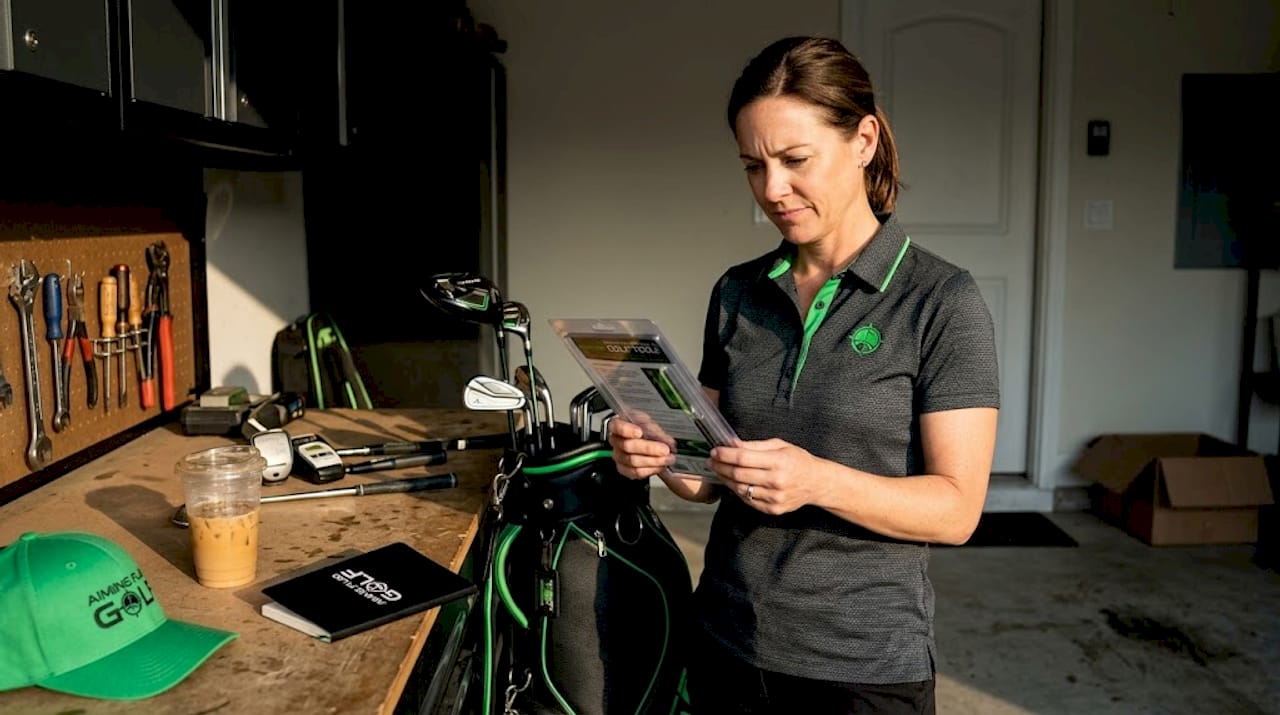
Pro Tip: Before buying any golf accessory, ask yourself three questions. Does this tool produce objective, repeatable data? Does it address a specific, identified weakness in my game? Has it been validated by golfers at or above my skill level? If you cannot answer yes to all three, put it back on the shelf. Avoiding the most common beginner golf mistakes often starts with the purchase decisions you make before you even reach the first tee.
Comparing novelty gadgets vs. essential performance tools
With the failure modes identified, a direct comparison between novelty gadgets and essential performance tools clarifies the decision-making framework. The gap between these two categories is not always visible in product listings. It shows up in practice results over a six to twelve month period.
Serious golfers use objective swing measurements and reliable tracking tools for improvement, not novelty gadgets. That distinction matters because product marketing rarely differentiates between categories. You have to do that work yourself.
Criteria for evaluating any golf accessory:
- Performance impact: Does the tool directly influence a measurable element of your swing, short game, or on-course decision-making?
- Measurement accuracy: Is the product validated against known standards, or does it rely on proprietary metrics without independent verification?
- Longevity: Will this tool remain useful as your handicap drops, or does it address a problem that disappears at a certain skill level?
- Workflow integration: Does it fit naturally into your current practice structure, or does it require building an entirely new routine around it?
- Durability: Is the construction quality appropriate for sustained outdoor use in variable weather conditions?
| Product type | Category | Performance impact | Data reliability | Longevity |
|---|---|---|---|---|
| Novelty swing wristband | Novelty | Low | Inconsistent | 1 season |
| Alignment stick | Performance | High | N/A (visual tool) | Indefinite |
| Branded novelty divot tool | Novelty | None | None | Decorative |
| Precision divot tool with ball marker | Performance | Moderate | N/A | Indefinite |
| Entertainment putting gadget | Novelty | Low | None | Weeks |
| Quality magnetic golf towel | Performance | Moderate | N/A | Multi-season |
| GPS watch (unvalidated) | Novelty | Variable | Low | 1 to 2 seasons |
| Validated GPS rangefinder | Performance | High | High | 3 or more seasons |
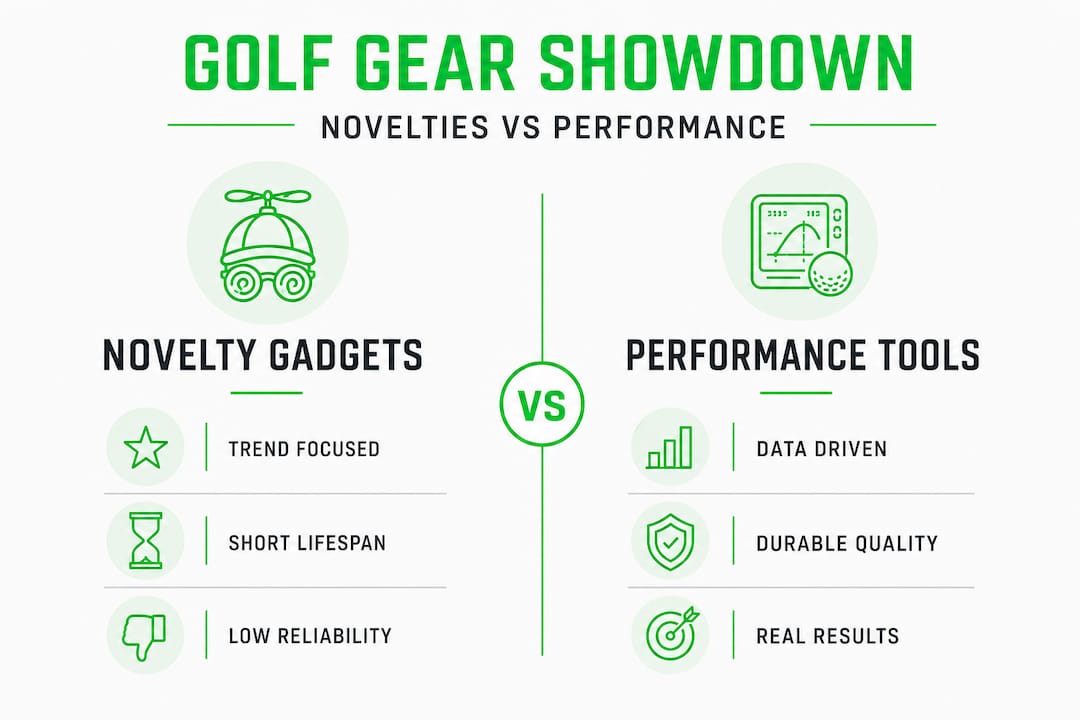
Reviewing professional accessory picks curated for serious amateur golfers gives you a practical shortcut. Rather than evaluating each product individually from scratch, you start from a filtered list of tools already screened for performance relevance and construction quality. The accessories that improve your game are usually less visually dramatic than novelty items, but their impact compounds over dozens of rounds.
What serious golfers choose instead—and why it matters
The shift from novelty to functional gear is not complicated, but it requires a deliberate audit of what is currently in your bag. Most serious amateur golfers find, upon honest review, that their bag contains a mix of high-quality clubs paired with a chaotic collection of accessories, some useful, many redundant, and a handful that were purchases driven by trend rather than need.
Research in golf performance confirms that practice conditions that transfer to the course are more valuable than gadgets focused on entertainment. That principle extends directly to the accessories surrounding your practice environment.
Step-by-step bag audit:
- Remove everything from your bag. Lay every item out on a flat surface. This forces honest evaluation instead of assumption-based decisions.
- Sort by function category. Group items into: ball striking aids, course management tools, organizational accessories, and miscellaneous.
- Apply the three-question filter. For each item, ask: Does this address a specific weakness? Does it produce objective feedback? Has it remained in regular use over the last 30 rounds?
- Identify redundancy. If you have three ball markers, four tees of different novelty designs, and two pocket tools that do the same job, consolidate. Each redundant item is cognitive load you do not need during a round.
- Replace novelty items with performance counterparts. Use the comparison table above as a reference. Prioritize tools that will still be in your bag two seasons from now.
Accessories that deliver quantifiable on-course benefits:
| Accessory | Functional benefit | Measurable outcome |
|---|---|---|
| Magnetic golf towel | Instant access, keeps grip surfaces dry | Consistent grip pressure across all 18 holes |
| Precision golf tees | Consistent tee height for driver and fairway woods | Reduced variance in launch angle |
| Reliable divot tool | Proper green repair, course etiquette compliance | Maintained pace of play |
| Validated GPS rangefinder | Accurate yardage to front, middle, and back of green | Better club selection, lower dispersion |
| Quality utility pouch | Organized access to balls, tees, markers without digging | Reduced pre-shot preparation time |
Pro Tip: Apply the same standard to your practice tools as you do your on-course gear. Review simple, high-impact golf tips before every practice session to ensure your accessories are aligned with what you are actively working on that day. For ball striking development specifically, impact feedback tools are among the highest-ROI accessories available at any price point, and they require no calibration or software. UV protection clothing is another frequently overlooked functional investment, particularly for golfers who log 30 or more rounds per season.
Why the allure of novelty is hard to resist—and how to overcome it
Here is the uncomfortable truth that the golf equipment industry rarely acknowledges: novelty gear does not just target beginners. It targets every golfer who has hit a frustrating plateau. And plateaus affect every level, from 28 handicaps trying to break 100 to 6 handicaps trying to consistently shoot in the 70s. When your progress stalls, the emotional appeal of a new tool promising instant correction is significant and almost entirely rational in the moment.
The marketing machinery behind novelty golf products is precise. It isolates the emotional state of the stalled golfer, pairs it with a single, simplified solution, and delivers it through channels where social proof is visible and peer behavior is persuasive. You see a touring pro mention a grip trainer in passing. You see 400 reviews saying it changed someone’s swing. The case feels made before you have done a single critical evaluation.
What we have observed, across thousands of interactions with serious golfers, is a consistent pattern. Golfers who invest in novelty items report a short satisfaction window, usually two to four weeks, followed by declining use and eventual abandonment. Golfers who invest in functional, durable accessories report ongoing use across multiple seasons and, more importantly, a quieter mental environment during play. When your towel is exactly where it should be, when your tee height is consistent, when your bag is organized to the point that you never dig for anything, your attention stays on the shot in front of you.
The practical mental framework for smarter buying decisions is simple. Create a thirty-day rule. When a product catches your attention, wait thirty days before purchasing. During that period, research whether any validated performance outcome is attributed to it by sources outside the manufacturer. If the answer is no, the product is almost certainly novelty. If the answer involves reliable measurement, documented skill transfer, or structural durability data, it deserves a second look.
Focus on meaningful practice routines first. The accessories that support those routines will become obvious. The ones that do not will stop appearing attractive.
The most durable improvement in amateur golf comes from removing friction, not adding gadgets. Clean grips, a dry glove, accessible tees, and a well-organized bag are not glamorous investments. But over 72 holes, their cumulative effect on your ability to stay focused, stay consistent, and stay efficient is far greater than anything a novelty product can offer.
Upgrade your golf experience with proven essentials
If this article clarified why your current accessories may not be supporting your performance goals, the next step is straightforward. Replace items that fail the three-question filter with tools selected for durability, function, and documented on-course impact.
Aiming Fluid Golf curates expert accessory recommendations for serious amateur golfers who want gear that earns its place in the bag over multiple seasons. Every product in the catalog is evaluated against the same criteria outlined in this article: performance relevance, construction quality, and practical workflow integration. The official accessories guide is the most direct path to building a bag that reflects your commitment to the game rather than the latest market trend.
Frequently asked questions
What counts as a novelty golf accessory?
A novelty golf accessory is any item designed primarily for entertainment or trendiness rather than measurable performance improvement. Serious golfers prioritize tools with measurable benefits over products that offer visual appeal without functional output.
Do novelty golf gadgets ever help?
Very rarely, and only if they offer accurate measurement or a direct link to improved fundamentals, which most do not. Meaningful practice guidance requires that measurement be accurate and repeatable, not just engaging.
How can I tell if an accessory improves performance?
Look for tools supported by objective data and reliability in skill measurement, not just marketing claims. Products that drive real improvement are those where objective tools guide practice through verified, repeatable output.
Is it worth spending more on quality golf accessories?
Yes. Serious golfers consistently see greater improvement and longevity from high-quality, functional gear. Research confirms that reliable measurement tools create lasting improvement in a way that cheap, trendy alternatives cannot replicate over a full season.


