


TL;DR:
- Maintaining consistent tee height improves shot accuracy and guarantees a repeatable setup in golf.
- Using fixed design tees like step-style or castle types reduces variability, enhancing distance and confidence.
Precision in golf tees is defined as the ability to set and repeat an exact ball height above the ground on every drive. A 0.25-inch tee height variation shifts launch angle by 2 to 3 degrees, which translates to 10 to 15 yards of carry distance at a 90 mph swing speed. That is not a small margin. For amateur golfers who already battle inconsistency, losing 15 yards on a random drive because of a poorly placed tee is a preventable problem. Understanding why precision matters in tees is the first step toward building a repeatable, confident setup before every shot.
Why precision matters in tees and ball flight
Tee height controls where the ball contacts the clubface. A ball teed too low strikes the lower grooves, producing a lower launch angle and more spin. A ball teed too high catches the upper face, reducing spin but also reducing control. Both outcomes are avoidable with a consistent tee height standard.
The numbers make the case clearly. Launch angle deviation directly affects carry distance and shot shape. A golfer who varies tee height by even a quarter inch from hole to hole introduces unpredictable variables into every drive, before the swing even begins.
“Many perceived bad swings result from poor impact conditions set before swinging, with tee height as the most accessible variable to control.”
This insight reframes how golfers should think about their pre-shot routine. The swing gets most of the blame for a bad drive. The tee setup rarely does. Fixing tee height consistency is one of the fastest ways to reduce shot-to-shot variance without changing your swing mechanics at all. You can read more about how tee height affects shots and driver distance in detail.
What tee designs and materials promote precision?
Not all tees are built to deliver the same level of setup accuracy. The design and material of a tee directly affect how repeatable your height is from round to round.
Step-style and castle tees
Step-style tees feature graduated ridges along the shaft. Each ridge marks a specific height, so you push the tee into the ground until the target ridge sits at soil level. Castle tees use a raised cup design that physically stops the ball at a fixed height. Professional golfers like Aaron Rai use castle tees specifically for this repeatable setup advantage. Both designs remove the guesswork from tee placement.
Material comparison
| Tee type | Material | Precision benefit | Best for |
|---|---|---|---|
| Step-style tee | Plastic | Graduated height markers, durable | Consistent drivers, all skill levels |
| Castle tee | Plastic or composite | Fixed cup height, no measurement needed | Pros and precision-focused amateurs |
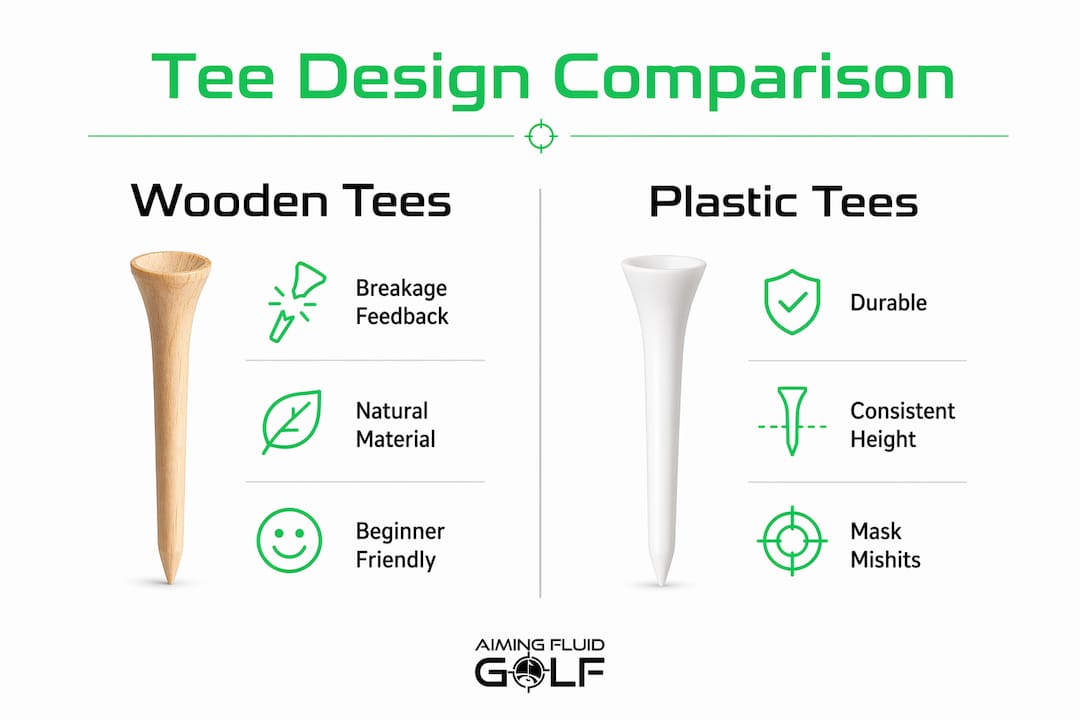
| Standard wooden tee | Wood | Breaks on mishits, signals poor contact | Beginners learning feedback |
| Bamboo tee | Bamboo | Eco-friendly, moderate durability | Golfers prioritizing sustainability |
Key benefits of precision-focused tee designs include:
- Color-coded height markers that let you identify the correct height at a glance
- Non-breaking construction that maintains height accuracy across multiple rounds
- Reduced setup time that keeps your pre-shot routine efficient and focused
Wooden tees break on mishits, which provides useful tactile feedback. Plastic tees may mask poor contact by surviving the impact. This distinction matters depending on where you are in your development as a golfer. Beginners benefit from wooden tees as learning tools. More experienced golfers benefit from the durability and height consistency of plastic precision tees.
Pro Tip: If you are a beginner, start with wooden tees to learn from your mishits. Once your ball striking improves, switch to a step-style or castle tee to lock in your height standard.
What practical steps can golfers take to improve teeing precision?
Improving tee precision does not require a major equipment overhaul. A structured setup routine and the right tee design are enough to produce measurable results.
-
Select the correct tee length for your driver. 3.25-inch tees are preferred for 460cc drivers, which are the most common driver head size today. Using a tee that is too short forces the ball below the optimal strike zone on the face.
-
Use a step or castle tee with a fixed height marker. Color-coded height markers on precision tees remove the need to eyeball the height. Push the tee in until the marker meets the ground, every time.
-
Build a consistent physical motion for tee insertion. Use two fingers to push the tee to the same depth on every hole. This physical habit reinforces the height standard even when you are not thinking about it consciously.
-
Check your tee height against the driver face before addressing the ball. The ball should sit roughly half a ball-width above the top edge of the driver face. This is the standard reference point used by most tour-level coaches.
-
Track your results by tee type. If you switch between tee designs during a round, note which drives felt most solid. Over time, patterns will emerge that tell you which height and design works best for your swing.
Pro Tip: Keep a single tee type in your bag during a round. Mixing tee designs mid-round reintroduces the height variability you are trying to eliminate.
A step-by-step tee setup guide can help you build this routine into your regular practice.
How does tee precision improve consistency and confidence?
The performance benefits of tee accuracy in sports are well documented at the professional level. The psychological benefits for amateurs are equally real, though less discussed.
Consistent tee height leads to more fairways hit and fewer wasted drives. This is not a minor statistical footnote. Hitting more fairways directly reduces the number of recovery shots in a round, which is where most amateur scoring falls apart.
The confidence effect works like this:
- A golfer who knows their tee height is correct can focus entirely on the swing.
- A golfer who is unsure about tee height carries that uncertainty into the swing itself.
- Uncertainty in setup produces tension, which produces poor mechanics.
“PGA professionals’ use of graduated tees illustrates that precision is a standard of performance, providing amateurs a replicable advantage.”
This is the key insight. Professionals do not use precision tees because they are unsure of their swing. They use them because eliminating every controllable variable before the swing gives them one less thing to manage mentally. Amateurs can apply the same logic. Golfers over 55 using step-style precision tees saw launch angle deviation drop from ±3.2° to ±1.1°. That reduction in variance translates directly to tighter shot dispersion and more predictable ball flight. The benefits of precise tees extend well beyond the equipment itself. They create a mental framework where setup is solved before the swing begins. You can explore more on precision tee benefits and how they affect your overall game.
Key Takeaways
Tee precision is the single most controllable variable in the pre-shot routine, and fixing it produces measurable gains in launch consistency, distance, and confidence.
| Point | Details |
|---|---|
| Height variance costs distance | A 0.25-inch tee height difference shifts launch angle by 2–3 degrees and carry distance by 10–15 yards. |
| Precision tee designs reduce error | Step-style and castle tees use fixed markers to eliminate guesswork in setup. |
| Material choice affects feedback | Wooden tees signal mishits through breakage; plastic tees prioritize durability and height consistency. |
| Consistent height builds confidence | Standardized tee height removes pre-swing uncertainty, allowing full focus on the swing itself. |
| Tee length must match driver size | 3.25-inch tees suit 460cc drivers and produce optimal ball-striking height and launch conditions. |
The variable most golfers ignore entirely
I have watched hundreds of amateur golfers on the range and on the course. The single most common setup error is not grip, stance, or alignment. It is tee height, and it changes on almost every hole.
Most golfers grab a tee, push it into the ground by feel, and step back. That process takes about two seconds and produces a different height almost every time. I have seen players tee the ball a full inch higher on the back nine than the front nine without realizing it. Their swing did not change. Their results did.
When I started paying attention to tee height as a variable in my own game, the improvement was immediate. Not because I changed my swing, but because I stopped introducing a new problem before every drive. Precision tees made that easy. The step markers gave me a reference point I could trust, and that trust carried into the shot.
My recommendation is simple. Pick one tee design with a fixed height marker. Use it on every par-4 and par-5 tee shot for an entire round. Compare your fairways hit to your average. The data will make the case better than any instruction tip.
— Gary
Aimingfluidgolf precision tees: built for consistent drives

Aimingfluidgolf designs precision golf tees with consistent height markings and durable materials built to hold up across full rounds of play. The DON’T SUCK™ Golf Tees are engineered to deliver the same tee height on every drive, removing the setup variability that costs amateur golfers distance and accuracy. Paired with the broader Aimingfluidgolf golf tees collection, you get options matched to different driver sizes and course conditions. Every product in the lineup is built around the same principle: a repeatable setup produces repeatable results.
FAQ
What is tee precision in golf?
Tee precision is the ability to set the ball at the same height above the ground on every drive. Consistent tee height produces repeatable launch angles and more predictable ball flight.
How much does tee height affect distance?
A 0.25-inch difference in tee height shifts launch angle by 2 to 3 degrees, affecting carry distance by 10 to 15 yards at a 90 mph swing speed.
What tee design is best for consistency?
Step-style and castle tees are the most consistent options because they use fixed height markers or cup designs that eliminate guesswork in setup.
Should beginners use wooden or plastic tees?
Beginners benefit from wooden tees because breakage signals a mishit, providing useful feedback. Plastic precision tees suit more experienced golfers who prioritize height consistency over contact feedback.
How does tee height affect launch angle?
Tee height determines where the ball contacts the clubface. A lower tee produces a lower launch angle with more spin; a higher tee raises the launch angle and reduces spin, both of which affect carry distance and shot shape.
Recommended
- Precision golf tees: drive straighter and play smarter – Aiming Fluid Golf
- Precision Golf Tee Benefits: Improve Consistency and Play Smarter – Aiming Fluid Golf
- What Is Tee Performance? A Golfer’s Guide to Better Drives – Aiming Fluid Golf
- Professional Wooden Golf Tees Guide: Maximize Distance & Consistency – Aiming Fluid Golf


