


TL;DR:
- A structured golf bag maintains its shape and organization under full load with reinforced collars, rigid frames, and stable bases. It protects clubs from damage, reduces search time, and improves on-course focus by ensuring consistent club placement. Prices range from about $80 to over $500, depending on materials and structural features.
What makes a golf bag “structured”?
A structured golf bag is engineered to maintain its shape, posture, and internal organization under the full load of 14 clubs, water, balls, and accessories. Unlike a soft or unstructured bag that sags and twists when packed, a structured bag uses reinforced top collars, rigid frames, and a stabilized base to hold vertical alignment through every round. The result is a bag that functions less like a duffel and more like a precision equipment system.
Key defining features:
- Reinforced top collar that resists deformation under load
- Rigid internal spine or frame that prevents sagging and twisting
- Stable base construction that keeps the bag upright on any surface
- Full-length divider system (commonly 14-way) that separates each club individually
- High-density exterior materials with reinforced stitching at stress points
How the engineering of structured bags actually works
The structural integrity of these bags comes from several interlocking components, not just one feature, similar to the engineered design seen in tent-style certificate holders that maintain shape and posture under load.
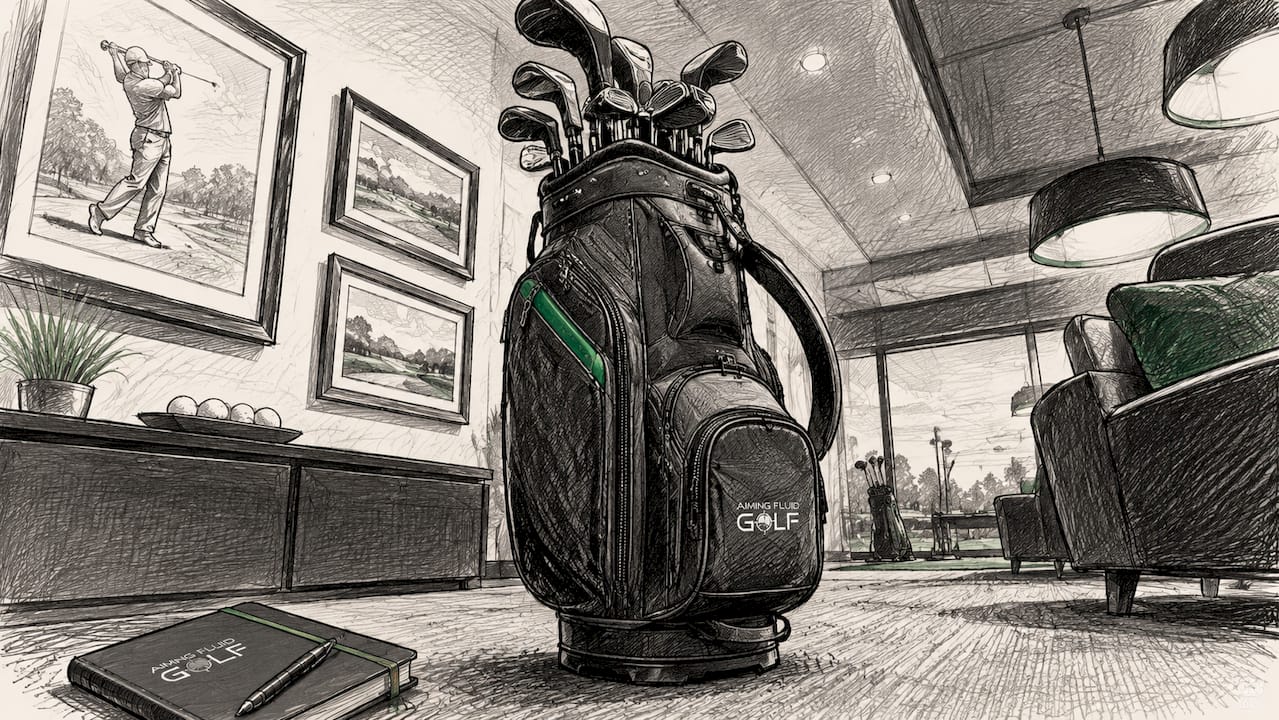
The top collar is the first line of defense. On cheaper bags, this ring deforms under load, causing clubs to bunch and shafts to grind against each other. A reinforced collar holds its circular shape regardless of how much weight sits below it.
The internal spine or frame runs vertically through the bag body. This is what prevents the characteristic lean and twist you see in unstructured bags after a season of use. When structure collapses, the bag begins to lean or twist. Experienced equipment engineers describe this as engineering fatigue, not cosmetic wear.
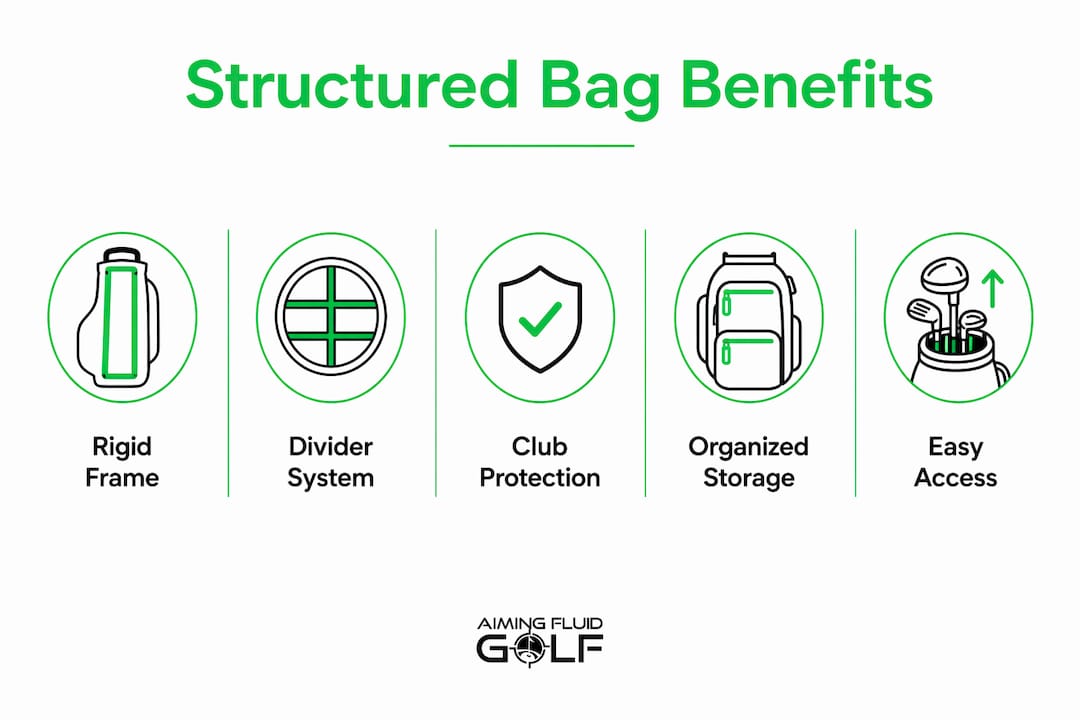
The base matters more than most golfers realize. A stabilized, wide-footprint base distributes load evenly and prevents the bag from tipping on cart paths or uneven terrain.
Divider systems complete the picture:
- 14-way dividers give each club its own dedicated slot, reducing shaft tangling and club-to-club contact
- 6-way or 5-way dividers group clubs by type, lighter but less protective
- Full-length separators run top to bottom, preventing contact along the entire shaft rather than just at the collar
Why a structured bag protects your clubs and saves you time
Graphite shafts are particularly vulnerable to wear without full-length separation. When shafts rub repeatedly inside an unstructured bag, the friction degrades the material over time. A structured bag with full-length dividers eliminates that contact entirely.
Beyond equipment longevity, the organizational benefits are direct and measurable on the course:
- Faster club selection because every club has a fixed, predictable location
- Reduced mental distraction from not searching through a disorganized bag mid-round
- Easier club count before and after each hole, since missing clubs are immediately visible
- Better weight distribution that reduces physical strain during walking rounds
- Protection for clubheads by preventing irons from knocking against woods and putters
Consistent club placement fosters mental focus and supports efficient pre-shot routines. When you reach for a club and it is exactly where you expect it, that small certainty keeps your attention on the shot rather than the gear.
How a structured bag improves your on-course routine
A structured bag functions as an external dashboard for your equipment. You can scan the top of the bag and immediately see which clubs are present, which are in your hand, and whether anything is missing. That visual inventory takes seconds rather than minutes.
Proper club arrangement reflects preparation discipline. Experienced golfers place woods and the driver in the top slots, mid-irons in the middle rows, and wedges at the base. This layout aligns with how clubs are used across a round: the driver comes out first, wedges come out last and most frequently near the green.
Pro Tip: Arrange your clubs longest to shortest from top to bottom, and keep your putter in its dedicated slot every single time. Repetition builds a retrieval habit so automatic that you stop thinking about the bag entirely and focus on the shot.
Aimingfluidgolf’s bag organization guide covers this system in detail, including how to adapt it for both cart and carry setups.
How to choose the right structured bag for your game
The right structured bag depends on how you play, not just how many clubs you carry.
Divider type: 14-way bags suit cart golfers who prioritize maximum organization and club protection. 5-way or 6-way bags work well for walkers who want lighter weight without sacrificing basic structure.
Transportation mode: Cart bags are wider, heavier, and built for stability on a cart frame. Carry and stand bags prioritize weight distribution and shoulder comfort over pocket volume.
Key selection criteria:
- Divider count and whether separators run full length
- Base width and material (rubber-reinforced bases outlast thin plastic)
- Bag weight relative to how far you walk per round
- Exterior material density and stitching quality at stress points
- Strap system quality for carry bags
Pro Tip: Before buying, pick the bag up fully loaded at the shop if possible. A bag that feels manageable empty can become a liability at 25 pounds on hole 14.
Maintenance extends the life of any structured bag. Wipe down the exterior after wet rounds, store the bag upright rather than on its side, and check divider stitching at the top collar every season. A durable golf bag should maintain its structural integrity for many years of consistent play with basic care.
What does a structured golf bag cost?
Structured bags span a wide price range, and the price generally reflects the quality of the frame, divider system, and exterior materials.
Entry-level structured bags with basic rigid frames and 6-way dividers typically start around $80–$150. Mid-range bags with 14-way full-length dividers, reinforced collars, and quality zippers run $150–$300. Premium cart bags and tour-style stand bags with advanced structural engineering, cart strap protection channels, and high-density materials often exceed $300, with some reaching $500 or more.
The value calculation is straightforward: a bag that protects graphite shafts from premature wear pays for itself by extending the life of clubs that cost far more than the bag itself. Buying the cheapest option and replacing clubs early is rarely the better financial decision.
Key Takeaways
A structured golf bag maintains its shape under full load through reinforced collars, rigid internal frames, and stable bases, making it the most protective and organizationally efficient option for serious golfers.
| Point | Details |
|---|---|
| Core engineering | Reinforced top collar, rigid internal frame, and stable base prevent sagging and twisting under full load. |
| Divider system | 14-way full-length dividers give each club its own slot, eliminating shaft friction and reducing wear. |
| Equipment protection | Graphite shafts are particularly vulnerable to damage without full-length separators between clubs. |
| On-course efficiency | Consistent club placement reduces distraction and supports faster, more focused pre-shot routines. |
| Buying decision | Match divider count and bag weight to your transportation mode: 14-way for cart golfers, lighter setups for walkers. |
Aimingfluidgolf designs accessories built around the same organizational principles that make structured bags work. From magnetic golf towels that stay accessible without digging through pockets to precision tools that belong in every organized bag, the full range is at Aimingfluidgolf’s accessories guide.

Recommended
- Premium golf setup: organized bags and custom fitting – Aiming Fluid Golf
- How to Organize Your Golf Bag Like a Pro: The Peter Finch Method – Aiming Fluid Golf
- Golf Bag Systems | Stop Losing Gear & Play Faster | Aiming Fluid Golf
- Golf bag layering: organize smarter for faster play – Aiming Fluid Golf


