


TL;DR:
- Advanced golf gear uses precise water resistance ratings like hydrostatic head and IPX classifications.
- Proper construction features such as taped seams and waterproof zippers are essential for true waterproof protection.
- Upgrading accessories like magnetic towels, sealed bags, and waterproof rangefinders enhances wet-weather efficiency and convenience.
Most golfers assume that “weather-resistant” is a single category, as if every rain jacket or bag cover offers the same level of protection. That assumption costs rounds. Advanced golf gear uses precise engineering standards, including hydrostatic head ratings measured in millimeters and IPX waterproof classifications, to separate light rain shrugging from true all-weather defense. The gap between a 1,500mm-rated jacket and a 10,000mm one is not minor; it is the difference between staying dry for nine holes and staying dry for eighteen. This guide decodes what weather-resistant golf gear actually means, how ratings translate to real-world performance, and which features matter most for organized, efficient play in any conditions.
Table of Contents
- What makes golf gear weather-resistant?
- Key apparel technologies for all-weather golfers
- Weather-resistant accessories: Towels, rangefinders, and bags
- How to evaluate and upgrade your golf gear for weather protection
- The real secret to weatherproof convenience (most golfers overlook)
- Level up your game with top-rated weather-resistant gear
- Frequently asked questions
Key Takeaways
| Point | Details |
|---|---|
| True weather resistance | Top golf gear relies on technical waterproof measures like hydrostatic ratings and sealed seams for real performance. |
| Accessory advantages | Magnetic towels and waterproof rangefinders keep your essentials protected, organized, and accessible in any weather. |
| Smart upgrading | Routine gear audits and upgrades let you stay dry and efficient so bad weather never ruins your round. |
| Focus on function | The best convenience comes from integrated systems and practical accessories, not just apparel. |
What makes golf gear weather-resistant?
The term “weather-resistant” gets applied loosely across golf equipment. Understanding what it actually signals requires looking at the specific mechanisms manufacturers use to block water ingress and wind penetration.
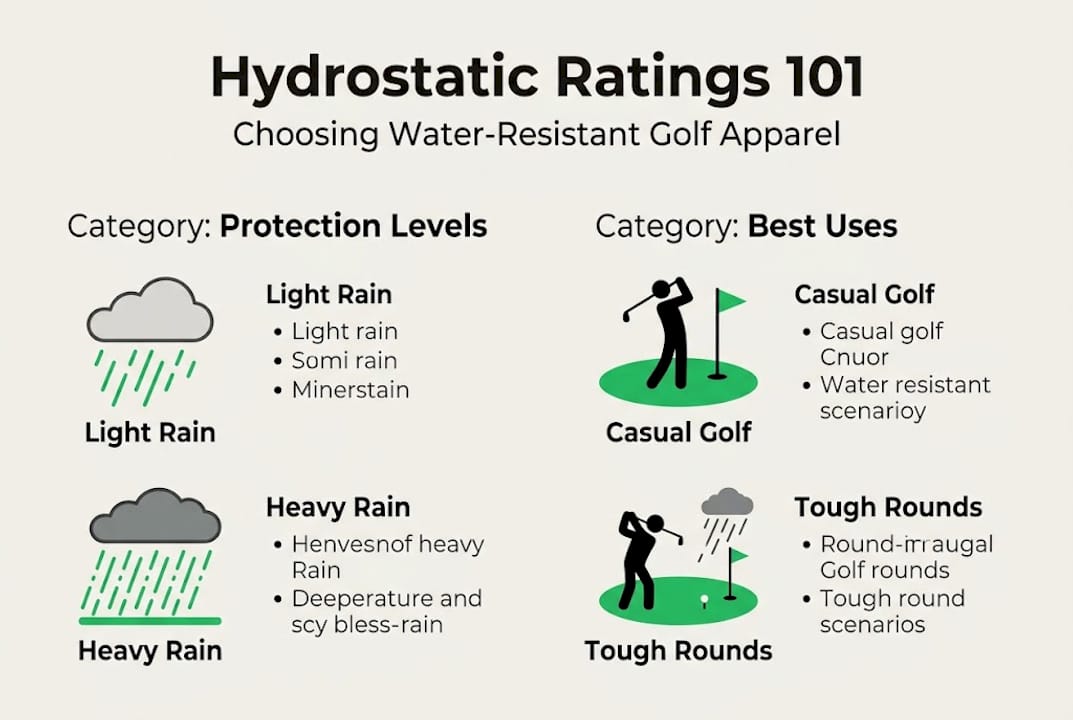
Hydrostatic head ratings are the primary standard for waterproof fabrics. This number, expressed in millimeters, reflects how much water pressure a fabric can withstand before leaking. A rating of 1,500mm handles light drizzle. A rating of 10,000mm or higher confirms the fabric can hold up through sustained, heavy rain. Most serious all-weather golf gear targets 10,000mm as a floor, not a ceiling.
Beyond the fabric itself, construction details determine whether a garment or bag actually keeps water out. Seam-sealed zippers and high mm ratings are essential for sustained waterproofing. Open seams are the most common failure point in otherwise high-rated gear. Water follows the path of least resistance, and an unsealed stitch line can let in more moisture than a lower-rated fabric would.
Materials like Gore-Tex and similar laminate membranes bond a waterproof film directly to the inner face of the fabric. This creates a three-layer sandwich that blocks water from the outside while allowing water vapor from perspiration to escape. Waterproof zippers, particularly those from YKK’s Aquaguard line, use a coated or molded surface to prevent water entry through the zipper teeth.
For golfers who play through cold and wet seasons, reviewing winter golf tips before purchasing can help match gear ratings to the specific conditions you actually face.
Common weather-resistant components by category:
- Apparel: Hydrostatic-rated membranes, taped seams, waterproof zippers, DWR (durable water repellent) outer coating
- Bags: Seam-sealed pockets, covered or waterproof zippers, thermoplastic base panels
- Accessories: IPX-rated electronics, microfiber or waffle-weave towels, quick-release magnetic attachments
Waterproof rating comparison:
| Rating | Protection level | Best suited for |
|---|---|---|
| Under 2,000mm | Light mist or drizzle | Casual rounds, low-rain regions |
| 5,000mm | Moderate rain | Most U.S. golf seasons |
| 10,000mm | Heavy sustained rain | All-weather golfers |
| 20,000mm+ | Extreme conditions | Tournament play in severe weather |
Key apparel technologies for all-weather golfers
With the basics of weather resistance covered, let’s focus on the advanced technologies powering modern golf apparel.
Gore-Tex remains the benchmark membrane in performance outerwear. It works by laminating an expanded polytetrafluoroethylene (ePTFE) film to the inner surface of a shell fabric. The film contains billions of microscopic pores, each too small for liquid water to enter but large enough for water vapor molecules to escape. The result is genuine waterproofing without trapping heat from exertion.
Packlite versions of Gore-Tex strip the inner lining to reduce weight and bulk, which matters when you are carrying a bag over eighteen holes in wet weather. Other performance membranes, including those from Toray and Polartec Neoshell, offer similar moisture management with different tradeoffs in weight, packability, and durability.
Stretch fabrics for swing freedom are not optional for golf-specific outerwear. A jacket may have a perfect waterproof rating but restrict the shoulder rotation needed for a full swing. Manufacturers address this with four-way stretch panels at the back, shoulders, and underarms. Ergonomic patterning, including articulated sleeves and a pre-curved hem, allows the jacket to move with the body rather than against it.
Key apparel features to prioritize:
- Hydrostatic rating of 10,000mm or higher
- Fully taped or critically taped seams (taped seams at shoulders and arms at minimum)
- Waterproof zipper on main closure and pockets
- Adjustable cuffs to prevent water from running down the wrists
- Underarm ventilation zips for breathability during active play
- Stretch panels at high-movement zones
Apparel material comparison:
| Material | Waterproof rating | Breathability | Stretch |
|---|---|---|---|
| Gore-Tex Pro | 28,000mm+ | High | Moderate |
| Gore-Tex Paclite | 20,000mm+ | High | Low |
| Polyester laminate | 5,000–10,000mm | Moderate | High |
| Softshell membrane | 2,000–5,000mm | Very high | Very high |
For gloves, weatherproof golf gloves made from synthetic materials outperform leather in wet conditions, maintaining grip when natural leather stiffens and loses traction.
Pro Tip: Layering works best when each layer has a distinct function. Base layers wick moisture away from skin, mid layers trap warmth, and the outer shell blocks water and wind. Avoid layering two insulating pieces without an outer shell, as trapped humidity from sweating will make you feel colder, not warmer.
Weather-resistant accessories: Towels, rangefinders, and bags
Beyond apparel, the right accessories can make or break a round once the weather turns. Here’s what to look for in on-course essentials.
Magnetic microfiber towels with waffle weave and integrated ball pockets provide quick-drying, groove-cleaning utility in wet conditions. The waffle-weave structure creates surface area that accelerates moisture absorption and release. In rain, a towel that stays soaked becomes useless within the first few holes. Quick-release magnetic attachments, like those on the Magna-Anchor towel, allow one-handed retrieval and return without interrupting your pre-shot routine.
For rangefinders, IPX ratings indicate resistance to water intrusion. IPX6 confirms protection against powerful water jets, while IPX7-rated rangefinders withstand submersion up to one meter for thirty minutes. In practical terms, IPX6 handles most rain scenarios comfortably. IPX7 adds a margin of safety for courses with standing water or heavy downpours where the device might be submerged momentarily.
“Empirical benchmarks show IPX7 rangefinders excel in downpours where IPX4 fails.” — Best Golf Rangefinders 2026
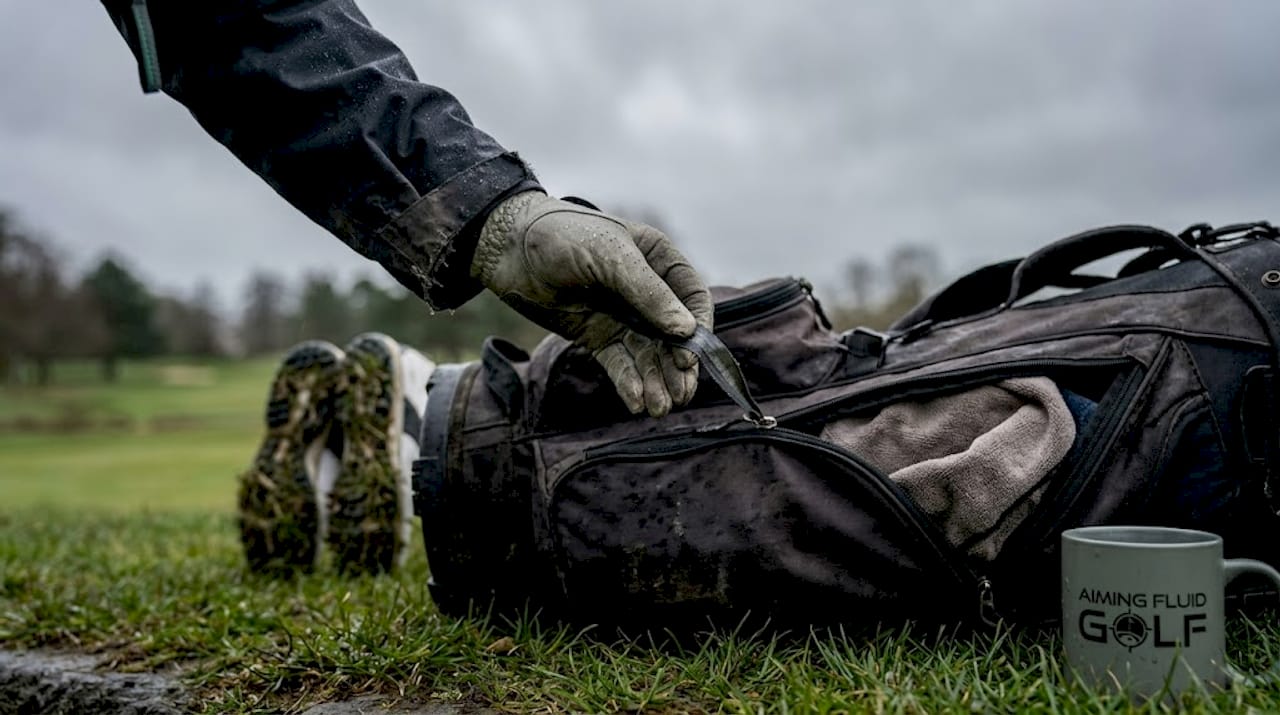
Bags represent the largest investment in weather protection after apparel. True waterproof bags use seam-sealed construction throughout, not just on the main compartment. Covered zippers on accessory pockets, thermoplastic bases that resist ground moisture, and integrated rain covers add multiple layers of redundancy. Comparing best magnetic towels alongside bag features shows how an integrated approach to organization keeps everything accessible without digging through wet gear.
Must-have weather-resistant accessories:
- Magnetic microfiber towel with quick-dry waffle weave
- IPX6 or IPX7 rated rangefinder
- Seam-sealed bag with covered zippers
- Waterproof headcover for woods and hybrids
- Premium utility pouch for valuables (phone, wallet, keys)
Pro Tip: Integrated organization systems that use magnetic or clip-based attachment keep towels, tees, and tools accessible without requiring you to open pockets or bags. In rain, every second spent searching for gear is a second of exposure.
How to evaluate and upgrade your golf gear for weather protection
Now that you know what features work, it’s practical to check your current gear and see what needs an upgrade.
Gear audit checklist:
- Check fabric tags for hydrostatic ratings. If no rating is listed, assume the item is not waterproof.
- Inspect seams on jackets and bags. Run a finger along inner seams to feel for tape. Bare stitching is a leak point.
- Test zippers by running water over closed zips. Watch for seepage at the teeth or pull tab.
- Evaluate the DWR coating by sprinkling water on the outer shell. If it beads up and rolls off, the coating is active. If water spreads and darkens the fabric, the DWR is depleted.
- Check bag base panels for cracks or soft spots that indicate moisture absorption over time.
- Review electronic accessories for IPX ratings printed on the device or in the specification sheet.
Common failure points include shoulder seams on jackets (where flexing breaks seam tape over time), zip garage areas (the flap that covers a main zip), and the base of carry bags after repeated contact with wet grass.
Seam-sealed zippers and high mm ratings separate gear worth upgrading from gear worth replacing entirely. If a jacket’s membrane has delaminated or a bag’s seams have failed, no amount of DWR spray will restore full protection.
For towels and accessories, reviewing why use magnetic towels helps clarify where the upgrade investment delivers the highest return in convenience and round efficiency.
Gear audit framework:
| Gear category | Key check | Upgrade trigger |
|---|---|---|
| Jacket | Hydrostatic rating, seam tape | Below 5,000mm or failed tape |
| Bag | Seam sealing, zip coverage | Visible leaks after moderate rain |
| Rangefinder | IPX rating | Below IPX6 for regular wet play |
| Towel | Drying speed, attachment system | Soaks through within 3 holes |
| Gloves | Grip retention when wet | Slippage or stiffening in rain |
The real secret to weatherproof convenience (most golfers overlook)
Stepping back, here is what repeated rounds in wet and windy conditions reveal about where real performance gains come from.
Most golfers spend their upgrade budget on the jacket and ignore everything else. That is a reasonable starting point, but it misses where friction actually accumulates during a round. The frustration on a rainy day is not usually a leaky sleeve. It is a soaked towel that can no longer clean a clubface, a rangefinder that fogs up and fails at a critical hole, or a bag where every pocket requires two hands to open.
The contrarian take is this: waterproofing yourself is necessary, but streamlining how you access, protect, and use your equipment is where you gain the most. A magnetic towel’s impact on pace of play and groove maintenance in wet conditions is measurable. A premium pouch that keeps your phone and wallet dry without digging through a soaked bag has real value.
Pro Tip: Choose one or two versatile, high-performance accessories that work in every condition, not just stormy ones. Gear that earns its place on clear days will be second nature when the weather turns.
Level up your game with top-rated weather-resistant gear
The right gear does not just protect you from the rain. It keeps every part of your round organized, efficient, and frustration-free regardless of forecast.

Aiming Fluid Golf designs accessories built for exactly these conditions. From magnetic towels engineered for quick-dry performance and one-handed retrieval to the leather utility pouch that keeps valuables protected with a secure 360-degree metal clip, every product is built around real on-course problems. Explore the full lineup of best golf accessories to find the upgrades that match your game and conditions.
Frequently asked questions
What’s the difference between weather-resistant and waterproof golf gear?
Weather-resistant gear handles light rain and surface moisture, while waterproof gear uses high mm ratings and sealed construction to block water even during prolonged heavy rain. The difference becomes critical after the first thirty minutes of sustained exposure.
Are waterproof ratings actually important for golf accessories?
Yes. For electronics, ratings like IPX6 and IPX7 confirm reliable performance in heavy rain where unrated devices fail. For fabrics, millimeter ratings confirm real protection rather than marketing language.
What are the must-have weather-resistant golf accessories for wet rounds?
Magnetic microfiber towels, seam-sealed bags, and waterproof rangefinders cover the three most critical failure points: groove cleaning, gear protection, and distance measurement accuracy.
How can I check if my current gear is still waterproof?
Test the DWR coating by applying water to the outer surface and watching whether it beads or spreads. For seams and zippers, inspect seam tape and rated zips for delamination or gaps. If either fails, waterproofing performance is compromised regardless of the original rating.


