


Walk more than half your rounds, and a stand bag is the right call; ride more than half, and a cart bag makes more sense. Per MyGolfSpy’s testing, the split should follow your actual habits, not your aspirations. If your rounds are mixed, a lightweight hybrid bag, or owning both, solves the problem better than compromising on one. Aiming Fluid Golf’s accessory systems work with either choice.
TL;DR:
- A stand bag is ideal if you walk over half your rounds, prioritizing lightweight design and fewer storage options, while a cart bag suits riders with more gear and storage needs.
- Bag weight significantly impacts fatigue during a walk, with even 3 to 4 pounds difference affecting comfort and performance on a four-hour, five-mile round.
- Pockets and dividers should match your actual needs, with Valet, cooler, and rangefinder pockets enhancing efficiency, and 14-way top versus grouped clubs influencing speed and protection.
- Cart bags typically last longer with fewer moving parts but may be less convenient for walking, while retractable legs on stand bags are the most common failure point over time.
- Choose a bag based on your play habits, and optimize organization with accessories like magnetic towels and dedicated storage to improve pace and convenience on the course.
Table of Contents
- Walking vs Cart Bag: Comparing the Core Differences
- How Much Does Bag Weight Actually Affect a Walking Round?
- What Pockets Do You Actually Need on the Course?
- Do You Need a 14-Way Divider or Can You Group Clubs?
- What Actually Breaks on a Golf Bag Over Time?
- How Do You Decide Which Bag Fits Your Game?
- When Does a Hybrid or Two-Bag Setup Make More Sense?
- How Walking Golfers Can Organize a Bag Better
- Does Cart Golf Wear Down Courses More Than Walking?
- How Have Walking and Cart Bags Evolved Over Time?
- A Personal Take on Walking, Riding, and What Actually Matters
- Gear Up Your Walking Bag the Right Way
- Sources
- FAQ
Walking vs Cart Bag: Comparing the Core Differences
A stand bag and a cart bag are built to solve different problems, and the specs reflect that. One is engineered to disappear on your back for four hours; the other is built to sit still on a moving platform and hold everything you own. Below is how the two categories stack up across the dimensions that actually affect your round.
| Dimension | Stand/Carry Bag | Cart Bag |
|---|---|---|
| Typical empty weight | 3 to 6 lb | 5 to 10 lb |
| Loaded weight impact | Adds noticeably to fatigue over 18 holes; every pound counts | Less relevant since the cart carries the load |
| Pocket count/types | 4 to 6 pockets, streamlined | More pockets, including coolers and valet pockets |
| Divider setup | Often 4 to 6 way for speed and weight savings | Usually full 14 way for maximum club separation |
| Cart compatibility | Works on a cart but often lacks a strap pass-through | Built with pass-through channels and a contoured base for stability |
| Best for | Walkers, minimalists, players who value pace | Riders, golfers who bring extra gear, warm-weather rounds |
| Typical price range | $150 to $300 | $200 to $390 |
| Durability notes | Retractable legs are the main wear point | Fewer moving parts, generally longer lifespan |
The weight ranges above reflect commonly reported figures across bag reviews and retail listings; exact numbers vary by brand and material. What doesn’t vary much is the trade-off: stand bags sacrifice some storage and divider protection to stay light, and cart bags sacrifice portability to hold more gear and organize it better.
Best for at a glance: if you’re carrying your own bag for 18 holes, weight and balance dominate every other spec. If you’re riding, storage and divider protection matter more than ounces. MyGolfSpy’s guidance backs this directly: walk over half your rounds, buy a stand bag; ride most rounds, buy a cart bag.
How Much Does Bag Weight Actually Affect a Walking Round?
Every pound on your back compounds over four hours and roughly five miles of walking. A bag that feels manageable in the pro shop parking lot can feel very different by the 15th hole, especially once you’ve added water, rain gear, and extra balls. A Golf Digest test found that golfers who walked without carrying any bag showed more consistent play than those carrying a full load, with the gap widening late in the round. That’s the clearest evidence yet that carried weight has a real, measurable cost on performance, not just comfort.
Even 3 to 4 lb of difference between two stand bags starts to matter once you’re carrying it, not just holding it. Test this before you buy:
- Pack the bag with what you actually bring on a normal round, not a stripped-down demo load.
- Carry it 50 to 100 yards on both shoulders and note where the strap digs in.
- Check hip pad placement. It should ride at your hip bone, not your lower back.
- Walk with it for at least five minutes. Store aisles hide problems that show up on hole 12.
Pro Tip: Test the bag with your rangefinder, extra layer, and full ball supply already loaded. An empty-weight comparison in the store tells you almost nothing about how the bag will feel on hole 14.
What Pockets Do You Actually Need on the Course?
Pocket count sounds like a simple spec, but the layout matters more than the number. A valet pocket keeps your phone and wallet separate from wet gloves. A cooler pocket, common on cart bags and increasingly on stand bags, holds drinks without soaking your snacks. A dedicated rangefinder pocket saves you from digging through balls and tees every time you need a yardage.
Cart bags add strap pass-through channels and a contoured base so the bag sits flat and doesn’t rotate when strapped down. A stand bag can technically ride on a cart too, but without that pass-through design, pocket access gets awkward and the bag tends to shift or block adjacent pockets.
- Valet pocket: separates valuables from wet or dirty gear.
- Cooler pocket: insulated storage for drinks, most useful on warm-weather rounds.
- Rangefinder pocket: quick access without unzipping a full compartment.
- Apparel pocket: fits a rain jacket or extra layer without crowding balls and tees.
SCGA’s packing guidance recommends packing only what you’ll realistically use and organizing pockets by function rather than by whatever fits. Overpacking a stand bag defeats the entire purpose of choosing one.
Do You Need a 14-Way Divider or Can You Group Clubs?
A full 14-way top separates every club individually, protecting shafts from rattling against each other and making travel bags nearly mandatory for tournament golf or flights. A 4 to 6 way top groups clubs by type, which shaves weight and speeds up the swap between clubs since your hand isn’t hunting for one slot among fourteen.
Divider choice directly affects how fast you play. Walkers pulling a wedge mid-fairway benefit from quick grouping; a 14-way top is closer to a filing cabinet than a quick-grab system, which is exactly why most cart bags use it and most stand bags don’t.
- Full 14-way: best for travel, tournament bags, and golfers who want zero club-to-club contact.
- 4 to 6 way: best for walkers who prioritize speed and lighter weight over individual slotting.
- Putter well: check that it’s separated and easy to reach without unclipping the whole top.
- Feel test: reach into the top cuff in the store and see how much clubs shift against each other.
What Actually Breaks on a Golf Bag Over Time?
A stand bag left unsecured on a cart can rotate mid-round, blocking the exact pocket you need at that moment. Cart bags solve this with strap pass-through channels and a contoured, flat base built to sit still, which is why bringing a stand bag onto a cart full-time tends to be more annoying than it looks in the store.
Retractable leg mechanisms are the single most common failure point on stand bags. Cart bags, with fewer moving parts, generally hold up longer according to MyGolfSpy’s durability comparisons. Zippers are the second weak spot on both bag types, especially on pockets that see daily use.
- Retractable legs: check for smooth, even deployment before buying, and avoid storing the bag wet.
- Zippers: run every pocket zipper twice in the store; sticking now means failure later.
- Base wear: on a used bag, check for cracking or flattening on the bottom panel.
- Strap stitching: inspect where the strap attaches to the frame, a common tear point on heavier loads.
Pro Tip: If you’re buying secondhand, extend the legs fully and let them sit under load for a minute. A leg that droops or sticks is telling you it’s near the end of its life.
How Do You Decide Which Bag Fits Your Game?
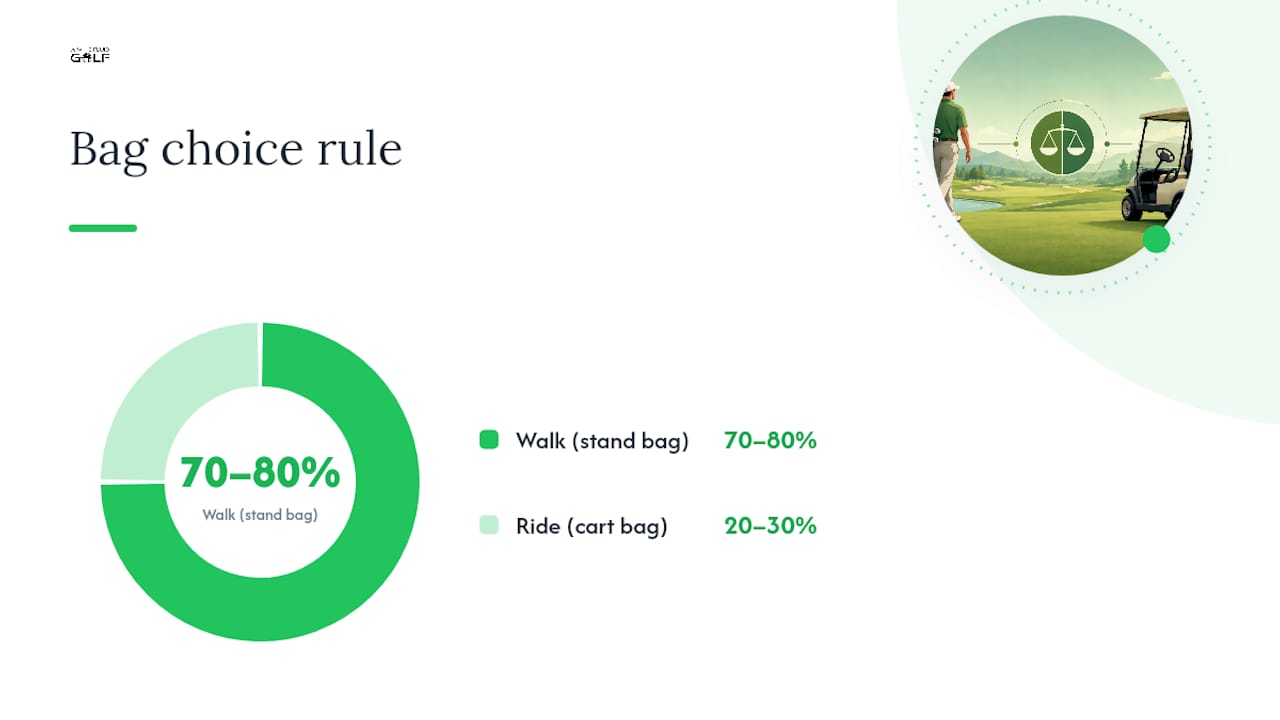
The clearest rule of thumb: buy the bag optimized for however you spend 70 to 80% of your rounds, not the occasional outlier round. If you walk most of your golf, a stand bag will serve you better even on the rounds you happen to ride. If you ride most of your golf, a cart bag will outperform a stand bag even on the rare walking round. This guidance lines up with what Grumpy Gopher’s comparison and MyGolfSpy both recommend, and it removes the guesswork of trying to build one bag for every scenario.
Before buying, run through this checklist:
- Load-and-carry test. Pack the bag as you normally would and walk at least 50 yards with it on your back.
- Trunk-to-cart lift test. Lift the loaded bag the way you would loading it into a trunk or onto a cart frame. Note any strain points.
- Strap pass-through test. If you’ll ever use a riding cart, strap the bag on and check whether pockets stay accessible without shifting.
- Pocket-access test while strapped. With the bag secured to a cart, try opening every pocket you’d realistically use mid-round.
- Storage measurement. Measure your trunk space or garage storage area against the bag’s footprint, especially if you own a push cart too.
Watch for these red flags before you buy:
- A stand bag with legs that stick or deploy unevenly in the store.
- A cart bag with no strap pass-through, meaning it was designed as a stand bag first and marketed as dual-purpose second.
- Pockets that only unzip halfway or catch on the zipper pull.
- A shoulder strap with thin, unpadded stitching where it meets the frame.
- A base that wobbles when the bag stands unassisted on a flat floor.
When Does a Hybrid or Two-Bag Setup Make More Sense?
A hybrid bag splits the difference: lighter than a full cart bag, with more storage and sturdier legs than a minimalist stand bag. The compromise is real. You’ll carry a bit more weight than a true carry bag, and you’ll get fewer pockets than a full cart bag, but for golfers who genuinely split their rounds between walking and riding, that middle ground beats owning a bag mismatched to half their golf.
A push cart changes the math entirely. If you walk but don’t want the weight on your back, pairing a stand bag with a push cart lets you choose a bag with more storage since you’re not carrying it directly. Before committing, verify the bag’s base fits your cart’s frame securely, since not every stand bag locks into every push cart the same way.
A few other paths worth knowing:
- Sunday/minimalist bags strip down to the essentials, often under 3 lb empty, and suit range sessions or short par-3 courses rather than full 18-hole rounds.
- Two-bag ownership solves the split-use problem outright: a stand bag for walking days, a cart bag for riding days. The upfront cost is higher, but each bag performs exactly as designed.
- Electric caddies are worth a look if you want to walk without carrying at all, shifting the bag decision toward storage capacity over pure weight, as covered in Aiming Fluid Golf’s caddy comparison.
How Walking Golfers Can Organize a Bag Better
Weight and storage specs only solve half the problem. The other half is what you actually pack and where you put it, and that’s where most walking golfers lose time and patience mid-round. SCGA’s packing guidance recommends stripping your bag down to essentials and organizing by function, which is exactly the philosophy behind A thoughtfully designed accessory lineup.
Organizational accessories genuinely speed up pace of play for walkers by keeping frequently used items within reach instead of buried under three other things. A magnetic towel and landing pad system lets you grab and return your towel in one motion instead of digging through a side pocket after every shot, according to Aiming Fluid Golf’s own research on walking-golfer accessories.
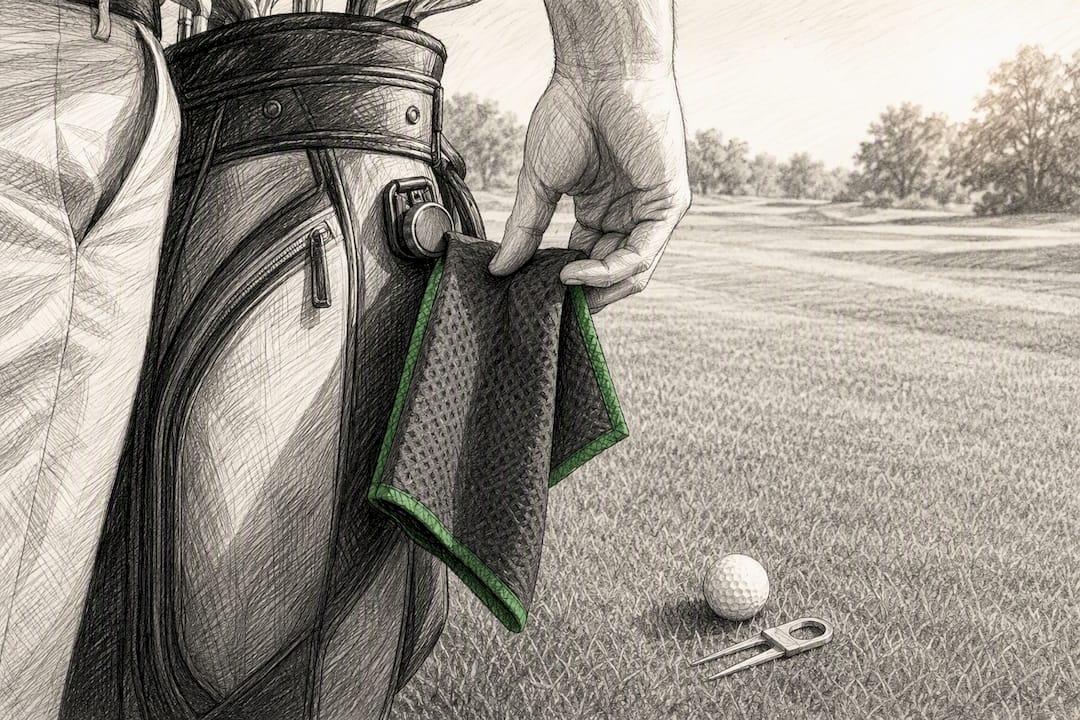
A practical layout looks like this: keep your rangefinder and scorecard in the top pocket where you can reach them without setting the bag down. Use hip pockets for tees, ball markers, and a compact divot tool, the things you touch on nearly every hole. Reserve the cooler or apparel pocket for anything you access once or twice a round, like a rain layer or extra sleeve of balls.
A common scenario among walking golfers: a towel that constantly slides to the bottom of a side pocket forces a search after every approach shot, adding real time to a round with a group behind you. A magnetic towel system fixes that specific friction point without adding weight or bulk to the bag.
Does Cart Golf Wear Down Courses More Than Walking?
Cart traffic concentrates wear along fixed paths, particularly near tee boxes, greens, and cart-path exits, where turf takes repeated compaction from tires. Walking spreads foot traffic more evenly across the course and skips the compaction issue almost entirely, which is part of why some clubs restrict carts to paths during wet conditions.
This isn’t purely an environmental footnote. Courses that see heavy cart use often invest more in path maintenance, turf repair near cart corridors, and drainage work to offset compaction damage. Walking-friendly courses, by contrast, tend to spend more on tee-to-green maintenance and less on path infrastructure.
For golfers weighing bag choice against course impact, the connection is indirect but real: choosing to walk more often, and equipping yourself with a bag built for that, supports courses that are trying to reduce cart-path wear and water runoff near high-traffic zones. It’s a small factor next to comfort and cost, but it’s one more reason the walking-first crowd tends to be vocal about the experience, not just the exercise.
Whether this factor moves your decision at all likely depends on how much you already value walking as part of the round versus riding for convenience. Either way, it’s worth knowing that the bag you choose isn’t entirely separate from how the course around you holds up over a season.
How Have Walking and Cart Bags Evolved Over Time?
Cart bags became dominant in American golf alongside the widespread adoption of gas and electric golf carts starting in the mid-20th century, when courses began building cart paths and encouraging riding to speed up play and increase round volume. That shift reshaped bag design entirely, pushing manufacturers toward larger, sturdier bags with more pockets since weight no longer mattered to the person carrying them.
Stand bags emerged as a direct response to golfers who wanted the storage benefits of a modern bag without giving up walking. Retractable legs, first popularized in the late 20th century, let a bag stand upright on uneven ground without a caddie or a cart holding it in place, which made walking rounds far more practical for recreational players.
Regional habits still diverge sharply today. Walking remains far more common in the UK and Ireland, where many clubs still expect it as the default, while cart use dominates recreational play across much of the United States, partly due to course layout and partly due to decades of cart-centric course design. Minimalist stand bags and push carts have seen renewed popularity in the US in recent years as more golfers rediscover walking for both the exercise and the pace-of-play benefits.
A Personal Take on Walking, Riding, and What Actually Matters
Convenience is not the same thing as enjoyment, and golf bag choice is one of the few equipment decisions where that distinction actually shows up in how you feel after 18 holes. A cart bag full of gear feels efficient right up until you realize you’ve spent four hours sitting instead of playing. A stand bag stripped down to essentials feels restrictive right up until you realize how much lighter the whole round felt.
The honest answer is to build around your typical round, not your best-case scenario or your worst excuse. If you walk most weekends, buy the bag that rewards walking. If you ride most weekends, don’t punish yourself carrying a bag built for someone else’s game. The stand-versus-cart, walk-versus-ride, hybrid-when-it’s-mixed framework holds up because it’s built on your actual habits, not a hypothetical ideal round you rarely play.
— Gary
Gear Up Your Walking Bag the Right Way
A stand bag solves weight and mobility, but it doesn’t solve organization on its own, and that’s the gap Aiming Fluid Golf’s accessories are built to close. A magnetic towel and landing pad system means you’re never digging through a side pocket mid-round, a compact leather utility pouch keeps your phone and valuables separate from wet gloves, and precision tees and a foldable divot tool keep the essentials in reach without adding bulk to a bag you’re trying to keep light.

None of these accessories replace a good bag decision, but they make whichever bag you choose easier to live with for four hours. If you’re building a walking setup around a new stand bag, start with the curated accessory collection to see what pairs well with a lighter pack, or check the magnetic towel systems directly if pace of play is your main frustration right now.
Sources
- Does walking without carrying your bag lead to lower scores? — Golf Digest
- Cart bag versus stand bag: Which is better for you? — MyGolfSpy
- How to pack your golf bag for a stress-free round — SCGA
- Take a swing at this: golf is exercise — NPR
FAQ
What Is the 70/80 Percent Rule for Choosing a Golf Bag?
It’s a decision rule stating you should buy the bag optimized for however you spend 70 to 80% of your rounds. Walk most of the time, buy a stand bag; ride most of the time, buy a cart bag.
Why Do Professional Golfers Not Use Carts?
Most professional tours require players to walk the course with a caddie carrying their bag, both for tradition and because walking is part of the competitive format. It also keeps pace of play consistent across a full field of golfers.
How Many Calories Does Carrying a Golf Bag Burn Over 18 Holes?
Carrying a bag while walking 18 holes burns noticeably more calories than riding, since you’re covering roughly five miles on foot with added load. NPR’s reporting confirms walking golf counts as legitimate exercise, with carrying adding to the calorie burn beyond simply walking the course.
Is a Cart Bag Worth It?
A cart bag is worth it if you ride most of your rounds. It offers more storage, a full 14-way divider, and a stable, contoured base that works with a cart’s strap system, though it adds weight you’d notice if you switched to walking.
Can a Stand Bag Work on a Golf Cart?
A stand bag can ride on a cart, but it often lacks the strap pass-through channels and contoured base that cart bags have, which can cause pocket blocking and rotation during the round.


