


Waffle weave towels are the right pick when you need a lightweight, fast-drying fabric that scoops dirt and grit out of grooves and textured surfaces rather than just wiping over them. Microfiber waffle wins on performance for golf, detailing, and quick-dry bath use; cotton waffle wins on spa-style looks for towels that mostly hang and dry between light uses. What follows covers the material tradeoffs, the technique that actually gets results, and how to buy one that holds up.
TL;DR:
- Microfiber waffle towels dry faster, resist odors better, and are more effective at scrubbing debris from textured surfaces than cotton or terry cloth towels.
- Proper use involves keeping the towel dry for debris removal and using a damp side for wet surfaces, with suitable attachment hardware based on your activity.
- Machine wash microfiber waffle towels without fabric softener, and air dry or tumble on low heat to preserve their structure and performance.
- Choose a towel with verified material details, appropriate size, and durable construction, especially avoiding vague product descriptions or unverified certifications.
- It is best to use separate towels for dry scrubbing and wet wiping to maximize performance and avoid mildew or odor issues in humid environments.
Table of Contents
- What Is a Waffle Weave Towel? The Honeycomb Structure Explained
- Where Waffle Weave Towels Actually Earn Their Keep
- Microfiber Waffle vs. Cotton Waffle vs. Terry: Which Material Wins?
- How to Use a Waffle Weave Towel the Right Way
- Washing and Storing Waffle Towels So They Last
- What to Check Before You Buy a Waffle Weave Towel
- Why I Never Recommend Just One Towel
- Get the Waffle Weave Towel Built for the Course
- Sources
What Is a Waffle Weave Towel? The Honeycomb Structure Explained
A waffle weave towel gets its name from the raised, boxy squares woven into the fabric. Those squares create small pockets, and the pockets are the entire point: they increase surface area compared to a flat weave, which is what lets the fabric dry faster and grab onto debris instead of just smearing it around.
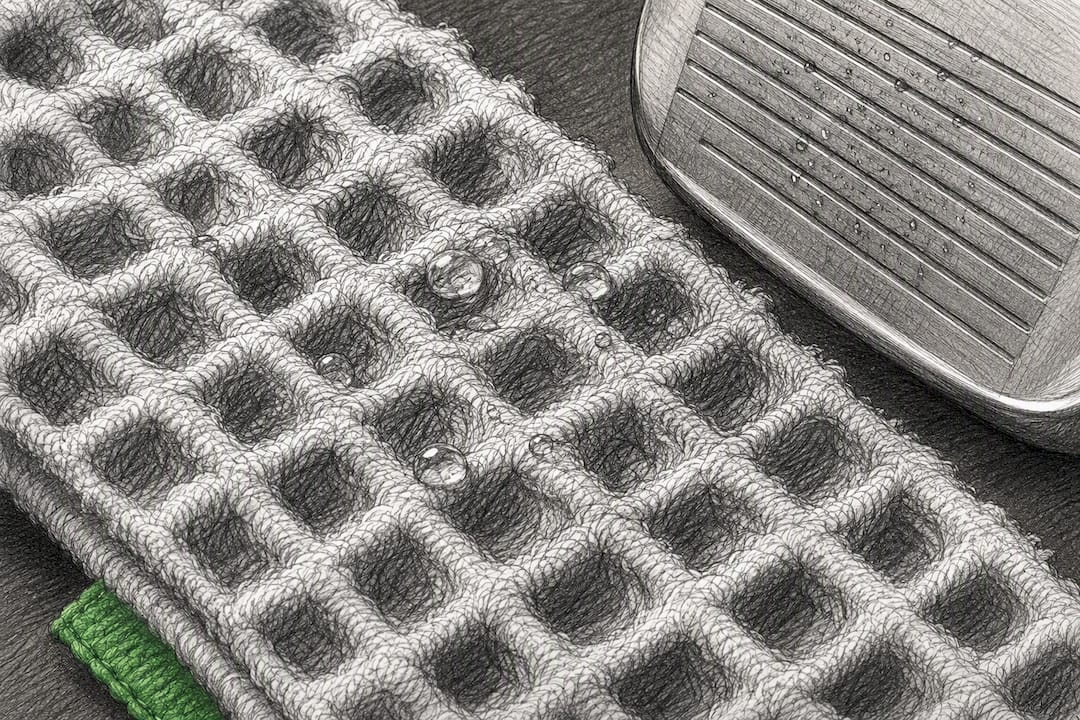
That structural difference changes how the towel behaves against a dirty surface. Terry cloth, with its dense loops, works by wiping and absorbing. Waffle weave works by scooping and trapping, letting grit and moisture settle into the pockets instead of riding across the surface on the towel’s face.
Common constructions include:
- Microfiber waffle: split polyester/polyamide fibers, built for speed and grip
- Cotton waffle: long-staple cotton, built for softness and appearance
- Hybrid waffle: waffle texture on one side, plush terry or flat microfiber on the other
Where Waffle Weave Towels Actually Earn Their Keep
Waffle weave shows up in a specific set of jobs, and it’s worth knowing where it beats a plush towel outright versus where it’s just a different tool.
Best-suited tasks:
- Cleaning glass and mirrors without streaking
- Scrubbing dirt and debris out of golf club grooves
- Quick-dry drying for bath and kitchen use
- Wiping down detailing surfaces where lint and residue matter
The reason waffle weave works so well on glass and club faces comes down to texture. The raised pockets grab particulate debris and hold it, rather than pushing it around the surface the way a flatter fabric can. That’s the same mechanism that makes it a favorite for golf club cleaning, where grit lodged in grooves needs to be pulled out, not just brushed over.
It’s not the right tool for everything. Waffle weave feels thinner and less plush than terry against skin, and once it’s fully saturated, the pockets fill up and the scrubbing action drops off. That’s the tradeoff you’re accepting for speed and dryness.
Microfiber Waffle vs. Cotton Waffle vs. Terry: Which Material Wins?
Material choice does more to determine performance than the weave pattern itself. Here’s how the three main options stack up against each other.
Microfiber waffle dries fast, resists odor better than cotton, and holds up to repeated scrubbing without breaking down. Cotton waffle looks and feels more like a spa towel, with a softer hand, but it dries slower and can develop odor issues if it sits damp. Terry cloth wins outright on plush absorbency, which is why it’s still the better choice for drying hands or skin, but it lags badly on dry time and doesn’t scrub as effectively.
Quick comparison:
- Microfiber waffle: fastest dry time, best scrubbing action, most odor-resistant
- Cotton waffle: softest feel, best appearance, slower to dry
- Terry cloth: highest liquid absorbency, least effective at scooping debris
One Turkish cotton waffle towel line runs at roughly 240 GSM, which is light by bath-towel standards. That lower weight is exactly why it dries quickly, but it also means it won’t feel as substantial as a heavier terry towel. Onsen makes a similar claim for its Supima cotton waffle line, stating it dries faster than terry while staying fresher between uses, a direct result of the open weave structure rather than the fiber content alone.
Dual-sided towels split the difference: a waffle face for scrubbing paired with a terry or flat microfiber back for wiping wet surfaces. If you only own one towel and need it to do both jobs, a hybrid is the more sensible buy than committing fully to one weave. Cotton waffle’s biggest weakness shows up in humid or repeatedly wet environments, where it’s more prone to mildew and lingering odor than a comparable microfiber piece.
How to Use a Waffle Weave Towel the Right Way
Technique matters almost as much as material here, and golfers in particular tend to get this wrong.
- Use the waffle side dry for grooves. A dry waffle towel scrubs debris out of club grooves far better than a damp one, since the pockets need room to grab particles rather than just pushing wet grit around.
- Carry a second, damp towel for wet work. Wiping a ball or grip needs moisture; scrubbing a clubface doesn’t. Keep the two jobs on two different towels or two sides of a hybrid.
- Choose your attachment based on how you play. A magnetic system is fast and convenient for cart golfers who are constantly setting the towel down and grabbing it again. A carabiner clip works better for walkers, since it stays clipped to a bag strap without shifting around.
- For glass and dishes at home, use light pressure. Heavy scrubbing on glass with a waffle towel can leave faint scratching on delicate finishes. Rinse the towel periodically, and drape it to dry rather than wadding it up wet.
Pro Tip: Keep your primary waffle towel dry until you actually need to scrub something. A towel that’s already damp when you reach for it loses most of its scooping advantage on grooves and grit.
Washing and Storing Waffle Towels So They Last
Waffle weave holds its shape and performance longest when it’s treated the way microfiber actually needs to be treated, not the way people wash a regular bath towel.
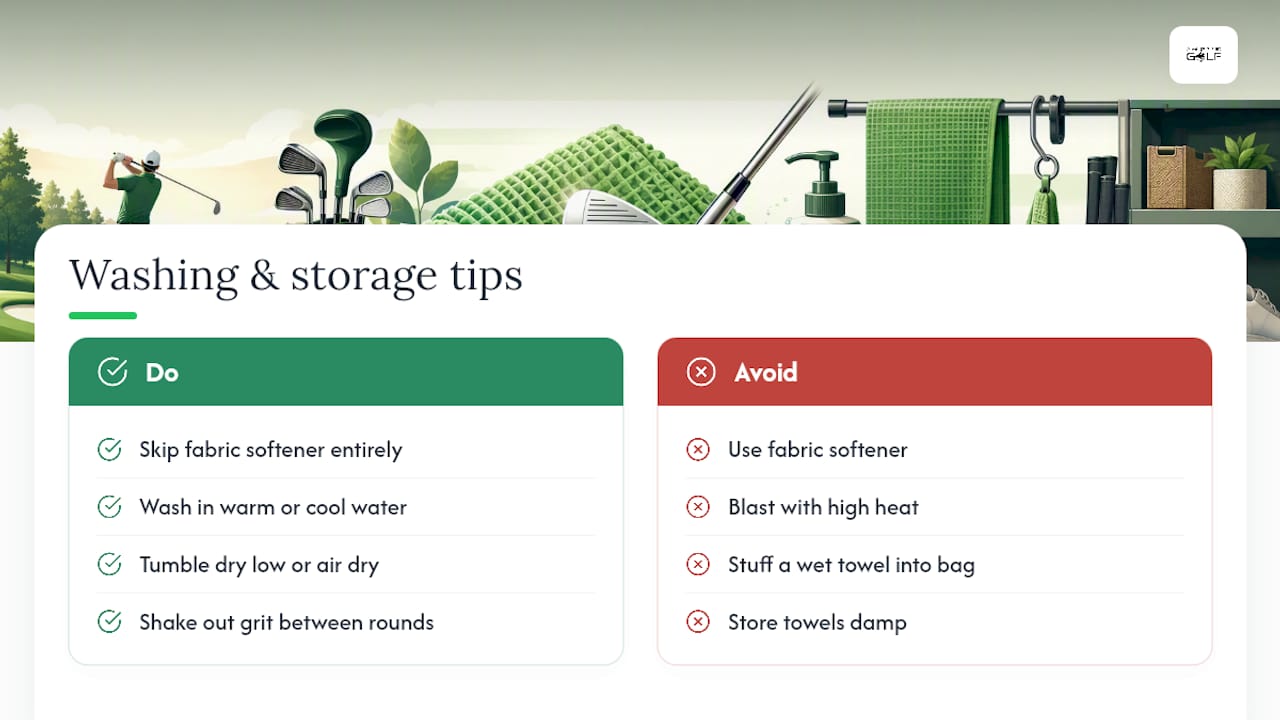
Skip fabric softener entirely. It coats microfiber fibers and kills the material’s ability to grip dirt and hold moisture. Wash in warm or cool water, avoid bleach unless a product specifically says otherwise, and tumble dry on low heat or air dry instead of blasting it with high heat that can warp the woven structure over time. Aiming Fluid’s own washing guide for microfiber golf towels walks through the specifics, and it’s worth a look before your first wash, not after your fifth.
Between rounds, shake out grit before storing the towel and let it air dry rather than stuffing it wet into a cart pocket or golf bag. Damp storage is the single fastest way to shorten a towel’s usable life.
Microfiber waffle towels hold their performance far longer when they’re machine washed without softener and kept dry between uses. Cotton waffle towels, by contrast, run a real risk of mildew and odor if they’re repeatedly stored damp.
Fold or drape the towel to dry rather than hanging it from a single corner loop, which stretches the weave unevenly over time and can distort the honeycomb pockets that make the fabric work in the first place.
What to Check Before You Buy a Waffle Weave Towel
Most of the guesswork in buying a waffle towel disappears once you know what to actually check on the product page.
- Material and weave depth. Microfiber waffle for performance tasks, cotton waffle if the towel is mostly for looks and light bath use.
- Size matched to the job. Golf towels commonly run 16x24 inches or 16x26 inches; bath towels run considerably larger.
- Attachment hardware. Corner grommet with a carabiner clip, a magnetic system, or a simple loop, depending on whether the towel travels on a cart, a bag strap, or a towel bar.
- Weight and construction cues. GSM (grams per square meter) gives a rough sense of density, and clean, finished edges signal the towel was built to hold up to repeated washing.
- Certifications and clear specs. Listings that mention OEKO-TEX certification or name the exact fiber (Supima, long-staple Turkish cotton) are more trustworthy than ones that just claim “quick-dry” with no material detail behind it.
Treat vague listings as a red flag. If a product page can’t tell you the fiber content, the GSM, or the exact dimensions, you’re guessing at whether it’ll actually perform the way the photos suggest.
Why I Never Recommend Just One Towel
Most golfers buy one towel and expect it to do every job on the course. It won’t, and that’s not a flaw in the towel, it’s a flaw in the expectation. A waffle microfiber towel scrubs grooves better than anything else in the bag, but it’s the wrong tool for wiping a wet grip or drying hands after rinsing a ball. Pair it with a terry or flat microfiber backup kept damp in a zip pocket, and you’ve covered both jobs without compromise. My own setup is simple: waffle towel clipped to the cart or bag strap for dry scrubbing, terry towel folded and damp in a side pocket for everything wet. It’s a two-towel system, not a two-towel luxury.
— Gary
Get the Waffle Weave Towel Built for the Course
If you’ve read this far, you already know what to look for: microfiber waffle construction, real attachment hardware, and a size that actually fits how you play. Aiming Fluid Golf’s towels are built around exactly that checklist, with a magnetic attachment system that beats fumbling with a carabiner clip between shots and a waffle-weave face sized for scrubbing grooves without dragging through your stance.
The magnetic system means the towel snaps back into place on your cart or bag the second you’re done with it, so it’s never buried at the bottom when you need it. That’s a real difference from clip-and-grommet setups, which work fine but require you to actually reach and re-clip every time. Browse the current lineup on the best golf accessories page and pick the towel sized for your bag and your round.


