


TL;DR:
- Proper golf equipment storage involves controlling environmental conditions, physical positioning, and organization to preserve club performance and extend equipment lifespan.
- Maintaining humidity between 40-50% and temperature between 50-80°F, along with upright support, prevents rust, grip failure, and shaft damage. Organized bag zones and correct storage infrastructure improve efficiency and protect equipment quality, benefiting both players and golf facilities.
The role of storage in golf is defined as the systematic management of equipment placement, environmental conditions, and gear organization to preserve club performance and maximize on-course efficiency. Most golfers invest heavily in clubs, bags, and accessories, then store them carelessly in a hot garage or damp shed. That gap between purchase price and storage quality is where equipment value disappears fastest. Proper golf equipment storage controls humidity, temperature, and physical positioning to protect every component from grip to shaft. Aimingfluidgolf builds accessories designed around this principle: gear that stays organized, accessible, and ready every round.
What is the role of storage in golf performance?
Golf storage, or equipment management, is the practice of controlling the conditions and organization of your clubs, bags, and accessories between rounds. Its primary function is preservation. A set of irons stored correctly for five years performs like new. The same set stored in a car trunk or unventilated shed degrades within one season.
The three core functions of golf storage are:
- Environmental protection: Controlling humidity and temperature to prevent rust, grip failure, and shaft warping
- Physical positioning: Supporting clubs at the grip or head to prevent pressure damage to shafts
- Gear organization: Assigning fixed locations to every item so nothing is missing when you need it
Each function directly affects your readiness and your equipment’s lifespan. Ignoring any one of them accelerates damage and adds cost.
How does proper storage preserve golf equipment quality?
Equipment degradation follows a predictable pattern when storage conditions are poor. Moisture causes rust on clubheads and heat causes grip stickiness and adhesive failure. Both failure modes are entirely preventable with the right storage environment.
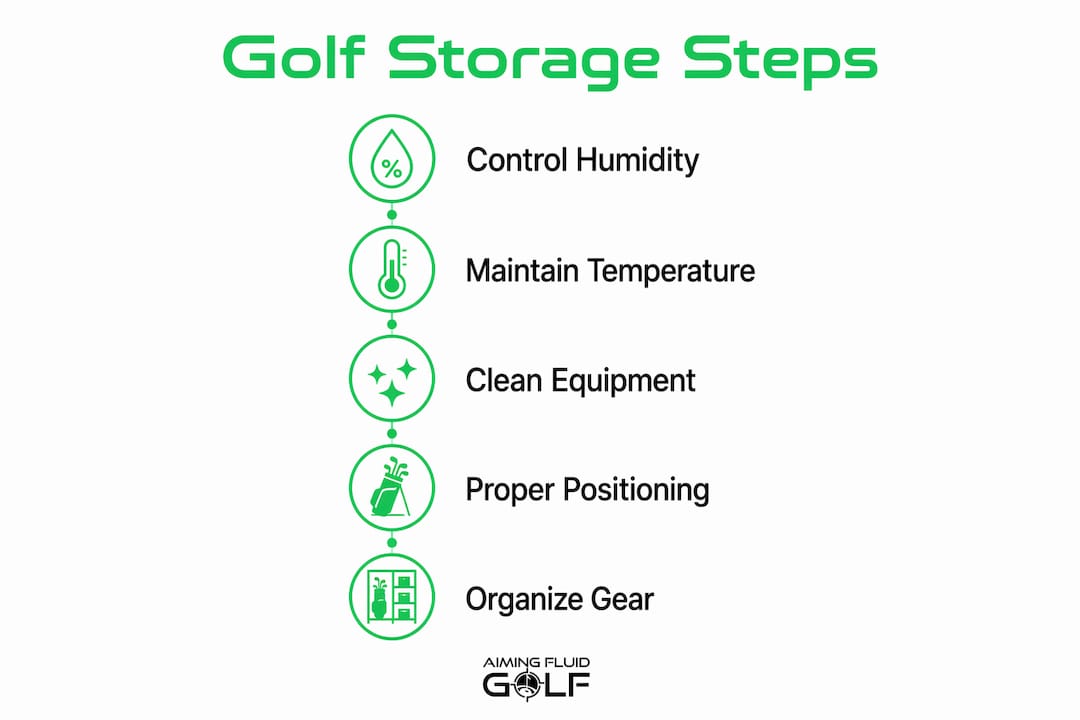
Humidity and temperature: the two critical variables
Proper long-term storage requires maintaining humidity between 40–50% to prevent clubhead rust and grip degradation. Humidity above 60% accelerates oxidation on steel clubheads and causes rubber grips to soften and lose tackiness. Below 30%, grips dry out and crack prematurely.
Temperature control is equally specific. The ideal storage temperature sits between 50–80°F. Heat above 90°F softens the adhesive bonding grips to shafts, and freezing temperatures make graphite brittle. A climate-controlled room or dedicated storage unit eliminates both risks.
Upright vs. horizontal storage
Physical positioning affects shaft integrity in ways most golfers overlook. Leaning clubs against walls creates localized pressure points that weaken graphite shafts over time. The correct method is upright storage in a purpose-built rack that supports each club at the grip or head, distributing weight evenly. Horizontal storage in a bag is acceptable for short periods but creates mid-shaft stress when left for weeks.
The importance of golf storage extends to cleaning before storage. Dirt and moisture left on grooves after a round accelerate corrosion. Wipe each clubhead dry, clean the grooves, and return clubs to their rack before putting the bag away.
Pro Tip: Install a hygrometer in your storage space. They cost under $15 and give you a real-time humidity reading so you can adjust ventilation or add a dehumidifier before damage starts.
Here are the most common storage mistakes and their consequences:
- Storing clubs in a car trunk: heat spikes above 130°F in summer, melting grip adhesive
- Using a damp basement without dehumidification: rust forms on clubfaces within weeks
- Leaning clubs against a wall: graphite shaft damage accumulates invisibly over months
- Storing a wet bag without drying: mold grows inside pockets and on grips
How should you organize golf gear for maximum efficiency?
Organization is the second pillar of effective golf equipment storage. When your bag feels like a junk drawer, you waste time and mental energy on every hole. A structured system means every item has a fixed location and returns to that location after each use.
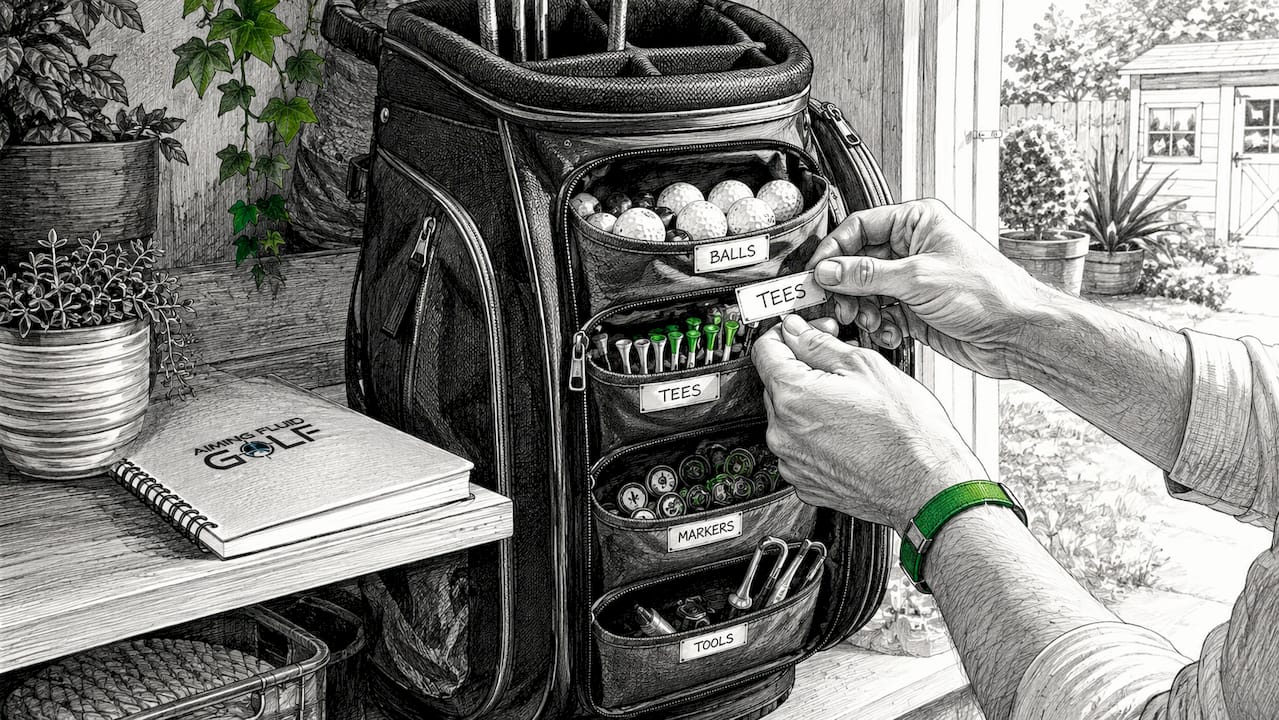
Golf bag organization by zone
Full-length dividers are the foundation of bag organization. They keep clubs separated, prevent shaft-on-shaft scratching, and make club selection faster under pressure. A 14-way divider assigns one slot per club, eliminating the need to sort through a cluster of shafts.
Beyond dividers, assign each pocket a specific category:
- Top pocket: Rangefinder, GPS device, scorecard, pencil
- Side pockets: Golf balls, tees, and a spare glove
- Front pocket: Snacks, sunscreen, and personal items
- Valuables pocket: Keys, phone, and wallet
This zone system means you reach for the right pocket without thinking. Over 18 holes, that automatic recall reduces cognitive load and keeps your focus on the shot.
Pro Tip: Before every round, run a 60-second pocket check in the same order every time. This habit catches missing items at home, not on the 7th tee.
Home storage systems: racks, mounts, and closets
At home, the best golf gear organization starts with a dedicated space. A freestanding club rack in a climate-controlled room is the minimum standard. Wall-mounted systems save floor space but require proper installation. Wall-mounted storage must anchor into wall studs or use toggle bolts rated for the load. Plastic anchors fail under the weight of a full golf bag, which typically runs 25–35 pounds when loaded.
Custom storage closets go further. They combine a vertical club rack, shelving for shoes and accessories, and hooks for bags and rain gear. Golfers who organize their bag systematically report faster pre-round preparation and fewer forgotten items.
Golf storage solutions compared: which option fits your needs?
Different golfers need different storage setups. The right choice depends on available space, climate, and how often you play.
| Storage Method | Climate Control | Space Required | Accessibility | Best For |
|---|---|---|---|---|
| Freestanding garage rack | No (unless heated) | Low | High | Frequent players with garage space |
| Climate-controlled room | Yes | Medium | High | Serious golfers with dedicated space |
| Wall-mounted system | Depends on room | Very low | High | Small spaces, apartment storage |
| Self-storage unit | Optional upgrade | Varies | Low | Seasonal storage, limited home space |
| Custom storage closet | Yes | Medium | Very high | Organized golfers wanting full systems |
| Professional facility locker | Yes | None required | Medium | Members at private clubs |
Climate-controlled self-storage units are an underused option for golfers who live in extreme climates. They maintain the 50–80°F range year-round and cost significantly less than replacing a set of irons damaged by heat or freeze cycles.
Professional facility lockers offer climate control and security but limit access to club hours. For golfers who play multiple courses or travel frequently, a home climate-controlled setup combined with a quality travel bag provides the most flexibility.
How does storage infrastructure affect golf facility operations?
The role of storage in golf extends beyond individual equipment to the operational backbone of every course. Cart barns, maintenance facilities, and tool storage systems directly affect turf quality, pace of play, and equipment longevity at the facility level.
Behind-the-scenes storage spaces like cart barns are critical to daily golf operations yet often receive less investment than visible amenities. That underinvestment shows up in delayed maintenance, equipment failures, and inconsistent course conditions.
Visual tool control systems
Modern maintenance facilities use high-contrast foam tool layouts to manage equipment. Technicians verify tool completeness in seconds using mapped layouts where every tool has a labeled outline. A missing tool is visible immediately. This system reduces maintenance delays and prevents tools from being left on the course, where they become hazards.
Structured visual tool-control systems reduce errors and improve maintenance quality by enabling instant inventory checks. The principle mirrors what organized golfers do with their bags: fixed locations, instant verification, no searching.
Electric fleet charging infrastructure
The shift to electric cart fleets creates new storage infrastructure demands. Modular power distribution systems enable flexible, efficient charging for electric fleets. Facilities like Butler Country Club have upgraded their power distribution to support simultaneous charging across a full fleet. Without that infrastructure, carts arrive at the first tee with partial charges, directly affecting the golfer’s experience.
“The hidden infrastructure of a golf course, from cart barn power systems to tool storage layouts, determines whether the course operates at its potential or constantly plays catch-up.” — Golf Course Architecture
Gary’s take: stop treating storage as an afterthought
Most golfers I talk to spend hours researching shaft flex and loft angles, then store their clubs in a corner of the garage next to the lawnmower. That disconnect is the single most common source of premature equipment wear I see.
The environmental factors are not complicated. A $40 dehumidifier and a $15 hygrometer solve 80% of humidity-related damage. A purpose-built rack solves the shaft pressure problem. Neither requires a major renovation. What they require is treating storage as part of your equipment investment, not as an afterthought.
The golfers who get the most from their equipment are the ones who keep their clubs ready year-round, not just during the season. They clean clubs after every round, store them upright in a controlled environment, and organize their bag the same way every time. Their pre-round routine takes five minutes. Everyone else spends 20 minutes searching for a glove.
My advice: build your storage system before you buy your next club upgrade. The return on investment from protecting what you already own is higher than the marginal gain from a new driver.
— Gary
Gear that supports your storage and organization system
Aimingfluidgolf designs accessories built around the principle that organized gear performs better. Every product in the lineup solves a specific on-course storage or access problem.

The premium leather utility pouch keeps valuables secure and accessible without digging through bag pockets. The magnetic towel system eliminates the search-and-return cycle that slows down every hole. For golfers building a complete organization system, the best golf accessories guide from Aimingfluidgolf covers expert picks across every category, from carry gear to cart upgrades. Each product is selected for practical function, not novelty.
Key takeaways
Effective golf storage protects equipment value, reduces pre-round preparation time, and directly supports better on-course focus through organized, accessible gear systems.
| Point | Details |
|---|---|
| Control humidity and temperature | Store clubs in 40–50% humidity and 50–80°F to prevent rust, grip failure, and shaft damage. |
| Use upright, supported storage | Purpose-built racks that support clubs at the grip or head prevent graphite shaft pressure damage. |
| Organize your bag by zone | Assign each pocket a fixed category so gear is found by habit, not by searching. |
| Install wall mounts correctly | Anchor into studs or use rated toggle bolts; plastic anchors fail under a loaded bag’s weight. |
| Apply facility-level thinking | Visual tool control systems used by course maintenance crews work equally well for personal gear management. |
FAQ
What humidity level is best for storing golf clubs?
The recommended humidity range for golf club storage is 40–50%. Levels above 60% accelerate rust on steel clubheads and degrade rubber grips.
Is it safe to store golf clubs in a garage?
An unheated garage is acceptable in mild climates but becomes problematic in extreme heat or cold. Temperature swings above 90°F or below freezing damage grips and graphite shafts, so a climate-controlled space is the better choice.
How should golf clubs be positioned in storage?
Clubs should be stored upright, supported at the grip or head in a purpose-built rack. Leaning clubs against a wall creates pressure points that weaken graphite shafts over time.
What is the best way to organize a golf bag?
Use full-length dividers to separate clubs and assign each pocket a fixed category: rangefinder and GPS at the top, balls and tees on the side, and valuables in a dedicated zippered pocket. This zone system makes every item findable without searching.
How does storage affect golf facility maintenance quality?
Facilities that use structured visual tool-control systems with mapped foam layouts allow technicians to verify equipment completeness in seconds, reducing maintenance delays and preventing tools from being misplaced on the course.
Recommended
- How to Organize Your Golf Bag Like a Pro: The Peter Finch Method – Aiming Fluid Golf
- How to Organize Your Golf Bag Like a Low Handicap – Complete Modern Gu – Aiming Fluid Golf
- Organization Strategies for Amateur Golfers That Work – Aiming Fluid Golf
- Futureproof golf gear for better organization and play – Aiming Fluid Golf


