


TL;DR:
- Proper golf bag organization improves balance, access, and equipment protection during a round. Repeating a post-round reset maintains consistent zone discipline, ensuring peak performance.
Zones in a golf bag control three things: weight distribution, access speed, and equipment protection. The single most effective packing rule is this — heavy and bulky items go low, frequently used tech and valuables stay elevated, and apparel fills the middle. Set your top, middle, and bottom zones before your first round, then run a 30-second post-round reset every time you leave the course.
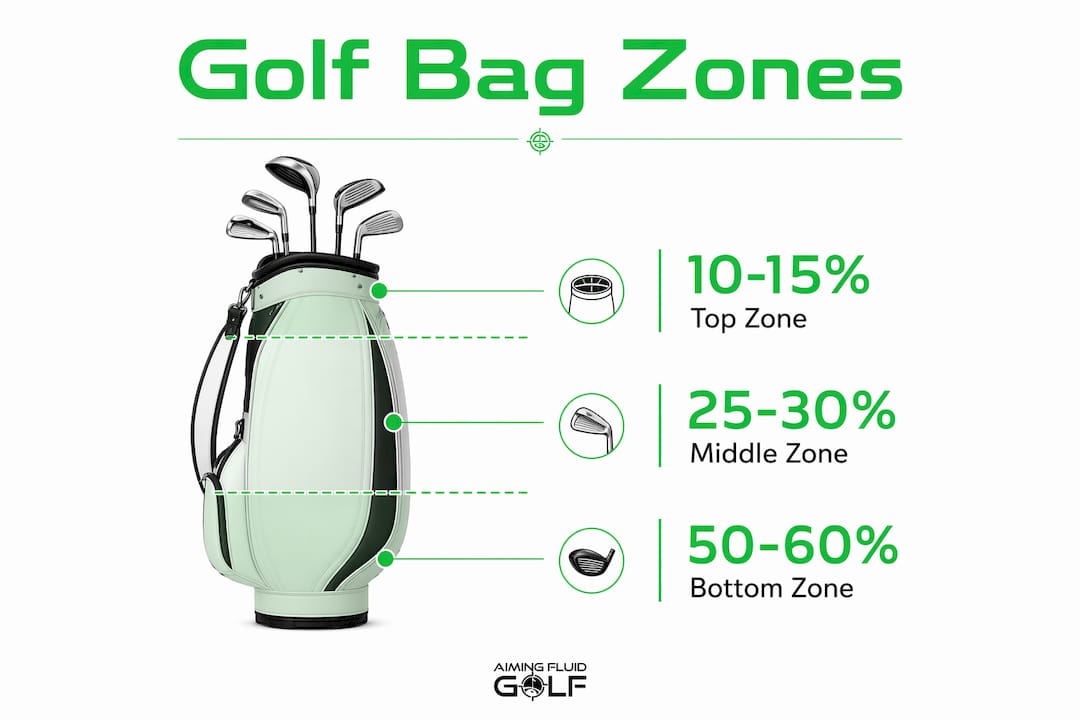
- Bottom zone: Golf balls, water bottles, umbrella — creates a stable base and keeps the center of gravity low.
- Middle zone: Apparel, gloves, towels, tech cases — stabilizes the midsection without burying valuables.
- Top zone: Rangefinder, phone, wallet, watch — light, fast to reach, and protected.
Table of Contents
- Why zones in a golf bag determine balance and performance
- What to store in each zone: a practical packing guide
- How zoning differs between carry bags and cart bags
- The post-round reset: a maintenance checklist that keeps zoning reliable
- Which accessories actually improve your zone system?
- On-course habits that keep your zones working under pressure
- Key Takeaways
- Why serious golfers think about zones differently
- Aimingfluidgolf products built for every zone in your bag
- Useful sources
Why zones in a golf bag determine balance and performance
Bag organization is as much a physics problem as a convenience one. A golf bag has three vertical weight zones, and proper weight distribution prevents twisting, reduces back strain, and keeps the bag upright on a cart. The center of gravity should sit slightly below the midpoint of the bag, biased toward the rear spine.
| Zone | Ideal Weight Share | Typical Contents |
|---|---|---|
| Top | 10–15% | Rangefinder, phone, wallet, keys |
| Middle | 25–35% | Apparel, gloves, towels, tech cases |
| Bottom | 50–60% | Golf balls, water, umbrella, bulk items |
When you overload upper pockets or pack side pockets unevenly, the bag twists on your shoulder during a walk and tips on a cart. That’s not just uncomfortable — it shifts clubs out of position and forces you to dig for gear mid-round. Keeping heavy replaceable items (balls, water) low and centered aligns the bag’s center of gravity with its base footprint, which is why heavy items kept low is the first rule every caddie follows.
Pro Tip: Place your water bottle and ball pocket contents on the same side as your dominant hand. It keeps the load centered and makes the heaviest pocket the easiest to reach.
What to store in each zone: a practical packing guide
Top zone: valuables and quick-access tech
Keep this zone light. A rangefinder, your phone, wallet, and watch belong here in a dedicated valuables pocket, ideally one that is soft-lined and waterproof. Hidden or tethered valuables pouches inside larger apparel pockets are a design solution in premium carry bags precisely because loose valuables sink under soft items. Use a structured pouch clipped to this zone rather than dropping items directly into a deep pocket.
Middle zone: apparel, towels, and gloves
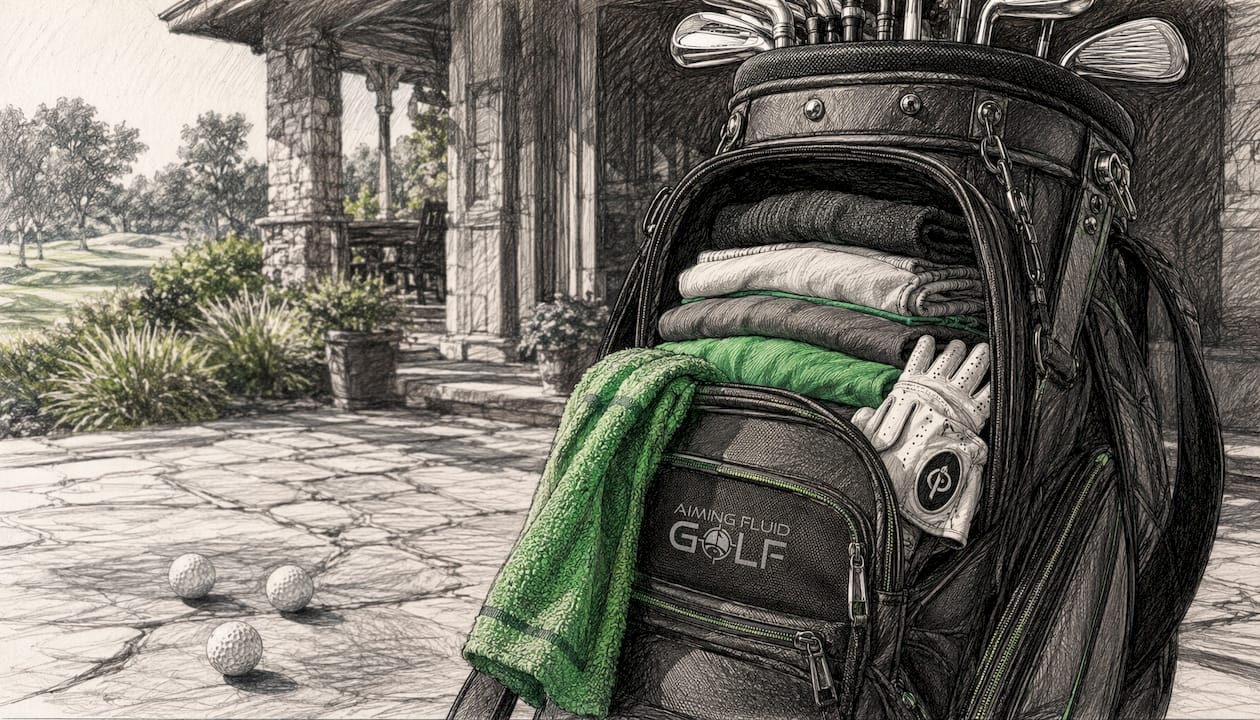
This zone stabilizes the bag’s midsection. Rain gear, a spare glove, and your towel live here. The mistake most golfers make is treating the large apparel pocket as a catch-all. Keep it for outerwear only — you want to open it once when the weather turns, not excavate it for a glove every three holes. Use golf bag layering techniques to keep soft items from burying anything important.
Bottom zone: balls, water, and bulk
The ball pocket is typically front-facing and near the base. Two fresh sleeves plus a few extras is the right load — more than a dozen balls adds weight without benefit. Water and an umbrella go here too. This zone is your ballast.
Club placement within the zones
Longest clubs go in the back/top slots — driver and woods first, then hybrids. Irons run through the middle dividers from longest to shortest. Wedges and the putter occupy the front/low slots for fast access. Full-length dividers prevent shaft tangling and protect headcovers from compressing against each other.
Pro Tip: Use an Aimingfluidgolf leather utility pouch clipped inside the top valuables pocket. It keeps your phone, wallet, and ball marker in one retrievable unit instead of scattered across three pockets.
How zoning differs between carry bags and cart bags
Carry bags and cart bags require different zoning strategies because the physical demands are opposite. A carry bag is on your back — center-of-gravity control is non-negotiable. A cart bag sits stationary, so pocket volume matters more than weight placement, but heavier items still need to be rear-facing for cart stability.
Carry (stand) bags:
- Keep total weight as low as possible; limit balls to 9–10 and skip the extra water bottle.
- Place hydration in a low side pocket, not a top pocket — top-heavy carry bags cause shoulder fatigue within nine holes.
- Mount magnetic accessories (towel, landing pad) on the bag’s exterior strap loop for one-motion retrieval without opening any pocket.
Cart bags:
- Use larger pockets for rain gear, snacks, and accessories, but orient heavier items toward the rear of the bag so the cart doesn’t tip forward.
- Face frequently used pockets toward you on the cart — the side you approach from.
- Full-length dividers are standard on cart bags; use every slot to prevent clubs from crossing and slowing your pull.
Full-length vs. partial dividers: Full-length dividers eliminate tangling entirely but add slight weight. Partial dividers allow more flexibility in club grouping but require deliberate placement to prevent shafts from crossing at the base. If your bag uses partial dividers, keep the putter in its own slot regardless.
The post-round reset: a maintenance checklist that keeps zoning reliable
Professional caddies recommend a post-round reset to restock, remove clutter, and return items to their designated zones. Without it, the zoned system degrades within two rounds and your bag starts to feel like a junk drawer.
- Empty quick-access pockets. Remove scorecards, wrappers, broken tees, and anything that doesn’t belong in a permanent zone.
- Return valuables to their tethered pouch. Phone, wallet, and keys go back into the top zone pouch before you close the bag.
- Restock the ball pocket. Count what’s left and refill to your target number before the bag goes in the car.
- Dry and replace towels. A wet towel left in the middle zone adds weight and can cause mildew. Swap it before storage.
- Remove trash and food. Granola bar wrappers and empty bottles shift the bottom zone’s weight balance and attract moisture.
The whole routine takes under two minutes. Done consistently, it means your bag is ready to perform from the first tee of the next round without a pre-round scramble.
Pro Tip: Follow the Peter Finch reset method — treat the post-round reset as a non-negotiable habit, not an optional cleanup. An Aimingfluidgolf leather utility pouch makes step two a five-second task.
Which accessories actually improve your zone system?
The right accessories reduce friction at every zone. Here’s what works and where it goes:
- Magnetic towel and landing pad (top/exterior): A magnetic towel system attaches and detaches in one motion, so you never open a pocket to retrieve or return it. This keeps the middle zone clear and speeds pace of play.
- Tethered leather utility pouch (top zone): Prevents valuables from sinking into deep apparel pockets. Clip it inside the top pocket with a 360-degree metal clip for secure, one-pull access.
- Precision tees in a dedicated accessory pocket: Loose tees scatter and add micro-clutter. A small structured pouch keeps them contained without adding bulk.
- Divot tool in a fixed tool pocket: Assign one small pocket exclusively to your divot tool and ball markers. Consistency here means you never pat down three pockets looking for it on the green.
- Insulated water sleeve (bottom zone): Holds a bottle upright without shifting the load. Far more stable than dropping a bottle into a general pocket.
For walkers, the magnetic towel is the single highest-impact accessory because it eliminates the most common mid-round pocket search. For cart players, a structured utility pouch in the top zone delivers the clearest improvement in access speed.
Pro Tip: Mount the magnetic landing pad on the bag’s exterior near the top handle. It gives the towel a fixed return point that never moves, regardless of how the bag is loaded.
On-course habits that keep your zones working under pressure
- Return every club to the same slot after every shot. Inconsistency here is how clubs end up in the wrong zone and slow your pull on the next hole.
- Never use a quick-access pocket for permanent storage. If something lives in a quick-access pocket, it belongs in a zone pocket instead.
- Keep your scorecard in the glove pocket or a fixed small pocket — not loose in the apparel zone where it gets crumpled.
- After the turn, do a 10-second visual sweep of your pockets. Rebalance anything that has shifted to one side.
In wet conditions, seal valuables in the tethered pouch and stow headcovers symmetrically — one heavy headcover on the left and nothing on the right creates the same twisting problem as uneven side pockets.
Pro Tip: Stow headcovers in alternating slots rather than stacking them on one side. It takes five seconds and keeps the bag’s horizontal balance intact through 18 holes.
Key Takeaways
Zones in a golf bag work only when the setup is deliberate and the post-round reset is consistent — heavy items low, valuables tethered, and accessories placed to match how you play.
| Point | Details |
|---|---|
| Bottom zone carries the load | Place 50–60% of total bag weight here: balls, water, and bulk items to stabilize the center of gravity. |
| Top zone stays light and fast | Keep the top zone at 10–15% of the bag’s weight; use a tethered pouch so valuables never sink into apparel pockets. |
| Bag type changes the strategy | Carry bags demand center-of-gravity control (aim for slightly below the midpoint of the bag); cart bags prioritize pocket orientation and rear-facing heavy items. |
| Reset after every round | A five-step post-round reset prevents zone drift and keeps the bag performing from the first tee next time. |
| Aimingfluidgolf fits each zone | Magnetic towels, leather utility pouches, and precision tee pouches are designed to occupy specific zones and reduce mid-round pocket searches. |
Why serious golfers think about zones differently
Most golfers treat bag organization as a one-time setup task. They load the bag before the season, maybe shuffle a few things after a frustrating round, and leave it at that. That approach misses the point entirely.
Zones are a repeatable system, not a one-time arrangement. The value isn’t in the initial setup — it’s in the consistency of the reset. A bag that gets repacked the same way after every round becomes a performance tool. You stop thinking about where things are and start thinking about the shot in front of you. That mental bandwidth matters more than most golfers acknowledge.
The other thing people underestimate is horizontal balance. Everyone talks about keeping heavy items low, and that’s correct. But an overloaded right side pocket creates the same twisting problem as a top-heavy bag — it just manifests differently, as a slow rotation on the shoulder rather than a forward tip. Symmetry across the bag’s vertical axis is as important as the vertical weight distribution, and it’s almost never discussed.
Accessories designed for specific zones solve both problems at once. A magnetic towel on the exterior eliminates a pocket search and keeps the middle zone from accumulating clutter. A tethered utility pouch in the top zone means valuables never migrate downward. These aren’t luxury additions — they’re the mechanism by which the zone system stays intact round after round.
Aimingfluidgolf products built for every zone in your bag
Every zone in your bag has a friction point. Aimingfluidgolf builds accessories that address each one directly, without adding bulk or complexity to your setup.
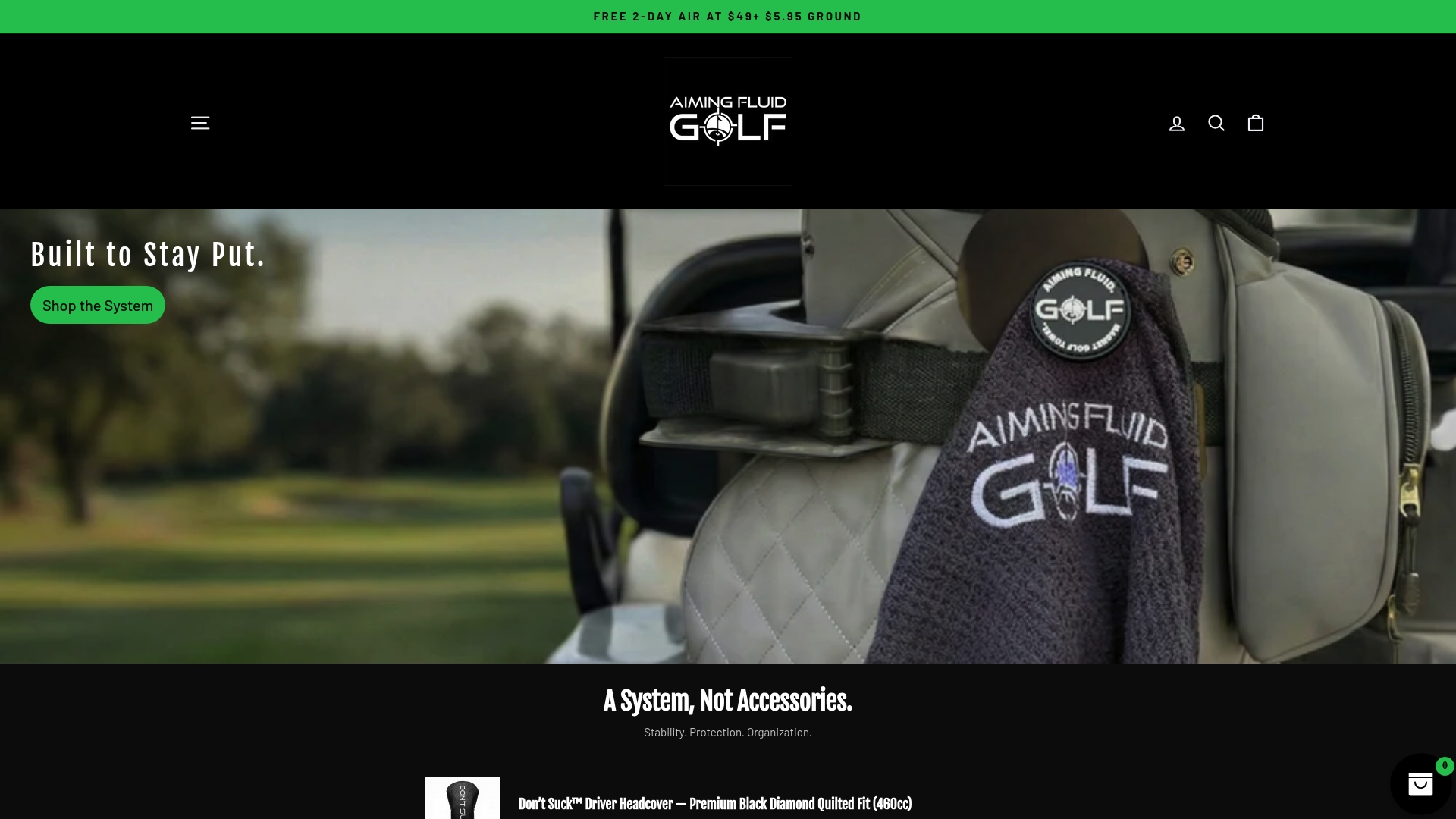
The magnetic towel system mounts on the exterior and returns in one motion — no pocket required, no clutter in the middle zone. The leather utility pouch clips into the top valuables zone and keeps your phone, wallet, and ball marker in a single retrievable unit. Precision tees go into a dedicated accessory pocket and stay contained. The divot multi-tool lives in a fixed tool pocket so it’s always in the same place on the green.
If you walk the course, start with the magnetic towel — it removes the single most common mid-round pocket search. If you ride, the leather utility pouch delivers the clearest upgrade to your top zone. Browse the full expert-picked accessory lineup to match each product to your bag type and playing style, then add the one that solves your biggest friction point first.
Useful sources
- How to Organize a Golf Bag: Pro Tips for Smart Golfers — weight zone percentages, center-of-gravity mechanics, and twisting/tipping failure modes.
- What’s the best way to organize a golf bag — caddie-recommended post-round reset routine and zone maintenance principles.
- How to Set Up an 8-Way Golf Bag — club placement by length and type within bag slots.
- Ping L8 Golf Bag Pockets Guide — tethered valuables pouch design and multi-zone pocket architecture in premium carry bags.
- How to Organize Your Golf Bag Like a Pro — carry vs. cart bag zoning differences and pocket orientation guidance.
Recommended
- How to Organize Your Golf Bag Like a Pro: The Peter Finch Method – Aiming Fluid Golf
- Golf Course Accessory Placement Tips That Save Strokes – Aiming Fluid Golf
- How to Organize Your Golf Bag Like a Low Handicap – Complete Modern Gu – Aiming Fluid Golf
- Golf Bag Systems | Stop Losing Gear & Play Faster | Aiming Fluid Golf


