


Shipping speed matters selectively. It becomes critical when you’re traveling for a tournament next week, ordering a custom-built club, or buying from an overseas seller subject to import duties. It matters far less when you’re restocking accessories you can plan around. Aimingfluidgolf ships small, low-risk items like magnetic towels and tees on predictable ground timelines, while a fitted driver with a backordered shaft can stall for weeks regardless of which carrier you choose or how fast FedEx Ground can technically move a box.
Three scenarios where speed changes the buying decision:
- Tournament travel: you need gear in hand before a fixed date, so lead time outranks price.
- Custom builds: component backorders, not carrier transit, usually decide when the club arrives.
- Impulse buys on in-stock accessories: speed barely matters if you can order a week ahead.
Key Takeaways
Shipping speed changes golf equipment availability and cost primarily through processing time, component backorders, and dimensional weight, not carrier transit alone.
| Point | Details |
|---|---|
| Two separate clocks | Processing time and carrier transit both add to your total wait, and quoted “2-6 day” windows usually cover transit only. |
| Custom builds need lead time | Component backorders, not shipping speed, typically decide when a fitted club actually arrives. |
| Expedited shipping has a real cost | Dimensional weight pricing makes air shipping for full club sets several times pricier than ground. |
| Tariffs add uncertainty | The end of the de minimis exemption has made pricing and lead times less predictable for imported components. |
| Small accessories ship reliably | Items like Aimingfluidgolf’s magnetic towels and precision tees avoid both dimensional weight penalties and build-queue delays. |
Table of Contents
- The Role of Shipping Speed in Golf Buying Decisions
- What Do Shipping Timelines Like “2-6 Business Days” Actually Mean?
- Is Paying for Faster Shipping Worth It?
- How Tariffs and Supply Chains Affect Golf Equipment Delivery
- How to Read a Shipping Policy Before You Buy
- Practical Ways to Avoid Delays and Get Your Gear Faster
- Decoding Retailer Shipping Policy Language
- How Long Does the Full Purchase-to-Hand Timeline Take?
- Does Shipping Speed Affect Insurance and Damage Risk?
- Timing Golf Purchases Around Tournaments and Peak Seasons
- Buying Golf Clubs From Overseas Retailers: What to Know
- Get Predictable Delivery on the Accessories You Actually Need Fast
- Frequently Asked Questions
- Sources
The Role of Shipping Speed in Golf Buying Decisions
Shipping speed shapes three things at once: what’s available to you right now, how long you’ll wait to hold it, and what you’ll pay for the privilege of not waiting. Those three variables interact in ways that catch a lot of buyers off guard, especially the ones who assume “2-day shipping” means their new irons show up in 48 hours.
Every order timeline has two separate clocks running. Processing time (also called handling time) is how long the seller takes to pick, pack, and hand the box to a carrier. Carrier transit time is how long the carrier then takes to move it. A listing that says “ships in 2-6 business days” is usually quoting transit only. Add the seller’s processing window on top, and a supposedly fast shipment can easily stretch past a week before it even reaches your porch.
The order-to-hand flow looks different depending on what you’re buying:
- In-stock accessory (a headcover, a divot tool, a pack of tees): pick, pack, ship. Processing often runs under 48 hours, and the rest is pure carrier transit.
- Custom-built club: order triggers a build queue first. Shaft, head, and grip components have to be in stock and assembled to spec before the item ever reaches a shipping label. This step can take longer than the shipping itself.
- New product launch pre-order: you’re queued behind initial production runs, so “ships within 24 hours” language doesn’t apply until the launch date passes.
Buyers tend to fall into one of three outcomes once they understand this split. Someone needing an immediate replacement (a cracked driver head, a lost wedge) should prioritize in-stock items with short processing windows over anything custom. Someone with planned travel, like a tournament three weeks out, has room to order a custom fitting and still make the date, as long as they account for build time separately from shipping. And someone pre-ordering a new release should expect the manufacturer’s production schedule, not the carrier’s transit map, to set the delivery date.
What Do Shipping Timelines Like “2-6 Business Days” Actually Mean?
Standard domestic ground shipping for golf bags commonly runs 2 to 4 business days for many routes, though wider estimates covering more routes and carriers put ground transit at 3 to 7 business days depending on distance and carrier load. Two-day and next-day services compress that window, but they don’t erase the processing time that happens before the carrier ever scans the box.
A few things determine which end of that range you land on:
- Distance and carrier network: cross-country ground shipments run longer than regional ones.
- Business days vs. calendar days: a Friday afternoon order often doesn’t start its transit clock until Monday.
- Cutoff times: most sellers set a same-day processing cutoff, often mid-afternoon, after which your order rolls to the next business day.
- Holiday and weekend handling: carriers like FedEx often pause standard ground pickups on weekends and federal holidays, which quietly adds a day or two.
Quick reference: Standard ground for golf equipment: roughly 2-7 business days transit. Processing/handling before that: often 24-48 hours for in-stock items. Guaranteed-delivery services (FedEx 2-Day, Next-Day Air) shrink transit but not processing, and they usually carry cutoff-time restrictions that void the guarantee if missed.
Watch for the phrase “guaranteed delivery” specifically. It typically applies only if your order clears the seller’s processing cutoff on top of meeting the carrier’s own pickup schedule. Miss either window and the guarantee doesn’t apply, even though you paid for expedited service. This is exactly where holiday shopping gets people. A retailer’s “order by December 18 for guaranteed Christmas delivery” cutoff refers to when they need the order placed, not when they’ll ship it. If you order on the 18th and their processing time is 48 hours, you’re already eating into the carrier’s guaranteed window before the package leaves the warehouse.
Is Paying for Faster Shipping Worth It?
Cost scales with speed faster than most buyers expect, and golf clubs make this worse than almost any other product category because of their size. Most domestic ground shipments for a full set run roughly $50 to $150 each way, with a 2026 cost analysis putting the broader range closer to $55 to $230 depending on route and speed. Expedited overnight service can run several times the ground price for the same box.
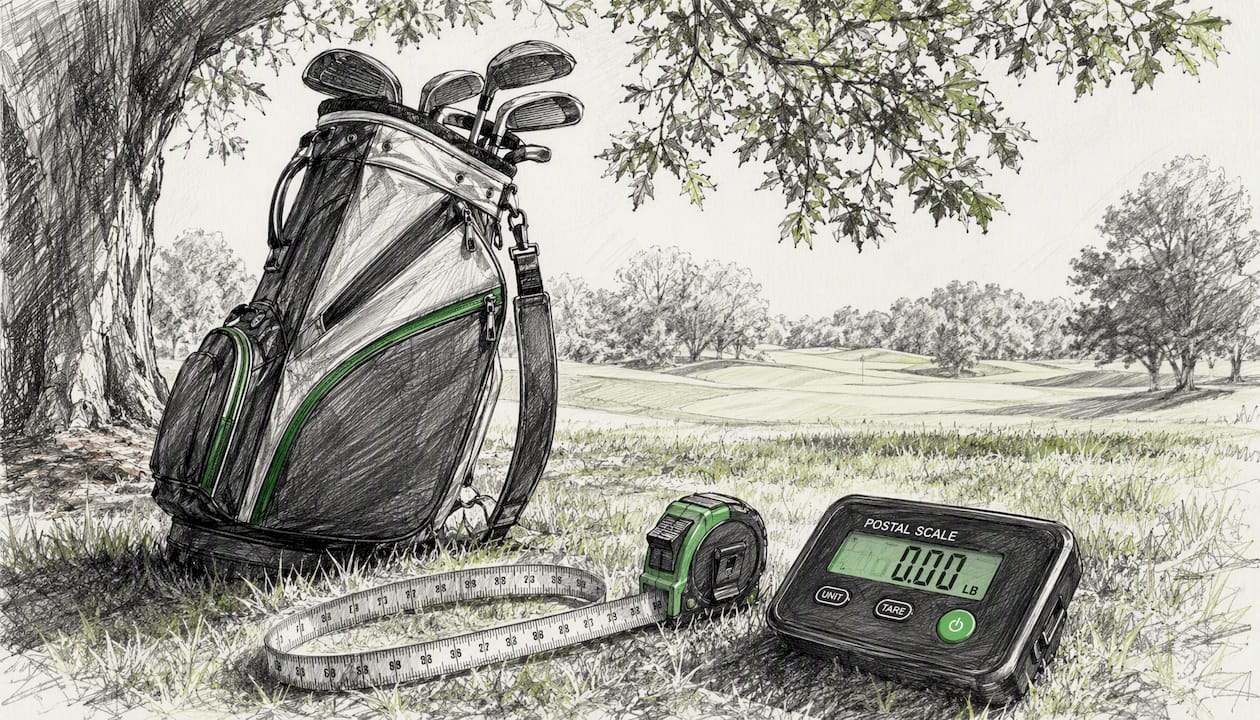
The reason clubs get hit so hard on air shipping is dimensional weight pricing. Carriers often bill oversized packages based on the space they occupy in a truck or plane, not their actual weight, and a golf bag is a lot of empty volume around a few pounds of metal. That dimensional weight math is why a driver headcover ships cheap and a full 14-club bag in a hard case does not.
So when is expedited actually worth the premium? Run through this before you pay for speed:
- You have a fixed date (tournament, group trip) with no slack in your schedule.
- The item is in stock now and expedited shipping would actually solve your timing problem.
- The cost difference is small relative to the equipment’s value, like paying $40 extra on a $2,000 set to guarantee arrival.
Skip expedited when the real bottleneck is a custom build. Paying for overnight air on a driver that still needs three weeks in the fitting queue doesn’t move your delivery date at all.
Pro Tip: Before upgrading to expedited shipping, ask the seller whether your item is in stock and ready to ship today. If it’s a custom order still in the build queue, faster shipping buys you nothing. Your bottleneck is production, not transit.
How Tariffs and Supply Chains Affect Golf Equipment Delivery
Carrier speed is only one piece of the delay puzzle, and it’s often not even the biggest one. Two forces outside the shipping label itself have reshaped availability for golf buyers recently: tariff policy and drop-shipping fulfillment models.

As of May 2, 2025, the United States ended the de minimis exemption that previously let shipments under $800 from China or Hong Kong enter duty-free. That change created real volatility in pricing and availability for imported golf components, and MyGolfSpy’s analysis points out that the impact lands unevenly. Retailers and drop-shippers sourcing components or finished sets from overseas now face new duty costs and customs processing that can stretch lead times well beyond anything a carrier controls. Brands that assemble domestically in the U.S. are largely insulated from this particular volatility.
Drop-shipping introduces a separate risk that has nothing to do with tariffs. When a seller doesn’t hold physical inventory and instead routes your order to a third-party warehouse or overseas factory, you inherit that supplier’s lead time without seeing it on the product page. A listing that looks identical to an in-stock item might actually route through two or three handoffs before a carrier ever gets involved, and drop-shipping and DTC fulfillment models respond very differently to the same tariff pressure depending on where they warehouse stock.
Custom club orders face their own version of this problem: component backorders. Shaft and head shortages routinely create multi-week delays that have nothing to do with how fast a carrier can move a finished box. If the part isn’t built yet, no shipping speed fixes that.
A few checks before you buy:
- Look for the seller’s stated fulfillment or shipping-from location on the product page.
- Search the listing for “ships from overseas” or similarly vague sourcing language, a common drop-shipping tell.
- For custom clubs, ask specifically whether all components are currently in stock, not just whether the base model is.
Pro Tip: If a product page doesn’t state where the item ships from, ask directly: “Is this shipped from a U.S. warehouse, or does it route through an overseas supplier?” A vague answer is itself useful information. Our guide on managing gear inventory covers more on spotting supply volatility before it affects your bag.
How to Read a Shipping Policy Before You Buy
Most shipping policy pages bury the details that actually matter in a wall of boilerplate. Here’s what to check, in order, before you click “buy”:
- In-stock status. Confirm the specific variant (loft, flex, color) is in stock, not just the product family.
- Processing/handling time. Look for a stated number of days, not just “ships fast.”
- Fulfillment origin. Domestic warehouse or overseas supplier changes your realistic timeline entirely.
- Carrier options at checkout. Ground-only sellers can’t offer you a 2-day guarantee even if you want to pay for it.
- Tracking and delivery confirmation. A real tracking number issued at ship time, not just an order confirmation email.
- Insurance coverage. Ask whether the shipment includes carrier insurance for loss or damage.
- Return window. Confirm how many days you have to return the item if it doesn’t fit or arrives damaged.
For tournament travel specifically, add a buffer of at least two to three business days beyond the stated delivery estimate. Carriers miss windows more often around holidays and peak shipping seasons. For custom orders, confirm component availability in writing before you pay, since “in stock” often refers only to the base model.
Pro Tip: Email or message the seller with this exact question: “Are all components for my exact configuration currently in stock, and what is your processing time before the order ships?” That single question surfaces both build delays and drop-shipping red flags at once.
Practical Ways to Avoid Delays and Get Your Gear Faster
A few habits consistently reduce the odds of a late arrival:
- Order earlier than feels necessary. Booking ground shipment 5 to 7 days before you need the item is usually the best value and avoids paying for speed you didn’t need to buy.
- Favor U.S.-assembled sellers when timelines are tight, since they’re less exposed to tariff-driven customs delays.
- Request expedited processing, not just expedited carrier service, if a seller offers it. A faster carrier can’t help if your order sits in the queue for three days first.
- Ship to your destination directly, like a tournament’s pro shop or your hotel, rather than carrying clubs through an airport.
- Track proactively rather than assuming delivery. A tracking number that hasn’t updated in 48 hours is worth a follow-up call.
On the shipping-versus-flying question: specialized club shipping services now offer door-to-door pickup with pro-shop delivery and real-time tracking, which frequently beats checking clubs as airline baggage on both cost and stress when booked within that 5 to 7 day window. If you’re coordinating arrival at an event, our equipment tracking workflow walks through keeping tabs on shipments headed to a venue.
Pro Tip: If you’re playing a multileg trip, book your outbound and return shipment together. Many golf shipping services discount round-trip bookings, and scheduling both legs up front avoids a last-minute scramble for return shipping while you’re still on the road. Details on coordinating multi-stop logistics for events are covered in this player package guide.
Decoding Retailer Shipping Policy Language
Retailer shipping pages use a handful of stock phrases repeatedly, and each one implies something specific about timing and risk:
- “Handling time up to 48 hours” means the transit estimate quoted elsewhere doesn’t start until two business days after you order.
- “Ships from overseas” or “international fulfillment” signals customs processing and likely a multi-week window, even on items marked in stock.
- “2-6 business days” almost always refers to carrier transit alone, not total time from order to doorstep.
- “Free shipping” with no timeline stated is often the slowest available tier. Sellers rarely advertise their fastest option for free.
Marketplace listings add another layer of ambiguity. A third-party seller on a large marketplace may not control fulfillment directly, and their processing times can vary order to order even under the same listing. A direct retailer site, by contrast, usually states its own warehouse policy consistently. Signs of drop-shipping include shipping times that vary wildly between reviews, generic tracking numbers that don’t update for days, and product photos that look identical across multiple unrelated storefronts.
Around the holidays, look specifically for a stated order-by cutoff date tied to a guaranteed delivery date. If a page only lists a shipping speed without a specific cutoff date, treat the guarantee as informal rather than binding.
How Long Does the Full Purchase-to-Hand Timeline Take?
Adding up processing, any build queue, and carrier transit gives you the real number, and it’s almost always longer than the number advertised at checkout. For an in-stock accessory from a domestic seller, expect roughly 3 to 7 business days total: a day or two of processing plus 3 to 7 business days of ground transit, depending on distance.

For a full set of clubs shipped ground, the same math applies, generally landing in the 2 to 5 business day transit range plus processing, so a week to ten days door to door is a realistic planning number.
Custom builds change the equation entirely. The build queue itself, driven by component availability, often adds one to several weeks before the item even reaches a shipping label. Because variability in delivery time frequently traces back to component backorders rather than carrier speed, a custom driver ordered today might not ship for three weeks, then arrive within days once it finally does.
The practical takeaway: ask two separate questions when you buy. “When does this ship?” tells you about processing and any build queue. “How long does shipping take once it ships?” tells you about carrier transit. Sellers who only answer one of those questions are giving you half the picture.
Does Shipping Speed Affect Insurance and Damage Risk?
Faster shipping methods generally handle packages less roughly, but that’s a byproduct of fewer transfer points, not a guarantee. Overnight and 2-day air shipments typically move through fewer sorting facilities than multi-day ground routes, which can reduce the number of times a golf bag gets tossed onto a belt or stacked under heavier freight.
That said, speed and insurance coverage are two separate purchases, and buyers often confuse them. A faster shipping tier doesn’t automatically include better insurance. Check whether your order includes carrier-provided coverage for the declared value of your clubs, and if it doesn’t, ask whether you can add it. Ground shipments, because they often move through more handling points over several days, are a reasonable candidate for added insurance even though they cost less than air.
Packaging matters as much as speed here. A hard travel case with reinforced corners protects clubs regardless of which carrier tier you choose, while a thin cardboard box increases damage risk even on a premium overnight service. If you’re shipping clubs yourself rather than buying new ones, prioritize a rigid case over paying extra for a faster carrier tier. The case reduces actual damage risk; the faster tier mostly reduces the number of days your gear is in someone else’s hands.
Timing Golf Purchases Around Tournaments and Peak Seasons
The single most effective lever you have over shipping speed isn’t a faster carrier tier. It’s buying earlier relative to when you need the gear. Booking ground shipment 5 to 7 days ahead of a tournament consistently delivers the best combination of cost and reliability, and it sidesteps the inflated pricing that expedited services charge during peak demand windows.
Peak seasons compress carrier capacity across the board. Spring launch season and the weeks around major tournaments both see higher shipping volume, which can push even “2-day” services closer to their outer time estimate. If you know a major event or a new product launch is coming, order ahead of that surge rather than during it.
A practical planning sequence for tournament season:
- 8 to 10 weeks out: place any custom fitting or build order, given component lead times.
- 2 to 3 weeks out: order any in-stock replacement gear or accessories you still need.
- 5 to 7 days out: ship your existing clubs to the venue or hotel if you’re not flying with them.
- 48 hours out: confirm tracking shows the shipment on schedule, and have a backup plan if it doesn’t.
New product launches follow a similar logic in reverse. Manufacturers frequently open pre-orders weeks before a release date, and the “ships on release day” language means your order timeline starts at launch, not at purchase. If you want a new driver in hand for a specific event, check the actual ship date against your travel date before assuming pre-ordering solves the timing problem.
Buying Golf Clubs From Overseas Retailers: What to Know
International purchases add a layer of complexity that domestic shopping doesn’t have, and it starts before the package even reaches a carrier. Since the de minimis exemption ended for shipments from China or Hong Kong, orders that once cleared customs duty-free under $800 may now incur duties, which can arrive as a surprise charge on delivery rather than being included at checkout.
Customs processing itself adds time independent of anything the carrier controls. A package can clear international transit quickly and then sit for days in customs review, particularly during high-volume periods. Overseas retailers rarely quote this step in their advertised shipping window, so a “7 to 10 day” international estimate often doesn’t account for customs delays at all.
Before buying from an overseas retailer, check:
- Whether duties and taxes are collected at checkout or billed separately on delivery.
- Whether the listed shipping estimate explicitly includes or excludes customs clearance time.
- Whether the retailer has a domestic return address, since returning an international shipment can be costly and slow.
If your timeline is fixed, like gear needed for a specific event, a domestic seller with in-stock inventory carries far less risk than an overseas retailer promising a fast international shipping tier. The savings on price rarely offset the uncertainty in delivery date.
Why Predictable Shipping Shapes How We Build Aiming Fluid Golf
Predictable delivery isn’t a marketing line for us. It shapes which products we design and stock in the first place. A magnetic towel or a pack of precision tees is small, light, and never waits on a fitting queue, which means the shipping estimate you see is close to the shipping estimate you get. We built our product lineup around items that avoid the two biggest sources of delay covered here: dimensional weight penalties and component backorders. That choice reflects what we’d want as buyers ourselves: fewer surprises between checkout and the first tee.
Get Predictable Delivery on the Accessories You Actually Need Fast
The tactics above help you plan around custom builds, tariffs, and carrier windows, but sometimes the simplest fix is buying items that were never at risk of those delays in the first place. Aimingfluidgolf designs accessories, like magnetic golf towels, precision tees, and leather utility pouches, that are small, light, and never sit in a build queue waiting on a backordered shaft.
That size advantage matters more than it sounds. A magnetic towel or a pack of precision tees ships as a small parcel, not an oversized box billed on dimensional weight, so you’re not paying the air-freight penalty that hits full club sets. Many of these items also avoid the customs and tariff volatility discussed earlier, since they’re not routed through the overseas component pipeline that stretches custom-build lead times. If you’re coordinating gear for a tournament and want one less variable to worry about, check current lead times on our accessory picks page before your next order and plan your purchase around a delivery window you can actually count on.
Frequently Asked Questions
Does shipping speed really affect whether I can get the golf clubs I want? Yes, but selectively. It matters most for custom builds with limited component stock and for purchases tied to a fixed date, like a tournament. For in-stock accessories, ordering a few days ahead usually removes shipping speed as a factor entirely.
How long does standard shipping take for golf clubs? Standard domestic ground typically takes 2 to 7 business days depending on distance, plus 24 to 48 hours of processing time before the carrier picks it up. Total door-to-door time often lands around a week.
Is it worth paying extra for expedited shipping on golf clubs? Only if the item is already in stock and ready to ship. Expedited service doesn’t shorten a custom build’s component lead time, so paying for overnight air on a backordered club wastes money without changing your delivery date.
Why do golf clubs cost more to ship than other similarly weighted items? Carriers often bill oversized packages using dimensional weight rather than actual weight, and a golf bag occupies a lot of space relative to how much it weighs.
How do tariffs affect the price and availability of golf equipment? The end of the de minimis exemption for shipments from China or Hong Kong has introduced pricing and inventory volatility for imported components, with effects varying depending on how a brand sources and fulfills orders.
How far in advance should I order golf gear for a tournament? Order custom builds 8 to 10 weeks ahead given component lead times, and ship any existing equipment or in-stock replacements 5 to 7 business days before you need them on site.
Sources
- End of de minimis for China — Easyship
- Cost to ship golf clubs — Red Stag Fulfillment
- How To Ship Golf Clubs: Safe & Affordable 2026 Guide | ParcelPath
- How to Ship Golf Clubs: The Complete 2026 Guide | Fairway Freight
Recommended
- Golf Ball Compression Chart: Match Your Swing Speed (With Ball Referen – Aiming Fluid Golf
- Best Golf Balls for Mid Swing Speed: Maxfli, Srixon & Chrome Tour X – Aiming Fluid Golf
- Why Premium Golf Equipment Pays Off | Performance, Durability, Confide – Aiming Fluid Golf
- Golf Game Pace Improvement Steps for Better Rounds – Aiming Fluid Golf


