


Equipment standards exist to protect athletes, keep competition fair, and make sure results reflect skill instead of gear. Governing bodies write the technical specifications; organizers and officials enforce them on-site through inspections, approved-model lists, and penalties for anything that doesn’t pass.
- Safety: specs on materials, condition, and construction reduce failure risk.
- Fairness: limits on performance and technology stop equipment from outweighing skill.
- Enforcement: pre-event checks, control stations, and technical delegates verify compliance and penalize violations.
Key Takeaways
Equipment standards protect athletes, cap technology’s influence on outcomes, and are enforced through inspections, approved lists, and clearly defined penalties for non-compliance.
| Point | Details |
|---|---|
| Standards serve three goals | Safety, fairness, and preserving skill-based competition drive every technical rule. |
| Governing bodies write, committees interpret | The R&A, USGA, FIE, IFSC, and national federations like USA Fencing set and refine the rules. |
| Enforcement is a sequence | Pre-event declarations, entry checks, control stations, and on-field inspection all feed into penalties. |
| Athletes need a pre-travel check | Confirm condition, certification, and permitted modifications before you leave for the event. |
| Compliant gear reduces friction | Organized, documented accessories from brands like Aiming Fluid Golf speed up inspections when checked against event rules. |
Where to Verify Official Equipment Rules
- R&A Rules of Equipment introduction
- USGA Equipment Rules
- IFSC Equipment Code
- USA Fencing rules-compliance page
Table of Contents
- Why the Role of Equipment Standards in Tournaments Matters
- Which Bodies Set and Interpret Tournament Equipment Standards
- Common Technical Requirements You’ll Find in Tournament Rules
- How Equipment Standards Get Enforced on Tournament Day
- Building an Equipment-Compliant Tournament as an Organizer
- What Competitors Need to Do Before They Travel
- Fencing and Golf Show How the Same Principles Apply Differently
- How Tournament Equipment Standards Evolved
- What Strong Standards Do for a Sport’s Reputation
- Manufacturers Carry Real Responsibility in the Standards Process
- How New Technology Keeps Reshaping Equipment Rules
- Advice for Organizers Building or Updating Their Own Standards
- Ready to Compete Without the Equipment Headaches?
- Frequently Asked Questions
- Sources
Why the Role of Equipment Standards in Tournaments Matters
Three things are on the line every time an athlete steps onto a field of play: bodily safety, a level contest, and the credibility of the result. A frayed climbing harness or a cracked fencing mask isn’t a technicality. It’s an injury waiting to happen, which is why equipment codes mandate specific certifications for ropes, harnesses, and safety matting.
Fairness works the same way. Golf’s Equipment Rules cap what a club or ball can do precisely so a $600 driver doesn’t turn a mediocre swing into a tour-caliber shot. And when a piece of equipment slips through unnoticed, it can taint an entire result. That’s the quiet cost tournaments try to avoid: not just an injury or a blown call, but a champion whose win gets an asterisk attached to it.
Which Bodies Set and Interpret Tournament Equipment Standards
Every sport runs on a layered system: international federations write the baseline rules, national federations adapt and enforce them locally, and technical committees handle the gray areas.
- The R&A and USGA jointly govern golf’s Equipment Rules, defining legal clubs, balls, and accessories.
- FIE sets the international framework for fencing gear; USA Fencing publishes compliance guidance and inspection protocols for domestic events.
- IFSC maintains the equipment code for competitive climbing, covering both personal and venue gear.
- National federations translate international rules into event-level checklists and penalties.
Manufacturers submit products for approval, organizers publish the approved lists, and competitors carry the burden of showing up compliant.
Common Technical Requirements You’ll Find in Tournament Rules
Most equipment standards fall into six buckets: materials, dimensions, performance limits, certified models, condition, and prohibited modifications. A golf club has to match an approved head design on file with the USGA. A climbing harness needs an EN 12277 certification stitched into its label, and a helmet needs EN 12492. These aren’t arbitrary strings of letters. They’re proof a third-party lab tested the item against a defined failure standard.
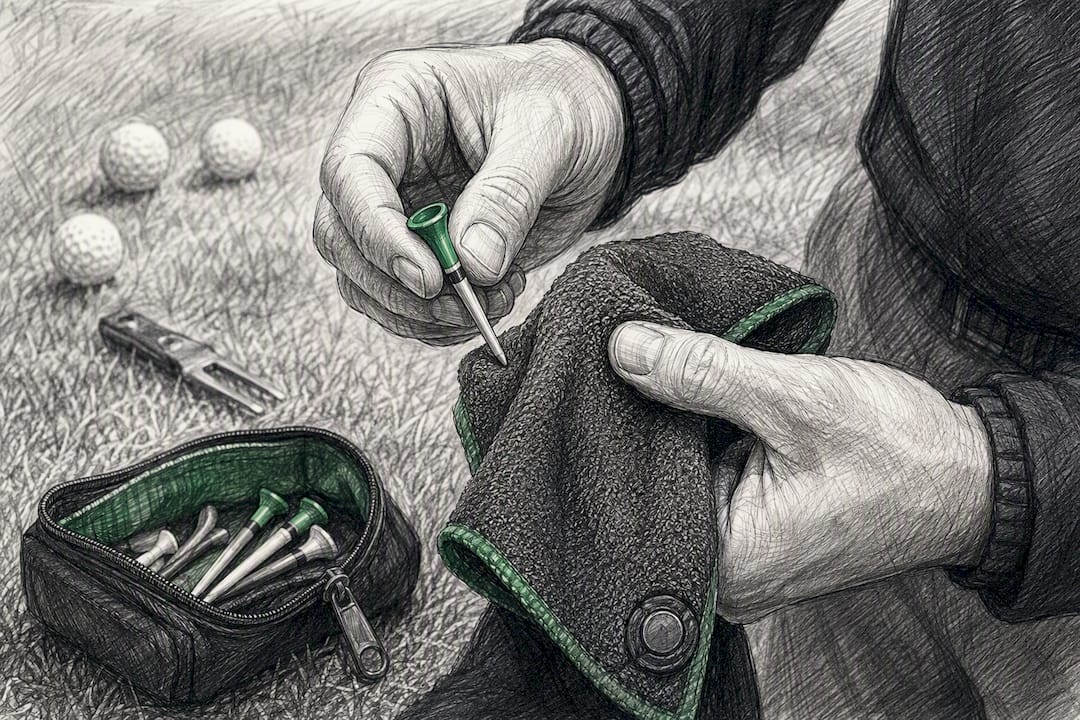
Performance limits work differently. Instead of certifying a single model, they cap what any compliant item can do. Golf balls have initial velocity and overall distance limits; club faces have a spring-like effect ceiling (the COR limit). Electronic aids like rangefinders with slope compensation are banned outright in most tournament formats unless a local rule says otherwise.
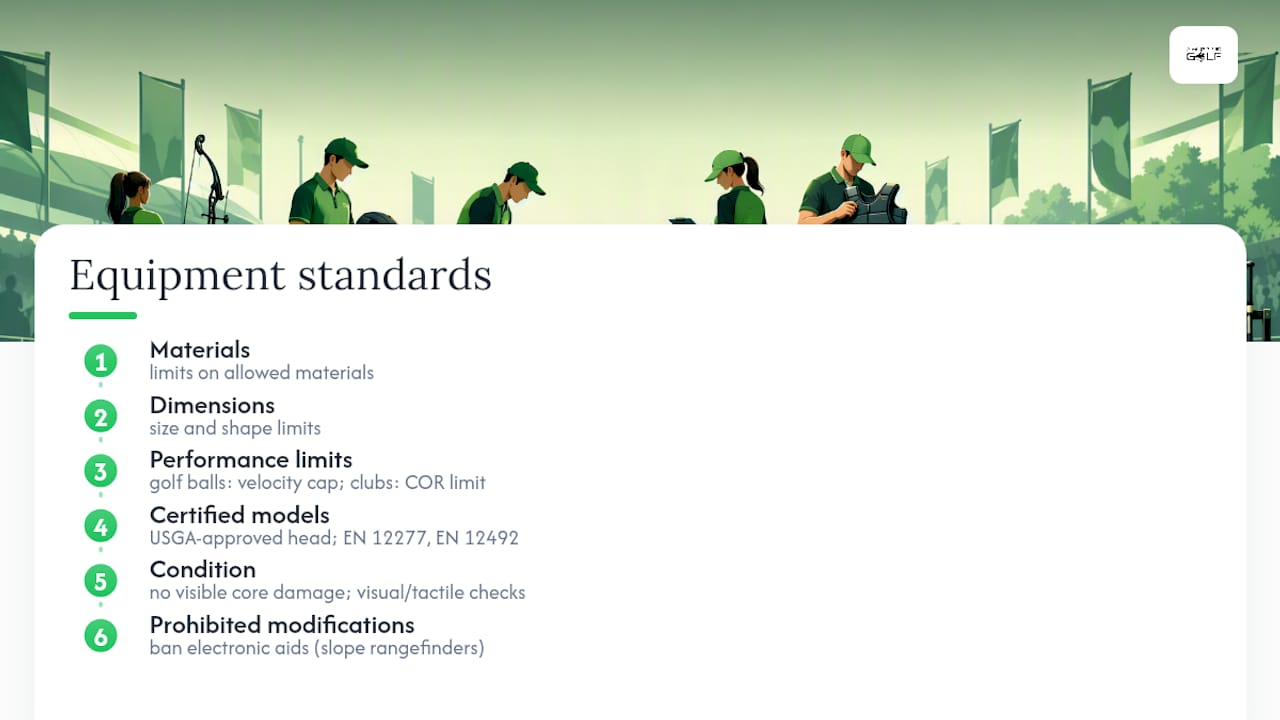
Condition requirements are the ones athletes overlook most. A rule might say a rope shows no visible core damage, or a lamé shows no tears exposing the underlying fabric. On-site, that turns into a visual and tactile check, sometimes with a test fixture. Equipment codes also make organizers responsible for maintaining certified venue gear, not just checking what athletes bring.
How Equipment Standards Get Enforced on Tournament Day
Enforcement isn’t a single event. It’s a sequence, and understanding the sequence is what separates organizers who run smooth events from those who spend the morning fielding disputes.
- Pre-event declaration. Competitors submit or confirm an equipment list before check-in.
- Entry checks. Registration staff verify labels, certifications, and obvious condition issues.
- Equipment-control stations. A dedicated area, staffed by marshals or technical delegates, does closer inspection, sometimes with gauges or test fixtures.
- On-field inspection. Officials spot-check during play, especially in sports where gear degrades mid-competition (fencing blades, climbing ropes).
- Random testing. Some federations reserve the right to pull equipment for testing after a match, particularly at higher-level events.
On-field officials verify equipment against safety, material, and performance benchmarks, and the consequences scale with the violation. A minor issue might get a warning and a chance to fix it. A serious one can mean refusal to compete, confiscation of the item, disqualification, or a results adjustment after the fact. Technical committees typically handle disputes on the spot, issuing an immediate ruling rather than letting a question linger into the next round.
Building an Equipment-Compliant Tournament as an Organizer
Compliance problems at check-in are almost always a communication failure, not a rules failure. Athletes show up with legal gear more often when they know exactly what’s expected weeks in advance, not the morning of.
- Publish the equipment regulations and any approved-model list well ahead of the event, not buried in a rulebook PDF nobody opens.
- Send a pre-event email flagging the most commonly flagged items from past tournaments.
- Set up a visible, dedicated equipment-control area at registration, not a folding table someone finds by accident.
- Brief marshals on their authority and give technical delegates the final call on disputed items.
- Stock the inspection area with the actual tools you’ll need: gauges, test fixtures, a copy of the current approved list.
Pro Tip: Schedule a voluntary equipment drop-off window the evening before competition. It catches non-compliance early, when there’s still time to swap a part or grab a backup, instead of at the start line when the clock is running.
What Competitors Need to Do Before They Travel
Most disqualifications for equipment issues trace back to something the athlete could have caught a week earlier. Build the check into your pre-tournament routine, not your morning-of routine.
Inspect every piece of personal gear for wear: no fraying ropes, no dead spots in padding, no loose fastenings. Confirm certifications or approved-model status on anything that requires it, and carry documentation if the event asks for it. Skip unauthorized modifications entirely; a “small tweak” to a blade or a club head is often the exact thing an inspector is trained to catch. Understand what’s a permitted consumable (chalk, grip enhancers) versus what crosses into performance aid. A self-check the week before travel gives you time to repair or replace something instead of scrambling at the venue.
Fencing and Golf Show How the Same Principles Apply Differently
The underlying logic (safety, fairness, preserved skill) shows up everywhere, but the technical specifics look completely different sport to sport.
- Fencing: Lamés and masks get checked for conductivity and structural integrity before bouts. USA Fencing’s enforcement approach relies on on-site inspection of electric equipment, catching a bad connection or a torn lamé before it becomes a scoring dispute.
- Golf: The R&A and USGA jointly maintain the Equipment Rules, and their Equipment Standards Committees interpret gray areas and keep a running database of rulings. Organizers reference these rules directly in local event conditions rather than rewriting them from scratch.
Same goals, different gauges. That’s the pattern worth remembering across every sport you compete in or organize for.
How Compliant Golf Accessories Reduce Inspection Friction
Gear that’s already organized and in good condition speeds up any pre-round check. A towel that’s actually clean, tees that meet performance-tee rules, and a bag that isn’t a scramble to search all shave time off a marshal’s walk-through. Aiming Fluid Golf documents its testing and design standards publicly for exactly this reason.
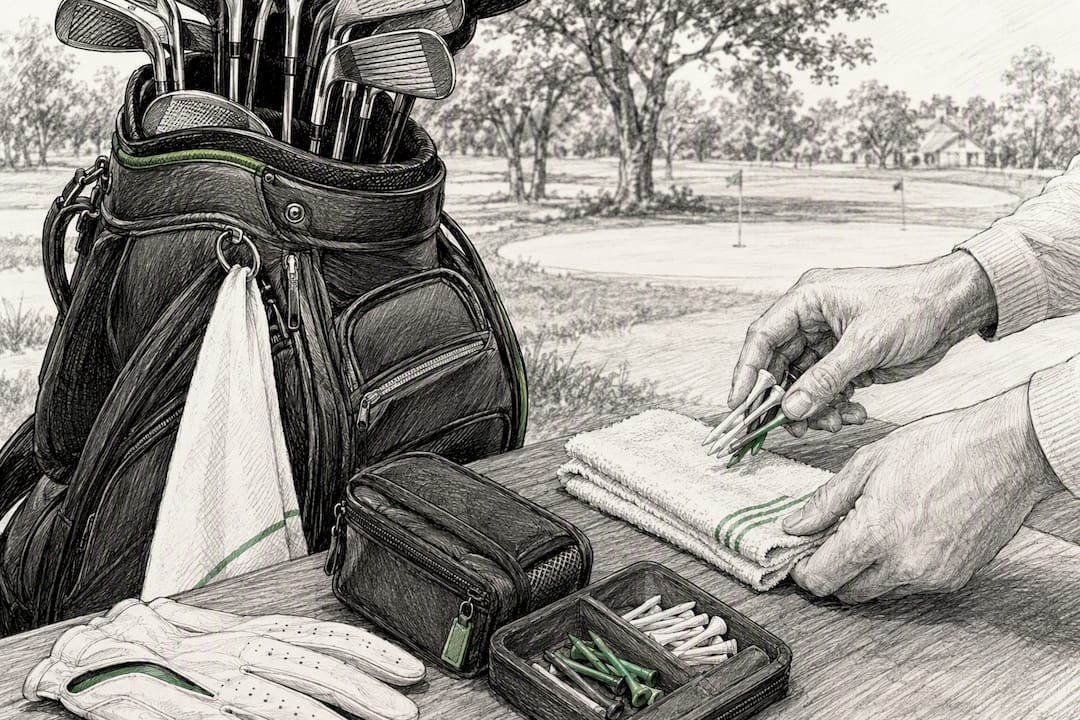
Pro Tip: Always cross-check any accessory against the specific event’s published rules before you buy it or bring it. A rule that’s legal at your home club isn’t automatically legal at a sanctioned tournament.
How Tournament Equipment Standards Evolved
Equipment rules didn’t start as comprehensive rulebooks. They started as reactions to specific incidents. Golf’s Equipment Rules trace back to disputes over club design that threatened to separate the game’s outcome from a player’s swing rather than the equipment in their hands. Climbing’s certification requirements grew directly out of documented gear failures, which is why EN standards for harnesses and helmets read like engineering specifications rather than sporting guidelines.
Fencing followed a similar arc. Electric scoring introduced entirely new failure points, faulty lamés, bad body-cord connections, that didn’t exist in the era of judged touches. USA Fencing’s inspection protocols exist because the sport’s own history showed exactly where equipment could quietly decide a bout instead of the fencer’s blade.
The pattern across every sport is the same: a near-miss or a controversy exposes a gap, a federation writes a rule to close it, and a committee gets standing authority to interpret that rule as new equipment designs test its edges. That’s why the Equipment Rules are described as both descriptive and restrictive: descriptive enough to define what a legal club looks like, restrictive enough to stop a clever redesign from exploiting a loophole nobody anticipated. Standards aren’t static documents. They’re a running record of every lesson a sport has had to learn the hard way, updated as materials science and manufacturing keep moving faster than the rulebook.
What Strong Standards Do for a Sport’s Reputation
A tournament result only means something if spectators and competitors trust the process behind it. Equipment standards are a big, often invisible, part of that trust. When a golf tournament references the R&A and USGA’s Equipment Rules, everyone watching knows the winning club wasn’t a specialized rule-bender built to exploit a gap. When a fencing federation inspects lamés before every bout, a touch that registers on the scoring box is trusted as real, not the product of a wiring quirk.
The flip side shows up whenever a sport lacks that consistency. Equipment controversies, a club later ruled non-conforming, a piece of gear pulled from competition after the fact, tend to dominate coverage far longer than the actual competitive result. That damage doesn’t stay contained to one event. It seeps into how casual fans perceive an entire sport’s legitimacy, which is a much harder problem to fix than any single disqualification.
Consistent enforcement also protects the athletes who follow the rules. A competitor who spent months confirming their gear meets every spec has a real grievance if an opponent gets away with something out of compliance. Governing bodies that enforce standards evenly, regardless of an athlete’s ranking or sponsorship, are the ones that keep their sport’s results credible over the long run. That’s the quieter, less discussed function of equipment standards: they don’t just prevent injury and cap technology, they give the entire sport a reason to be believed.
Manufacturers Carry Real Responsibility in the Standards Process
Governing bodies write the rules, but manufacturers do most of the work proving a product actually meets them. Before a new golf club or ball reaches retail, it typically goes through a submission process with the relevant Equipment Standards Committee, which tests it against the current Equipment Rules and either approves it or flags issues that need redesign.
Climbing gear works through third-party certification labs rather than a sport federation directly. A harness manufacturer has to test against EN 12277 and document the results before that harness can legally appear at a sanctioned event. That paperwork trail matters more than people realize. When an on-site inspector checks a harness label, they’re trusting an entire chain of testing that happened long before the athlete ever touched the gear.
Fencing equipment makers face a similar burden with conductivity and construction standards for lamés and body cords, since a manufacturing defect there doesn’t just fail a rule, it can fail mid-bout and cost someone a match on a technicality that has nothing to do with their fencing.
The honest reality is that not every manufacturer treats this process the same way. Some publish their testing methodology openly; others treat certification as a box to check. Brands that document their own testing and design standards openly, rather than just claiming compliance, make life easier for everyone downstream: organizers spend less time second-guessing a product at check-in, and athletes spend less time worrying whether gear they bought in good faith will actually clear inspection.
How New Technology Keeps Reshaping Equipment Rules
Every meaningful shift in tournament equipment standards over the past two decades traces back to a manufacturing or materials breakthrough that outran the existing rulebook. Titanium club heads forced golf’s Equipment Rules to introduce spring-effect limits. Carbon fiber and advanced polymer construction pushed climbing gear certifications to get more specific about load testing rather than relying on older material assumptions.
Electronics have created an entirely new category of rule. Rangefinders with slope compensation, GPS-based distance tools, and wearable sensors all forced golf’s governing bodies to draw a hard line between what helps a player prepare and what actively performs a calculation during play. That line keeps moving as devices get smaller and more capable, which is exactly why Equipment Standards Committees keep a running database of rulings instead of a fixed, one-time rulebook.
The next wave is already visible in smart fabrics, embedded sensors in gloves and grips, and manufacturing techniques like 3D-printed components that can be customized per athlete in ways a mass-produced item never could. Federations tend to respond to these shifts reactively rather than proactively, largely because it’s hard to write a rule against a technology that doesn’t exist yet. That lag is a genuine tension in every sport with active equipment innovation: rules exist to protect the game as it currently stands, but the products entering the market are always being designed for the game as it might become.
Advice for Organizers Building or Updating Their Own Standards
If you’re setting equipment rules for a new tournament series, the temptation is to write a complete rulebook from scratch. Don’t. Start by adopting the existing framework from the relevant national or international federation for your sport, then layer in local additions only where your event has a genuine gap the federation’s rules don’t cover.
Revisit your equipment standards at least once a year, not just when a controversy forces the issue. Technology moves faster than most volunteer-run tournament committees can track casually, and a rule that made sense three seasons ago can quietly become outdated without anyone noticing until it causes a dispute.
Build a lightweight appeals process before you need one. Even a two-person technical committee with clear authority to make an immediate ruling is better than an ad hoc argument at a registration table. Document every ruling you make, even informal ones, because that record becomes your own equivalent of a rulings database the next time a similar question comes up.
Finally, communicate changes early and specifically. A generic “check the current rules” email gets ignored. A specific note flagging exactly which equipment category changed since last season gets read, and it’s the difference between a smooth check-in and a line of frustrated competitors arguing with your marshals ten minutes before the first match starts.
A Quick Story From the Marshal Table
One late equipment swap, caught at the pre-round drop-off window instead of at the tee, kept a whole bracket on schedule and the result unquestioned.
Ready to Compete Without the Equipment Headaches?
Compliance shouldn’t slow you down on tournament morning, and it doesn’t have to. Aiming Fluid Golf builds accessories, magnetic towels, precision tees, utility pouches, designed around organization first, so nothing gets lost in your bag when a marshal asks to see it.

Every product line is built against the testing and design standards Aiming Fluid Golf publishes openly, which is exactly the kind of documentation that speeds up an inspection instead of triggering one. That said, rules vary by tournament and by governing body, so always confirm an accessory’s acceptance against the specific event’s published Equipment Rules before you rely on it in competition. Browse the expert-picked accessories built for cart, carry, and practice and get your bag tournament-ready before your next round.
Frequently Asked Questions
What is the role of equipment standards in tournaments? Equipment standards protect athlete safety, keep competition fair by limiting technological advantages, and preserve the skill-based nature of the sport. Governing bodies write them; organizers and officials enforce them through inspections and penalties.
What makes equipment “tournament-ready”? Tournament-ready equipment meets the certification, condition, and performance limits set by the sport’s governing body, and where required, matches an approved model on file, like a certified harness or an approved golf club design.
Who checks equipment compliance at an event? Marshals, technical delegates, and on-field officials typically handle inspections, ranging from a quick label check at registration to closer testing at a dedicated equipment-control station.
What happens if equipment fails inspection? Consequences scale with severity: a warning and chance to fix it, refusal to compete until the issue is resolved, confiscation of the item, or disqualification and a results adjustment for serious violations.
How often do equipment standards change? It varies by sport, but most federations review and update their equipment rules at least annually, often in response to new materials or technology, and maintain a public database of rulings and clarifications.
Sources
- Introduction - Rules of Equipment
- EQUIPMENT CODE (IFSC)
- Equipment-rules-for-2019
- USA Fencing rules-compliance


