


TL;DR:
- Proper organization and waterproof gear are essential to manage wet conditions in golf effectively.
- Consistent routines and prepared systems outperform makeshift hacks during rainy rounds.
- Post-round drying and maintenance preserve gear quality and ensure readiness for future wet weather play.
Reaching into your bag mid-round only to pull out a soggy glove or a wet scorecard is one of the most avoidable frustrations in golf. Rain arrives without much warning, and if your bag isn’t built for it, you spend the back nine managing chaos instead of managing your game. The good news is that a systematic approach to bag organization and the right waterproof gear can eliminate most of those problems before you even tee off. This guide walks you through exactly what to pack, how to organize it, and how to stay sharp when the weather turns.
Table of Contents
- Essential rain gear and preparation tools
- Step-by-step bag organization for wet weather
- On-course strategies: managing your bag in the rain
- After the round: drying and maintaining your gear
- Truths most golfers miss about playing in the rain
- Gear up for the rain with top-performing accessories
- Frequently asked questions
Key Takeaways
| Point | Details |
|---|---|
| Pack with purpose | A well-organized rain kit keeps essentials dry and improves on-course convenience. |
| Smart bag layout | Use waterproof pouches and accessible pockets for quick swaps in shifting weather. |
| Active gear management | Rotate towels and gloves and close your bag after every shot to minimize moisture. |
| Post-round care matters | Thorough drying of your bag and equipment prevents long-term damage and ensures readiness. |
Essential rain gear and preparation tools
With the seriousness of rain rounds in mind, let’s start with assembling the right gear and tools for your bag. Packing weather-resistant gear is crucial for golf during rain, and the difference between a prepared bag and an unprepared one shows up fast once the first drops fall.
Here is what belongs in every rain-ready bag:
- Waterproof bag cover — Fits over your entire bag and seals out rain during play or cart rides.
- Rain gloves — Designed to grip better when wet, unlike standard leather gloves that deteriorate fast.
- Two or more microfiber towels — One dedicated to club drying, one kept dry inside a sealed pouch.
- Zippered waterproof pouches — Used to protect valuables, electronics, scorecards, and backup gloves.
- Club dividers — Keep shafts separated so wet clubs don’t transfer moisture to grips.
- Compact umbrella — A must for cart golfers; a clip-on umbrella holder keeps it accessible.
Review the full golf bag essentials checklist to make sure nothing gets left behind.
| Item | Purpose | Packing tip |
|---|---|---|
| Waterproof bag cover | Protects full bag from rain | Store rolled at the top of your outer pocket |
| Rain gloves (2 pairs) | Maintains grip in wet conditions | Keep one pair per side pocket for fast access |
| Microfiber towels | Dries clubs and hands | Seal dry towel inside a zippered pouch |
| Zippered pouches | Protects electronics and valuables | Use one per category: phone, cards, tees |
| Club headcovers | Keeps iron and wood faces dry | Leave woods covered between shots |
| Small umbrella | Immediate rain shelter | Clip to bag handle or cart frame |
Pro Tip: Prioritize gear based on how often you need it. Items you reach for every hole, like towels and gloves, belong in the easiest-access outer pockets. Rain covers and backup gear go deeper in the bag.
Step-by-step bag organization for wet weather
Now that you’ve gathered the right items, it’s time to organize your bag so rainy conditions don’t slow you down. Pre-round organization can make all the difference in wet conditions, and the process is more methodical than most golfers expect.
Follow these steps to build a rain-ready bag:
- Empty your bag completely. Start fresh. Remove everything and group items by function: clubs, accessories, clothing, valuables, and supplies.
- Sort by moisture sensitivity. Separate items that cannot get wet (phone, wallet, backup gloves, extra balls) from items that can tolerate some exposure.
- Place valuables in waterproof pouches first. Seal your electronics and cards into individual zippered pouches before anything goes back into the bag.
- Double-bag electronics. For any device like a rangefinder or phone, use an inner pouch inside an outer waterproof pocket. This redundancy matters in heavy rain.
- Pack dry towels in a sealed pouch. Your backup towel should never see outside air until you need it. Seal it away from your working towel.
- Arrange clubs for efficient access. In wet rounds, you want to spend the least time possible with the bag open. Group clubs by frequency of use and make sure headcovers are on your woods.
- Reload quick-access pockets with gloves and tees. These items belong at the top of your outer pockets, not buried underneath balls or other gear.
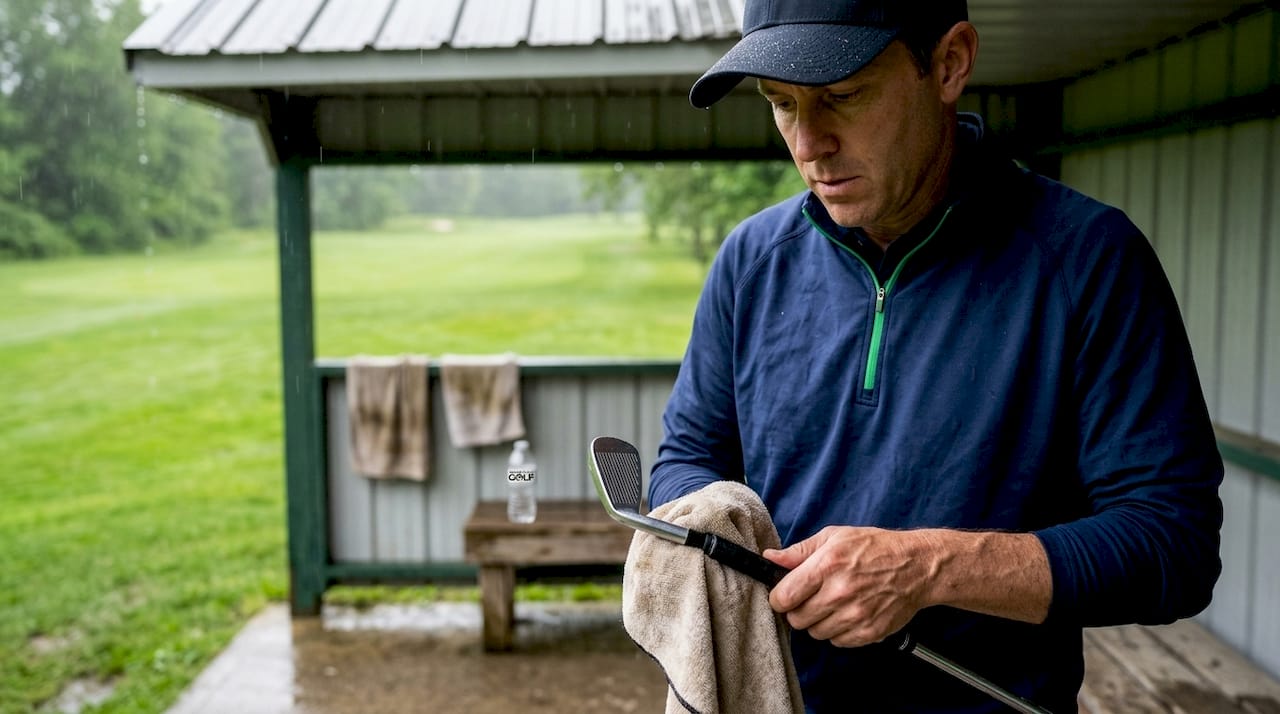
To stay organized in rain, you also need to manage grip care in rain proactively. Wet grips lose feel and increase grip pressure, which affects swing mechanics.
Pro Tip: Wrap a spare pair of socks, a backup glove, and an extra sleeve of balls in a single large zip-lock bag. Drop it in the bottom of your largest pocket. You’ll be glad it’s there on hole 14 when everything else is soaked.
On-course strategies: managing your bag in the rain
Organizing your bag is only part of the battle. Staying rain-ready during play requires active in-round strategies.
Proper towel use and covering bag openings during play maintains club dryness, and the golfers who do this consistently are the ones who aren’t scrambling when conditions get worse.
Here are the key on-course tactics:
- Rotate towels every three to four holes. Once a towel is saturated, it transfers moisture instead of removing it. Swap it for a dry one from your sealed pouch.
- Keep the bag cover partially engaged. Don’t wait until it’s pouring. Clip your rain cover loosely over the bag so you can deploy it in seconds.
- Swap gloves between holes. Wet rain gloves grip better than dry ones, but a completely soaked glove eventually loses structure. Rotate between two pairs.
- Avoid leaving the bag unzipped. Every second the bag is open during rain, water enters. Pull what you need and zip it back immediately.
- Use club headcovers on every wood after every shot. This is the single most neglected habit in wet weather golf.
Explore more rain round strategies that apply across different wet weather scenarios.
| Common mistake | Best practice |
|---|---|
| Hanging towel on bag strap exposed to rain | Use a towel hook at bag front and keep backup dry and sealed |
| Leaving bag fully open between shots | Zip all pockets after each access |
| Using one glove all round | Rotate two rain gloves every 4-5 holes |
| Skipping headcovers on irons | Cover woods consistently; wipe iron faces before each shot |
| Leaving electronics loose in a pocket | Always double-bag devices in waterproof pouches |
Knowing how to use a golf towel in rain conditions correctly also affects your shot quality. Dry club faces transfer spin more predictably, which matters when greens are already soft and unpredictable.
A properly placed towel hook changes your entire on-course workflow. Instead of digging through a wet bag for your towel, it stays clipped and accessible on every shot.
After the round: drying and maintaining your gear
Finishing a rainy round doesn’t mean your preparation ends. How you dry and maintain your gear matters for next time.
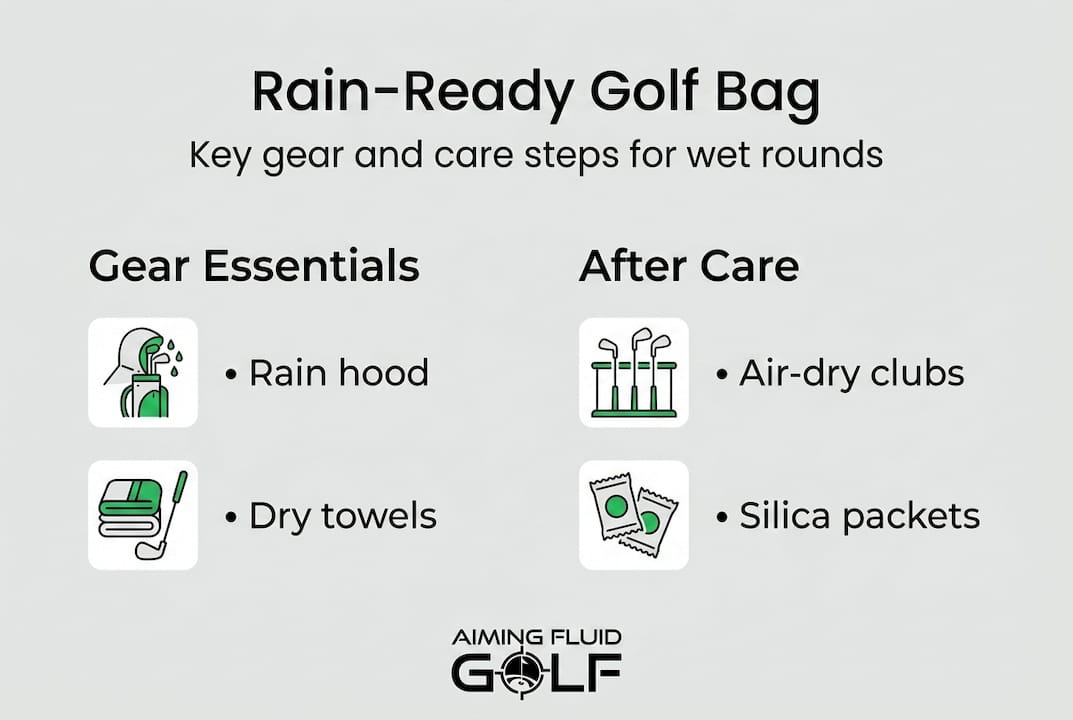
Proper drying and cleaning post-rain prevents long-term damage, including mold growth inside bag pockets, grip deterioration, and towel fiber breakdown that reduces drying effectiveness.
Here is what to do immediately after a wet round:
- Unpack the bag fully. Do not leave wet gear inside the bag overnight. Every pocket needs air circulation.
- Wipe down all club heads and shafts. Use a dry microfiber cloth. Pay special attention to grooves on irons and wedges where water pools.
- Hang towels immediately. Microfiber towels should be hung flat or draped rather than bunched, which creates conditions for mildew.
- Wash rain gloves by hand in cool water. Avoid machine washing, which can distort the grip texture of rain gloves. Let them air dry flat.
- Open all bag pockets and set the bag upright in a ventilated space. If possible, aim a fan at the open bag for two to three hours.
- Remove and dry waterproof pouches separately. Wipe the interiors and leave them unzipped to air out.
- Inspect your bag cover for damage. Check seams and the zipper or snap closures for wear that would compromise waterproofing next round.
Pro Tip: Place two or three silica gel packets inside your bag before storing it. These packets absorb residual moisture from pockets and fabric and cost almost nothing. Replace them every few months for consistent performance.
Once everything is dry golf gear after rain, repack your bag exactly as it was organized before the round. This creates a repeatable system that doesn’t require thinking before the next wet day.
Truths most golfers miss about playing in the rain
Once your gear is dry and ready for next time, let’s consider what truly sets strong rain golfers apart.
Most players treat rain preparation as a gear problem. They buy a rain cover, throw in an extra towel, and assume that’s enough. It isn’t. The golfers who perform well in wet conditions have something different operating underneath the gear: a rehearsed system and a calm mental state that doesn’t shift when the weather does.
Experienced players anticipate rain complications before they happen. They already know which pocket has the dry glove. They’ve already identified where the towel hook clips. They don’t decide those things mid-round while standing in a downpour.
The shortcut mentality, things like duct-taping a bag opening or borrowing a partner’s towel, creates inconsistency. You can’t perform at a high level if your equipment workflow changes every time it rains. The real rain golf advice isn’t about buying more stuff. It’s about building systems that are so automatic they require no conscious effort during the round.
Repeatable systems beat clever hacks. Every time.
Gear up for the rain with top-performing accessories
Ready to assemble your own rain-ready bag? Explore the gear that takes the hassle out of wet rounds.
The right accessories don’t just protect your equipment. They change how you interact with your bag under pressure. When your towel is always accessible, your glove rotation is built in, and your valuables are sealed without thinking, the rain becomes a manageable condition rather than a disruption.

Aiming Fluid Golf designs accessories specifically for golfers who operate this way. From magnetic golf towels that clip and release without searching your bag, to a leather valuables pouch built to protect what matters most in wet conditions, each product is built around a specific on-course problem. Browse the full range of best golf accessories to build a bag that performs regardless of forecast.
Frequently asked questions
What should you always keep in your golf bag for rain?
Essential golf bag rain items include covers, towels, gloves, and waterproof storage. Always keep a waterproof bag cover, two towels, rain gloves, and zippered pouches for valuables packed and ready.
How do you keep your golf clubs dry in heavy rain?
Rain hoods and towel swaps help keep clubs dry. Use a rain hood, rotate dry towels, and avoid leaving the bag open during shots to maintain club dryness throughout the round.
What’s the best way to dry golf gear after playing in the rain?
Proper drying after wet rounds prevents odor and damage. Unpack all wet items and air-dry towels, gloves, and the bag, storing gear only after everything is completely dry.
Are there special towels for wet weather golf?
Magnetic towels and microfiber outperform standard towels in poor weather. Yes, microfiber and magnetic golf towels offer superior drying performance and easier on-course access during rainy conditions.
Recommended
- Winter Golf Survival Guide: Gear & Tips for Rain & Cold – Aiming Fluid Golf
- How Weather-Resistant Golf Gear Elevates Your Game – Aiming Fluid Golf
- How to Organize Your Golf Bag Like a Pro: The Peter Finch Method – Aiming Fluid Golf
- Golf Bag Essentials Hub: What Every Golfer Should Carry (Beginner to S – Aiming Fluid Golf
- How to Winterize a Golf Cart: Step-by-Step Guide — GOLFCARTSTUFF.COM™


