


TL;DR:
- A true premium golf setup focuses on an organized bag, precisely fitted clubs, and function-oriented accessories rather than brand names. Proper organization, fitting, and rule-compliant accessories enhance performance, consistency, and enjoyment on every hole. Structural room design and correct posture are also essential to maximize equipment benefits and achieve optimal swings.
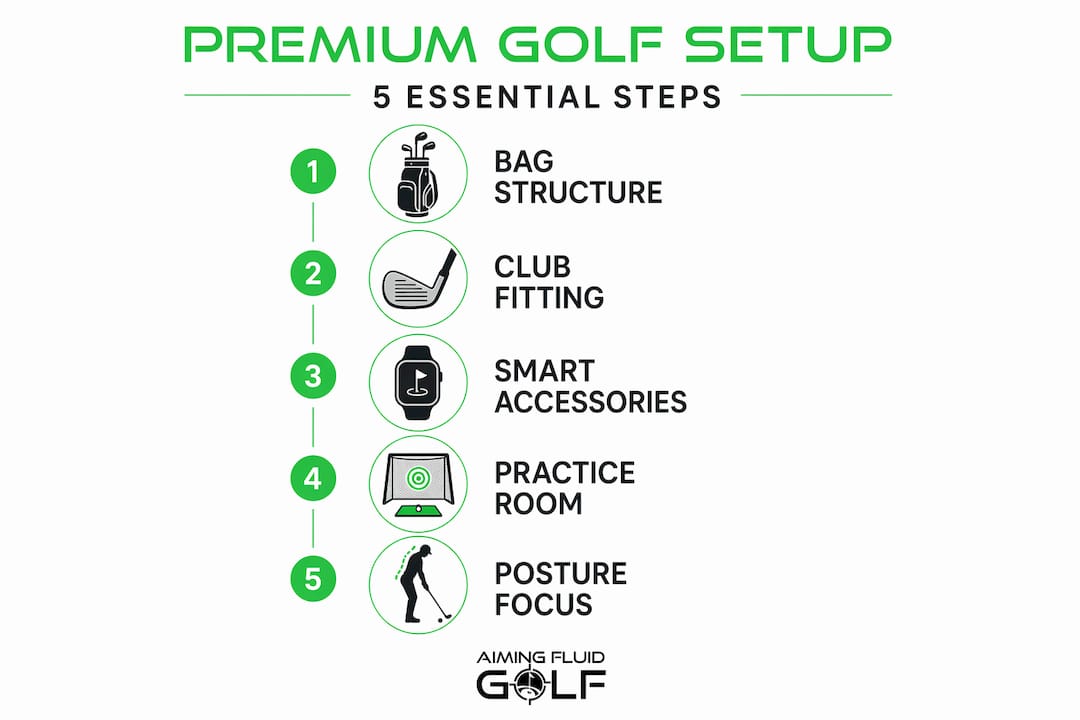
Most golfers assume a premium golf setup is defined by brand names on the clubhead or a bag that costs four figures. That assumption is wrong, and it costs players real performance. The true structure of premium golf setup is built on three things: a bag engineered for organized access, clubs fitted precisely to your body and swing, and accessories chosen for function rather than appearance. This guide breaks down each layer so you understand not just what premium looks like, but what it actually does for your game on every hole.
Table of Contents
- Understanding the structure of premium golf bags
- The custom club fitting process for a premium setup
- Choosing premium accessories compliant with golf rules
- Structuring premium home golf practice setups
- Integrating posture fundamentals with your premium setup
- Why structured organization and fitting beat flashy gear in premium golf setups
- Explore premium golf accessories and bags for your perfect setup
- Frequently asked questions
Key Takeaways
| Point | Details |
|---|---|
| Premium bag structure | Premium golf bags feature full-length dividers and dedicated pockets for organized, quick access to clubs and accessories. |
| Custom club fitting | Structured club fitting uses physical measures and launch monitor data to optimize club specs precisely for your swing. |
| Rules-compliant accessories | Select electronic devices and accessories that adhere to USGA guidelines to avoid penalties on course. |
| Simulator space design | A premium home golf simulator requires adequate ceiling height, room depth, and lighting control for realistic practice. |
| Posture fundamentals | Proper spine tilt, knee flex, and alignment are essential to leverage your premium equipment for better swings. |
Understanding the structure of premium golf bags
A well-built golf bag is not decoration. It is a functional system, and premium 14-way golf bag features make the difference between finding your 7-iron in two seconds and rooting through a tangle of shafts for thirty. The internal architecture of a quality bag directly affects pace of play, equipment longevity, and your mental state during a round.
Higher-end bags use full-length dividers plus purpose-built accessory pockets for organized club storage and easy access. That matters because full-length dividers prevent shaft contact during transit, which reduces wear on both graphite shafts and ferrules over time. A 14- or 15-way configuration means every club has a dedicated channel, eliminating the “junk drawer” effect entirely.
Key structural features that define premium golf bags:
- Full-length dividers: 14- or 15-way velvet-lined channels prevent tangling and protect shafts from abrasion
- Dedicated pocket architecture: Separate compartments for balls, tees, valuables, apparel, and rangefinders, each purpose-built rather than generic
- Magnetic closures: Faster access than zipper pockets and less likely to fail after repeated use in wet conditions
- Pass-through strap channels: Allow the carry strap to route without distorting the bag’s balance or blocking pocket access
- Material integrity: Matte Microfiber Composite Leather and carbon fiber leg systems maintain structural form across seasons, not just rounds
- Stand vs. cart design: Stand bags use angled top cuffs and a dual-leg mechanism for ground stability; cart bags use a flat base and cart strap pass-through channels for secure mounting
Pro Tip: When evaluating a bag, open every pocket while wearing the bag on your shoulder. If you cannot access the rangefinder pocket without removing the bag, the design fails the functional test regardless of its price.
Learning how to organize your golf bag like a pro further compounds the structural benefits of a well-designed bag. The bag provides the architecture; your organization method determines how effectively you use it.
The custom club fitting process for a premium setup
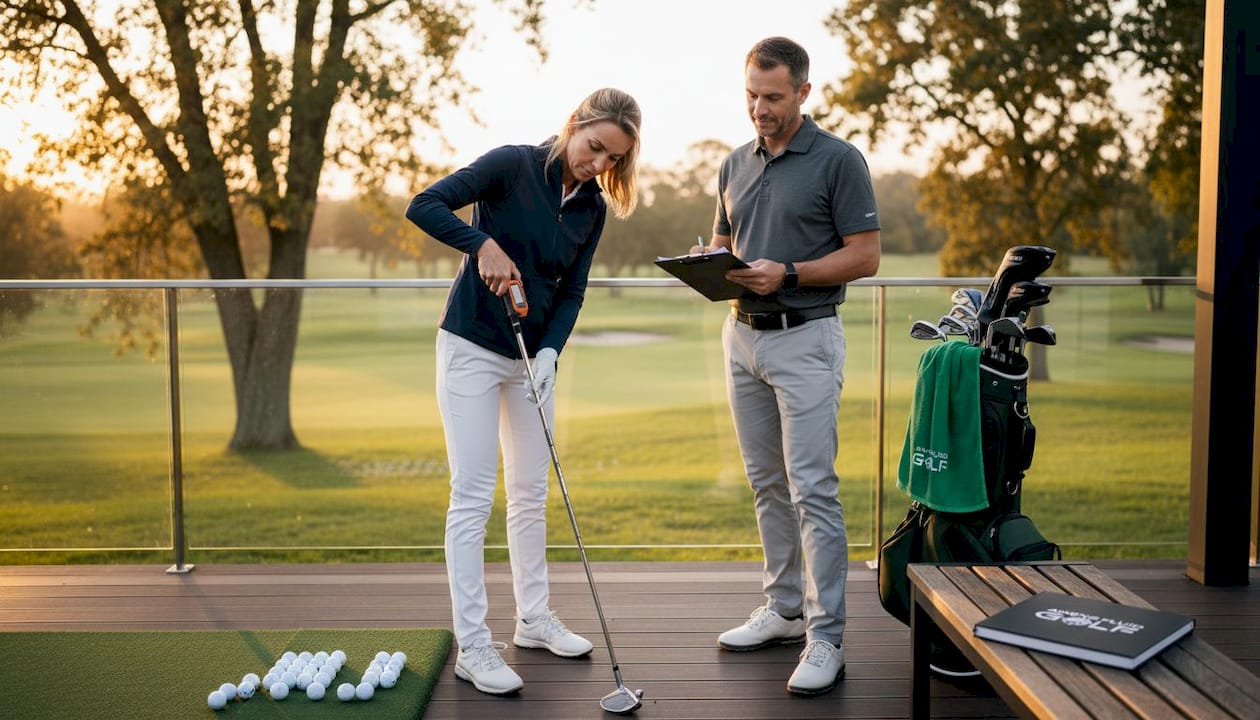
Buying premium clubs off the shelf without fitting is like buying custom dress shoes in the wrong size. The material is excellent, but the fit negates most of the benefit. A full-bag fitting follows a structured sequence: physical measurements, baseline launch-monitor data, component testing, and final optimization that produces a documented build sheet.
Here is how that process unfolds in a proper fitting session:
- Physical measurements: Height, wrist-to-floor distance, and hand size establish baseline specifications for shaft length and grip size before a single swing is taken.
- Baseline data capture: A launch monitor records 40 or more swing data points including ball speed, launch angle, spin rate, carry distance, and dispersion pattern to benchmark your current performance.
- Component testing: The fitter isolates variables such as shaft flex, shaft weight, clubhead model, and lie angle. Each variable is tested with multiple swings to separate genuine performance differences from swing variation.
- Optimization adjustments: Loft, lie, swingweight, and grip size are dialed in based on the data, not on what feels subjectively comfortable in the first few swings.
- Build sheet documentation: Your finalized specifications are recorded as a reference document. This prevents inconsistencies when re-ordering, replacing worn grips, or purchasing additional clubs later.
“The build sheet is the most underrated output of a fitting. Without it, your next purchase starts from scratch.” This is the document that separates a one-time fitting from a long-term equipment management system.
The custom golf bag fitting benefits extend beyond just the clubs themselves. When your clubs are correctly fitted for length and lie, the bag’s divider configuration also needs to accommodate shaft length without forcing grips into awkward positions. Structured club storage and properly fitted clubs form a system, not two separate decisions.
Pro Tip: Request your build sheet at the end of every fitting. If the fitter declines, take your own notes. This data belongs to you, not the fitting facility.
Choosing premium accessories compliant with golf rules
Accessories elevate a premium setup when they are chosen for function and compliance, not just appearance. One frequent error is purchasing electronic devices without verifying their rule compliance first. USGA requires distance-measuring devices to provide only distance information, prohibiting features that calculate wind speed, elevation changes, or other competitive advantages.
When building out your accessory layer, apply these criteria:
- Rangefinder compliance: Verify the device is USGA-compliant before purchasing. Slope-mode rangefinders are legal for practice rounds but illegal in most competitions unless the committee specifically permits them.
- Magnetic towel and landing pad systems: Accessories that attach magnetically to your bag eliminate the need to search for your towel mid-round. The towel returns to a fixed position every time, reducing fumbling and keeping your grip dry.
- Dedicated pocket placement: A rangefinder stored in a purpose-built side pocket is accessible in under three seconds. One stored in a general pocket adds unnecessary time and distraction.
- Material durability standards: High-quality accessories maintain their form after repeated wet and dry cycles. Look for reinforced stitching, rust-resistant hardware, and UV-stable fabrics.
- Rules of Golf compliance: No accessory should alter your stance, artificially influence club path, or modify the course in any way. When in doubt, consult the USGA equipment rules before use.
When choosing compliant premium golf accessories, cross-reference your selections against both the USGA equipment guidelines and your specific tournament’s local rules. Competition standards vary, and a device legal in a casual round may require adjustment for tournament play.
Structuring premium home golf practice setups
A premium simulator setup is not simply a projector on a screen. It is an architectural decision. Premium golf simulators require adequate ceiling clearance, room depth, accurate projector alignment, and controlled lighting for realistic ball tracking and safe swing execution.
Key structural requirements for a home simulator setup:
- Ceiling height: A minimum of 105 inches (8 feet 9 inches) allows a full driver swing without posture modification. Lower ceilings force compensations that ingrain bad mechanics.
- Room depth: Sufficient depth behind the hitting position allows realistic follow-through and positions the impact screen far enough from the golfer for accurate ball tracking.
- Projector alignment: Off-axis projection creates image distortion that affects target perception and shot accuracy feedback.
- Lighting control: Ambient light from windows or overhead fixtures interferes with infrared ball-tracking sensors. Blackout shades or dedicated lighting control systems are not optional in quality builds.
- Structural considerations: HVAC ducting, load-bearing beams, and wall placement all affect screen mounting options and swing clearance zones.
| Room element | Minimum standard | Premium standard |
|---|---|---|
| Ceiling height | 9 feet | 10 feet or higher |
| Room depth | 15 feet | 18 to 20 feet |
| Room width | 12 feet | 15 feet or wider |
| Ambient light | Reduced | Fully controlled |
Pro Tip: Before purchasing simulator hardware, measure your room diagonally from the intended hitting position. The diagonal swing arc of a driver is wider than most golfers expect and is the most common cause of ceiling contact.
Reviewing home golf simulator setup essentials before finalizing a room selection can prevent costly structural modifications after installation.
Integrating posture fundamentals with your premium setup
Equipment performs at its rated specification only when the golfer uses it correctly. Premium clubs fitted to your measurements deliver their full benefit only when your address position is consistent and mechanically sound. Correct posture with spine tilt, knee flex, and alignment supports better balance, swing mechanics, and centered contact.
The core posture checkpoints that interact directly with your equipment fit:
- Spine tilt: 35 to 45 degrees of forward tilt from the hips, not the waist. This angle determines how your fitted shaft length and lie angle interact with the turf at impact.
- Knee flex: Slight flex for athletic balance. Locking the knees or sitting too deep shifts weight distribution away from the design center of most club soles.
- Stance width: Shoulder-width for mid-irons. Wider for driver to support the weight shift your fitted driver length requires; narrower for wedges to promote a steeper, more controlled strike.
- Clubface alignment: Square the clubface to your target before setting your stance. Setting your body first and adjusting the face after introduces systematic alignment errors.
- Weight distribution: Balanced on the balls of the feet at address for irons; shifted slightly toward the trail foot for driver to encourage the upward strike that fitted driver loft is designed to complement.
- Grip pressure: Firmer for full shots to control the shaft through impact; lighter for short game to preserve tactile feedback and distance control.
“The most expensive setup in the world underperforms when the address position is inconsistent. Posture is not separate from equipment. It is part of the same system.”
Reviewing advanced golf bag organization tips alongside posture habits reinforces the connection between physical setup and equipment readiness. Both reduce friction between the decision to play a shot and the execution of it.
Why structured organization and fitting beat flashy gear in premium golf setups
Here is an uncomfortable truth most equipment marketing avoids: a well-organized $400 bag outperforms a disorganized $1,200 bag in nearly every practical measure during a round. Top bag systems focus on minimizing reach time and making essentials instantly accessible to speed play and improve focus. That is a performance claim, not an aesthetic one.
The same logic applies to club fitting. Golfers who buy fitted clubs based on validated launch monitor data consistently outperform those who buy the same model off the shelf based on marketing. Not because the clubs are different, but because the specifications match their swing geometry. A half-inch of incorrect shaft length changes your lie angle at impact, your swing arc, and your dispersion pattern. No amount of brand prestige corrects that.
Custom fitting also removes the psychological guesswork that undermines amateur golfer decision-making on the course. When you know your 6-iron carry distance within five yards because you have measured it with your fitted club, you commit to the shot. When that number is a guess based on marketing claims, you hesitate. Hesitation costs strokes.
The same principle extends to practice environments. A simulator room that is architecturally wrong forces swing compensations. Those compensations transfer to the course. A properly built practice space, with correct ceiling height and controlled lighting, reinforces the same mechanics you use outdoors.
Premium accessories for peak golf performance complete this picture by eliminating micro-frustrations: the towel you cannot find, the tee that fell through the pocket, the rangefinder buried under a sleeve of balls. These are not minor inconveniences. They interrupt concentration and break the pre-shot routine that consistent performance depends on.
Explore premium golf accessories and bags for your perfect setup
The principles in this guide only deliver results when matched with gear that is built to the same standard. Aiming Fluid Golf designs accessories specifically for golfers who treat their setup as a performance system, not an afterthought.
Start with the expert picks for premium golf accessories to find gear selected for function, durability, and rules compliance. The official guide to top golf accessories covers bags, towels, divot tools, and organizational systems in detail. If you are building around the magnetic access system, the magnetic golf towel holders and magnetic landing pads buyer’s guide are the right starting points for on-course efficiency that is immediately noticeable.
Frequently asked questions
What makes a golf bag ‘premium’ beyond its price?
A premium golf bag is defined by its structural design, material durability, and organized storage architecture that maintains form and function over time. Luxury in golf bags is defined by structure, material integrity, and long-term performance, not cost or branding alone.
How long does a full premium club fitting session usually take?
A comprehensive fitting for a full bag typically runs 3 to 4 hours, covering measurements, data capture, component testing, and final specification documentation. Typical sessions take 60 to 90 minutes per single club and up to 3 to 4 hours for a complete set.
Are electronic rangefinders allowed in official golf competitions?
Yes, provided they measure only distance and do not provide wind, elevation, or other competitive data. USGA competition guidance requires that distance-measuring devices provide no extra information beyond yardage to be permitted in play.
What is the ideal ceiling height for installing a premium golf simulator?
A ceiling height of at least 105 inches (8 feet 9 inches) is required to allow a full driver swing without altering your natural address posture. Ceilings must be high enough for a complete driver swing without forcing posture changes that compromise simulator accuracy.
How does proper posture improve the effectiveness of a premium golf setup?
Correct posture ensures the fitted specifications of your clubs interact with the turf and ball the way the fitter designed them to. Correct tilt and knee flex support better balance, swing mechanics, and centered contact, allowing premium equipment to perform at its rated specification.
Recommended
- How to Organize Your Golf Bag Like a Pro: The Peter Finch Method – Aiming Fluid Golf
- How to Organize Your Golf Bag Like a Low Handicap – Complete Modern Gu – Aiming Fluid Golf
- Golf Bag Essentials Hub: What Every Golfer Should Carry (Beginner to S – Aiming Fluid Golf
- Personalizing golf accessories: Expert picks for premium performance – Aiming Fluid Golf


