


Most amateur golfers spend hundreds on new drivers and zero minutes thinking about their tees. That’s a measurable mistake. Precision golf tees feature color-coding and consistent manufacturing that directly influence tee height, launch angle, and shot dispersion. The difference between a generic wooden tee and a precision-engineered one is not trivial. This article breaks down what makes a tee “precision,” how those features translate to real performance gains, how precision tees compare to standard options, and how to use them correctly every round.
Table of Contents
- What makes a golf tee ‘precision’?
- How do precision golf tees improve your performance?
- Comparing precision and standard golf tees: Which works best?
- Practical tips: Choosing and using precision tees on the course
- Our take: The overlooked value of precision golf tees for amateurs
- Discover high-performance golf tees and accessories
- Frequently asked questions
Key Takeaways
| Point | Details |
|---|---|
| Precision means consistency | Color-coded, high-quality tees let you repeat your setup for reliable drives. |
| Durability pays off | Plastic and bamboo precision tees last much longer, saving money over the golf season. |
| Better tee choice, better results | Choosing the right tee boosts launch angle, reduces shot dispersion, and improves scores. |
| Tailored to your game | Match tee size and material to your club and playing style for maximum benefit. |
What makes a golf tee ‘precision’?
The word “precision” gets used loosely in golf marketing, but when applied to tees, it has a specific, technical meaning. A precision tee is manufactured to tight dimensional tolerances, so every tee in the pack is the same height, the same diameter, and the same weight. Generic tees, by contrast, often vary by several millimeters across a single pack due to inconsistent molding or cutting processes.
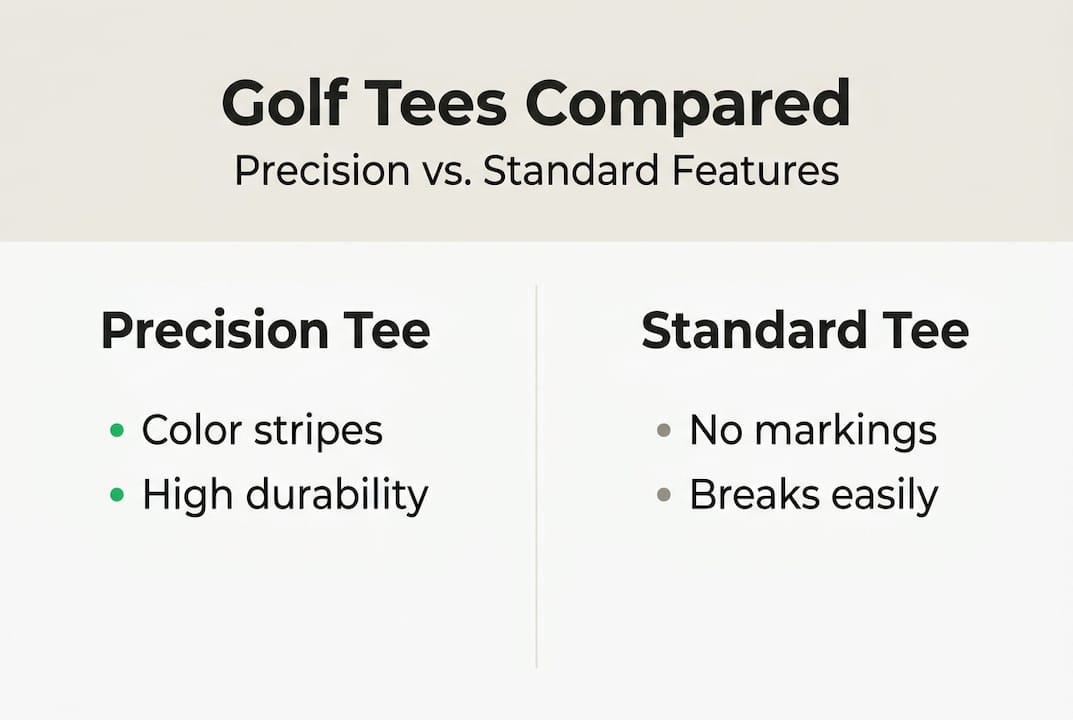
The most recognizable precision system is the PTS color-coded system, which uses colored stripes to mark insertion depth. Each stripe corresponds to a specific tee height above ground. You push the tee in until the correct stripe sits at turf level, and your ball sits at the same height every single time. That repeatability is the entire point.
Understanding golf tee system basics helps clarify why this matters. Tee height affects the angle at which your clubface contacts the ball, which directly controls launch angle and spin rate. A quarter-inch difference in tee height can shift your launch angle by 2 to 3 degrees. That is not a rounding error. That is the difference between a ball that climbs and carries versus one that launches too low and loses distance.
Precision tees are available in multiple lengths to match specific clubs and swing types:
- 1.5" to 2.125": Ideal for irons, hybrids, and fairway woods
- 2.75": Standard driver height for moderate swing speeds
- 3.25" to 4": Designed for high-speed driver swings and larger clubheads
Material choice also plays a role in how precision is maintained over time:
| Material | Durability | Consistency | Environmental impact |
|---|---|---|---|
| Plastic (PTS) | Very high | Excellent | Lower (reusable) |
| Precision wood | Moderate | Good | Biodegradable |
| Bamboo | High | Very good | Eco-friendly |
| Standard wood | Low | Poor | Biodegradable |
Amateur golfers actually benefit more from precision tees than tour professionals do. Pros develop such refined muscle memory that they can tee a ball consistently by feel alone. Most amateurs do not have that calibration. Precision tees remove a variable that, for most recreational players, is entirely uncontrolled. Reviewing tee selection tips before your next round is a practical first step toward locking in that consistency.
You can also explore PTS wood tees as a starting point if you prefer natural materials but still want the color-coded height system.
How do precision golf tees improve your performance?
Building on what sets precision tees apart, the next question is direct: what do you actually gain on the course?
The most documented benefit is launch angle control. A quarter-inch tee height difference shifts launch angle by 2 to 3 degrees. For a driver swung at 90 mph, that translates to roughly 10 to 15 yards of carry distance lost or gained. Most amateurs lose that distance not because of their swing, but because their tee height varies from hole to hole without them realizing it.
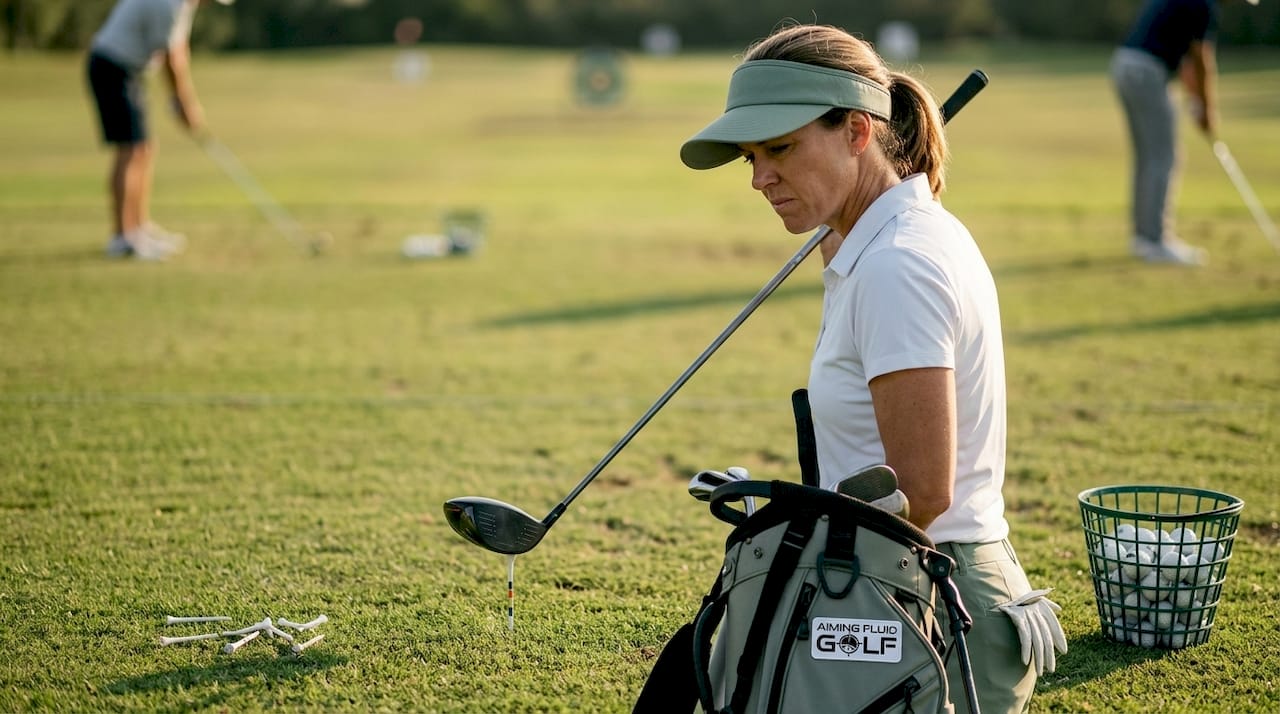
The second benefit is reduced shot dispersion. When your ball sits at the same height relative to your clubface on every tee shot, the contact point on the face becomes more predictable. Tighter contact patterns mean straighter shots and fewer penalty strokes. Understanding the impact on launch and dispersion makes it clear why this single variable carries so much weight in scoring.
Here is a practical workflow for using color-coded stripes during your pre-shot routine:
- Select your tee length based on the club you are hitting (driver, 3-wood, hybrid).
- Identify the correct stripe for your desired ball height above the clubface.
- Insert the tee until that stripe sits flush with the turf surface.
- Confirm visually that the ball equator aligns with the top edge of the clubface.
- Repeat this sequence on every tee shot without variation.
This five-step tee placement workflow takes under ten seconds but creates a repeatable physical routine that anchors your pre-shot process.
Pro Tip: Use the same tee length for every driver hole during a practice round and track your fairways hit. Then switch to random, unmarked tees for another round and compare. Most golfers see a 15 to 20 percent improvement in fairway accuracy with consistent tee height alone.
The compounding effect matters here. One extra fairway per round leads to shorter approach shots. Shorter approaches produce more greens in regulation. More greens in regulation directly lowers your score. The mechanism is simple, but the discipline to execute it consistently is where precision tees give you a structural advantage.
Comparing precision and standard golf tees: Which works best?
After revealing performance benefits, it is worth examining whether the cost and practicality justify the switch from standard tees.
| Tee type | Avg. cost per tee | Lifespan | Height consistency | Best for |
|---|---|---|---|---|
| Precision plastic (PTS) | $0.15 to $0.25 | 70+ drives | Excellent | High-frequency players |
| Precision wood (PTS) | $0.08 to $0.12 | 4 to 6 rounds | Good | Traditional feel |
| Standard wood | $0.03 to $0.05 | 1 to 2 rounds | Poor | Casual, low-frequency play |
| Bamboo precision | $0.10 to $0.18 | 3 to 4x wood | Very good | Eco-conscious players |
Plastic PTS tees last 70+ driver swings per tee, while standard wood tees typically survive only one to two rounds before breaking or warping. That durability gap changes the real cost calculation significantly.
Here is a quick breakdown of the trade-offs:
- Precision plastic: Maximum durability and consistency, slightly higher upfront cost, not biodegradable
- Precision wood: Biodegradable, good consistency, breaks more often than plastic
- Bamboo precision: Strong eco profile, excellent durability, slightly less widely available
- Standard wood: Lowest cost per unit, inconsistent height, frequent replacement
When you account for replacement frequency, annual tee savings of $20 to $40 are realistic for golfers who switch from standard to precision options. That is not a marketing claim. It is arithmetic: fewer replacements per round multiplied across a full season.
“I switched to PTS plastic tees two seasons ago and stopped thinking about tees entirely. Same height every hole, same ball flight. I’ve also spent less on tees this year than I ever did buying cheap wooden ones in bulk.” — Verified customer review
For a deeper look at material trade-offs, the wooden vs. precision tees comparison covers the durability and feel differences in detail. If you want to understand how modern engineering has changed tee design, the PureFlight tech vs. wood breakdown explains what has changed and why it matters for your game.
Practical tips: Choosing and using precision tees on the course
With the main differences and benefits clear, here is how to put this knowledge to work on the course.
Start with the right tee for the right club. Factors to consider when selecting precision tees:
- Club type: Drivers need longer tees (2.75" to 4"); irons and hybrids need shorter ones (1.5" to 2.125")
- Swing speed: Higher swing speeds generate more force on impact; plastic or bamboo tees hold up better under that load
- Weather conditions: Shorter precision tees perform better in windy conditions by keeping ball flight lower and more penetrating
- Course surface: Firm, dry turf requires less insertion force; soft, wet turf may shift tee angle if the tee is too thin
- Durability priority: If you play twice a week or more, plastic precision tees pay for themselves within a month
Here is a recommended setup routine for using precision tees effectively:
- Sort your tee pouch before the round: driver tees in one section, short tees in another.
- Check the stripe color for your driver before the first hole so it is already in memory.
- Insert to the marked depth on every tee shot without estimating.
- Retrieve the tee after each shot if it survived impact. Plastic tees are worth recovering.
- Adjust tee length if wind or course conditions change mid-round.
Pro Tip: Organize your bag by tee length before every round. Keep driver tees in a dedicated slot in your utility pouch and short tees in a separate pocket. When you reach the tee box, you grab the right tee without thinking. That small habit removes one more decision from your pre-shot routine and keeps your focus on the shot itself.
Storage matters more than most golfers realize. Keep precision tees in a rigid container or pouch, not loose in a pocket where they bend or break. Wet tees, especially wood or bamboo, can warp if left in a damp bag for days. A quick dry after a wet round extends their usable life significantly. Browse tee options to find lengths and materials that match your game, or check the best golf tee picks for a curated breakdown of top-performing options.
Our take: The overlooked value of precision golf tees for amateurs
Most golfers do not think seriously about tees until they start tracking their stats. That pattern is revealing. The players who pay attention to their numbers are usually the same ones who eventually notice that their tee height varies by round, by hole, and even by mood. Once you see that variable clearly, it is hard to ignore.
Here is what we observe consistently: small equipment decisions stack. A precision tee does not transform your swing. But it removes a variable that quietly undermines consistency in players who are otherwise working hard to improve. Amateurs have one structural advantage over tour professionals in this area. Pros are locked into sponsor obligations and established routines. You are not. You can adopt a tee selection system tomorrow and start seeing results within a few rounds.
The golfers who improve fastest are not always the ones who practice most. They are the ones who eliminate unnecessary variables from their game, one small decision at a time. Precision tees are one of the cheapest, most accessible ways to do exactly that.
Discover high-performance golf tees and accessories
If this article has made the case clearly, the next step is straightforward. Putting the right tees in your bag is a low-cost, high-return upgrade that most golfers skip simply because no one told them it mattered.

At Aiming Fluid Golf, we design gear around the principle that organization and consistency belong together. Our DON’T SUCK golf tees are built with PureFlight technology for repeatable height and maximum durability. You can shop precision golf tees across multiple lengths and materials to match your clubs and swing. For golfers who want to go further, our expert accessory picks cover the full system: tees, pouches, towels, and tools that work together to keep you organized and focused every round.
Frequently asked questions
Do precision golf tees really lower your score?
Yes. Users report lower scores attributed to improved shot consistency and fewer mistakes caused by variable tee heights across a round.
Are precision golf tees allowed in tournaments?
Yes, precision golf tees are legal under USGA rules as long as they do not exceed 4 inches in length or artificially indicate line of play. PTS is the number one tour wood tee used at the professional level.
How long do precision golf tees last compared to standard tees?
Plastic PTS tees last 70+ drives per tee, and bamboo options last 3 to 4 times longer than standard wooden tees, which typically break within one to two rounds.
What’s the benefit of color-coded stripes on tees?
Color coding enables repeatable insertion depth so the ball sits at the same height above the turf on every tee shot, optimizing launch angle and producing more consistent drives.


