


GSM stands for grams per square meter, the standard measurement of how much material makes up a microfiber towel. A higher GSM means denser, plusher, more absorbent fabric, while a lower GSM means a thinner, flatter towel built for control rather than volume. The quick rule: go low for glass and precision work, mid-range for washing and buffing, and high for drying.
TL;DR:
- Towels with GSM between 300 and 400 are suitable for glass, interior wipes, and light washing, while those above 700 GSM excel at drying tasks.
- The GSM number alone does not account for weave, fiber blend, or edge construction, all of which significantly influence a towel’s performance.
- Heavy-duty drying towels often have a GSM over 700 but should also feature a deep pile and high-quality weave for optimal water absorption.
- A towel’s size and shape impact its total absorbent capacity, even if the GSM is the same, meaning larger towels hold more material for tasks like drying.
- Combining task-specific GSM ranges with appropriate weave and fiber choices helps ensure effective, surface-safe towel performance across various detailing needs.
Table of Contents
- What GSM Measures and How to Calculate It Yourself
- How GSM Changes Absorbency, Pile Depth, and Drying Time
- Recommended GSM Ranges by Task
- Weave, Fiber Blend, and Edge Construction All Change What GSM Means
- A Six-Step Checklist for Choosing the Right GSM
- Why GSM Matters on the Golf Course, Not Just in the Detailing Bay
- Get a Task-Ready Towel Instead of Guessing at GSM
- Sources
- FAQ
What GSM Measures and How to Calculate It Yourself
GSM tells you how much fabric mass sits within one square meter. It doesn’t measure softness, weave pattern, or fiber split. It’s a density figure, and density has direct consequences for absorbency and pile depth, which we’ll get into below.
You can verify any towel’s GSM with a kitchen scale and a tape measure. Here’s the process:
- Weigh the dry towel in grams.
- Measure its length and width in centimeters.
- Multiply length by width, then divide by 10,000 (since 10,000 cm² equals one square meter).
- Divide the towel’s weight by that result to get GSM.
A worked example: a towel weighing 90 grams that measures 40 cm by 40 cm gives you 1,600 cm² ÷ 10,000 = 0.16 m². Divide 90 by 0.16, and you get a GSM value reflecting a solid mid-to-high range towel suited for buffing or wash duty.
How GSM Changes Absorbency, Pile Depth, and Drying Time
More material per square meter generally means more absorbency and a plusher feel, but it also means more weight and longer drying time between uses. Pile depth follows a similar logic: deeper pile can reduce pressure against a surface, which helps when you’re working a wax or sealant into paint, but that same depth adds drag when you’re trying to see through glass without streaks.
Here’s where GSM alone stops telling the full story:
- Weave, fiber split, and edge construction change performance just as much as density does.
- A towel can hit a high GSM number and still perform poorly if its base layer is heavy but its pile is shallow.
- Deeper pile gives residue somewhere to migrate into the cloth instead of dragging across the surface, which is exactly why high-GSM towels dominate buffing and drying tasks but underperform on glass.
Pro Tip: If a towel feels stiff or thin despite a high listed GSM, check the base weave before blaming the number. Manufacturers sometimes inflate density with heavier backing rather than usable pile.
Recommended GSM Ranges by Task
Matching GSM to the job is the single most useful habit you can build as a buyer. The ranges below reflect what most detailing professionals and manufacturers treat as practical bands.
| Task | GSM Range | Notes |
|---|---|---|
| Glass and precision work | 300–400 | Low pile keeps friction and lint transfer to a minimum |
| General wash and interior wipe-down | 300–400 | All-rounder range; waffle weaves often fall here |
| Buffing wax, sealant, or coatings | 300–400 | Extra pile depth helps work product into the surface |
| Drying | 700+ | Maximum absorbency for pulling water off quickly |
These bands come from a combination of manufacturer and independent detailing sources, and they hold up well across most consumer-grade towels.
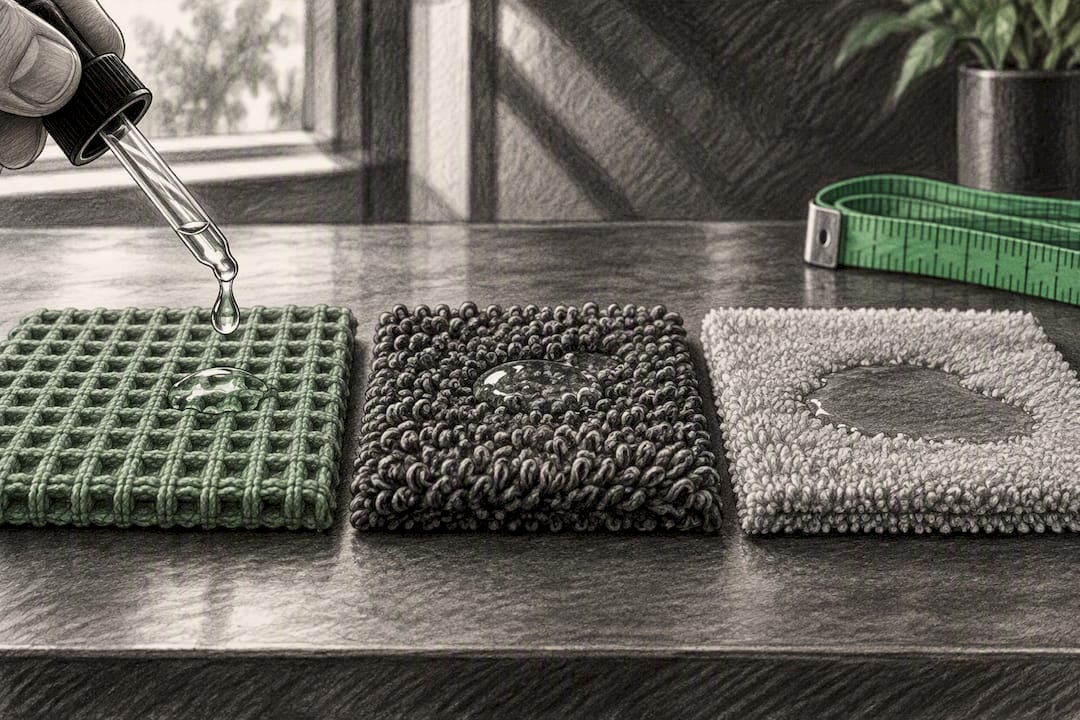
One exception worth remembering: waffle-weave and twisted-loop towels can outperform a much higher-GSM flat pile towel on drying, because the weave structure itself stores water efficiently. GSM matters, but so does the shape of the fabric holding it. Always check a towel’s dimensions alongside its GSM. A small 300 GSM towel and a large 300 GSM towel hold very different amounts of total material, even though the density reading is identical.
Weave, Fiber Blend, and Edge Construction All Change What GSM Means
A GSM number in isolation can mislead you if you ignore the weave underneath it. Twisted-loop towels grab and hold debris well, making them strong choices for washing. Flat weaves offer more control and less drag, which suits glass and trim. Waffle weaves trade pile height for surface area, giving them an edge in water capacity relative to their weight.
Fiber blend matters just as much:
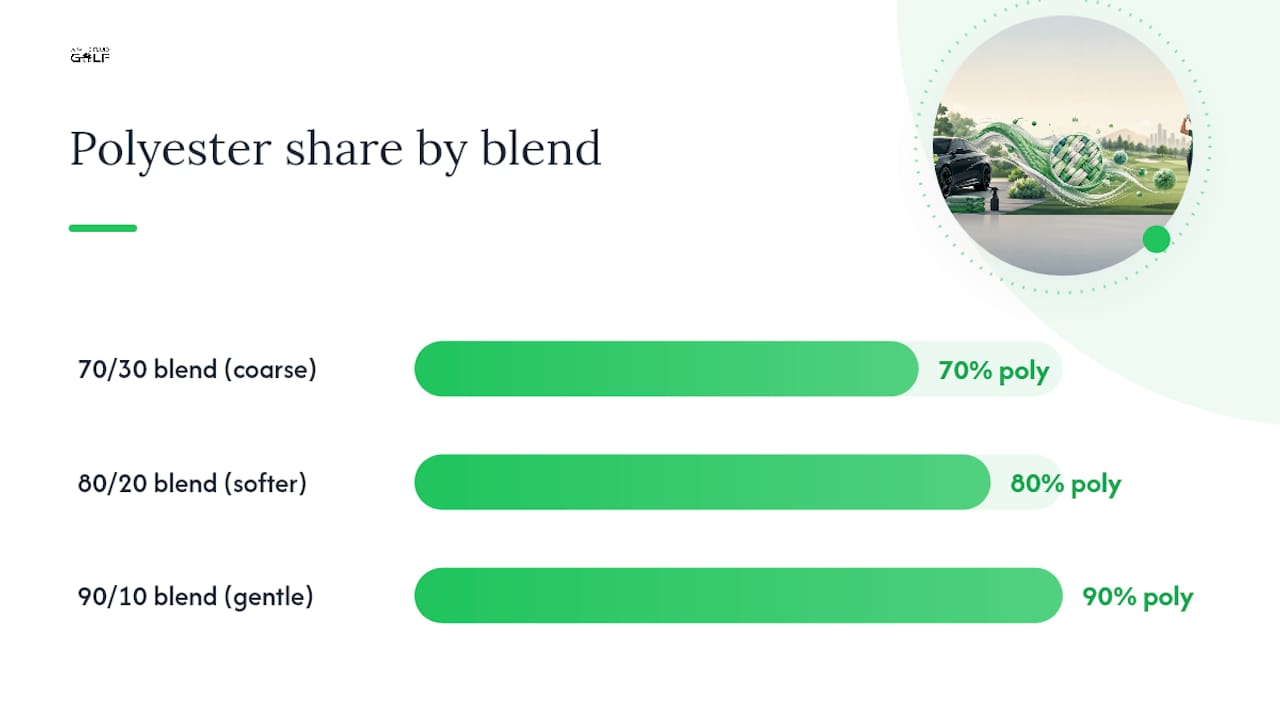
- A 70/30 polyester/polyamide blend tends to feel coarser and cleans more aggressively, useful for heavier grime.
- An 80/20 or 90/10 blend leans softer and gentler, better suited for finish work and coatings where scratching is a real risk.
- Edge construction can make or break paint safety: stitched polyester borders are harder and more likely to leave marks, while edgeless or suede-edged towels reduce that risk significantly.
None of these factors show up in a GSM number, which is exactly why two towels sharing the same GSM can perform completely differently on the same surface.
A Six-Step Checklist for Choosing the Right GSM
Skip the guesswork by working through these steps before you buy or grab a towel off the shelf:
- Identify the surface and the outcome you want (absorb water, remove residue, or preserve clarity).
- Pick the weave first. Task drives weave more than weave drives GSM.
- Choose a GSM range that matches both the task and the weave, using the table above as a baseline.
- Check the edge construction. Favor edgeless or suede edges for anything touching paint.
- Confirm the fiber blend fits the finish. Softer blends for coated or delicate surfaces.
- Test on an inconspicuous panel first, then rotate towels by task rather than grabbing whichever one is closest.
Washing correctly preserves the pile that gives a towel its performance in the first place. Overloading a washer or using fabric softener flattens pile fast, and that’s true regardless of GSM. Aiming Fluid Golf’s own guidance on washing microfiber towels covers the specifics.
Pro Tip: Keep at least two GSM tiers on hand: something in the 300 range for everyday wiping and something above 600 for anything you actually need to dry fast.
Why GSM Matters on the Golf Course, Not Just in the Detailing Bay
Golf equipment care runs into the same physics as automotive detailing; for tips on organizing golf events and tournaments where towel choices matter, visit How to Run a Golf Tournament (Step by Step) | Chase Birdies. A clubface caked in mud needs a mid-to-high GSM towel with enough pile to lift debris out of the grooves, while a quick wipe on a golf ball benefits from something lower profile that won’t leave lint behind. Certain towel systems balance GSM against weave and magnetic attachment so the towel does its job without falling into the mud pile between shots. The mechanics of grooves, debris, and towel density work the same way whether you’re on a fairway or in a garage, a point covered in more depth in our breakdown of golf towel cleaning mechanics.
— Gary
Get a Task-Ready Towel Instead of Guessing at GSM
Reading a GSM number is one thing. Never digging through your bag to find the right towel mid-round is another problem entirely. Magna-Anchor™ Magnetic Golf Towels apply task-based thinking, built with a weave and density suited to club and ball cleanup, then anchored to bags with a magnetic mount for easy access.

Pair a towel with the Magnetic Landing Pad and you’ve got a full towel system rather than a single accessory rattling around your bag. Neither product replaces a dedicated detailing towel for your car, but for grooves, grips, and golf balls, the fit is intentional rather than incidental. Browse the Magna-Anchor™ towel collection and pick the size that matches how you play.
Sources
- What is GSM? | What Does GSM Mean in Fabric? | Autofiber
- Microfiber GSM, Explained | Two Bucket Club
- Why GSM Matters in Microfiber — and When It Doesn’t – Beneath Zero
- Microfiber Towels and GSM – Car Supplies Warehouse
FAQ
What Is a Good GSM for Microfiber Towels?
There’s no single “good” GSM since it depends on the task. For general-purpose use, 300–400 GSM covers most washing and wiping needs, while dedicated drying towels perform best above 700 GSM.
What GSM Do Big-Box Store Microfiber Towels Typically Use?
Most mass-market microfiber towels, including the kind sold in bulk multipacks, fall in the 300 to 400 GSM range. That makes them reasonable all-purpose towels but underpowered for dedicated drying or heavy buffing work.
What Does a 300 GSM Microfiber Towel Mean?
A 300 GSM towel carries 300 grams of material per square meter, placing it in the all-rounder category suited to interior wiping and light washing. Keep in mind that production tolerance runs about ±3%, so a “300 GSM” towel might actually measure 291 to 309 GSM.
Is 600 GSM or 800 GSM Better for Detailing?
Neither is universally better. An 800 GSM towel gives more pile depth for residue capture during buffing or drying, while 600 GSM is often lighter and easier to wring out for wash-stage use. Match the number to the job rather than assuming higher always wins.


