


The most versatile premium approach to magnetic towel mount ideas is a clip-based magnetic system paired with a landing-pad hub, since it works across bags, carts, and apparel without permanent hardware. Check your bag or cart material first, since aluminum, carbon fiber, and plastic won’t hold a magnet on their own. Avoid relying on a weaker magnet grade for towels that might get heavy and soaked. Some brands have built magnetic towel systems around this logic.
TL;DR:
- Magnet strength should match weather conditions, with N52 magnets preferred for wet, heavy towels on non-magnetic bags.
- Aluminum, carbon fiber, and plastic bags require added metal hubs for magnetic attachments, and a quick resistance test can confirm compatibility.
- Proper installation involves cleaning, adding barriers to prevent scratches, and placing mounts where towels hang flat against the rail.
- Heavy magnets near electronics or medical devices can cause interference, so maintain safety distances, especially for pacemakers or magnetic media.
- Regular maintenance, including wiping contact points and storing magnets separately, extends the system’s effectiveness seasonally.
Table of Contents
- What Are the Best Magnetic Towel Mount Ideas for a Golf Bag or Cart?
- Will a Magnet Actually Hold on Your Bag or Cart?
- How Do You Install a Magnetic Towel Mount Without Scratching Your Gear?
- How Do You Choose the Right Magnetic Towel System for Your Game?
- Are Strong Magnets Safe Near Electronics or Medical Devices?
- How Do You Keep a Magnetic Towel Mount Working Season After Season?
- Why Aiming Fluid Golf Built the Magna-Anchor™ System
- Ready to Upgrade Your Bag With Magna-Anchor™?
- Sources
What Are the Best Magnetic Towel Mount Ideas for a Golf Bag or Cart?
A magnetic towel mount only earns its place on your bag if you can grab the towel without looking and reattach it without fumbling. That standard rules out a lot of designs that look clean in a product photo but frustrate you on hole four. Magnetic golf towels attach to metal surfaces, which allows one handed removal and reattachment, and that single mechanical advantage is what separates a good mount from a gimmick.
Here’s how to rank the options by real-world usefulness, starting with the setups that suit most golfers:
- Landing pad on the exterior bag rail. Mount it at hip height near your putter well, not buried behind pockets, so your hand finds it on the first reach.
- Clip attached to the cart frame or push-cart rail. For riding-cart golfers, magnetic clip systems often provide the best compromise between speed of access and security on bumpy cart paths.
- Built-in magnetic towel for steel-framed bags. This is the tidiest option when your bag frame is genuinely magnetic, since there’s no separate hub to lose.
- Removable metal hub for non-magnetic bags. An adhesive or strap-mounted puck gives carbon fiber or composite bags a magnetic point to work with.
- Apparel or belt clip for walkers. Minimal bulk, and it keeps the towel off the bag entirely if you prefer your hands free between shots.
- Wrap-style clip for push or pull carts with composite frames. These loop around a tube rather than depending on magnetism at all.
- Utility-pouch-mounted magnet. Attaching a magnet to a premium leather pouch gives you a towel point and a valuables case in one piece of gear.
- A simple felt or silicone scratch pad. Cut to size and placed under any hub, it protects painted surfaces from day one instead of after the first scuff.
Bag-organization guides consistently list magnetic towel attachments among the accessories that separate an organized cart bag from a cluttered one, and the placement matters as much as the hardware itself.
Pro Tip: Mount the pad or clip so the towel hangs flat against the rail rather than swinging free. A towel that dangles will eventually catch a club head on your backswing or block the pocket you need mid-round.
Will a Magnet Actually Hold on Your Bag or Cart?
Magnet strength is graded by pull force, and the two ratings you’ll see on product listings are N35 and N52. Built-in magnetic towels commonly use the weaker N35 magnets, which hold fine for a dry towel but lose grip fast once that towel is soaked from a rain delay or a wet cart path. N52 magnets are the stronger grade, and clip systems built around them handle wet, heavy towels with far less risk of dropping mid-swing.
Compatibility comes down to the metal itself, not the brand of bag:
- Steel frames and rails hold magnets reliably, full stop.
- Aluminum is not magnetic, despite being a metal, so a magnet will not stick.
- Carbon fiber and composite builds, common on lightweight carry bags, need a metal hub added before any magnet works.
- Plastic cart baskets and trim need the same hub workaround.
A quick test: hold a refrigerator magnet against the spot where you want your mount. If it grips with real resistance, you’re set for a direct magnetic system. If it slides off, a clip system with a small metal hub is your workaround, not a dealbreaker.
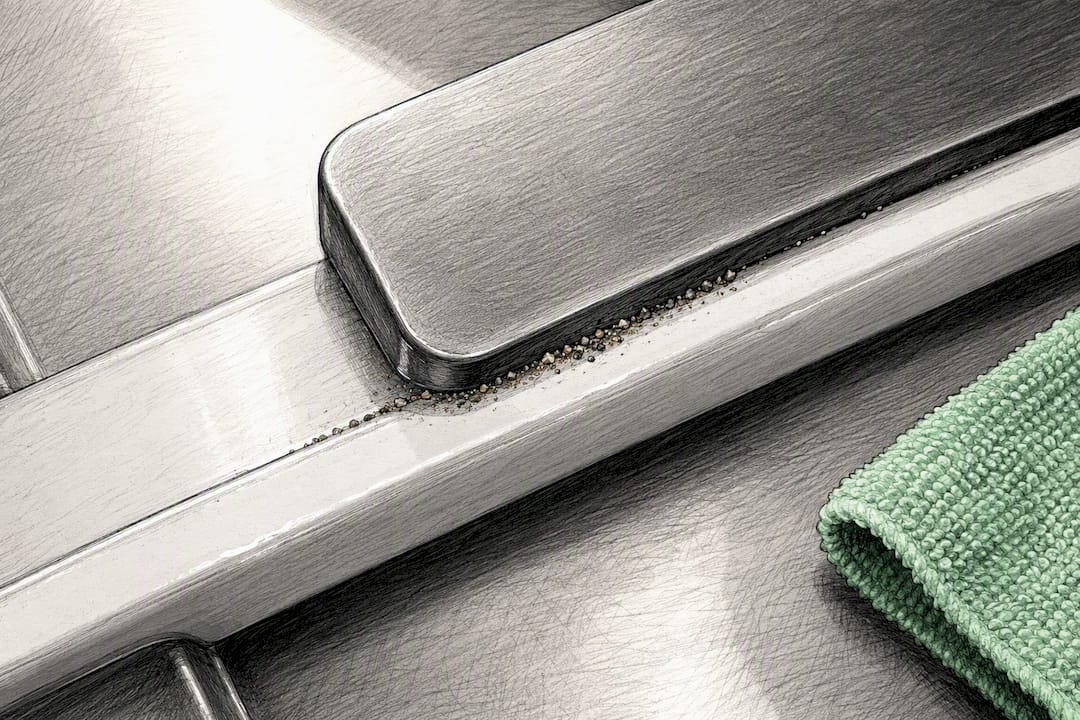
One overlooked risk sits between the magnet and the paint: grit. Dirt trapped between a magnet and painted metal causes scratching over repeated attach-and-remove cycles, which is the main argument for skipping bare-magnet contact on any finished surface.
How Do You Install a Magnetic Towel Mount Without Scratching Your Gear?
Installation takes five minutes, but the sequence matters more than the hardware you bought. Rushing the first attachment is how a scratch shows up by round three.
- Clean the surface and the magnet housing. Wipe both with a dry cloth before the first attach. Grit is the enemy here, not the magnet itself.
- Add a felt or silicone barrier on painted cart parts. Rubberized housings and soft sleeves reduce direct abrasion and are worth the extra few dollars if your cart or bag has a glossy finish.
- Choose your hub type deliberately. Adhesive hubs suit smooth, flat carbon fiber panels. Strap-mounted hubs work on tubular cart frames. Rivet-style hubs are the most permanent, best saved for a bag you don’t plan to replace soon.
- Run a daily wipe-and-reseat check. Before you leave the cart barn, wipe the contact points and reseat the towel to confirm the magnet still grips firmly.
Full attachment walk-throughs, including step-by-step placement guidance, can save you from repeating the trial-and-error most golfers go through in their first season with a magnetic system.
Pro Tip: If you wash your towel weekly, pick a clip system rather than a sewn-in magnet. Grommets and stitched-in hardware degrade faster in a washing machine, while a plain towel on a clip just swaps out clean.
How Do You Choose the Right Magnetic Towel System for Your Game?
Your play style decides more of this than any spec sheet does. A cart player, a walker, and a golfer chasing a premium look each need a different combination of hub, magnet grade, and mount point.
- Cart player: A clip-plus-landing-pad combo on the frame gives you the fastest single-hand access on bumpy paths.
- Walker with a composite or carbon-fiber bag: A leather utility pouch with an attached magnet, or a strap-mounted hub, solves the non-magnetic frame problem without adding bulk.
- Golfer prioritizing a premium look: A landing pad paired with a leather pouch keeps the setup visually clean while still functional in wet weather.
Before you buy, run down this checklist:
- Is the magnet rated N35 or N52, and does that match how often you play in wet conditions?
- Does the housing have a rubberized or felt barrier included, or will you need to add one?
- Is the metal hub removable, so you can move the whole system to a new bag later?
- Does the listing mention a warranty on the magnet or housing?
Ask any seller directly whether the hub ships separately for non-magnetic bags. Many premium listings bundle it, but plenty of budget clip sets assume you already have steel to work with, and you’ll find that out only after checkout. A comparison of towel attachment methods is worth a look if you’re still weighing clip versus built-in versus pad systems side by side.
Are Strong Magnets Safe Near Electronics or Medical Devices?
N52 magnets are strong enough to matter around more than just your bag. Keep any high-grade magnetic mount at least a few inches from phones with older magnetic-stripe wallets, hotel key cards, and hard-drive-based electronics, since a direct, sustained contact can corrupt data on magnetic media or interfere with compass sensors in GPS devices.
The bigger concern is medical. Anyone with a pacemaker, implanted defibrillator, or insulin pump should keep strong magnets away from the chest area entirely; these devices can misread a nearby magnetic field as an interference signal, and manufacturers generally advise a safe separation distance for any consumer magnet. If you or a cart-mate wears one of these devices, mount the towel system on the opposite side of the bag or cart from where that person sits, and skip clipping any magnet directly onto a shirt pocket or belt near the chest.
Store spare hubs and unused magnetic pucks away from wallets, watches, and loose electronics in your golf bag’s pockets. It’s a small habit, but it prevents the kind of accidental demagnetizing or data-scrambling that shows up as a mystery a week later, long after you’ve forgotten which pocket the magnet was in.
How Do You Keep a Magnetic Towel Mount Working Season After Season?
Magnets don’t wear out from use the way fabric or zippers do, but grit, corrosion, and repeated impact all shorten their working life. A little routine care keeps the pull force close to what it was on day one.
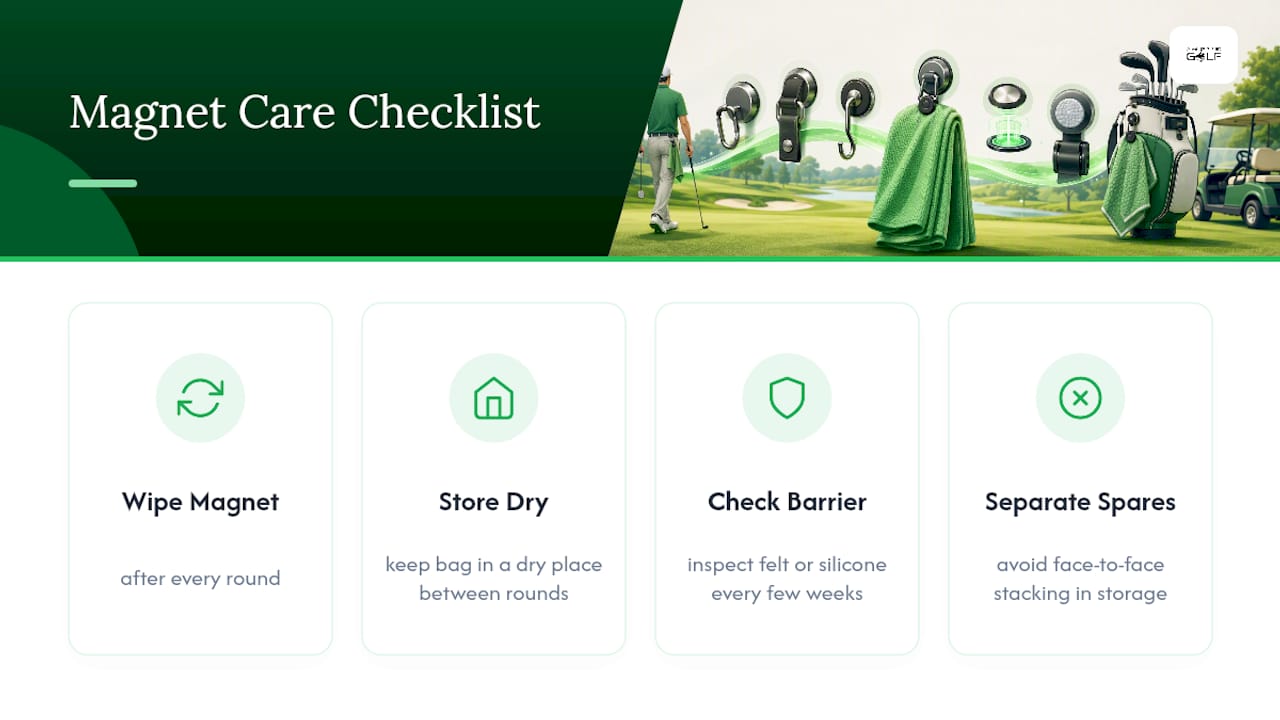
Wipe the magnet face and the contact hub after every round, not just when it looks dirty. Course dust and cart-path grit are abrasive at a microscopic level, and they build up fastest on mounts left exposed on an exterior rail.
Store your bag somewhere dry between rounds. Moisture trapped against a magnet and metal hub over weeks can encourage surface corrosion, particularly on lower-cost hubs without a sealed housing.
Check the felt or silicone barrier every few weeks if you added one during installation. These wear thin with repeated attach-and-remove cycles, and a thinned barrier lets grit back into direct contact with painted surfaces.
Avoid stacking two magnets face to face in storage. Doing this repeatedly, especially with high-grade N52 pairs, can gradually weaken their field strength over time. Keep spares separated in a pouch or drawer instead of clipped together.
Why Aiming Fluid Golf Built the Magna-Anchor™ System
Watching recreational rounds week after week, one pattern kept showing up: golfers losing thirty seconds per hole digging through a bag pocket for a towel that had slipped off a weak clip. That’s the problem Magna-Anchor™ was built to solve, not novelty, not looks, just faster access between shots.
The design leans on a stronger magnet grade than most built-in towel systems use, paired with a landing pad that keeps the towel flat against the bag instead of swinging into the club heads… Rounds played with a properly seated pad consistently showed fewer full stops to search for a towel, which matters more on a busy Saturday tee sheet than most golfers admit.
— Gary
Ready to Upgrade Your Bag With Magna-Anchor™?
If the ideas above convinced you that a clip-and-pad hybrid beats a flimsy sewn-in magnet, the fastest way to test that is with a system built for exactly this problem. Aiming Fluid Golf’s magnetic towel collection is built around the Magna-Anchor™ system: a rated magnet paired with a wash-pocket towel design so you’re not stuck replacing hardware every time you launder it.
Pair a Magna-Anchor™ towel with a landing pad and you cover both the cart-rail and bag-rail mounting ideas covered above in one setup, without adhesive residue or a permanent modification to your bag. If you’re also shopping for a full accessory kit, the best golf accessories guide rounds out the rest of what a well-organized bag needs. Check the current listing for the specifics on materials and any return terms before you order, since those details are confirmed at checkout rather than in a general buying guide.
Sources
- Are Magnetic Golf Towels Worth It? (Most Golfers Miss This) – Golf Deft
- How To Organize Your Golf Bag Like A Pro | Our Tips + Tricks – Lazrus Golf


