


The single most reliable way to keep grips dry in rain is a protected dry towel system: one towel stays sealed off from moisture at all times, a second towel handles heads and shafts, and you back both with an umbrella or bag cover and at least one spare pair of rain gloves. Rule 4.3 permits ordinary drying steps like this, so the routine is fully within the rules. Build the habit before the round starts, not after your grips are already slick.
TL;DR:
- The key to keeping grips dry in rain is a protected towel system that stays sealed from moisture, supported by umbrella or bag cover use and proper storage.
- Proper pre-round preparation includes cleaning grips, inspecting for wear, packing two dry towels, and using weather-resistant gloves, all stored in a protected bag pocket.
- During the round, shelter the bag before club retrieval, dry grips with a dedicated towel, wipe clubs with a beater towel, and rotate gloves to air-dry, minimizing contact with rain.
- Using magnetic towel anchors and specific magnetic landing pads ensures towels stay dry and accessible without added friction or exposure to water.
- Drying grips mid-round is legal under golf rules, but artificial assistance such as applying drying powders is limited to normal use, and full drying should occur overnight after play.
Table of Contents
- What Does It Take to Keep Grips Dry in Rain?
- How Do You Handle Clubs and Towels Mid-Round?
- Which Gear Actually Reduces Wet-Grip Risk?
- Is Drying Your Grips Mid-Round Actually Legal?
- What Should You Do With Wet Clubs After the Round?
- Why We Designed a Towel System Around This Exact Problem
- The Real Lesson From Caddie Rain Routines
- Keep One Towel Dry, Every Round, Without Thinking About It
- Sources
- FAQ
What Does It Take to Keep Grips Dry in Rain?
Keeping grips dry in wet weather is less about gear and more about discipline. PGA TOUR caddies, who deal with genuinely miserable rounds for a living, treat grip protection as a process problem rather than something one product fixes on its own. The core move is looping a dry towel under an open umbrella so it never touches falling rain, then using a bag cover so water can’t pool at the bottom of your bag and creep upward into your grips.
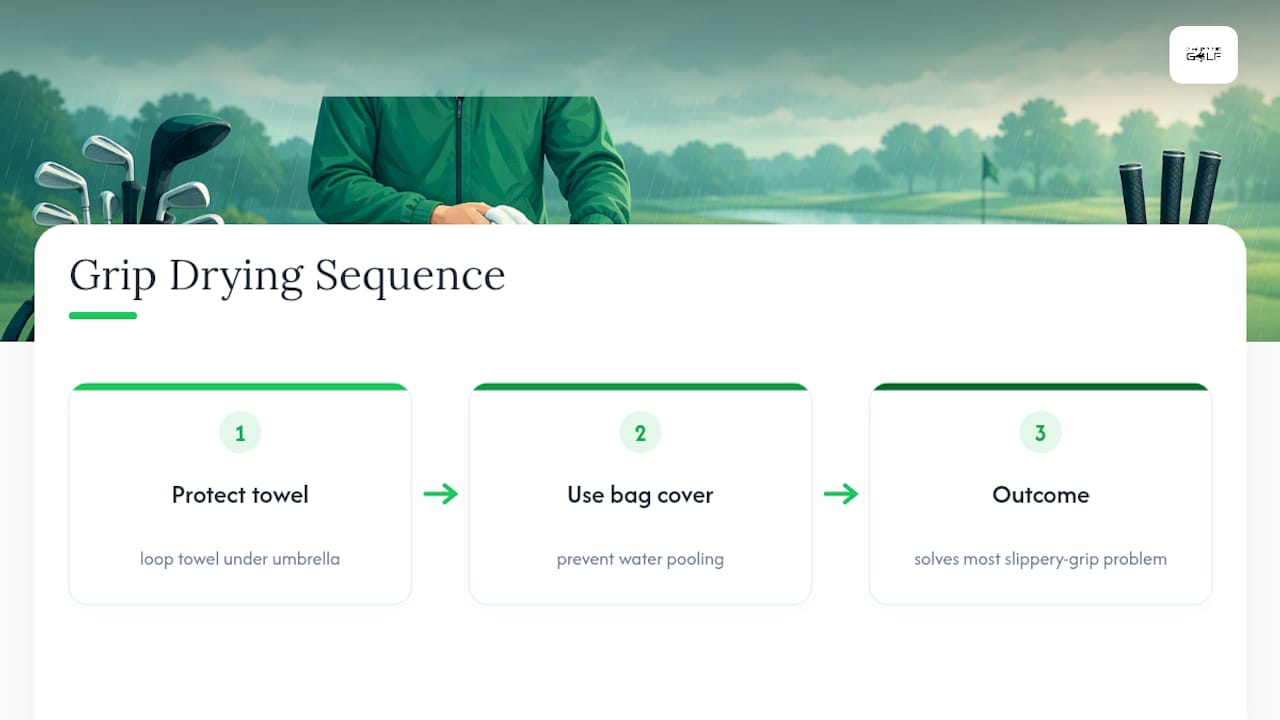
That single habit, protecting one towel from ever getting wet, solves most of the slippery-grip problem before you even think about gloves or grip material. Everything else in this guide supports that one habit.
Prep before the round: what goes in your bag
Rain-day prep starts the night before, not on the first tee.
- Clean your grips. Wipe them with warm water and a bit of dish soap to strip the oils that make wet grips even slicker.
- Inspect for wear. Shiny, smooth, or hardened grips lose tackiness fast in the rain. If you can see a shine where your hands sit, regrip before the round.
- Pack two towels minimum. One stays sealed and dry for grips only. The other, a “beater” towel, handles clubheads, shafts, and balls.
- Pack two pairs of rain gloves. One wears out from moisture faster than you’d expect over 18 holes.
- Bring a large umbrella and a rain hood for your bag, and test the hood’s fit before you’re standing in a downpour trying to figure it out.
Store the dry towel somewhere it physically cannot get splashed. A protected pocket or magnetic landing pad works better than clipping it loosely to a strap where every gust flips it into the mud.
How Do You Handle Clubs and Towels Mid-Round?
Every shot in the rain follows the same short sequence, and skipping a step is usually how a dry towel ends up soaked by the back nine.
- Shelter the bag opening. Keep your umbrella or rain hood over the top of the bag before you reach in.
- Pull the club out fully under cover, not halfway, then close the umbrella or hood back over the opening.
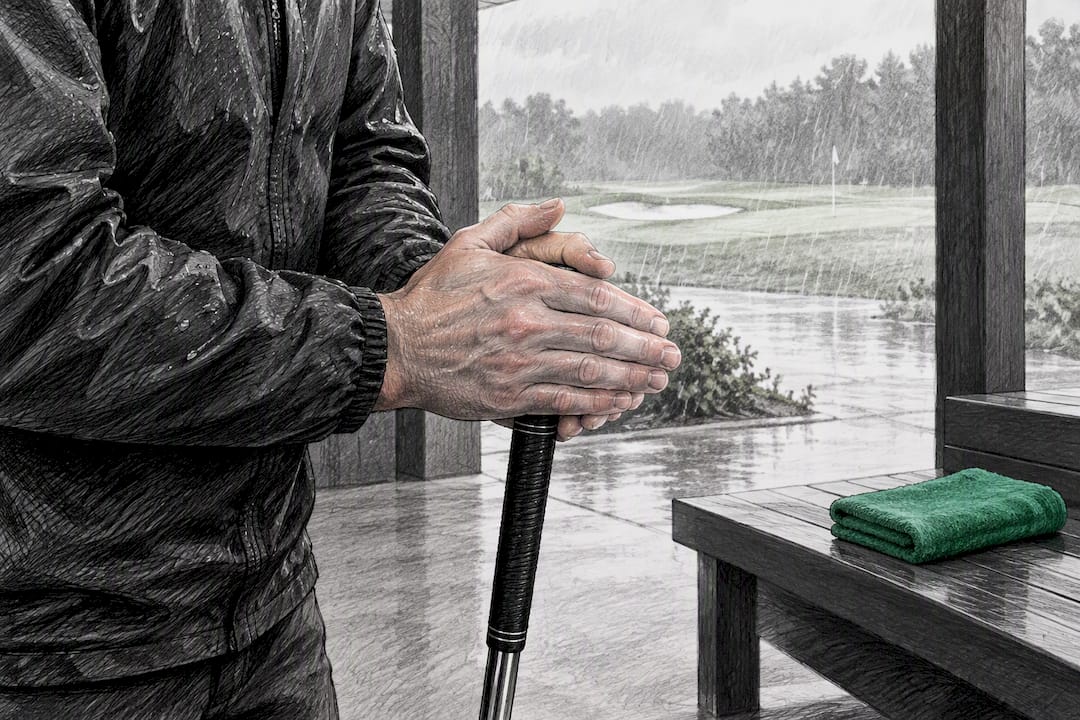
- Dry the grip with your dedicated grip towel only. This towel never touches a clubhead, the ball, or your hands directly. Its entire job is staying dry so it can dry your grip.
- Wipe the head and shaft with the beater towel before the club goes back in the bag. A common failure caddies flag is water dripping from a wet clubhead down onto grips that were already dry.
- Rotate your gloves. Wear one while the other air-dries clipped to your bag, never sealed in a pocket or plastic bag where trapped moisture ruins both.
If you’re caught without an umbrella, hold the club under your arm against your body while you dry it. Body heat and a jacket sleeve do more than nothing, and hand warmers in a jacket pocket keep your fingers from stiffening between shots.
Pro Tip: Cold, wet hands make golfers grip harder without realizing it, and that added tension tightens the swing and kills feel around the green. Focus on staying warm between shots, not squeezing tighter.
Which Gear Actually Reduces Wet-Grip Risk?
Not all rain gear pulls equal weight. Some pieces matter far more than others once water starts falling sideways.
- Towel material and stowage. Microfiber towels absorb more water per swipe than cotton, but the material matters less than whether the towel stays dry between uses. A towel that’s protected, whether tucked under an umbrella or clipped to a magnetic landing pad, beats a “better” towel that gets rained on anyway.
- Umbrella and bag cover size. A double canopy umbrella and a bag cover with a cinching rain hood keep the bottom of your bag, and the grips sitting in it, from soaking through over four hours.
- Wet-weather gloves. Simulated suede or synthetic rain gloves are built to grip better as they get wet, unlike a standard leather glove that turns slick. Carry at least one spare.
- Grip freshness. New, tacky grips shed water better than old ones. If your grips are more than a year old or feel glassy, regrip before rain season rather than during it.
Aiming Fluid Golf’s Magna-Anchor™ Magnetic Golf Towels and Magnetic Landing Pad exist specifically for that stowage problem. The towel snaps to a fixed magnetic spot on the bag instead of dangling loose, which keeps it out of splash range and out of the mud when you set your bag down between shots.
Is Drying Your Grips Mid-Round Actually Legal?
Under the Rules of Golf, drying your grip during a round isn’t a gray area. It’s explicitly allowed.
Rule 4.3 permits a player to towel a grip before a stroke, wrap a towel or handkerchief around the handle, and use drying powder or another drying agent, as long as none of it artificially assists the stroke itself.
That covers the entire towel-and-glove routine described above. What’s not allowed is anything that crosses into artificial assistance, such as building up material on a grip to change its diameter beyond a normal repair, or using clothing in an unusual way specifically to help your swing rather than to stay dry. Golf Digest’s rules review notes drying powders and resin fall under this same ordinary-use standard.
If you’re playing in a sanctioned competition, check the local rules sheet. Committees sometimes add specific language about drying agents, and it’s worth five minutes at registration to confirm you’re clear.
What Should You Do With Wet Clubs After the Round?
The round isn’t over just because you signed your scorecard. Wet grips left inside a closed bag overnight is how one rainy Saturday turns into a regripping bill.
- Pull every club out of the bag and lay them out at room temperature, headcovers off, overnight.
- Never seal damp gloves or clubs in an airtight bag. Trapped moisture spreads to everything else stored with it.
- Separate wet items from dry ones in your car or garage rather than piling everything back into one bag.
- Watch grip wear over time. Repeated wet storage without full drying speeds up hardening and cracking, which shortens the life of even a good grip. If a grip has taken several soakings this season, plan to regrip sooner than you normally would.
Why We Designed a Towel System Around This Exact Problem
Product development for the Magna-Anchor™ towel system started from a simple observation: golfers already know they should keep one towel dry, but almost nothing in a standard bag makes that easy to actually do under pressure.
A towel clipped to a strap flips around in wind and rain. A towel stuffed in a pocket takes both hands and ten seconds to retrieve, which is exactly when golfers give up and grab whatever’s closest, usually the wrong towel. insert specific professional credentials or golf industry experience of Gary] The magnetic anchor point was built to remove that friction entirely, so the “protected dry towel” habit this article describes takes no extra thought to maintain. For more on the reasoning behind the full rain-day setup, see [Rain-Ready Golf and how to keep golf hands dry for better performance.
The Real Lesson From Caddie Rain Routines
Most rain-day advice online is a gear list: buy better gloves, buy a bigger umbrella, buy grippier grips. That’s not wrong, but it puts the emphasis in the wrong place. The caddies who handle wet rounds for a living aren’t thinking about product specs mid-round. They’re thinking about one variable: has the dry towel stayed dry.
That’s the gap in most conventional advice. It treats grip protection as a shopping problem when it’s actually a process problem, the same lesson PGA TOUR looper routines make clear. Buy the good gloves and the better grips, sure. But if you don’t have a fixed, protected spot for one towel that never touches rain, none of the rest of it holds up by the back nine.
If you take one thing from this article, prioritize the storage problem before the product problem. Decide right now where your dry towel lives on your bag, make it a spot you can reach without opening it to weather, and treat that spot as sacred for eighteen holes. Everything else, gloves, umbrella technique, post-round drying, works better once that one decision is locked in.
— Gary
Keep One Towel Dry, Every Round, Without Thinking About It
Aiming Fluid Golf built the Magna-Anchor™ system to solve exactly the failure point caddies describe: a dry towel that gets forgotten, dropped, or soaked because there’s nowhere reliable to keep it.

The magnetic towel snaps to a fixed anchor point on a bag, so it is consistently in the same spot, reachable in one motion, and less likely exposed to splash-back from a wet clubhead. Pair it with the Magnetic Landing Pad to keep a second surface clear for setting down a wet club or wiping your hands, instead of using your dry towel for a job it was never meant to do. Neither product claims to make you rainproof. They simply remove the friction that causes golfers to abandon the routine after a few holes. Check the Magna-Anchor™ Magnetic Golf Towels collection and pick the size that fits your bag before your next wet forecast.
Sources
- Rule 4.3 Use of Equipment | USGA
- Playing in the rain: PGA TOUR caddies speak on how to keep grips from getting wet
- Tom Watson’s best golf tips for playing in the rain, wind and cold | Golf Digest
FAQ
How Long Does It Take Grips to Dry?
A grip wiped with a dry towel is usable within seconds, but full moisture removal from a soaked grip left overnight at room temperature typically takes a full night with headcovers off, according to Golf Digest’s post-round checklist. Rushing that process by sealing damp clubs back in the bag is what causes lasting grip damage.
What Golf Grips Work Best in Rainy Weather?
Fresh, tacky grips outperform older, glazed ones in wet conditions regardless of brand, since a worn grip loses the surface texture that channels water away from your hands. If your current grips are more than a season old or feel smooth to the touch, regrip before rain season rather than mid-round.
Why Do Some Golfers Put Drying Agent or Powder on Their Grips?
Drying powders and resins pull moisture off a wet grip surface fast, and Rule 4.3 allows this as an ordinary drying method, similar to using a towel. The key limit is that the agent has to dry the grip, not artificially change its feel or diameter to assist the stroke.
Is There a Term for a Golfer Who Struggles in Bad Weather?
There’s no official golf term for this, though “fair-weather golfer” is a common informal label for someone who avoids playing, or plays poorly, once conditions turn wet or cold. Building a rain routine, rather than a good-weather-only game, is usually what separates the two.
What Should I Rotate Between Shots to Keep Grips Dry?
Rotate between a dedicated grip towel that never touches anything else, a beater towel for clubheads and shafts, and a spare pair of rain gloves while the first pair air-dries. PGA TOUR caddie guidance treats this rotation, not any single product, as the real control against wet grips.


