


Keeping a glove from getting crusty comes down to four habits: rotate between at least two gloves, air-dry them flat away from heat, clean off salt and oil with a gentle hand-wash, and never rush the drying process with a car dashboard or hairdryer. Once a leather glove nears dryness, a light conditioner keeps the hide supple. Skip any one of these steps and salt crystals from sweat start doing quiet damage to the fibers, according to Copper Tech’s glove care guidance.
TL;DR:
- Rotating between multiple gloves and storing them flat in a ventilated space prevents salt crystals from damaging leather fibers.
- Cleaning leather gloves with mild, lipid-preserving soap on the hand and rinsing with vinegar dissolves salt buildup without stripping oils.
- Slow air-drying in a low-humidity spot with a glove stretcher or a ball in the palm is better than using heat, which makes leather brittle.
- Using a magnetic towel clip and a dedicated, dry pouch keeps gloves organized and protected from moisture between holes.
- Regularly inspecting seams, conditioning at near-dryness, and tracking usage prolongs glove life and prevents stiffness caused by improper storage.
Table of Contents
- Fast Checklist to Use Right After Every Round
- Step-by-Step Cleaning for Leather and Synthetic Gloves
- Safe Drying and Storage to Preserve Shape and Oils
- Rescue Routine for a Stiff or Crusty Glove
- How Care Differs for Cabretta Leather, Synthetic, and Suede Gloves
- A Practical Routine to Make Gloves Last
- Practical Tips From Gary and How Accessories Cut Risk
- The Real Bottleneck Isn’t Cleaning, It’s Storage Discipline
- Keep Your Gear Dry and Organized Between Holes
- Sources
Fast Checklist to Use Right After Every Round
Crust doesn’t form on the 18th green. It forms in the 20 hours after, when a damp glove sits crumpled in a side pocket while salt slowly crystallizes inside the leather. The habits that stop it take less than two minutes.
- Pull the glove off as soon as you’re off the course and lay it flat, fingers uncurled, instead of leaving it balled up in your bag.
- Blot excess moisture with a microfiber towel. Press, don’t twist. Wringing a leather glove stretches the seams and distorts the palm.
- Rotate between two or more gloves so each one gets a full 24 to 48 hours to dry before its next round.
- Once it’s completely dry, store it flat in its original pouch or a ventilated drawer, not zipped inside a plastic sleeve.
- Never toss a damp glove into your golf bag or leave it baking on a car dashboard between rounds.
A clean microfiber towel also matters more than most golfers realize. A towel that’s already stiff with old sunscreen or dirt just transfers grit back onto the glove while you’re trying to dry it.
Pro Tip: Keep a spare glove in your cart bag’s outer pocket rather than the main compartment. It gets airflow between holes instead of trapping humidity against your other gear.
Step-by-Step Cleaning for Leather and Synthetic Gloves
Most golfers either avoid washing gloves entirely, letting salt build up for months, or scrub them like a dish rag and strip out the oils that keep leather flexible. Neither approach works. Cabretta leather, the sheepskin used in the majority of premium golf gloves, needs a gentler touch than a kitchen sponge and a squirt of dish soap.
Here’s the sequence that actually preserves the hide:
- Wear the glove during washing. Fill a basin with lukewarm water, under about 86°F, and put the glove on your hand. Washing it on your hand keeps the fingers from collapsing and helps you feel where dirt is concentrated.
- Use a lipid-preserving soap. Liquid Castile soap or baby shampoo works because both are formulated to clean without stripping the natural oils leather depends on for flexibility, a method backed by FabricCare101’s leather glove restoration guide. Skip anything with enzymes or heavy-duty surfactants, including most laundry detergent pods.
- Lather the high-wear zones. Focus on the palm, the base of the fingers, and any area with visible sweat staining. A soft cloth or your fingertips are enough; you don’t need a brush.
- Rinse with a vinegar solution if salt is heavy. If you see a faint white haze on the leather, that’s dried salt working its way to the surface. A rinse of 1 tablespoon of white distilled vinegar per gallon of water neutralizes it, according to NMSafety’s leather glove cleaning guide.
- Rinse until the water runs clear. Leftover soap residue makes the palm slick once dry, which defeats the entire purpose of a golf glove.
- Extract water with the towel burrito method. Lay the glove flat inside a dry microfiber towel, roll it up, and press firmly along the length. This pulls water out of both the lining and the exterior hide without the wringing motion that warps seams, a technique detailed in the same FabricCare101 guide.
Salt is the real enemy here, not dirt. Sweat dries into microscopic crystals that work their way into leather fibers and pry them apart from the inside, which is why a glove can look clean but still feel stiff and papery after a hot, humid round.
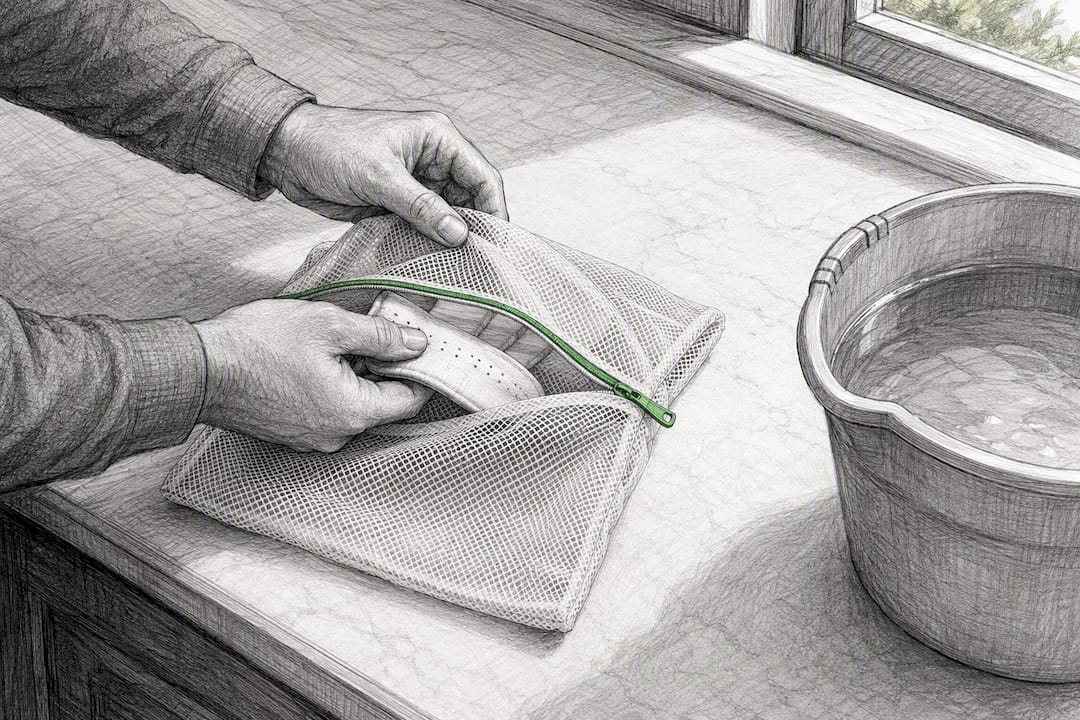
Synthetic and mesh gloves have more tolerance for this process. Some can even handle a gentle cold cycle inside a mesh laundry bag, but check the label first, since blanket advice for leather doesn’t automatically apply to synthetic blends, per Invictus Golf Gloves’ washing guide.
Safe Drying and Storage to Preserve Shape and Oils
Drying is where most gloves actually get ruined, not during play. A hairdryer, a car heater vent, or a sunny dashboard all seem like faster options, but rapid heat pulls moisture out of leather so quickly that the natural oils go with it, leaving the hide permanently brittle. Manufacturers are consistent on this point: Reusch’s official care instructions explicitly warn against any direct heat source, and that guidance holds regardless of brand or price point.
The better method is slower but far cheaper on glove life:
- Lay the glove flat in a ventilated, low-humidity spot away from direct sun.
- Slide a wooden glove stretcher inside, or place a ball in the palm and close the fingers around it to hold its shape while it dries.
- Never hang a glove by its Velcro closure tab. The weight stretches the strap over time and throws off the fit.
- Once it’s bone dry, store it flat in the original pouch or a cool, dry drawer. A breathable baggie works for long-term storage, but only after the glove is fully dry; sealing in moisture is worse than leaving it exposed.
- Give each glove enough time to dry fully between uses under normal conditions, and add extra time in humid climates.
Common packing mistakes like stuffing a damp glove into a zippered pocket or leaving one in a hot trunk overnight undo days of good care in a single afternoon.
Pro Tip: If you play in humid conditions, keep a small silica packet in your glove pouch. It pulls ambient moisture out of the air around the glove even when the leather itself is dry.
Rescue Routine for a Stiff or Crusty Glove
A glove that’s already crusty isn’t necessarily dead. Salt-spew, that chalky white residue on stiff leather, is reversible in most cases if you catch it before the fibers crack. Here’s the rescue sequence:
- Soak briefly. Submerge the glove in cool water with a small amount of mild soap for 10 to 15 minutes, gently flexing it every few minutes to loosen embedded salt.
- Add the vinegar rinse if crystals are visible. The same 1 tablespoon per gallon dilution neutralizes salt deposits and helps pull them out of the leather during the soak, though a thorough final rinse matters here to avoid leaving acid residue behind, per NMSafety’s cleaning breakdown.
- Extract water with a towel, not a wringing motion.
- Wear the glove periodically while it dries. Slipping it on for a few minutes every hour or two helps reform the natural creases at the knuckles instead of letting them dry flat and stiff.
- Condition at roughly 90% dry. Apply a pea-sized amount of a lanolin-based or neatsfoot conditioner while the glove is on your hand. Conditioning at this near-dry stage lets residual moisture carry the lipids into the hide rather than sitting on the surface, a detail Hestra’s care guide calls out specifically.
Set realistic expectations. This routine restores flexibility to a glove that’s stiff or salt-stained, but it won’t rebuild leather that’s already cracked or chewed through at the seams. At that point, replacement beats restoration. Aggressive shortcuts like petroleum jelly or a blast from a hairdryer aren’t a substitute either; Rawlings’ break-in guidance for leather gear warns against exactly these kinds of quick fixes for good reason.
How Care Differs for Cabretta Leather, Synthetic, and Suede Gloves
Applying leather rules to a suede glove, or synthetic rules to a Cabretta glove, is one of the fastest ways to ruin a good pair. Each material handles moisture and cleaning differently.
- Cabretta leather is soft, thin, and sensitive to both heat and harsh detergents. Hand-wash only, with a mild lipid-preserving soap, and follow up with a light conditioner when it starts to feel dry or papery. This is the material used in most premium Cabretta gloves, and it rewards patience over speed.
- Synthetic and mesh gloves tend to be more forgiving. Some tolerate a cold, delicate machine cycle inside a mesh bag, but always check the label first since blends vary widely between brands.
- Suede and nubuck should never get wet at all. Water leaves permanent dark spots and mats the nap. Stick to a dry suede brush and spot-clean stains with a suede eraser instead.
The salt-spew effect hits leather the hardest because sweat salts crystallize inside the fiber structure itself, not just on the surface, which is why a neutralizing rinse matters so much more for leather than for synthetics, where salt mostly sits on the exterior weave.
A Practical Routine to Make Gloves Last
Longevity comes down to spreading wear across more than one glove and catching small problems before they become expensive ones.
- Rotate at least two gloves, and if you play four or more rounds a week, keep three in circulation so none of them get pressed back into service before they’re fully dry.
- Inspect seams, the Velcro tab, and palm wear once a month. Fraying threads and a loosening closure are early warnings, not cosmetic issues.
- Condition lightly after several deep cleans, or whenever the leather starts looking matte and dry. Over-oiling softens and darkens leather faster than under-oiling, so less is more here.
- Build a small glove-care kit: a microfiber towel, a travel-size conditioner, and a dedicated pouch. Keeping it together in your bag removes the excuse to skip the routine.
- Track usage. A quick note on your phone with the date you last wore each glove prevents the common mistake of unknowingly wearing one pair twice as often as the other.
Pro Tip: Write the purchase date on the inside wrist tab in permanent marker. It takes ten seconds and tells you exactly how many months of wear each glove has logged.
Practical Tips From Gary and How Accessories Cut Risk
Most glove damage doesn’t happen from bad technique. It happens from small workflow gaps between the green and the golf bag, according to Gary at Aimingfluidgolf. A golfer takes the glove off after the ninth hole, tosses it in a pocket, and doesn’t think about it again until the cart barn. That gap, sometimes three or four hours of a damp glove pressed against other gear, is where most of the salt damage actually accumulates.
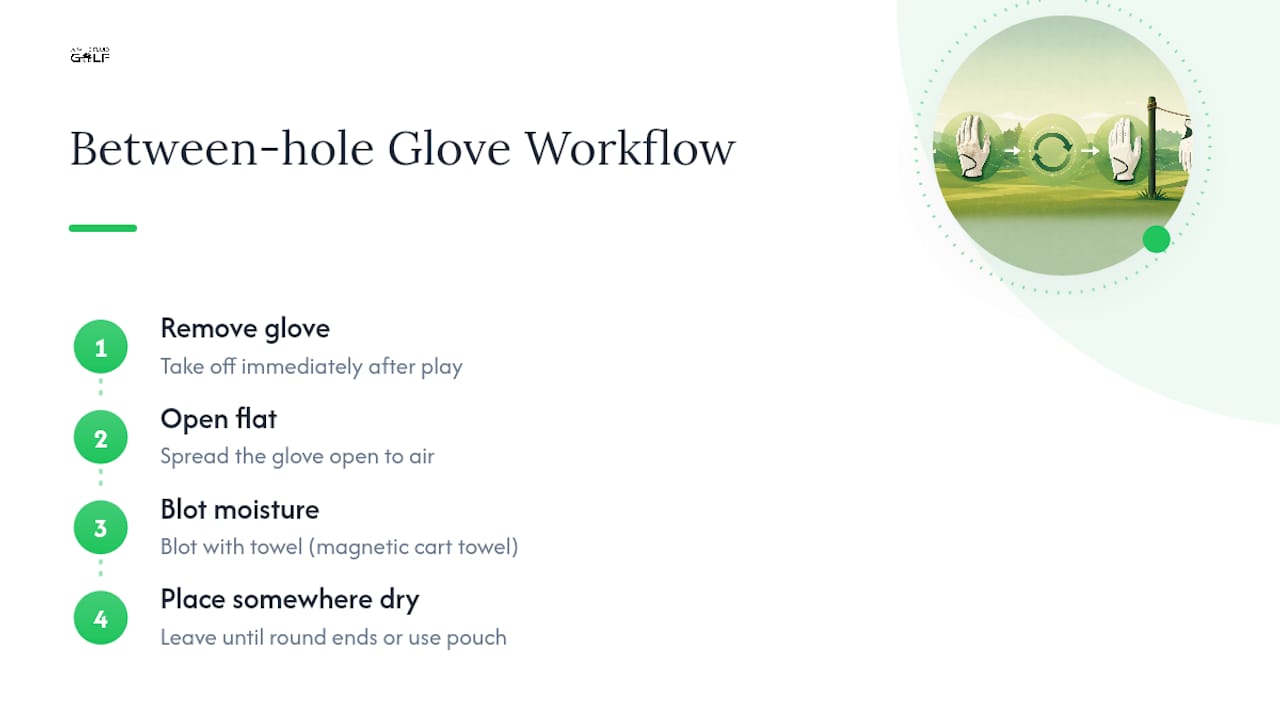
The fix isn’t complicated: open the glove flat the moment it comes off, blot it, and give it somewhere dry to sit until the round ends. A magnetic towel clipped to the cart bar makes that blotting step take five seconds instead of becoming a chore you skip on a busy front nine. And a dedicated pouch, separate from your tees, balls, and rangefinder, keeps a fully dried glove from getting crushed under heavier gear on the drive home.
The players who go through gloves fastest tend to share one habit: they treat the glove as disposable during the round and only think about care once it’s already stiff.
The Real Bottleneck Isn’t Cleaning, It’s Storage Discipline
Most golfers who complain about crusty gloves aren’t skipping the cleaning step. They own a bottle of leather soap and know roughly how to use it. What they skip is the boring middle part: giving a glove somewhere dry to sit between the moment it comes off and the moment it goes back in the bag.
That’s the gap conventional advice glosses over. Articles talk a lot about conditioner and vinegar rinses, and those matter, but the single highest-leverage habit is owning a second glove and actually rotating it. Salt damage is cumulative and largely a function of how many hours a glove spends damp, not how dirty it gets in a single round.
If you take one thing from this, prioritize the rotation and the dry-storage habit before you ever buy a fancy conditioner. Buying leather balm won’t help a glove that gets crumpled wet into a side pocket three times a week. Fix the storage habit first, then worry about the products.
— Gary
Keep Your Gear Dry and Organized Between Holes
Aiming Fluid Golf’s magnetic towels solve the exact problem that causes most crusty gloves: the gap between when a glove needs blotting and when a towel is actually within reach. The magnetic mount attaches to your cart bar or bag ring, so the towel snaps back into place instead of getting buried under headcovers where it stays damp and gritty.

For storage, a leather utility pouch keeps a fully dried glove flat and separated from tees, ball markers, and other gear that would otherwise crush it against the side of your bag. It’s a small habit shift, but it closes the exact gap that causes most salt-driven stiffening. Browse the best golf accessories for cart and carry bags to see how the towel and pouch work together as a system, and pick up a set before your next round.
Sources
- How to Wash Leather Gloves: Safe Restoration Guide
- Golf glove care tips (Copper Tech)
- Glove care — Reusch
- Glove care — Hestra Gloves
- How do you clean leather work gloves? — NMSafety


