


TL;DR:
- Improving your golf experience depends on pacing, organized equipment, and structured preparation for maximum enjoyment. Proper pace habits prevent delays, keep you focused, and enhance shot quality throughout the round. Using organized gear and passive technology further reduces friction, allowing you to play more smoothly from start to finish.
Upgrading your golf round experience is defined by three measurable factors: pace of play, equipment efficiency, and on-course preparation. Golfers who address all three consistently report smoother rounds, better focus, and more enjoyment from the first tee to the final putt. This guide covers each factor with specific techniques, gear recommendations, and etiquette upgrades that apply whether you walk, ride, or carry. The goal is a repeatable system you can apply every round.
How to upgrade your golf round experience through pace of play
Pace of play is the single biggest factor separating an enjoyable round from a frustrating one. USGA analysis shows that groups finishing just 11 minutes late after falling 10 minutes behind back up the entire course by roughly 1 minute per group downstream. That compounding delay can add 35 to 40 minutes to a round without any single group feeling responsible.
The fix is not playing carelessly. Playing faster means eliminating wasted time and committing quickly to decisions, which actually improves shot quality by reducing overthinking. The mental state of a golfer in rhythm is measurably different from one waiting on every tee box.
Here is a numbered sequence for building pace habits into every round:
- Read yardages and select your club while others are hitting. This is the core of ready golf. You should arrive at your ball with a decision already made.
- Limit practice swings to one per shot. MyGolfSpy confirms that cutting decision time and limiting practice swings improves pace without sacrificing accuracy.
- Walk directly to your ball after each shot. Avoid detours to watch others unless you are marking a lost ball.
- On the green, read your putt while others are putting. Mark, clean, and line up before it is your turn.
- Leave the green immediately after holing out. Record scores at the next tee, not on the putting surface.
Pro Tip: Treat your pre-shot routine as a time budget. If you consistently take more than 30 seconds from club selection to swing, you are adding minutes per hole across the round. Time yourself during a practice round to find your baseline.
The 4-hour round framework from Aimingfluidgolf breaks this down further with gear and habit combinations that keep groups moving without sacrificing enjoyment.
What equipment upgrades make the biggest difference on the course?
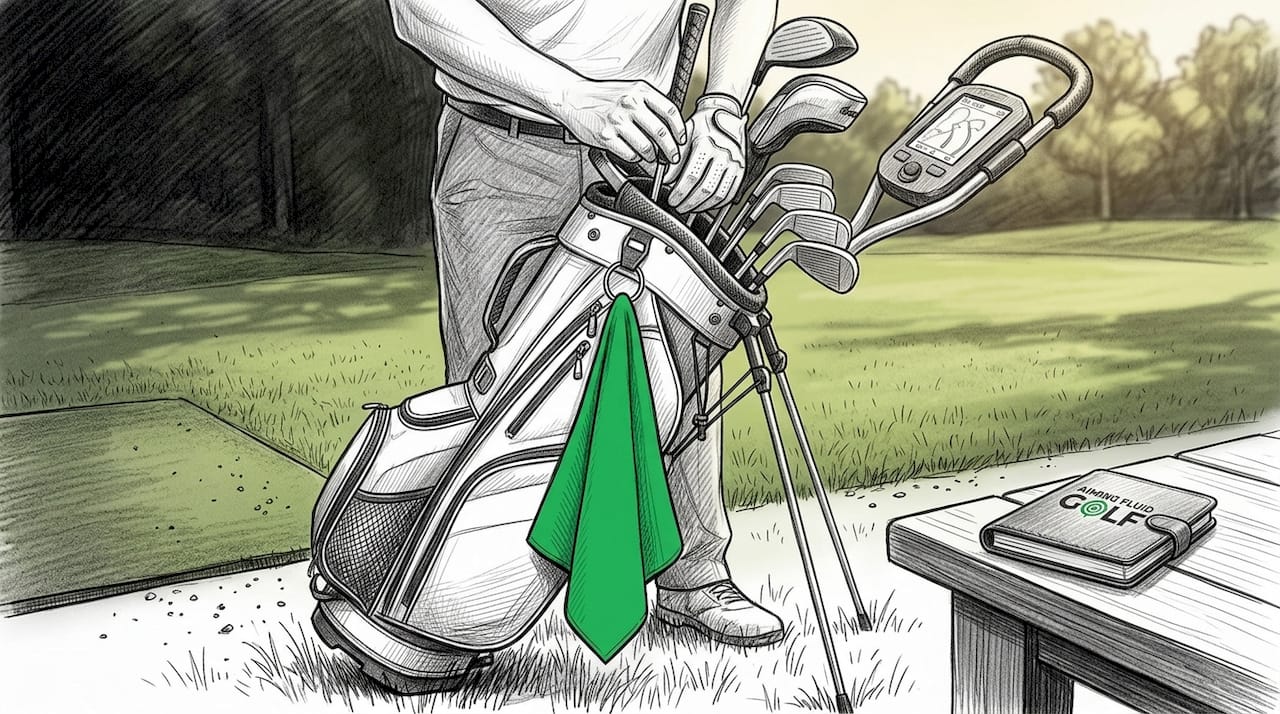
The right gear reduces friction. When your bag is organized, your yardages are instant, and your towel is where you left it, you spend mental energy on golf instead of logistics. Equipment upgrades that reduce mid-round effort deliver more enjoyment than tech that requires extra work to operate.
GPS trolleys and mapping tools
The Motocaddy 2026 M7 GPS is a strong benchmark for what modern trolley technology delivers. Golf Monthly’s review highlights its pinch-and-zoom 3D mapping, shot measurement, and lost ball timer as features that make rounds measurably smoother. The key insight is that GPS trolleys simplify decisions rather than adding complexity, which is the correct standard for evaluating any on-course technology.
Shot-tracking sensors
Arccos Smart Grips embed weather-resistant sensors directly into club grips for automatic shot tracking and AI-driven distance analytics. The system pairs with a GPS rangefinder app and provides strokes gained insights without requiring manual input during the round. This matters because data collected passively does not slow your pace.
Organizational accessories
Here is a comparison of accessory categories by their impact on round efficiency:
| Accessory type | Primary benefit | Impact on pace |
|---|---|---|
| Magnetic towel system | Instant access without bag searching | High |
| GPS trolley with mapping | Eliminates yardage book delays | High |
| Shot-tracking grips | Passive data capture, no manual entry | Medium |
| Utility pouch or cart organizer | Keeps tees, markers, and tools accessible | Medium |
| Precision tees | Consistent tee height, faster setup | Low to medium |
Key organizational principles for your bag:
- Keep your divot tool, ball marker, and tees in the same pocket every round. Muscle memory replaces searching.
- Use a magnetic towel system so the towel returns to a fixed point rather than disappearing into a side pocket.
- Store your rangefinder or GPS device in an accessible outer pocket, not buried under rain gear.
Pro Tip: If your bag feels like a junk drawer by the 9th hole, the problem is not the bag. It is the absence of a fixed system for where each item lives. Assign every item a permanent location and enforce it.
How to organize your pre-round and on-course routine for maximum enjoyment
A structured pre-round routine removes decision fatigue before the first shot. Golfboosters recommends arriving early to organize gear, check conditions, and practice ready golf habits before stepping onto the first tee. Golfers who skip this step spend the first three holes finding their rhythm instead of playing in it.
Follow this sequence before every round:
- Arrive 20 to 30 minutes early. Check in, confirm your tee time, and move directly to bag organization.
- Complete a 10-minute warmup. Focus on mobility and a few swings with mid-irons before moving to driver. This is not about hitting balls. It is about activating movement patterns.
- Check course conditions. Note wind direction, green speed if available, and any local rules. This information shapes club selection on the first several holes.
- Set your bag for the round. Confirm tee supply, ball count, glove condition, and towel placement before leaving the bag drop.
- Build your first-hole plan. Know your target, your club, and your yardage before you reach the tee box.
On-course, the same principle applies. Pre-deciding clubs and targets during others’ shots keeps you within an efficient play rhythm without rushing. The golfer who arrives at the ball undecided is the one who slows the group.
What is the correct way to repair pitch marks and why does it matter?
Pitch mark repair is one of the most misunderstood etiquette practices in golf. Golfers often misunderstand ball-mark repair, but correct technique benefits everyone by maintaining consistent green conditions across the entire course.
The standard most courses use is the Augusta method, documented by Golf Digest in an interview with superintendent Steven Aspinall. The technique uses a single-pronged tool or tee with a circular pushing motion that moves grass back toward the center of the mark. This preserves the root zone and promotes faster recovery.
What to do and what to avoid:
- Use a single-pronged tool or a tee. Insert it at the edge of the mark, not the center, and push inward with a circular motion.
- Pat the repaired area flat with your putter face after completing the circular push. This re-establishes surface contact for the grass.
- Avoid two-pronged tools used with a twisting motion. Twisting damages roots and causes brown spots that take weeks to recover, rather than the 24 to 48 hours a properly repaired mark needs.
- Repair your own mark plus one additional mark on every green. This habit, if adopted by every player in a group, eliminates most visible damage on high-traffic greens.
Pro Tip: Carry a single-pronged divot tool in a fixed pocket, not loose in your bag. The two seconds it takes to find a buried tool is two seconds you will skip the repair entirely.
Proper green care directly improves your putting conditions. Preserving the root zone encourages faster grass recovery and maintains the roll quality that makes putting predictable.
How can technology and feedback systems enhance your golf round experience?
Technology improves a round when it reduces the number of decisions you make under pressure. The Arccos system, for example, captures shot data automatically through grip-embedded sensors, meaning you never stop to log a shot manually. This passive data collection model is the correct standard for on-course tech.
Benefits of integrating shot-tracking systems into your round:
- Distance baselines per club. After 10 to 15 rounds, Arccos builds accurate carry distance profiles for every club in your bag, removing guesswork on approach shots.
- Strokes gained analysis. The AI caddie identifies which parts of your game cost the most strokes, directing practice toward measurable weaknesses.
- Course-specific strategy. GPS-integrated systems like the Motocaddy M7 combine mapping with shot history to suggest club choices based on your actual performance data, not generic yardage charts.
- Passive operation. Because sensors capture data without manual input, the technology adds zero time to your round.
The selection principle here is straightforward. Tech that reduces mid-round friction improves enjoyment far more than tech requiring extra chores or analysis during play. If a device requires you to stop, tap, or log something manually on every hole, it is working against your pace rather than supporting it. Evaluate every technology purchase by asking whether it removes a decision or adds one.
For a detailed breakdown of Arccos sensor integration, Aimingfluidgolf covers strokes gained analytics and how to use the data between rounds rather than during them.
Key takeaways
Upgrading your golf round experience requires three parallel improvements: pace habits that keep you in rhythm, equipment that removes friction, and preparation that eliminates mid-round decisions.
| Point | Details |
|---|---|
| Pace of play is the foundation | Groups falling 10 minutes behind can delay the entire course; ready golf habits prevent this. |
| Equipment should reduce decisions | GPS trolleys, magnetic towel systems, and organized bags cut friction without adding complexity. |
| Pre-round routine sets the tone | Arriving 20 to 30 minutes early with a structured warmup and bag setup removes first-hole hesitation. |
| Pitch mark repair protects your round | The Augusta method preserves root zones and restores green roll quality within 24 to 48 hours. |
| Technology works best passively | Shot-tracking systems like Arccos that capture data automatically improve strategy without slowing pace. |
What I have learned from upgrading my own rounds
The conventional advice on improving your golf round focuses almost entirely on swing mechanics. That is the wrong starting point for most golfers. The rounds I have enjoyed most were not the ones where I hit the ball best. They were the ones where everything around the swing worked without friction.
Pace is the variable that controls everything else. When a group is moving well, you stay warm, you stay focused, and you make decisions from a calm mental state rather than a frustrated one. The USGA data on compounding delays is not abstract. You feel it by the 12th hole when the group ahead has disappeared and you are standing on a tee box with nothing to do.
The equipment upgrade that changed my rounds most was not a new driver. It was fixing the organizational system in my bag. When your towel, tees, and divot tool are always in the same place, you stop thinking about gear and start thinking about golf. Aimingfluidgolf’s magnetic towel system is a specific example of a product designed around this principle rather than around novelty.
On technology, I would caution against buying data-heavy systems before you have the pace habits in place. A shot-tracking system on a slow round adds frustration, not insight. Get your pace right first, then layer in feedback tools that operate passively. The order matters.
— Gary
Gear that supports every upgrade you make on the course

Every improvement covered in this article, from pace habits to pitch mark repair, works better when your gear is organized and accessible. Aimingfluidgolf designs accessories specifically for golfers who want their equipment to support their round rather than slow it down. The magnetic towel system, precision divot tools, and utility pouches are built around fixed-location access, meaning you reach for what you need and return it without thinking.
For a curated selection covering cart, carry, and practice setups, the best golf accessories guide from Aimingfluidgolf covers expert picks across every category. Each recommendation is evaluated on how much friction it removes from your round, not on price or novelty.
FAQ
What is the fastest way to improve pace of play?
Adopt ready golf principles: select your club and read yardages while others are hitting, limit practice swings to one, and leave the green immediately after holing out. USGA research shows these habits prevent the compounding delays that add 35 to 40 minutes to a round.
What are the best golf accessories for on-course organization?
Magnetic towel systems, GPS trolleys, and fixed-location utility pouches deliver the highest impact on round efficiency. The goal is that every item in your bag has a permanent location so you never search for gear mid-round.
How do you repair a pitch mark correctly?
Use a single-pronged tool or tee inserted at the edge of the mark, push inward with a circular motion, then pat flat with your putter face. Avoid twisting two-pronged tools, which damage roots and cause brown spots that take weeks to recover.
Does shot-tracking technology slow down a round?
Passive systems like Arccos Smart Grips capture data automatically without manual input, adding zero time to your round. Avoid any technology that requires you to log shots manually on the course, as this works against pace rather than supporting it.
How early should you arrive before a round to prepare properly?
Arriving 20 to 30 minutes before your tee time allows enough time for bag organization, a structured warmup, and a review of course conditions. Golfers who skip this step typically spend the first three holes finding their rhythm instead of playing in it.
Recommended
- Top multipurpose golf gadgets to upgrade your game in 2026 – Aiming Fluid Golf
- Quality golf gear: 15 yards more distance in 2026 – Aiming Fluid Golf
- Advanced materials in golf: How innovation boosts your game – Aiming Fluid Golf
- Golf round preparation guide: boost your game in 2026 – Aiming Fluid Golf


