


TL;DR:
- Keeping hands dry in golf is crucial for maintaining grip control, swing consistency, and confidence on every shot. Using appropriate gear like perforated gloves, microfiber towels, and drying powders, combined with a disciplined routine of rotation and moisture management, optimizes grip performance. A systematic approach, compliant with rules and supported by intentional equipment and habits, outperforms quick fixes and reactive strategies.
Wet or sweaty hands are one of the most underrated performance problems in golf. The moment moisture builds between your palm and the grip, friction drops, your hands shift at impact, and the shot you practiced a hundred times falls apart. Knowing how to keep golf hands dry is not just a comfort issue. It directly affects your swing mechanics, consistency, and confidence on every hole. This guide covers proven, rule-compliant strategies including glove selection, towel systems, drying powders, and gear rotation so you stay in control from the first tee to the 18th green.
Table of Contents
- Understanding the problem: Why dry hands matter in golf
- Essential gear: Premium gloves, towels, and drying agents
- Practical techniques: How to keep your golf hands dry during play
- Troubleshooting common pitfalls and rule compliance tips
- Verification and maintaining performance: Monitoring hand dryness and grip
- A fresh take: Why a system approach beats quick fixes for dry golf hands
- Enhance your grip strategy with premium golf accessories
- Frequently asked questions
Key Takeaways
| Point | Details |
|---|---|
| Hand dryness is essential | Dry hands improve grip control, reducing slippage and improving your golf shots. |
| Use multiple gloves | Rotating 2–4 gloves during a round helps keep hands dry and grip consistent. |
| Towels and powders help | Use towels and approved drying powders on grips to maintain traction legally. |
| Avoid clothing grips | Do not use sleeves or clothing to hold the club during strokes; it’s against the rules. |
| Combine methods | A system of glove rotation, towel use, and drying agents is the most effective way to keep hands dry. |
Understanding the problem: Why dry hands matter in golf
Grip pressure is one of the most sensitive variables in your swing. Apply too much force to compensate for slippery hands and you tighten your forearms, which kills clubhead speed. Apply too little and the club rotates at impact, sending the ball offline. Either outcome costs you strokes.
Moisture causes grip slippage through a simple mechanical failure: it reduces the coefficient of friction between your skin and the grip surface. Leather and synthetic grip materials are designed to function within a specific friction range. Once moisture saturates that surface, the material behaves differently than it was engineered to, and your control suffers.
Common sources of grip moisture include:
- Perspiration from palms and fingers during warm or high-humidity rounds
- Rain that saturates both gloves and exposed grip tape
- Morning dew transferred from wet grass when you retrieve your club
- Condensation on club shafts and grips during temperature changes
As Golf Digest’s rules review notes, sweaty hands cost shots in golf by reducing the grip control needed for consistent ball striking. For golfers who play in the Southeast, Southwest, or any warm-weather market in the US, this is a year-round problem, not a seasonal one. Even in cooler climates, the layering required for winter golf grip tips creates its own moisture management challenges.
Now that we understand why keeping hands dry is essential, let’s explore the preparation and gear that help you maintain dryness on the course.
Essential gear: Premium gloves, towels, and drying agents
The equipment layer is where most golfers either solve the problem or make it worse by choosing gear designed for looks rather than function.
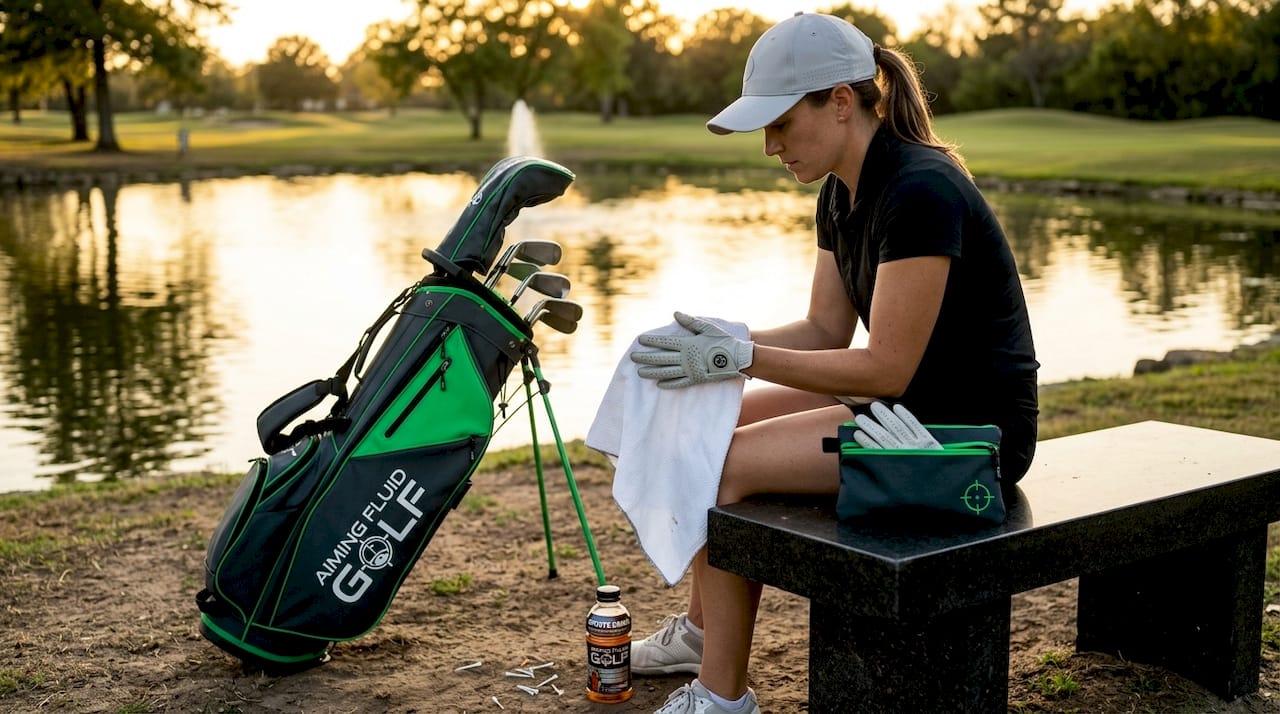
Golf gloves are the first line of defense against moisture. The best golfing gloves for sweat-prone conditions share a few specific design features: perforated knuckle panels that allow heat to escape, Cabretta leather palm sections that maintain tackiness even when slightly damp, and moisture-wicking wristbands that intercept sweat before it migrates to the fingers. The TaylorMade Tour Preferred glove, for example, uses engineered perforations and a wicking wristband specifically to address sweat buildup during play. Understanding premium golf glove features like these helps you match glove construction to your specific hand moisture patterns.
Towels are a frequently overlooked tool. Golf rules permit towel use between shots to dry both hands and club grips. According to Golf Digest, using towels and drying powders on grips is fully allowed and represents one of the most effective ways to restore friction quickly. Knowing the golf club towel features that make a towel effective for grip drying, such as waffle-weave texture and quick-dry microfiber construction, separates functional gear from decorative accessories.
Drying powders and grip agents round out the essential gear set. Products like rosin bags and grip-specific drying powders are used by tour players to restore surface friction between holes.
| Gear type | Primary function | When to use |
|---|---|---|
| Cabretta leather glove | Maintain baseline grip tack | Every shot in dry or mild conditions |
| All-weather glove | Grip retention in wet weather | Rain rounds or extremely humid conditions |
| Waffle-weave microfiber towel | Absorb surface moisture from hands and grips | Before each shot |
| Rosin or drying powder | Restore friction on grip surface | When moisture persists despite towel use |
| Moisture-wicking wristband | Intercept sweat migration from forearm | Hot weather or high-exertion rounds |
Pro Tip: Keep your towel clipped to the outside of your bag where you can access it in under two seconds. A towel buried in a pocket does not get used consistently, and inconsistency in drying is the same as not drying at all.
With essential gear selected, the next step is learning how to use these tools effectively during your round to keep hands consistently dry.
Practical techniques: How to keep your golf hands dry during play
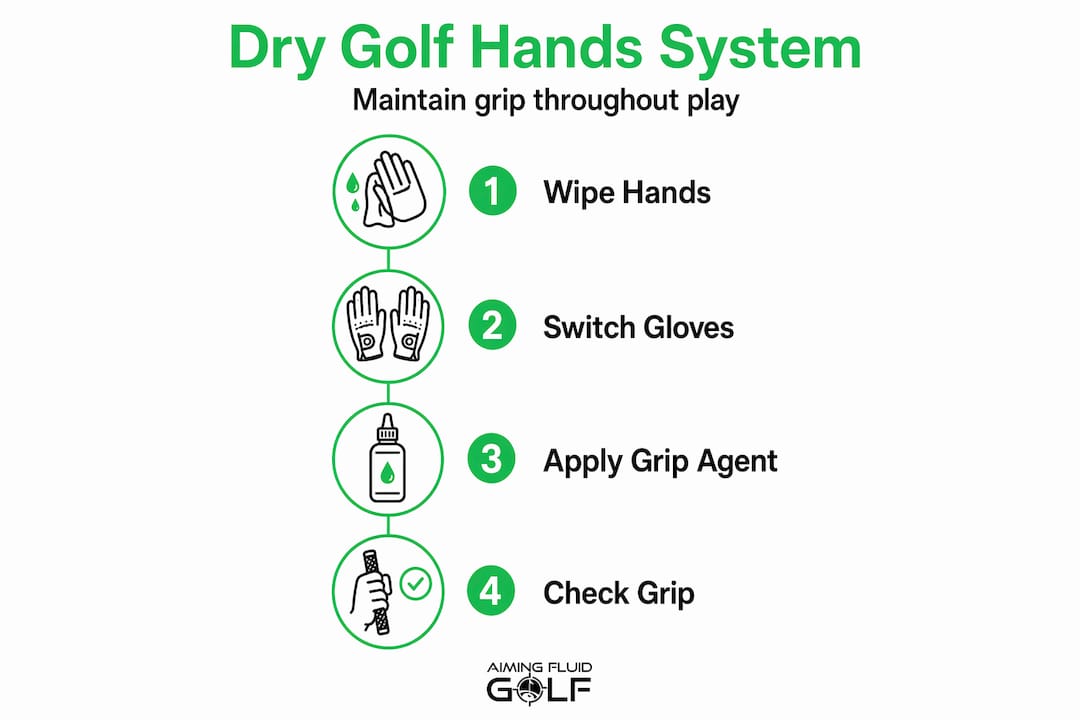
Gear alone does not solve the problem. Execution matters just as much. Here is a step-by-step system for staying dry from hole to hole.
- Start with dry hands before your round. Wash and fully dry your hands before putting on your first glove. Any moisture trapped at setup will accelerate saturation.
- Rotate between two to four gloves during the round. Once a glove is damp, set it open-palm on your bag rail to air-dry. Rotating 2 to 4 gloves during a round keeps each glove functional for longer and prevents the accumulated-sweat problem that single-glove players experience by the back nine.
- Use your towel before every grip-sensitive shot. Wipe your lead hand, trailing hand, and the top six inches of the club grip before you address the ball. This takes four seconds and dramatically improves friction at the moment it matters most.
- Apply drying powder when humidity is high. Rosin bags or grip powder applied to your palms between holes restore surface tackiness and buy additional dryness time before the next glove rotation is needed.
- Remove your glove between shots when possible. Keeping a glove on while waiting, riding the cart, or searching for a ball accelerates moisture buildup. Take it off and let your hand breathe.
- Keep an all-weather glove in the bag for rain rounds. Rain-specific gloves actually grip better when wet, which is the opposite of standard leather. Switching at the first sign of rain is one of the most effective golfing in the rain tips you can use.
The most effective approach follows a three-part framework: absorb existing moisture with a towel, restore friction with grip tack or drying powder, and prevent future buildup with breathable gloves. Addressing only one of those three factors leaves gaps. Smart use of towel system tips can turn this routine into something automatic within a few rounds.
Pro Tip: Store spare gloves in a zip-lock bag inside your carry bag. Keeping them sealed protects them from ambient humidity and ensures they are genuinely dry when you rotate to them.
Troubleshooting common pitfalls and rule compliance tips
Some hand-drying habits create new problems, specifically around rule compliance. These are the most common errors to avoid.
- Gripping your shirt sleeve during a stroke. This is the most frequently violated rule in wet conditions. According to Golf Digest, deliberately using clothing to assist grip during a stroke is a breach of Rule 4.3 and results in a penalty. Drying your hands on your shirt between shots is perfectly fine. Using clothing as part of your grip mechanics during the swing itself is not.
- Using unapproved grip substances. Pine tar, excessive rosin buildup, or materials that create an artificial tack beyond normal are not permitted. Stick to products specifically marketed as golf grip aids.
- Ignoring grip tape condition. A worn grip absorbs moisture faster and provides less friction recovery. Check your grips at the start of each season and consider re-gripping if the surface feels hard or slick. Strong grip maintenance tips cover this in detail.
- Wearing a saturated glove. Many players leave a wet glove on because removing it feels disruptive. A saturated glove provides less grip than no glove at all. Take it off, dry your hand with a towel, and rotate to a fresh glove.
“You can use some type of drying powder on the handle under the rules… but deliberately using a gripping hand to hold an article of clothing during a stroke breaches Rule 4.3.” — Golf Digest Rules Review
Understanding these compliance tips confirms that your hand-drying methods are both effective and legal for consistent performance.
Verification and maintaining performance: Monitoring hand dryness and grip
Once your system is in place, you need a way to measure whether it is working across all 18 holes. These are the key checkpoints and maintenance behaviors that keep the system running.
- Check grip feel at the start of each hole. Before your tee shot, press your lead hand fingers firmly against the grip and release. If the grip shifts in any direction, dryness has degraded and you need a towel pass before swinging.
- Monitor glove condition by hole six. Most players hit peak glove saturation around the sixth to ninth hole if they start with one glove and high humidity. Set a mental trigger at the sixth hole to evaluate and rotate if needed.
- Air out gloves after every round. Open them palm-side up and let them dry naturally at room temperature. Avoid leaving gloves sealed in your bag overnight. Trapped moisture degrades the leather and encourages odor.
- Clean your towel after every two to three rounds. A towel saturated with grip residue, sunscreen, and dried sweat becomes less absorbent over time. Wash it and keep absorption capacity high.
| Check interval | Action | Purpose |
|---|---|---|
| Before each shot | Wipe hands and top grip with towel | Remove surface moisture |
| Every 3 to 4 holes | Evaluate glove condition | Decide whether to rotate |
| After round | Air out gloves, wash towel | Restore gear for next use |
| Monthly | Inspect grip tape condition | Identify re-gripping needs |
A well-maintained system built around these habits, as research confirms, means combining glove rotation and towel use leads to better grip quality and more consistent confidence during play. Reviewing premium golf accessories designed for this purpose can accelerate the process of building that system.
A fresh take: Why a system approach beats quick fixes for dry golf hands
Here is the uncomfortable reality most golfers avoid: the problem is not that they lack the right glove or the right towel. The problem is that they treat hand dryness as an occasional inconvenience rather than a performance variable that requires a managed system.
Most golfers reach for a towel only when they notice their grip slipping. At that point, friction has already degraded. The shot is already compromised before the towel comes out. A reactive approach does not work in golf because the feedback loop is too slow. By the time you feel the problem, the damage is done.
Effective hand dryness requires a system built around three parallel functions: absorbing existing moisture, restoring grip friction, and preventing new moisture accumulation. These three functions must run simultaneously, not in rotation. You cannot absorb with a towel, skip the friction restoration step, and expect performance to hold across 18 holes.
There is also a rules knowledge gap worth addressing directly. Golf Digest’s rules review makes a clear and important distinction: drying for traction is legal, but modifying your grip mechanics during a stroke by involving clothing is not. Many golfers blur this line without realizing it, especially in cold or rainy conditions when they instinctively fold their sleeve over the butt of the club. Understanding the boundary protects you from unnecessary penalties.
The golfers who manage this best treat their comprehensive golf grip strategies the same way a surgeon treats glove protocol. You follow a pre-defined sequence before every procedure, not just when something goes wrong. That discipline, applied to grip dryness, produces more consistent results than any single piece of gear can deliver on its own.
Enhance your grip strategy with premium golf accessories
Knowing the system is one thing. Having the right gear to execute it reliably is another.

Aiming Fluid Golf builds accessories specifically for golfers who approach their round with this level of intention. The magnetic golf towels are designed to stay within arm’s reach at all times, clipping to your bag or cart rail and returning effortlessly after each wipe. No more digging through a side pocket mid-round. Pair that with premium PXG golf gloves built from 100% Cabretta leather for consistent tack across a full round, and you have the core of a functional dryness system. Browse the full range of best golf accessories expert picks to see how intentional gear design supports everything this guide covers.
Frequently asked questions
Is it legal to use drying powders on golf club grips during a round?
Yes, according to the USGA Rules of Golf, you can apply certain drying powders to grips to maintain traction without incurring a penalty.
How many golf gloves should I carry to keep my hands dry during a round?
Carrying and rotating 2 to 4 gloves is the standard recommendation, giving each glove time to air out while you play with a fresh one.
Can I use my shirt sleeve to help with grip if my hands are wet?
No. Using clothing during a stroke to assist your grip is a direct breach of Rule 4.3 and carries a penalty. Drying your hands on your shirt between shots is allowed.
What features should I look for in golf gloves if I have sweaty hands?
Prioritize gloves with engineered perforations for ventilation and moisture-wicking wristbands. The TaylorMade Tour Preferred is a well-documented example of these features applied specifically to sweat management.
Are there techniques besides gear to prevent sweaty hands in golf?
Yes. The most effective approach combines regular towel drying with glove rotation and grip-specific drying products, addressing all three layers of the moisture management system simultaneously.


