


Most golfers carry a moderate number of headcovers, enough to protect a driver, one or two fairway woods or hybrids, and a putter. That range covers the clubs most vulnerable to dings and the ones with the highest resale value. Irons are the exception: covering them is optional and comes down to whether you value protection or prefer the classic, uncluttered bag look.
TL;DR:
- Most golfers carry four to six headcovers, primarily protecting the driver, one or two woods or hybrids, and a putter, with iron covers being less common.
- Covering driver and fairway woods is high-priority due to their susceptibility to scratches and cost, while hybrids are often protected for similar reasons.
- Protecting irons with headcovers is mostly a personal choice, as they are less vulnerable but can chip paint or groove wear over time.
- Using secure-fit, magnetized, or elastic headcovers reduces loss and damage, making them more effective for extended protection and pace of play.
- Covering all fourteen clubs is rare; most golfers protect only the most vulnerable four to seven clubs to balance protection, speed, and style considerations.
Table of Contents
- How Many Headcovers Do Most Golfers Carry?
- Which Clubs Actually Need Protection?
- Weighing Protection Against Pace and Style
- A Decision Checklist for Your Bag
- Fit, Materials, and Keeping Covers From Falling Off
- How Aiming Fluid Golf Addresses the Real Complaints
- What the Golf Community Actually Agrees On
- Ready to Upgrade Your Bag Setup?
- Sources
- FAQ
How Many Headcovers Do Most Golfers Carry?
Ask ten golfers how many headcovers they carry and you will get ten slightly different answers, but the patterns repeat themselves once you look at enough bags. Community threads on sites like Titleist’s Team Titleist Clubhouse show reported counts clustering tightly in the four-to-six range, and that consistency is worth paying attention to.
The minimal setup (4 covers) protects a driver, one fairway wood, one hybrid, and a putter. This is the golfer who wants fast club selection and does not want to fuss with a cover on every stick in the bag. It is common among players who walk more than they ride and who prioritize speed over showroom polish.
The typical setup (5 to 6 covers) adds a second fairway wood or a second hybrid on top of the minimal lineup. This is where most recreational bags land, and it makes sense: golfers carrying two fairway woods (a 3-wood and a 5-wood, say) or two hybrids want equal protection on both, since both get the same abuse riding around in a crowded bag.
The maximal setup (7 or more covers) usually means one of two things: a full or near-full set of iron covers, or a bag built for travel rather than daily play. Golfers who fly with their clubs several times a year tend to load up on covers because airline handling is far rougher than a cart path ever will be.
- Minimal (4): driver, one wood, one hybrid, putter
- Typical (5 to 6): driver, two woods or hybrids, putter, sometimes a hybrid duplicate
- Maximal (7+): full iron sets, travel-focused protection, or both
Forum threads on GolfWRX back this up with hundreds of real bag photos. The variance is wide, but the center of gravity sits firmly in that four-to-seven band, and almost nobody covers all fourteen clubs.
Which Clubs Actually Need Protection?
Not every club in the bag faces the same risk. Drivers and fairway woods have thin, often painted faces and crowns that scuff, chip, or dent when they knock against other metal in the bag. Given how much a modern driver costs, a $10 headcover is cheap insurance against a scratch that would bother you every time you looked down at address.
Hybrids sit in a gray zone. They blend the compact face of an iron with the rounded profile of a wood, and that rounded crown is just as prone to cosmetic damage as a fairway wood’s. Most golfers who cover their woods cover their hybrids too, for the same reason.
Putters get covers more often for etiquette and grip protection than pure damage prevention. A scratched putter face rarely affects performance, but a scuffed insert or a dinged alignment line bothers golfers who spent real money dialing in their stroke.
Irons are where opinion splits hardest. The stigma against iron covers runs deep in golf culture, tied to old-school notions that “real” players do not fuss over their blades. But Golf Monthly’s take on the debate makes a fair case: irons clink against each other constantly, and that contact chips paint fill and dulls grooves faster than most golfers realize.
- Driver: high priority, protects the most expensive club in the bag
- Fairway woods: high priority, thin crowns dent easily
- Hybrids: moderate to high priority, rounded shape shares wood-like vulnerability
- Putter: optional, mostly cosmetic and etiquette-driven
- Irons: divisive, protection benefit real but culturally uncommon
Quick fact: guides on club protection commonly note that covering four to seven clubs addresses the practical needs of most bags, while covering all fourteen clubs is rare outside of collectors and frequent flyers.
Some tour pros have quietly pushed back against the stigma. Aaron Rai plays with iron covers, a deliberate choice equipment writers frame as smart husbandry of expensive, forged clubheads rather than an aesthetic statement.
Weighing Protection Against Pace and Style
Every headcover you add is a small trade-off, and it helps to name the trade-offs plainly instead of assuming more covers is automatically better.
Protection and resale value. Dings and paint chips lower what a club is worth on the used market, and covers slow that wear down considerably. If you plan to trade in or sell clubs within a few seasons, covering your driver and woods protects real dollars, not just appearances.
Pace of play. Fumbling to remove and replace a snug cover before and after every shot adds up over eighteen holes, especially in a group already fighting the clock. This is the strongest argument against covering every club, and it is why most golfers stop at four to seven rather than going further.
Style and etiquette. Some golfers simply prefer the look of bare irons peeking out of the bag, a small signal of confidence at the range or on the tee. Others see a fully covered set as a mark of someone who takes care of their gear. Neither view is wrong; it is a preference, not a rule.
- Protection: preserves resale value and finish on high-cost clubs
- Pace: fewer covers means faster transitions between shots
- Style: bare irons vs. fully covered sets is a personal call
- Mitigation: label covers by club number and use secure-fit styles that go on and off fast
Pro Tip: If pace of play worries you more than protection, cover only the driver and fairway woods. Those two see the most abuse in a crowded bag, and skipping the rest saves real time over a round.
A Decision Checklist for Your Bag
Rather than guessing at a number, run your own bag through a short set of questions. This mirrors how forum members actually explain their choices when asked directly, and it gives you a repeatable way to decide instead of copying someone else’s setup.
- How often do you play? Weekly players who put real mileage on their clubs benefit more from consistent protection than golfers who tee it up twice a month.
- How much did your clubs cost, and how old are they? Newer, premium drivers and forged irons justify more coverage than a well-worn game-improvement set you are not precious about.
- How often do you travel with your bag? Anyone flying with clubs more than a couple of times a month should lean toward fuller coverage, since baggage handling causes far more damage than a round ever will.
- What are your typical weather and turf conditions? Wet courses and abrasive cart paths accelerate wear on crowns and soles, making covers more worthwhile.
- Do you prioritize pace of play over protection? If you regularly play in groups that move fast, fewer covers means fewer seconds lost at every club change.
Red flags to watch for: slip-on covers with no retention feature that fall off mid-swing walk, and bulky covers that make it hard to identify a club by feel while reaching into the bag. Both slow you down more than carrying zero covers would.
Three quick profiles show how this plays out. A weekend player with a mid-range set usually lands on four covers: driver, one wood, one hybrid, putter. A frequent traveler who checks clubs at airports several times a year often goes to seven or more, adding iron protection specifically for transit. A gear collector with premium forged irons and a rotation of vintage putters tends to cover nearly everything, valuing preservation over speed.
Fit, Materials, and Keeping Covers From Falling Off
The wrong fit causes more headaches than the decision of how many covers to carry in the first place. Look for retention features like elastic collars, zip closures, or extended necks sized for graphite shafts, since generic slip-on styles are the ones golfers complain about losing mid-round.
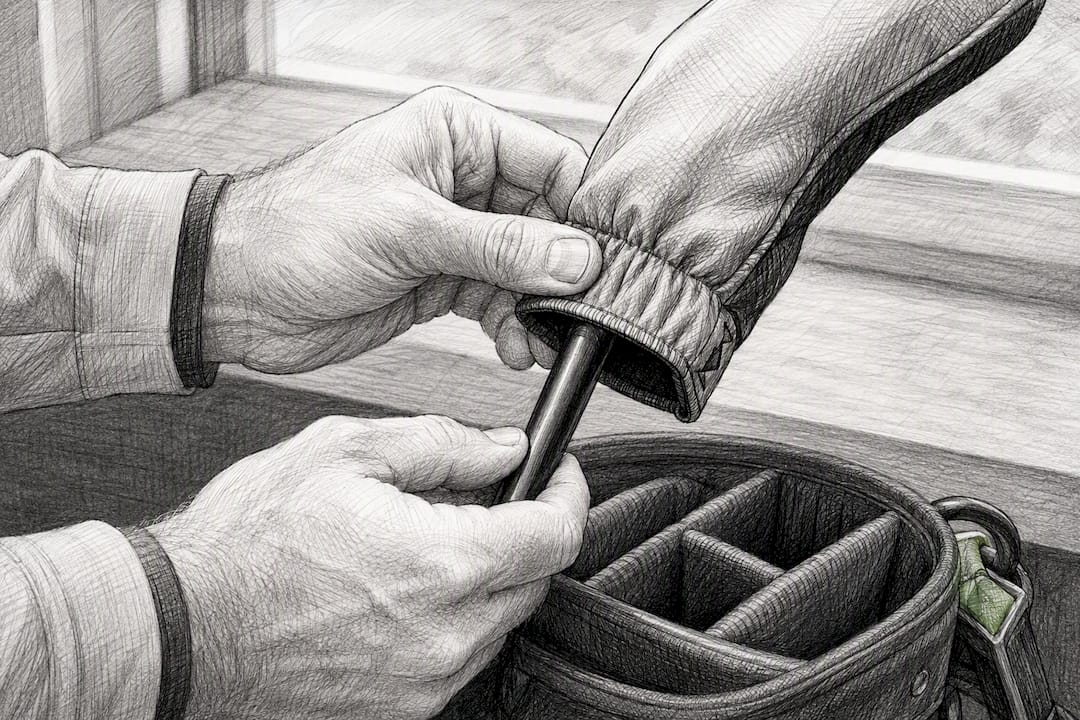
Full iron-set covers, typically sized for four to nine clubs, make sense for storage and air travel but are usually overkill for a round at your home course. Save them for the trunk or the flight, and switch to partial, on-course coverage for the woods and putter during actual play.
Material matters too. Knit covers are light and affordable but wear thin over a season or two. Leather looks sharp and lasts longer but costs more. Neoprene splits the difference, offering solid padding at a moderate price.
- Look for elastic necks or zip closures over plain slip-on styles
- Use full iron sets for travel and storage protection, partial covers for on-course rounds
- Choose knit for budget, leather for durability, neoprene for a middle ground
- If covers keep falling off mid-round, check these fixes before replacing the whole set
How Aiming Fluid Golf Addresses the Real Complaints
Most of the frustration golfers report about headcovers has nothing to do with how many they carry. It is losing a cover mid-round, fumbling one back on while a group waits, or watching a driver face pick up a scratch because a cover slipped off in the cart. Those are organization problems, not counting problems.
A magnetic system solves the access half of that equation directly. Pairing a magnetic golf towel with a magnetic landing pad gives you one fixed spot to grab and return gear instead of digging through pockets, a fix that pairs naturally with the same instinct that leads golfers to carry two or three towels for different jobs on the course.
On the protection side, a secure-fit driver headcover matters more than the raw count you carry. A cover that stays put through a cart ride protects better than three loose ones that slide off.
- Magnetic towels and landing pads cut down fumbling and lost gear
- Secure-fit driver covers reduce the scratches golfers actually complain about
- Durable materials outlast the knit covers most bags start with
Pro Tip: Pair one secure driver headcover with a magnetic towel setup. You solve the two most common complaints, slow access and lost covers, without adding bulk to your bag.
— Gary
What the Golf Community Actually Agrees On
Forum consensus is remarkably consistent once you sift through enough threads: most recreational golfers settle on four to six covers, protecting the driver, one or two woods or hybrids, and a putter, with iron covers as the clear minority choice. That pattern holds across Titleist’s community forum and years of GolfWRX bag threads alike.
The dissenting voices tend to be equipment writers and a handful of pros who make a resale and durability case for iron covers rather than a style one. Aaron Rai’s example shows that stance is not fringe among players who think seriously about club longevity.
The practical takeaway: there is no single correct number, but four to seven is where the community lands, and going outside that range should be a deliberate choice, not an accident of habit.
Ready to Upgrade Your Bag Setup?
Once you know how many covers your bag actually needs, the next question is whether your current gear supports that setup or fights it. Aiming Fluid Golf builds around one idea competitors often overlook: a headcover or towel only helps your pace of play if you can grab it and put it back without thinking.

Secure-fit driver headcovers that stay put through cart rides and travel address common loss complaints reported by golfers. Pairing a magnetic golf towel and a magnetic landing pad provides instant access to gear without digging through pockets between shots. Browse the full accessory collection to build a setup around your own bag, whether that means four covers or seven, backed by Aiming Fluid Golf’s 12-month warranty and satisfaction guarantee.
Sources
- Why are iron headcovers so divisive? | Golf Monthly
- How Many Head Covers? - The Clubhouse
- How Many Headcovers are in Your Bag - GolfWRX
FAQ
How many headcovers should I carry in my bag?
Most golfers use four to seven headcovers, covering the driver, one or two fairway woods or hybrids, and often a putter. Going beyond that usually means full iron protection or travel-specific coverage.
Do irons need headcovers?
Not strictly. Irons clink together and can chip paint fill over time, but most recreational golfers skip iron covers for speed and style, while some equipment writers and pros defend them for long-term protection.
What clubs do you need headcovers for?
Drivers and fairway woods benefit most because their thin crowns and faces dent easily, followed by hybrids, which share that same vulnerability. Putters and irons are optional depending on your priorities.
What headcover does Rory McIlroy use?
Specific tour headcover setups vary by player and sponsor, and that detail is not publicly listed here. What is well documented is that most tour bags follow the same core pattern as recreational golfers: driver, woods, and putter covered, irons left bare.
What 14 clubs should you carry, and do they all need covers?
A standard bag includes a driver, three to five woods or hybrids, a set of irons, a wedge or two, and a putter, but covering all fourteen is uncommon. Most players cover only the four to seven clubs most prone to cosmetic damage.


