


The best golf shoe bag for most golfers is the Aimingfluidgolf shoe bag. It balances ventilation, durable construction, and a clean organizational footprint that fits both travel and daily trunk storage. If you want a single pick that handles dirt containment, moisture isolation, and fits neatly into a systemized gear routine, this is it.
Quick specs at a glance:
- Fit range: Accommodates most standard shoe sizes; verify internal length if you wear size 13 or larger
- Primary material: Premium construction with durable exterior
- Ventilation: Mesh or vented panels for airflow between rounds
- Pockets: External pocket(s) for accessories or socks
- Carry options: Top handle; compatible with standard golf luggage systems
The core rationale is straightforward. A shoe bag’s primary job is containment: keeping mud, moisture, and odor away from your vehicle interior and the rest of your gear. Aimingfluidgolf’s design addresses that job without unnecessary bulk.
Table of Contents
- What does a golf shoe bag actually do?
- Key features that separate a good shoe bag from a mediocre one
- How do you pick the right shoe bag for your needs?
- How to pack, clean, and store your shoes and shoe bag
- What do golf shoe bags cost, and where can you buy one in the U.S.?
- Key Takeaways
- Why shoe bags belong in every serious golfer’s system
- Aimingfluidgolf’s shoe bag: built for golfers who treat gear management as part of the game
- Useful sources
What does a golf shoe bag actually do?
A shoe bag is a containment tool. It isolates dirt, moisture, and odor from your car trunk, your main golf bag, and every other piece of gear you carry. Experienced players consistently recommend a purpose-built shoe bag rather than storing shoes inside the main bag, where mud and moisture can compromise interior pockets and other equipment.
The main configurations available:
- Single-compartment soft bag: The most common format. Lightweight, packable, and sufficient for most golfers.
- Twin/dual-compartment bag: Separates each shoe to prevent lateral friction and cleat-on-cleat scuffing during transit.
- Molded hard case: Maximum protection for travel; heavier and less flexible for daily use.
- Lightweight/shag bag style: Minimal structure, low weight, best for golfers who prioritize packability over protection.
Pro Tip: Make the shoe bag your default landing spot the moment you finish a round. Shoes go directly into the bag before they touch the trunk floor. That single habit prevents gradual contamination of car carpets and keeps the rest of your gear clean without any extra effort.
Key features that separate a good shoe bag from a mediocre one
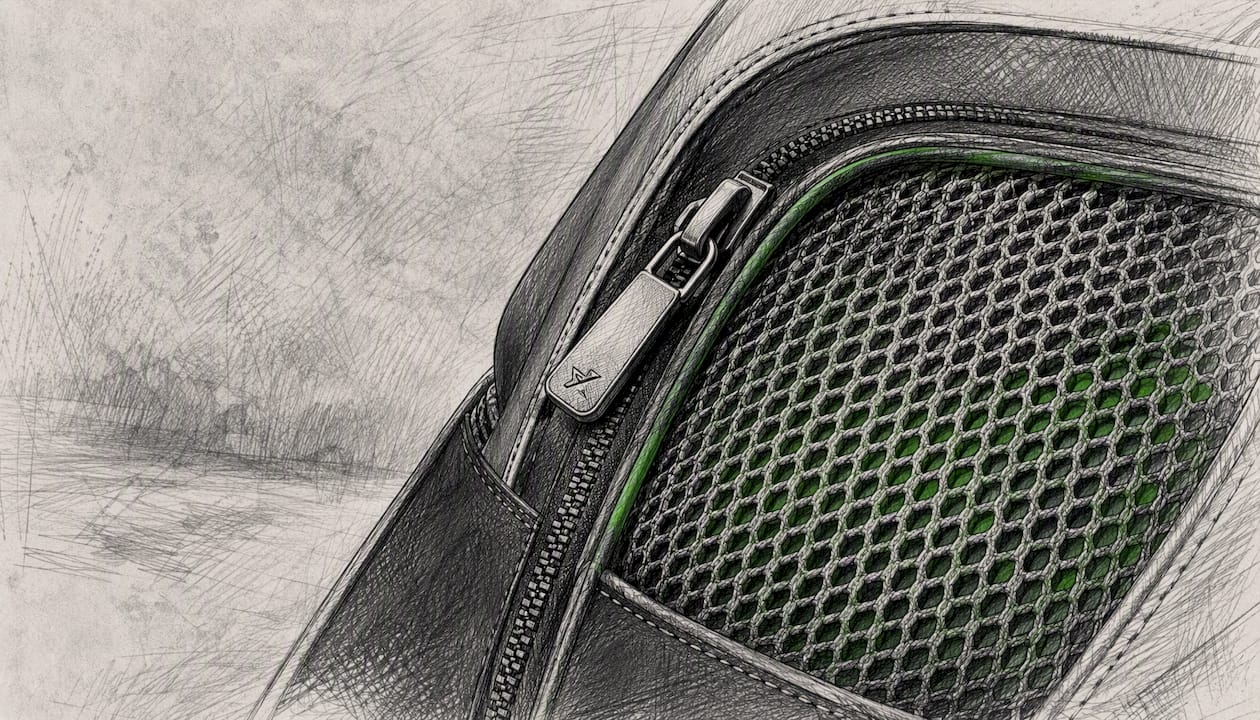
Material, fit, ventilation, and zipper quality affect real-world use far more than the number of pockets. A bag with four pockets and a flimsy zipper will frustrate you within a season. A bag with one well-placed pocket and a smooth double-pull zipper will last years.
Feature checklist:
- Internal divider(s): Separates shoes to reduce friction and protect materials during transit. Premium cases use dedicated compartments to prevent scuffing between cleats.
- Ventilation/mesh panels: Airflow prevents moisture buildup and slows odor development between rounds.
- Durable zippers: Double-pull zippers allow one-handed access; look for smooth glide and reinforced pull tabs.
- Carry handle or strap: A top handle is the minimum; a detachable shoulder strap adds flexibility for travel.
- Weather resistance: Treated nylon or leather exteriors repel light moisture; critical if you play in variable conditions.
- Dimensions and fit: Standard bags run approximately 13–15 inches in length. Golfers wearing size 13 or larger should confirm internal dimensions before purchasing, as many standard bags are optimized for sizes up to about 12–13.
- Pocket layout: At least one external pocket for socks, tees, or a shoe horn.
- Weight: Under 1 lb is the practical target for a soft bag used daily.
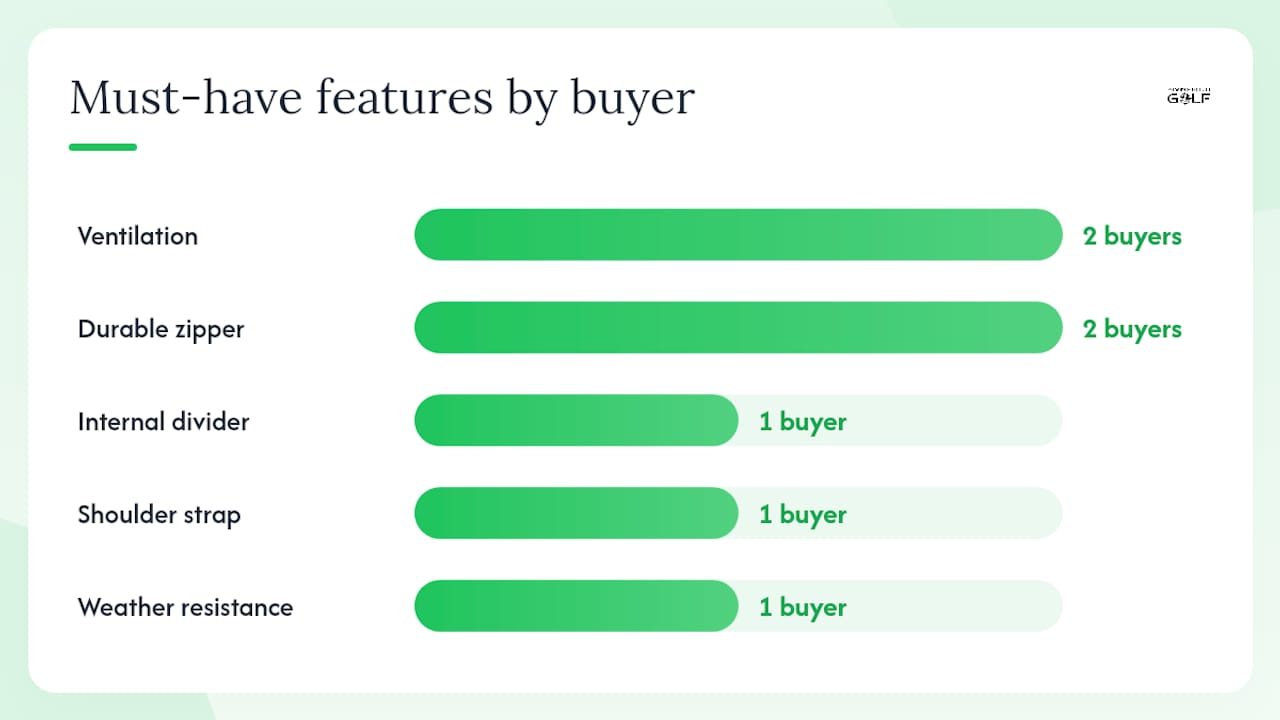
Must-have vs. nice-to-have:
| Feature | Average Buyer | Gear-Focused Buyer |
|---|---|---|
| Ventilation panels | Must-have | Must-have |
| Durable zipper | Must-have | Must-have |
| Carry handle | Must-have | Must-have |
| Internal divider | Nice-to-have | Must-have |
| Shoulder strap | Nice-to-have | Must-have |
| Weather-resistant exterior | Nice-to-have | Must-have |
How do you pick the right shoe bag for your needs?
Start with fit and ventilation, then evaluate pockets and material. A bag that does not fit your shoes or traps moisture is a problem no number of extra pockets can fix.
Questions to ask before you buy:
- What is my shoe size, and does the bag’s internal length accommodate it?
- Am I using this primarily for daily trunk storage, travel, or both?
- Does it need to fit inside a travel golf bag or hard case?
- How important is weight for my carry setup?
- What is the return policy if the fit is wrong?
Red flags to avoid:
- No internal dimensions listed in the product description
- Single-pull or plastic zippers on a bag priced above $40
- Zero ventilation on a closed soft bag
- No stated return or warranty policy
- Vague material descriptions (“polyester blend” with no weight or denier rating)
Price-tier guidance:
- Budget ($15–$30): Basic nylon construction, single compartment, minimal ventilation. Functional for occasional use. Example: compact ventilated travel bags around $18.99.
- Mid ($30–$60): Better zipper quality, side vents, carry handle. The FootJoy nylon bag at approximately $24.90 fits this tier with dimensions of 13" x 9.5" x 5" and a double-pull zipper.
- Premium ($60–$120+): Leather or high-denier nylon, twin compartments, internal dividers, shoulder strap. Premium vented leather models reach approximately $89.69 and above.
How to pack, clean, and store your shoes and shoe bag
Packing after a round:
- Knock excess mud and debris off cleats before placing shoes in the bag.
- Loosen laces so the shoe retains its shape.
- Place each shoe in the bag with soles facing each other, or use the divider if your bag has one.
- If shoes are damp, leave the zipper partially open until you reach home.
- Once home, remove shoes and let them air dry fully before sealing the bag.
The bag’s job is containment, not deodorizing. Ventilation slows moisture buildup, but it does not eliminate odor. Dry the shoes separately, and use cedar shoe trees or a deodorizing insert if odor is a recurring issue.
Cleaning the bag:
- Wipe the interior with a damp cloth after muddy rounds.
- Air dry completely before storing with shoes inside.
- Do not machine-wash unless the manufacturer explicitly permits it; most structured bags lose shape in a machine cycle.
- For leather exteriors, use a leather conditioner every few months to prevent cracking.
When to replace: If zippers fail to close fully, seams separate, or the interior lining tears, replace the bag. A compromised bag transfers contamination rather than containing it.
What do golf shoe bags cost, and where can you buy one in the U.S.?
| Tier | Price Range | Example | Key Features |
|---|---|---|---|
| Budget | Under $20 | Compact ventilated nylon bag ($18.99) | Single compartment, basic zipper, 15" x 9.5" x 4" |
| Mid | $20–$60 | FootJoy nylon bag ($24.90) | Double-pull zipper, side vents, carry handle, 13" x 9.5" x 5" |
| Premium | $60–$120+ | Vented leather model ($89.69) | Leather exterior, ventilation panels, structured construction |
Price data sourced from retail listings and specialty golf retailers.
Where to buy:
- Specialty golf retailers: — Strong product knowledge and in-store fit checks; prices may be slightly higher.
Key Takeaways
A shoe bag’s primary value is containment: isolating dirt, moisture, and odor from your vehicle and gear, not eliminating them.
| Point | Details |
|---|---|
| Top pick | Aimingfluidgolf’s shoe bag balances ventilation, durable construction, and clean organizational design for most golfers. |
| Fit first | Confirm internal dimensions before buying, especially for shoe size 13 or larger; standard bags run 13–15 inches. |
| Ventilation and zippers | Mesh panels and a double-pull zipper are the two features most likely to affect daily satisfaction. |
| Containment vs. deodorizing | Bags isolate odor; they do not remove it. Dry shoes separately before sealing them inside. |
| Price tiers | Budget options start under $20; premium leather models reach $89.69 and above. |
Why shoe bags belong in every serious golfer’s system
Most golfers underestimate the organizational cost of skipping a shoe bag. The problem is not a single muddy round. It is the gradual accumulation: cleat marks on trunk carpet, moisture seeping into a side pocket, the faint smell that builds up in a bag that doubles as a shoe carrier. None of it is dramatic. All of it is avoidable.
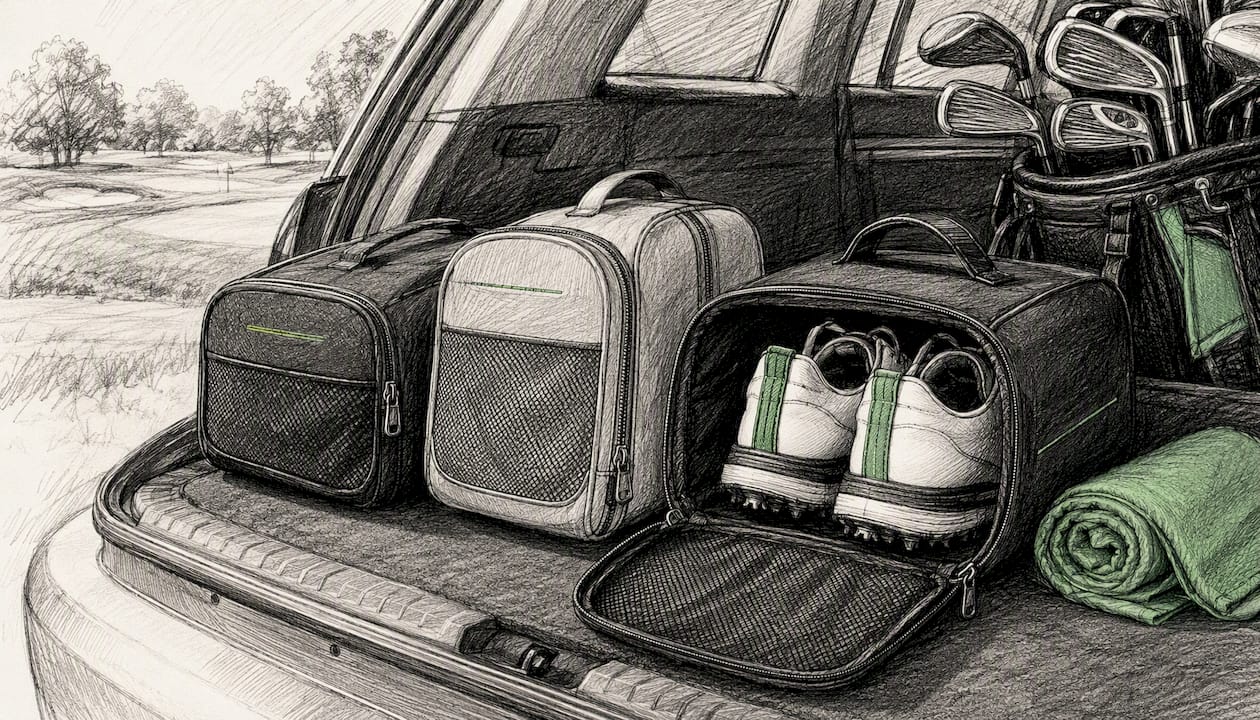
The deeper argument is about repeatability. Tour-level players and high-performance amateurs systematize gear management precisely because consistent routines reduce decision fatigue before a round. A shoe bag is a small piece of that system, but it is a reliable one. When shoes have a designated place, you stop thinking about them. That mental bandwidth goes somewhere more useful.
The conventional wisdom treats shoe bags as a luxury add-on. The more accurate framing is that they are a maintenance tool. A $90 pair of golf shoes stored carelessly will show material wear and odor within a season. The same shoes stored in a ventilated bag with an internal divider will last considerably longer. The bag pays for itself in extended shoe life alone, before you account for the trunk carpet.
Aimingfluidgolf’s approach to accessories reflects this logic. The goal is not to sell more gear. It is to build a system where every item has a function and a place, so that organizing your golf bag becomes a repeatable routine rather than a pre-round scramble.
Aimingfluidgolf’s shoe bag: built for golfers who treat gear management as part of the game
Golfers who invest in premium footwear need storage that matches. Aimingfluidgolf’s shoe bag is designed for organized golfers who want a dedicated, ventilated home for their shoes that fits cleanly into a broader gear system, not a generic drawstring pouch that transfers grit to everything it touches.

The bag pairs naturally with Aimingfluidgolf’s premium leather utility pouch and the full range of organizational accessories available at the Aimingfluidgolf accessories storefront. Every product in the lineup is built around the same principle: a designated place for every item, so your pre-round routine runs on muscle memory rather than searching.
| Spec | Detail |
|---|---|
| Material | Premium durable exterior |
| Ventilation | Mesh/vented panels |
| Compartments | Main compartment with organizational features |
| Carry | Top handle |
| Compatibility | Standard golf luggage systems |
| Warranty/Returns | See product page for current policy |
Browse the full shoe bag and accessory lineup at Aimingfluidgolf to confirm current specs, sizing details, and return terms before purchasing.
Useful sources
- Premium Golf Shoe Bag – Vented Leather Shoe Storage – The Golf Guys Online: Product page with specs, pricing ($89.69), and editorial context on containment vs. deodorizing.
- Golf Shoe Bag — Ventilated Travel Bag – ANKSO: Budget-tier example with compact dimensions and sub-$20 pricing.
- Aaron Rai’s PGA Championship win – National Club Golfer: Editorial context linking accessory systemization to performance-driven routines.


