


Preparing for a golf round at your private club or an amateur event can feel overwhelming when you’re juggling gear checks, warm-up routines, and mental readiness. Many golfers arrive at the first tee unsure if they’ve packed everything or properly warmed up, leading to rushed swings and missed opportunities. This guide walks you through expert-backed preparation strategies that enhance confidence, improve organization, and lower scores. You’ll learn how to plan weeks ahead, execute dynamic warm-ups, adopt consistent pre-shot routines, and use premium accessories to keep your gear accessible and your mind focused.
Table of Contents
- Key takeaways
- Planning your preparation: setting the foundation
- Mastering your pre-round warm-up and gear organization
- Executing an effective pre-shot routine and adapting to conditions
- Verifying readiness: troubleshooting common mistakes and expected results
- Discover premium golf accessories for superior organization and performance
- Frequently asked questions
Key Takeaways
| Point | Details |
|---|---|
| Eight week plan | An eight week plan builds skills fitness and mental readiness for events and prevents last minute scrambles. |
| Dynamic warm ups | Dynamic warm ups activate muscles increase range of motion and prepare the nervous system for explosive movements while static stretching reduces club head speed. |
| Consistent pre shot routine | Practice pre shot routines during every range session to improve focus and confidence under pressure. |
| Weather aware strategy | Plan to adjust shot strategy for weather conditions to maintain accuracy and save strokes. |
| Gear checks and premium accessories | Check gear and use premium accessories to keep essentials accessible and reduce on course clutter. |
Planning your preparation: setting the foundation
Starting your preparation early makes the difference between showing up hoping for the best and arriving with genuine confidence. Amateur events require 8-week plans that systematically build skills, fitness, and mental readiness. This timeline gives you enough runway to address weaknesses without cramming everything into the final week.
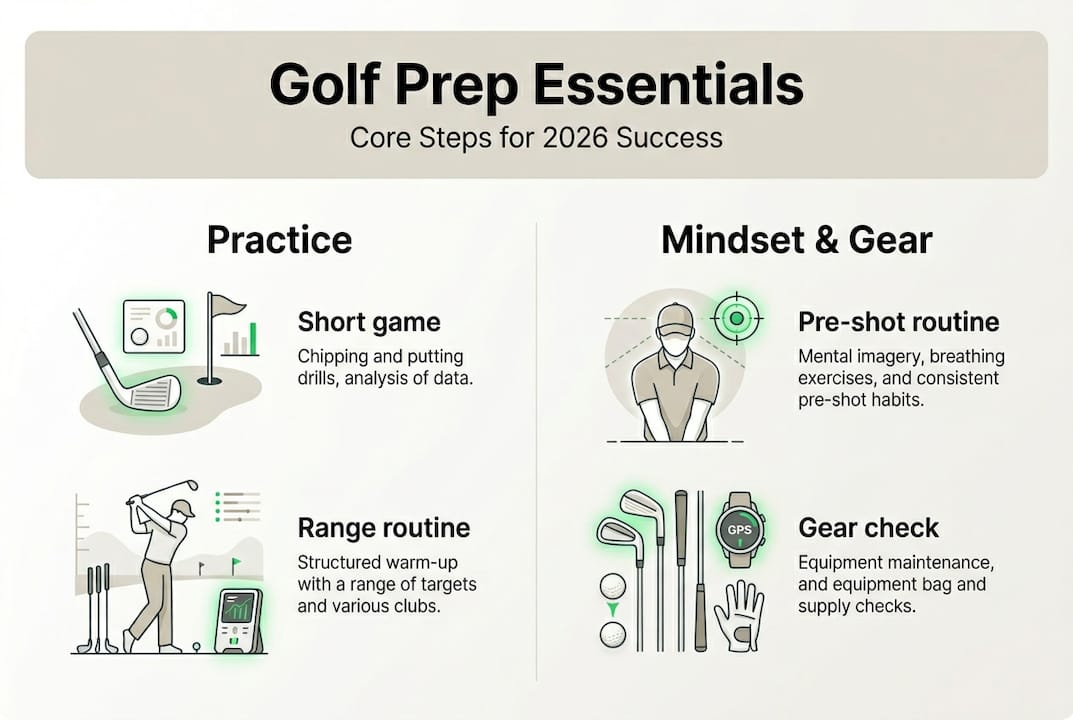
Your 8-week plan should emphasize three core areas. First, dedicate practice time to skills that directly impact scoring, particularly short game shots within 100 yards where most strokes are gained or lost. Second, incorporate golf-specific fitness routines that improve rotation, stability, and endurance for consistent swings late in the round. Third, practice mental preparation techniques like visualization and pressure simulations that prepare you for tournament nerves.
Short game work deserves special attention because it’s where amateur golfers leave the most strokes on the table. Spend 60% of practice time on chipping, pitching, bunker shots, and putting under simulated pressure. Create games that replicate tournament scenarios, like requiring three up-and-downs in a row before moving to the next station.
Mental preparation separates golfers who fold under pressure from those who thrive. Practice pre-shot routines during every range session, not just before events. Visualize successful shots on challenging holes you’ll face. Use breathing techniques to manage adrenaline when nerves spike. The more you rehearse these mental skills in practice, the more automatic they become during competition.
On event day, arrive at least 90 minutes before your tee time. This buffer lets you check in without rushing, complete a thorough warm-up, and double-check your gear. Use this time to organize your bag with premium accessories that keep essentials accessible. A spring golf bag gear checklist ensures you’ve packed everything needed for peak performance.
Your 8-week preparation checklist:
- Weeks 1-2: Assess current skills, identify weaknesses, establish baseline fitness
- Weeks 3-4: Focus on short game drills, begin pressure simulations, add golf-specific exercises
- Weeks 5-6: Play practice rounds on tournament course, refine pre-shot routine, test gear setup
- Weeks 7-8: Taper intensity, maintain sharpness with focused practice, finalize mental preparation
Pro Tip: Schedule a full dress rehearsal round one week before your event. Play the same tees, use the same gear setup, and execute your pre-shot routine on every shot. This reveals any gaps in preparation while you still have time to adjust.
Mastering your pre-round warm-up and gear organization
Your warm-up routine directly impacts how you perform on the first tee and throughout the round. Dynamic warm-ups improve performance significantly by activating muscles, increasing range of motion, and preparing your nervous system for explosive movements. Static stretching before play, however, reduces clubhead speed and should be avoided.
Start with 5 minutes of light cardio to elevate your heart rate and increase blood flow to muscles. Arm circles, leg swings, torso rotations, and walking lunges prepare your body for golf-specific movements. Progress to dynamic stretches that mimic swing patterns, like practice swings with increasing speed and rotation exercises that open up your hips and shoulders.
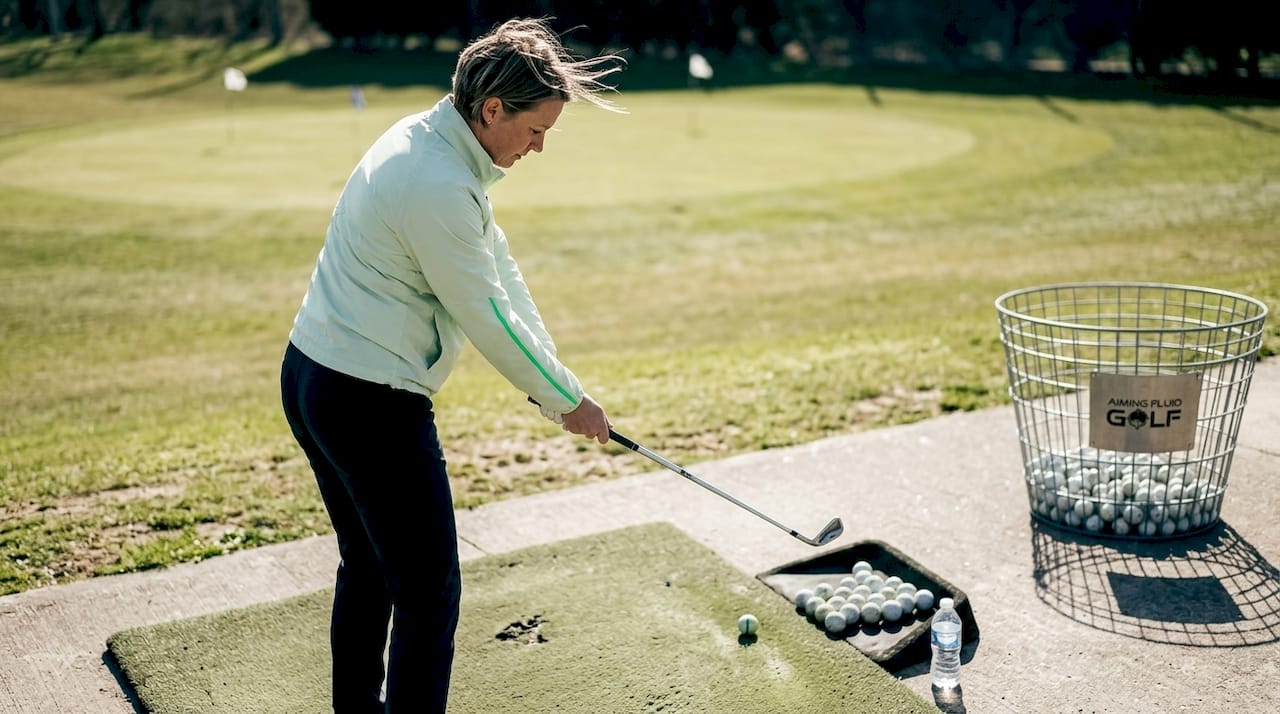
Spend 10 minutes hitting balls on the range, starting with wedges and progressing to longer clubs. Focus on rhythm and contact quality rather than distance. Hit 5-7 shots with each club, paying attention to ball flight and feel. Finish with 3-5 drives to dial in your timing for the first tee. Check out our pre-round golf warmup routine for a complete sequence.
Gear organization prevents the frustration of searching through your bag mid-round. Use utility pouches to group similar items together: tees and ball markers in one, extra gloves and sunscreen in another. Magnetic towels attached to landing pads on your bag keep cleaning tools instantly accessible without fumbling through pockets. Premium accessories create systems that save time and mental energy.
Double-check your equipment one hour before your tee time. Confirm you have 14 clubs maximum, enough balls for the round (pack at least 6), tees in multiple sizes, gloves, and any personal items like medication or snacks. Verify your rangefinder or GPS device is charged. This final check catches missing items while you still have time to address them.
| Warm-Up Type | Effect on Performance | Timing |
|---|---|---|
| Dynamic exercises | Increases clubhead speed, improves flexibility | 15 minutes pre-round |
| Static stretching | Reduces power output, decreases speed | Avoid before play |
| Progressive ball striking | Builds rhythm, dials in contact | 10 minutes on range |
| Putting practice | Calibrates speed, builds confidence | 5 minutes on green |
Pro Tip: Keep a pre-round checklist on your phone that you review one hour before tee time. Include gear verification, warm-up completion, hydration check, and mental preparation confirmation. This systematic approach ensures nothing gets overlooked when nerves are high.
Executing an effective pre-shot routine and adapting to conditions
Consistent pre-shot routines transform nervous energy into focused execution. Professional routines include visualization, alignment verification, and 1-2 practice swings executed within 15-20 seconds. This structure keeps you present while preventing overthinking that leads to tension and poor swings.
Your routine should follow the same sequence every time. Stand behind the ball, visualize the shot shape and landing area, pick an intermediate target on your target line, take 1-2 practice swings feeling the motion you want, address the ball with alignment verified, and execute within 3 seconds of final setup. This consistency creates a mental anchor that calms nerves during pressure moments.
Managing tournament nerves requires accepting that adrenaline will be present and using your routine to channel it productively. When you feel your heart racing, take two deep breaths before starting your pre-shot sequence. Focus on the process (routine steps) rather than the outcome (score or result). Trust the preparation you’ve completed and commit fully to each shot.
Weather conditions significantly impact shot distances and strategy. Wind, temperature, and humidity affect how far balls travel and how they react on landing. Before each round, note wind direction and speed, temperature, and dew point. Adjust your yardage book by adding or subtracting distances based on conditions. Headwinds require extra club, tailwinds less club, and crosswinds demand aim adjustments.
Your step-by-step pre-shot routine:
- Stand behind ball, visualize shot shape and landing spot
- Pick intermediate target 2-3 feet ahead on target line
- Take 1-2 practice swings feeling desired tempo and path
- Address ball, verify alignment to intermediate target
- Execute swing within 3 seconds of final setup
Adjusting for common weather conditions:
- Headwind: Add 1-2 clubs, swing smoothly to maintain control
- Tailwind: Subtract 1 club, expect more roll on landing
- Crosswind: Aim into wind and let it bring ball back to target
- Cold temperatures: Add 5-10 yards per 10-degree drop below 70°F
- High humidity: Expect slightly less distance due to air density
Course conditions also require on-the-spot adjustments. Tight lies demand clean contact with less aggressive swings. Fluffy lies in rough require steeper angles of attack to avoid grass getting between clubface and ball. Uphill and downhill lies change effective loft and require club selection changes. For more strategies, explore our simple golf tips for focus.
Pro Tip: Create a conditions card that lives in your yardage book. List typical adjustments for wind, temperature, and elevation so you don’t have to remember everything mid-round. Update it based on experience to build a personalized reference guide.
Verifying readiness: troubleshooting common mistakes and expected results
Even well-prepared golfers fall into predictable traps that undermine performance. The most common mistake is over-fixating on swing mechanics during warm-up. Experts recommend calibrating swings on the range by focusing on tempo and contact quality rather than making technical changes minutes before competition. Save swing work for practice days.
Another frequent error is aggressive hole-hunting during putting warm-up. Instead of trying to make every putt, practice lag putting to calibrate speed on the greens you’ll face. Hit putts from 30-40 feet focusing on getting them within 3 feet of the hole. This builds confidence in your distance control, which matters more than holing short putts during warm-up.
Skipping a dress rehearsal hole costs golfers strokes they could save with simple preparation. Play one full hole before your official round starts, executing your pre-shot routine on every shot. This activates your competitive mindset, tests your gear setup, and reveals any last-minute adjustments needed before the first tee.
Common preparation mistakes and their impact:
| Mistake | Impact on Score | Solution |
|---|---|---|
| Swing changes on range | +2-3 strokes from tension | Focus on tempo, not mechanics |
| Aggressive hole-hunting warm-up | +1-2 strokes from poor speed | Practice lag putting instead |
| Skipping dress rehearsal hole | +1-2 strokes from cold start | Play one full hole pre-round |
| Rushing gear check | +1 stroke from missing items | Check 1 hour before tee time |
| Static stretching pre-round | +1 stroke from reduced power | Use dynamic warm-up only |
Proper preparation delivers measurable improvements in strokes gained across all categories. Golfers who follow structured 8-week plans, execute dynamic warm-ups, and maintain consistent pre-shot routines typically see 3-5 stroke improvements in competitive rounds. Short game preparation alone can save 2-3 strokes per round by improving up-and-down percentages and reducing three-putts.
Common pitfalls to avoid:
- Arriving less than 60 minutes before tee time
- Eating heavy meals within 2 hours of play
- Trying new equipment during competition
- Neglecting hydration throughout the round
- Abandoning pre-shot routine under pressure
Verify your readiness by asking these questions one hour before your round: Have I completed my dynamic warm-up? Is my gear organized and double-checked? Have I practiced my pre-shot routine? Do I have a game plan for the first three holes? Am I hydrated and mentally prepared? Answering yes to all five confirms you’re ready to perform at your best. Our final golf bag preparation checklist ensures nothing is overlooked.
“The golfer who arrives prepared, both mentally and physically, has already gained strokes on the field before the first tee. Preparation isn’t just about practice; it’s about creating systems that support peak performance when it matters most.”
Pro Tip: Keep a post-round journal noting what preparation elements worked well and what needs adjustment. Track correlations between preparation quality and scoring performance. This data helps you refine your system over time and identify patterns that lead to your best rounds.
Discover premium golf accessories for superior organization and performance
The preparation strategies you’ve learned work best when supported by thoughtfully designed gear that enhances organization and on-course efficiency. Aiming Fluid Golf creates premium accessories engineered specifically for golfers who value performance and convenience during every round.

Our magnetic towel and landing pad system keeps cleaning tools instantly accessible without searching through pockets or bags. Premium utility pouches organize tees, ball markers, and valuables with zippered security and soft interior lining that protects your gear. Precision tees and divot tools complete your setup with durable materials built for consistent performance round after round. Explore our best golf accessories expert picks to discover how premium gear supports the preparation systems covered in this guide. Check out our top golf accessory picks 2025-26 for comprehensive recommendations, or view our premium leather golf utility pouch that combines luxury design with practical functionality.
Frequently asked questions
What is the best time frame to start preparing for an amateur golf event?
Amateur golfers should begin at least 8 weeks before their event to systematically build skills, fitness, and mental readiness. This timeline provides enough runway to address weaknesses in your game without cramming everything into the final week. Focus your 8-week plan on short game development, golf-specific fitness routines, and mental preparation techniques like visualization and pressure simulations.
What warm-up exercises improve golf performance most effectively?
Dynamic warm-up exercises improve performance significantly by activating muscles and increasing range of motion before play. Start with light cardio, progress to dynamic stretches like arm circles and torso rotations, then hit balls on the range starting with wedges. Avoid static stretching immediately before your round because it reduces clubhead speed and power output.
How can I manage nerves during my golf round?
Consistent pre-shot routines with visualization and alignment verification help manage tournament nerves effectively. Execute your routine within 15-20 seconds after preparation, focusing on process rather than outcome. Take two deep breaths when you feel adrenaline spiking, then trust the preparation you’ve completed and commit fully to each shot without second-guessing.
What gear should I double-check before heading to the first tee?
Double-checking your gear one hour before tee time ensures nothing is overlooked when nerves are high. Confirm you have 14 clubs maximum, at least 6 balls, tees in multiple sizes, extra gloves, and any personal items like medication or snacks. Use premium utility pouches to organize similar items together and magnetic towels to keep cleaning tools instantly accessible throughout your round.
Recommended
- Spring Golf Bag Essentials: 5 Items to Replace Before Your First Round – Aiming Fluid Golf
- 9 Simple Golf Tips to Instantly Improve Your Game (Rick Shiels Breakdo – Aiming Fluid Golf
- Spring Golf Bag Gear Up: The Essential 7-Point Checklist & Upgrades – Aiming Fluid Golf
- Golf Bag Essentials Checklist 2026: The Ultimate Gear Guide – Aiming Fluid Golf


