


The accessory story for 2026 is tech meets tidy: magnetic organization, ultralight modular bags, and smarter on-course devices lead the year. The practical payoff is faster access to your gear, better pace of play, and real shot data without a launch monitor nearby. Add limited-edition personalization and recycled materials to the mix, and you get a category shifting from novelty add-ons to purpose-built systems. Aiming Fluid Golf’s magnetic towel and pouch systems are one working example of where this is headed.
TL;DR:
- Magnetic organization systems like towels and landing pads now attach instantly to cart bars or straps, reducing search time and improving pace of play.
- Ultralight modular bags under four pounds with detachable pockets cater to walking players, though they may have fewer internal dividers and less padding.
- AI-enabled rangefinders and launch monitors are increasingly integrated, but buyers must verify the accuracy, slope options, and battery life for legal play.
- Limited-edition personalized headcovers, durable synthetic materials, and recycled fabrics are becoming must-have accessories reflecting personal style and environmental concerns.
Table of Contents
- What Are the Top Golf Accessory Trends for 2026?
- What Specs Actually Matter When Buying These Accessories?
- How Big Is the Golf Accessory Market in 2026?
- Do Smart Golf Devices Actually Improve Your Game?
- What Colors and Materials Define 2026 Golf Style?
- How Do You Organize Your Bag for Faster, Lighter Rounds?
- What Do 2026 Golf Accessories Actually Cost?
- What New Accessories Are Brands Releasing in 2026?
- Are High-Tech Accessories Worth It Over Traditional Gear?
- What Are Golfers and Experts Saying About 2026 Must-Haves?
- Do Golf Accessory Preferences Vary by Region or Player Type?
- How Aiming Fluid Golf Applies These 2026 Trends
- Which 2026 Trends Deserve Your Money Right Now?
- Get Your Bag Organized With Aiming Fluid Golf
- Sources
- FAQ
What Are the Top Golf Accessory Trends for 2026?
Eight trends dominate this year’s gear conversation, and they split cleanly between organization, technology, and identity.
- Magnetic towels and landing pads. Magnetic attachment points on cart bars and bag straps let you grab and return a towel without digging through pockets, which shaves seconds off every hole and adds up over 18.
- Ultralight, modular carry bags. Several premium stand bags now come in under 4 pounds, with detachable pocket systems that let one bag shift between a walking round and a cart round.
- AI-enabled rangefinders and portable launch monitors. New devices combine distance measurement with swing analytics in one unit, closing the gap between a $200 rangefinder and a $2,000 monitor.
- Smart grips and embedded swing sensors. Rather than replacing your putter or driver, sensor-equipped grips clip onto clubs you already trust and feed data to an app.
- Limited-edition headcovers and personalization drops. Headcovers have become the golf equivalent of sneaker culture, with small-batch runs and colorways that sell out fast.
- Sustainable materials. Recycled polyester towels and biodegradable tees are moving from niche to mainstream shelf space.
- Modular utility pouches and bag organization systems. Detachable pouches for balls, gloves, and valuables keep the main bag compartments free and reduce the “junk drawer on wheels” problem.
- Wearables evolving into full course companions. Golf watches now handle shot tracking, GPS mapping, and swing tempo in one wrist-worn device, not just yardage.
Each of these solves a specific frustration golfers have complained about for years: lost towels, heavy bags, guessing distances, and gear that never quite has a home. The difference in 2026 is that manufacturers are finally building single-purpose fixes instead of bolting features onto existing products.
What Specs Actually Matter When Buying These Accessories?
Marketing copy loves adjectives. Specs tell you what you’re actually getting. Here’s what to check category by category.
Magnetic organization systems:
- Magnet strength and attachment cycle rating, since a weak magnet that drops your towel mid swing defeats the purpose.
- Attachment point compatibility with your specific bag or cart bar.
- Towel material and size, with microfiber blends holding up better than cotton in wet conditions.
- Resistance to common solvents and cleaners, a detail worth confirming before you buy.
Bags:
- Total carry weight empty, not loaded, since manufacturers often quote the lighter figure.
- Divider count and configuration for the top of the bag.
- Weatherproof zippers and fabric coating quality.
- Whether pockets use a true modular interface or just Velcro that wears out.
Tech devices:
- Stated accuracy range in yards, not just “tournament legal” claims.
- Whether slope mode can be disabled for USGA-compliant play.
- Battery life in hours of active use, not standby.
- Bluetooth pairing stability with your phone’s operating system.
Headcovers and style pieces:
- Material weight and stitching quality on the seams.
- Whether “limited edition” refers to a numbered run or just a seasonal color.
- Ease of cleaning, since leather accents need different care than synthetic knit.
Sustainability claims:
- Look for a specific recycled-content percentage rather than a vague “eco-friendly” label.
- Biodegradable tee claims should specify a timeframe and testing standard, not just the word “biodegradable.”
Pro Tip: Before buying any magnetic accessory, test the attach and release motion with a glove on. Magnets that feel strong bare handed sometimes underperform once a golf glove adds friction and bulk.
How Big Is the Golf Accessory Market in 2026?
The global golf accessories market was valued at $398.5 million in 2025 and is projected to reach $693.7 million by 2035, a compound annual growth rate of about 5.7%.
By the numbers: $398.5 million (2025) → $693.7 million (2035) at a 5.7% CAGR, with cart covers and storage-focused accessories among the largest segments tracked in that forecast.
That growth curve means more manufacturers competing for shelf space, which typically pushes prices down at the entry level while funding more premium, tech-integrated options at the top. For you, that translates to more choice across price points rather than one dominant style of gear.
Do Smart Golf Devices Actually Improve Your Game?
Smart devices earn their price tag only when you understand what they measure. A rangefinder tells you distance to the pin. A launch monitor tells you what your swing did to the ball. Confusing the two leads to disappointment.
- Rangefinders give yardage, often with slope adjustment for practice rounds.
- Portable launch monitors track carry distance, club head speed, and smash factor, the ratio between club speed and ball speed that reveals mishits even on solid-feeling contact.
- Combination devices are starting to blend both functions. Industry press has covered a 3-in-1 device using optical stabilization and radar as an early example of where integrated tech is heading.
- Slope mode matters for legality. Tournament rounds require slope-adjusted distance to be switched off, so confirm your device allows that before relying on it in competition.
- Battery life and connectivity vary widely. Check for USB-C charging and stable Bluetooth pairing rather than trusting a spec sheet’s “all day” claim.
Treat these numbers as diagnostic tools, not magic fixes. A smash factor reading tells you where to focus practice; it doesn’t swing the club for you.
What Colors and Materials Define 2026 Golf Style?
This year’s aesthetic leans toward restraint with one loud detail. Design coverage points to muted nature palettes, matte textures, and leather accents dominating headcovers, bags, and caps.
- Earthy greens, tans, and grays as base tones, with a single bright accent color on zippers or stitching.
- Leather patches and trim showing up on premium headcovers and utility pouches, paired with high-performance synthetics for the parts that take abuse.
- Recycled polyester in towels and bag fabric, plant-based foam in grips, and biodegradable tees replacing standard wood versions.
- Matte finishes over glossy ones across ball markers, divot tools, and cart accessories.
Function and looks are converging. A leather utility pouch with clean stitching survives a season of cart rides better than a flashy synthetic one that cracks by July.
How Do You Organize Your Bag for Faster, Lighter Rounds?
Bag organization is where the 2026 trends stop being theoretical and start saving you actual time on the course. A methodical setup beats a bag stuffed with whatever fit.
- Start with a hard audit: pull everything out and only put back what you used in your last five rounds.
- Detach valuables like phones and wallets into a dedicated utility pouch rather than a loose pocket.
- Mount a magnetic towel or landing pad at hip height on the cart bar or bag strap for one-motion access.
- Choose an ultralight bag only if you walk most rounds. The tradeoff for a sub-4-pound bag is fewer dividers and thinner padding, which matters if your shoulders already complain on the back nine.
Pro Tip: Place your magnetic landing pad on the side of the bag facing your dominant hand’s swing path. That way you reach for it in the same motion you use to set up your stance, no extra steps.
What Do 2026 Golf Accessories Actually Cost?
Prices this year split into three rough tiers. Entry-level accessories, think basic tees, ball markers, and single-function towels, run $10 to $25. Mid-tier organization gear like magnetic towel systems, landing pads, and leather utility pouches lands between $25 and $65, reflecting better materials and repeated-use durability. Premium tech, including AI-assisted rangefinders and integrated launch monitor devices, ranges from $200 well into four figures depending on how many functions get packed into one unit.
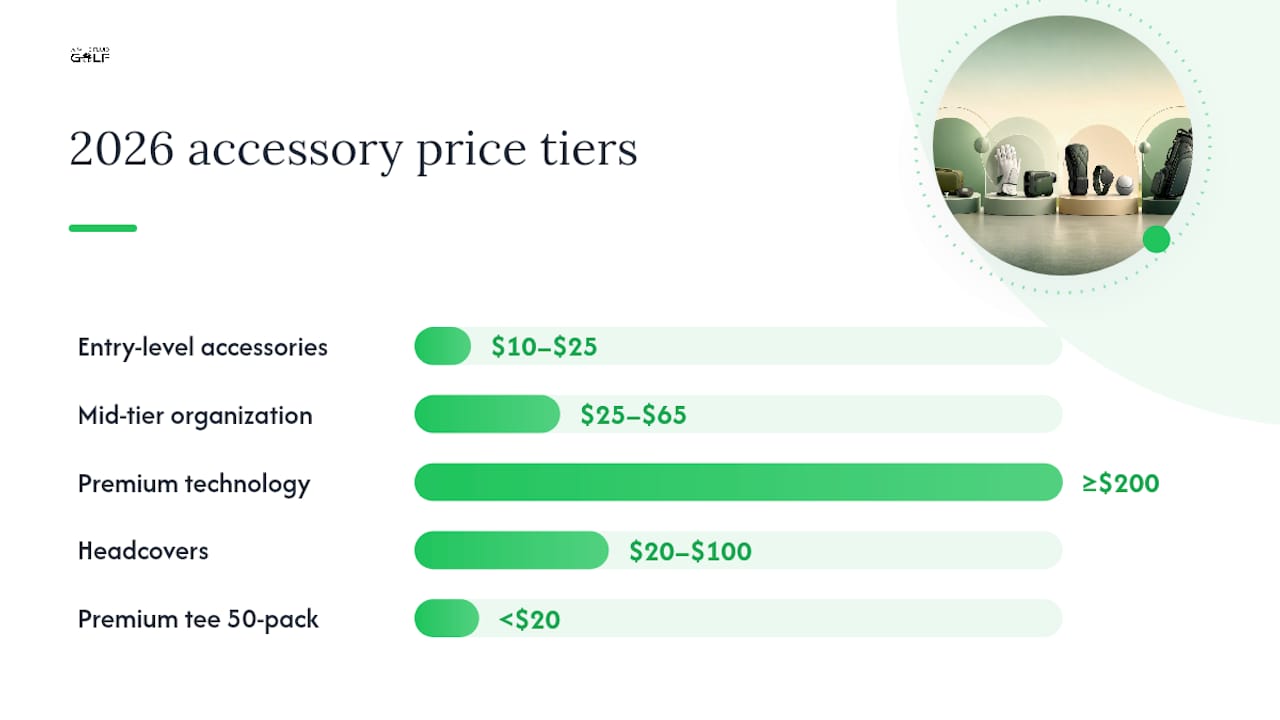
Headcovers occupy their own bracket. A standard synthetic cover might run $20, but limited-edition or leather-accented versions regularly command $65 to $100, driven by the same scarcity psychology that fuels sneaker drops. Divot tools sit at the affordable end, typically $20 to $30 for a durable foldable model, while a 50-pack of premium tees usually costs under $20.
The market growth to $693.7 million by 2035 noted earlier isn’t just about volume. It reflects more manufacturers competing at every price point, which keeps entry-level gear affordable while funding the premium, tech-heavy releases that get the headlines. Expect a wider spread between budget and premium options this year than in past seasons, with fewer accessories stuck in an awkward middle price with no clear value proposition.
What New Accessories Are Brands Releasing in 2026?
Expect the innovation this year to concentrate in two places: sensor integration and modular add-ons rather than entirely new product categories. Manufacturers have realized most golfers won’t replace a driver they love just to get swing data, so the smarter move is building sensors into accessories that attach to existing gear.
One clear example is the Arccos and SuperStroke partnership on a sensor-equipped putter grip, which lets golfers add stroke tracking without buying a new putter. That modular philosophy is likely to spread to other clubs and accessories throughout the year.
Combination optical and radar devices, like the 3-in-1 rangefinder reported in golf industry press, suggest device makers are consolidating what used to be three separate purchases (rangefinder, launch monitor, GPS watch) into one unit. PGA Show coverage has repeatedly flagged technology and personalization as the two themes defining new product launches this year, which tracks with what’s actually hitting shelves: smarter devices and more limited-run style pieces, rather than radical reinventions of the golf bag or towel.
Are High-Tech Accessories Worth It Over Traditional Gear?
Traditional accessories win on reliability and cost. A basic towel doesn’t need charging. A standard rangefinder without slope mode never needs a firmware update. If your priority is simplicity and a lower upfront cost, traditional gear still does the job it’s always done.
High-tech accessories win on data and convenience, but only if you’ll actually use what they collect. A portable launch monitor that tracks smash factor and club speed is valuable for a golfer serious about lowering their handicap through deliberate practice. That same device is dead weight for someone who plays twice a month and just wants to enjoy the round.
The realistic answer is a hybrid approach. Keep the fundamentals simple, a reliable bag, a durable towel, well-made tees, and add technology only where you’ll extract real value: a launch monitor if you practice regularly, a smart grip if you’re working specifically on your putting stroke. Magnetic organization sits in a useful middle ground here. It’s not “high-tech” in the sensor sense, but it solves a real friction point with mechanical simplicity rather than a battery and an app.
What Are Golfers and Experts Saying About 2026 Must-Haves?
Coverage from equipment writers and golf retailers this year keeps circling back to the same shortlist: modular bags, magnetic organization, and personalized headcovers. That consensus lines up with what the PGA Show highlighted as its top consumer takeaways, technology integration and personalization leading the list of what drew crowds at the show floor.
Player feedback on ultralight bags is more mixed than marketing suggests. Golfers who walk regularly report real relief on their back and shoulders, but several notes the tradeoff in fewer dividers means more careful packing to avoid clubs rattling around. That’s consistent with the structural tradeoffs documented in bag design coverage: less weight almost always means less internal structure.
On the magnetic organization side, the appeal cuts across skill levels because it solves a universal problem rather than a skill-specific one. A scratch golfer and a 20-handicapper both waste time hunting for a towel in a cluttered bag. Expert commentary on the broader accessory market’s growth points to durability and story-backed limited runs as what separates gear people actually keep from gear that gets replaced within a season. That favors accessories built with attachment cycle testing and solvent-resistant materials over ones designed purely to look good in a product photo.
Do Golf Accessory Preferences Vary by Region or Player Type?
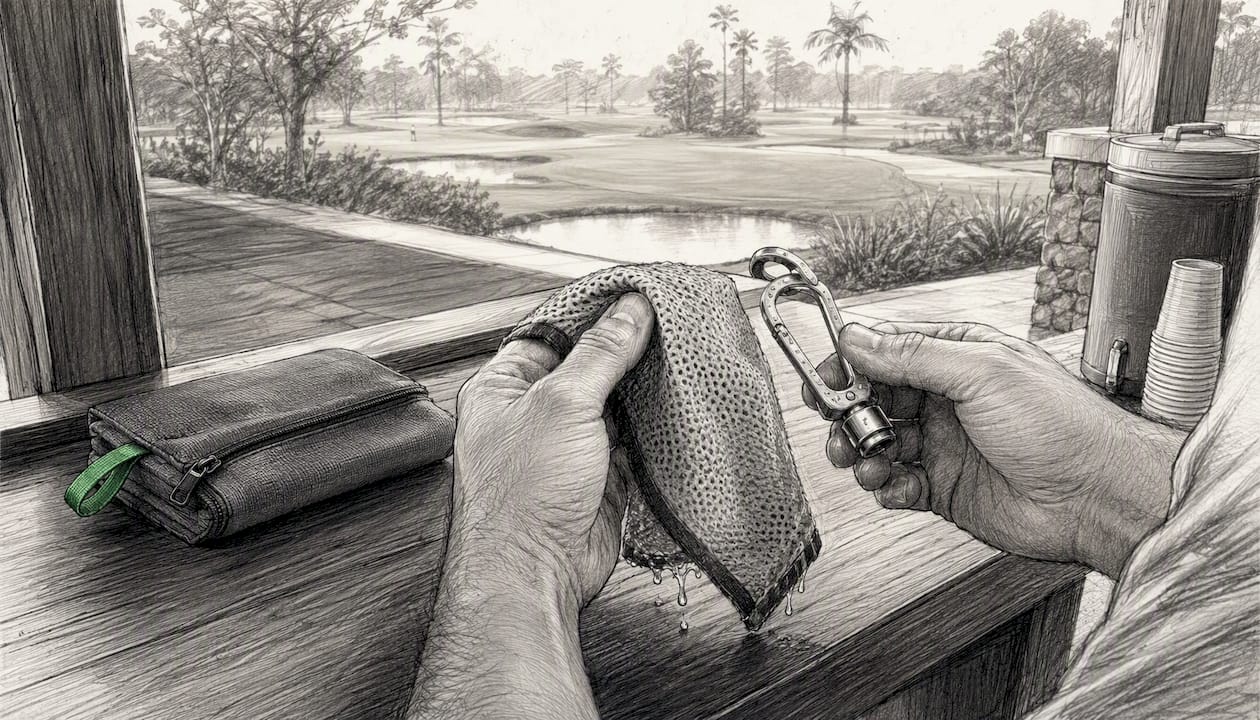
Climate and course conditions shape which accessories matter most in different regions. Golfers in humid Southeast climates lean harder into moisture-wicking towels and rust-resistant metal accessories, since standard hardware corrodes faster in that environment. Players in drier Southwest and Mountain West regions prioritize UV-resistant fabrics and hydration-focused bag pouches over anything moisture related.
Demographics matter just as much as geography. Younger golfers, particularly those under 35, drive most of the demand for limited-edition headcovers and personalization drops, treating gear the way earlier generations treated golf shoes: as a visible signal of taste. Older, more established players tend toward the durability and organization side of the trend list, favoring magnetic towel systems and utility pouches that solve a practical annoyance rather than make a style statement.
Walking golfers versus cart golfers split almost evenly on bag preference. Walkers gravitate to the sub-4-pound modular stand bags despite the padding tradeoffs, while cart-based players show far less interest in weight and more interest in organization features like dedicated cooler pockets and magnetic attachment points on the cart bar itself. Tech adoption follows a similar divide: competitive and low-handicap players are the primary buyers of portable launch monitors, while casual and recreational golfers account for most of the growth in simpler conveniences like magnetic towels and premium tees.
How Aiming Fluid Golf Applies These 2026 Trends
Aiming Fluid Golf’s product lineup was built around the same problem the whole magnetic organization trend is solving: gear that’s technically in your bag but never where you need it when you need it. The Magna-Anchor™ magnetic golf towels and magnetic landing pads attach directly to a cart bar or bag strap, so retrieving and returning a towel takes one motion instead of a search through side pockets.
The leather utility pouch applies the same modular philosophy that’s showing up across premium bags this year, isolating valuables and small items from the main compartment. Picture a Saturday foursome where three players are digging through pockets for a towel between shots while the fourth just reaches down, wipes the clubface, and reattaches it before the group even finishes walking to the next ball. That’s the pace-of-play gain magnetic systems are built to deliver, and it’s the same principle behind Aiming Fluid’s ergonomic accessory lineup.
Which 2026 Trends Deserve Your Money Right Now?
If you’re a walking weekend player, prioritize magnetic towel systems and a lighter bag before you touch any tech. If you’re a data-driven improver chasing a lower handicap, a portable launch monitor earns its cost fast. If you’re the golfer who treats gear as self-expression, limited headcovers and personalized pouches are worth the premium.
Invest now in organization, since it pays off every single round. Wait on bleeding-edge combination devices until this year’s integration kinks get worked out.
— Gary
Get Your Bag Organized With Aiming Fluid Golf
Aiming Fluid Golf built its lineup specifically for the organization problem this whole trends list keeps circling back to: gear that’s expensive and well made but never accessible when you actually need it mid round. The Magna-Anchor™ magnetic towels and matching landing pads solve instant towel access with a one-motion attach and release, so you stop digging through zippers between shots.
If your bag has turned into the equivalent of a junk drawer with wheels, start with the magnetic towel collection and the landing pad lineup to fix the single most common frustration on this year’s trend list. Pair either with the leather utility pouch for valuables, or browse the full accessory collection for tees, divot tools, and ball markers that round out a properly organized bag. Testing a new system on your next round carries no real risk due to satisfaction guarantees typically offered by premium brands.
Sources
- Golf Accessories Market | Global Market Analysis Report - 2035
- PGA (Professional Golfers’ Association)
- Aimtech 3-in-1 OIS Radar Golf Rangefinder (press coverage)
- Golf trends 2026: Colors, materials and designs dominating the greens
FAQ
What Are Some Popular Golf Accessories in 2026?
Magnetic towels and landing pads, ultralight modular bags, AI-enabled rangefinders, and limited-edition headcovers top this year’s popularity list. Sustainable materials like recycled polyester and biodegradable tees are also gaining shelf space as buyers pay closer attention to material sourcing.
What Are the Trends in Golf Apparel and Accessories for 2026?
Muted, earthy color palettes with one bold accent, paired with premium textures like leather trim and matte finishes, define this year’s look. Personalization through limited-run headcovers and accessory drops is the other major style driver.
What Are Some Cool New Golf Accessories Worth Trying?
Magnetic towel and landing pad systems rank among the most practical new accessories, since they solve the constant hunt for a towel mid round. Sensor-equipped putter grips, like the Arccos and SuperStroke collaboration, let you add data tracking without replacing clubs you already trust.
What New Golf Equipment and Accessories Will Release in 2026?
Expect more sensor-based add-ons that attach to existing clubs rather than replacing them, plus combination devices merging rangefinder and launch monitor functions into a single unit. Industry press has already covered one such 3-in-1 device as an early signal of that integration trend.
How Much Do Trending Golf Accessories Cost in 2026?
Entry-level accessories like tees and ball markers typically run $10 to $25, while mid-tier organization gear such as magnetic towel systems lands between $25 and $65. Aiming Fluid Golf’s magnetic towels fall in the $29.69 to $39.69 range, and its magnetic landing pad is priced at $24.95.


