


TL;DR:
- An efficient tee box routine is a structured process divided into decision, preparation, and execution phases, each with specific time targets that enhance focus and consistency. Following the STOP S.L.O.W. GO model and timing benchmarks helps golfers avoid phase confusion, reduce delays, and perform reliably under pressure. Proper physical and mental preparation before the round further streamlines on-tee decisions and maintains rhythm during play.
An efficient tee box routine is a structured sequence of physical and mental actions designed to prepare you for each tee shot within a defined time window, improving focus, consistency, and pace of play. Most amateur golfers treat the tee box as a place to arrive and react. Tour professionals treat it as a controlled environment with a repeatable process. The difference in outcomes is not talent alone. It is structure. This guide covers the validated STOP S.L.O.W. GO model, PGA Tour and LPGA timing benchmarks, and the specific phase breakdowns that separate efficient golfers from slow ones.
What are the key phases of an efficient tee box routine?
A tee box pre-shot routine, the recognized industry term for what this efficient tee box routine guide describes, breaks into three distinct phases: decision, preparation, and execution. Each phase has a defined purpose and a time target. Treating them as separate stages prevents the most common failure mode, which is blending all three into one unfocused block of time at the ball.
Phase 1: Decision (behind the ball)
The decision phase happens entirely behind the ball before you step into your stance. You select your club, identify your target line, and commit to a shot shape. Routine inefficiency often arises from incorrect phase orders. Addressing the ball before all decisions are made forces re-alignment loops that waste time and erode confidence. This phase should take 10 to 15 seconds.
Phase 2: Preparation (approaching the ball)
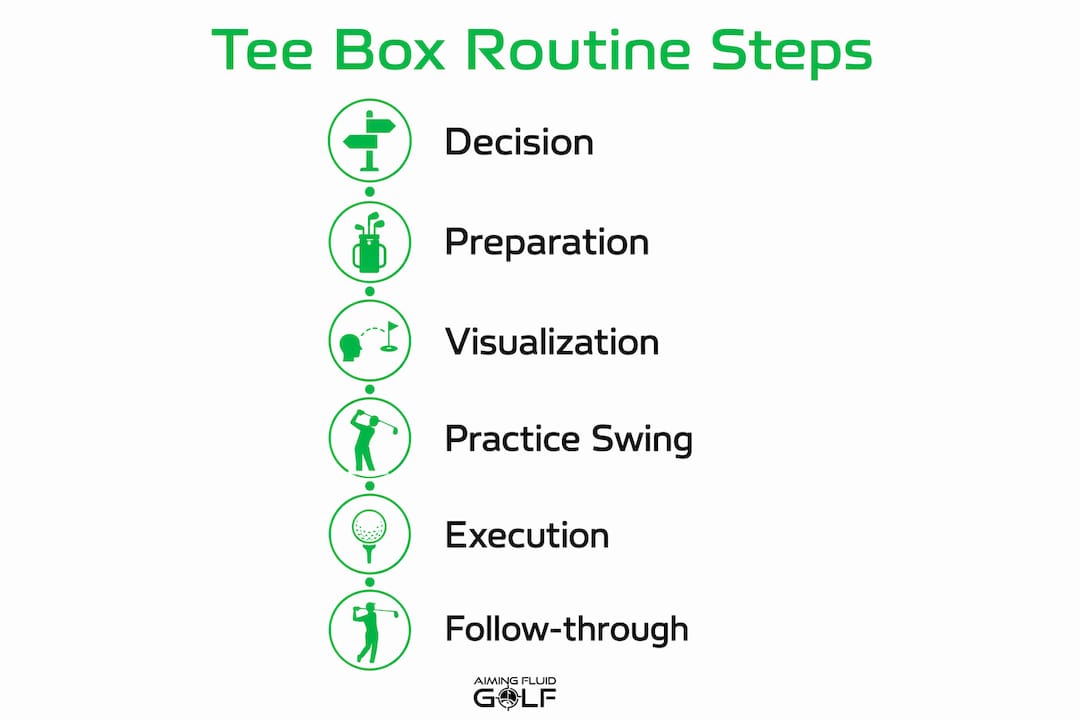
Once you commit to the shot, you approach the ball with your clubface first, then set your feet. The teeing area extends two club-lengths behind the tee markers, so you have room to position precisely without rushing. Your body can stand partially outside the teeing area legally, which gives you flexibility on stance width. This phase covers alignment and any practice swings, and should run 10 to 20 seconds.
Phase 3: Execution (trigger to swing)
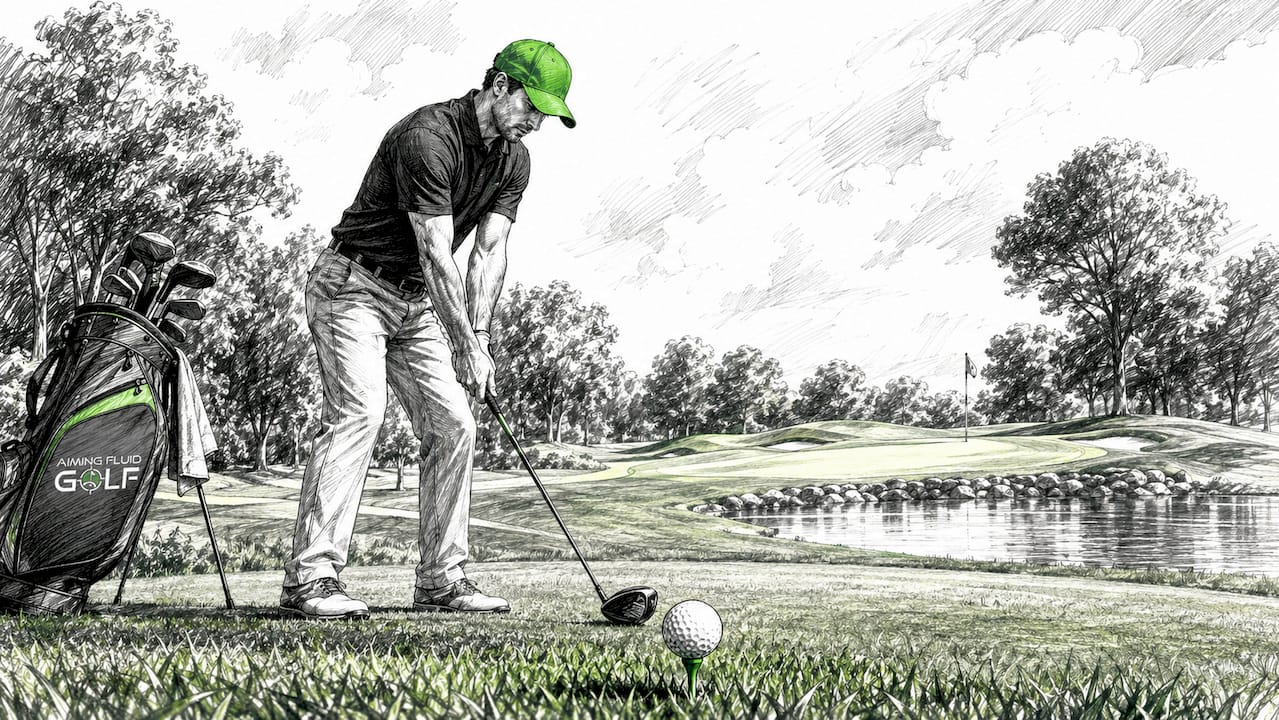
The execution phase begins the moment you settle into your final stance and ends at impact. The STOP S.L.O.W. GO model structures this entire sequence into six steps: Stop, Strategy, Look, Outline, Waggle, and Go. Over 90% of NCAA Division I golf coaches consider these steps effective for consistent performance under stress. The Waggle step serves as a physical trigger that cues the Go phase, limiting hesitation and keeping tempo intact.
- Stop behind the ball and clear your mind.
- Strategy by selecting club, target, and shot shape.
- Look at the target to build a visual picture.
- Outline your approach path and stance position.
- Waggle as a physical trigger to activate motor readiness.
- Go by initiating the swing without further deliberation.
Pro Tip: Kinesthetic awareness combined with visual imagery during your practice swing improves motor programming, reinforcing reliable shot execution under varying course conditions. One deliberate practice swing beats three mechanical ones.
How to prepare physically and mentally before arriving at the tee box
Tee box preparation tips begin well before you reach the first tee. Physical and mental readiness built before your round reduces the cognitive load you carry to each shot, which directly shortens your on-tee decision time.
Physical warm-up priorities:
- Target hip, glute, and spine mobility specifically. Pre-round mobility work targeting these areas about 2.5 hours before play reduces slow readiness searching on the tee and supports faster transitions between phases.
- Use a 10-minute pre-round warm-up that includes hip circles, thoracic rotations, and progressive swing speed work rather than static stretches.
- Hit a structured range session with purpose. Start with wedges, move to mid-irons, then finish with your driver. This sequence mirrors the motor patterns you will use on the course.
- Organize your bag before leaving the car. Tees in one pocket, ball marker and divot tool in another. When your bag feels like a junk drawer, you waste 15 to 30 seconds per hole searching for basics.
Mental preparation before the first tee:
- Visualize your opening tee shot during your warm-up, not while standing on the tee box. Arriving with a mental picture already formed cuts your decision phase time significantly.
- Review the golf round preparation guide from Aimingfluidgolf for a structured pre-round checklist that covers both physical and mental readiness.
- Set a personal par for the round based on current form. This reduces the mental pressure that causes routine bloat under stress.
Pro Tip: Place your tee at the correct height before stepping into your stance. A consistent tee placement workflow eliminates one micro-decision from the preparation phase and keeps your focus on target selection.
Timing your routine: pace-of-play rules and execution speed
Professional pace-of-play policies set the clearest benchmark available for efficient golf warm-up and execution timing. The PGA Tour allocates approximately 40 seconds per shot, with phased timing of 10 to 15 seconds for decision-making, 10 to 20 seconds for preparation, and roughly 8 seconds for final execution. The LPGA enforces the same 40-second standard with escalating penalties from fines to stroke penalties for violations. These benchmarks are not just for tour players. They represent the outer limit of what a well-structured routine requires.
| Phase | Time Target | Key Action |
|---|---|---|
| Decision | 10 to 15 seconds | Club selection, target line, shot shape commitment |
| Preparation | 10 to 20 seconds | Approach ball, set clubface, align stance, one practice swing |
| Execution | 8 seconds | Trigger cue, waggle, initiate swing |
| Total | ~40 seconds | Full routine from behind ball to impact |
Common timing pitfalls to avoid:
- Repeating practice swings after alignment is set. One practice swing in the preparation phase is sufficient. Multiple swings after addressing the ball add 10 to 20 seconds without improving shot quality.
- Re-checking yardage after committing to a club. Yardage confirmation belongs in the decision phase, not after you have approached the ball.
- Pausing between the waggle and the swing. A consistent trigger cue such as a waggle, a breath, or a forward press signals the brain to execute without further analysis. Scottie Scheffler uses a deliberate forward press as his Go cue, which eliminates the freeze response that causes timing bloat.
- Resetting your stance after addressing the ball. If you need to reset, step away completely and restart the preparation phase from scratch.
The 40-second total is achievable without rushing. Breaking routines into psychological phases promotes tempo and rhythm consistency, which means you can move efficiently and still feel composed at the moment of execution.
Common mistakes in tee box routines and how to fix them
The four most damaging habits in a tee box routine all share the same root cause: phase confusion. When decision-making bleeds into execution, or when preparation restarts mid-swing, the routine loses its protective function.
-
Chasing the perfect spot after addressing. Pro golfers complete all club and shot decisions behind the ball, then commit to a single approach path. Completing decisions before addressing eliminates the re-alignment loop that adds 20 to 40 seconds and introduces doubt. If you find yourself shuffling your feet after setting your stance, the decision phase was incomplete.
-
Excessive practice swings. One practice swing with intent beats three mechanical ones. The purpose of a practice swing is to activate the motor pattern for the shot you have already decided to hit. Without a clear shot picture formed in the decision phase, practice swings become a stalling mechanism rather than a preparation tool.
-
Skipping the decision phase entirely. Many amateur golfers walk to the ball, pull a club by habit, and swing without a defined target line or shot shape. Mental state and tempo depend on a reliable routine. Skipping the decision phase removes the mental anchor that keeps focus sharp through the execution phase.
-
Mental rushing caused by external pressure. Slow groups ahead or fast groups behind create social pressure that compresses the routine. The fix is not to speed up each phase but to protect the decision phase specifically. You can shorten preparation and execution slightly without losing quality. Cutting the decision phase produces poor shot selection and compounds errors.
Pro Tip: Practice your full routine on the range, not just your swing. Hit every range shot with a complete decision, preparation, and execution sequence. Golfers who build consistent pre-shot sequences on the range transfer those habits to the course automatically.
Key takeaways
A structured tee box routine built on the STOP S.L.O.W. GO model, timed within the 40-second professional benchmark, and rehearsed on the range produces measurable improvements in both pace of play and shot consistency.
| Point | Details |
|---|---|
| Use the STOP S.L.O.W. GO model | This six-step framework structures every phase and has over 90% consensus among Division I coaches. |
| Complete decisions behind the ball | All club, target, and shot shape choices must be made before approaching the ball to prevent re-alignment. |
| Target 40 seconds total | Allocate 10 to 15 seconds for decision, 10 to 20 for preparation, and 8 seconds for execution. |
| Use a consistent trigger cue | A waggle, breath, or forward press signals the Go phase and eliminates hesitation at the moment of execution. |
| Warm up before the first tee | Pre-round mobility work and mental visualization reduce on-tee decision time and support faster phase transitions. |
Why your routine matters more under pressure
The golfers I have watched struggle most under tournament conditions are not the ones with the worst swings. They are the ones with no defined routine. When pressure rises, an undefined routine collapses into either paralysis or rushing, and both produce the same result: a poor shot.
What I have found through years of observing and playing is that the routine is not a pre-swing ritual. It is a cognitive reset. Each time you run through the STOP S.L.O.W. GO sequence, you are redirecting attention away from outcome anxiety and toward process execution. That is attentional control theory applied practically, and it works at every skill level.
For beginners, I recommend starting with just two phases: a 10-second decision behind the ball and a single practice swing before addressing. Do not try to build the full 40-second model on day one. For mid-handicappers, add the trigger cue and time yourself on the range until 40 seconds feels natural, not rushed. For low-handicappers preparing for amateur tournament formats, the routine becomes your primary stress management tool. The swing you have on tournament day is the swing you have. The routine is the one variable you can fully control.
One observation I keep returning to: golfers who practice their routine as seriously as their swing mechanics improve faster and hold their game together under pressure far more reliably. The routine is not a shortcut. It is the structure that makes every other improvement stick.
— Gary
Gear that supports a faster, more organized tee routine

The physical side of an efficient tee box routine depends on having the right equipment accessible without searching. Aimingfluidgolf designs accessories specifically to solve that problem. Precision golf tees with consistent height markings remove one micro-decision from your preparation phase. Magnetic golf towels attach and detach instantly, so cleaning your ball or club never interrupts your timing. Utility pouches keep tees, ball markers, and divot tools in fixed locations so your hands find them without looking.
Browse the full expert picks for cart and carry at Aimingfluidgolf to find gear built around on-course efficiency. Every product in the lineup is designed to reduce friction in your routine, not add to it. You can also explore Aimingfluidgolf’s precision tees for tee height consistency that supports repeatable ball position on every drive.
FAQ
What is a tee box pre-shot routine?
A tee box pre-shot routine is a structured sequence of decision, preparation, and execution steps performed before each tee shot to improve focus and consistency. The STOP S.L.O.W. GO model is the most validated framework for building this sequence.
How long should a tee box routine take?
A tee box routine should take approximately 40 seconds total, based on PGA Tour and LPGA pace-of-play policies. This breaks into 10 to 15 seconds for decision-making, 10 to 20 seconds for preparation, and roughly 8 seconds for execution.
What is the STOP S.L.O.W. GO model?
The STOP S.L.O.W. GO model is a six-step pre-shot routine framework covering Stop, Strategy, Look, Outline, Waggle, and Go. Over 90% of NCAA Division I golf coaches endorse it for consistent performance under stress.
How do I stop rushing my tee shot routine?
Protect the decision phase first. Complete all club and target decisions behind the ball before approaching, and use a consistent trigger cue such as a waggle or forward press to initiate the swing without hesitation.
Does a pre-round warm-up improve tee box efficiency?
Pre-round mobility work targeting hips, glutes, and spine reduces physical hesitation on the tee and supports faster phase transitions. Mental visualization during warm-up also shortens on-tee decision time by arriving with a shot picture already formed.
Recommended
- Step-by-step golf tee setup guide for consistency – Aiming Fluid Golf
- Master golf tee placement workflow for consistent drives – Aiming Fluid Golf
- Golf tee selection tips to improve your game performance – Aiming Fluid Golf
- 9 Simple Golf Tips to Instantly Improve Your Game (Rick Shiels Breakdo – Aiming Fluid Golf


