


The fastest safe way to dry wet golf shoes is mechanical, not thermal: pull the insoles and laces, wipe off surface water, pack the interior with absorbent material, then set them in a shaded, ventilated spot with airflow. Skip the hair dryer entirely. Trusted references like MyGolfSpy’s shoe-care guidance and FootJoy’s official care instructions back this exact approach. Expect initial wicking to show results in 20 to 60 minutes, with a full air-dry taking several hours to overnight.
TL;DR:
- Using airflow with a fan and packing shoes with absorbent material is the fastest safe way to dry golf shoes without risking damage.
- Completely removing insoles and laces, then rotating the packing material every 20 to 40 minutes speeds up moisture absorption during the initial drying phase.
- Avoid heat sources like hair dryers, radiators, or direct sunlight, as they can warp leather and weaken shoe adhesives.
- Once dry, inserting cedar shoe trees and thoroughly drying or replacing insoles prevents odors and maintains shoe shape.
- Preventative measures such as waterproofing, rotating between pairs, and using silica packets can significantly reduce soaking incidents.
Table of Contents
- How Do You Dry Wet Golf Shoes Step by Step?
- What Are the Fastest Safe Ways to Speed Up Drying?
- What Should You Never Do When Drying Golf Shoes?
- How Do You Restore Shape and Stop Odor After Drying?
- How Can You Prevent Golf Shoes From Getting Soaked Again?
- When Should You Contact the Manufacturer or a Repair Shop?
- What Does Aiming Fluid Golf Recommend for Wet-Weather Prep?
- The Real Priority Isn’t Speed, It’s Restraint
- Sources
How Do You Dry Wet Golf Shoes Step by Step?
A soaked pair of golf shoes responds best to a sequence, not a single trick. Rushing straight to a fan without prepping the shoe first wastes time and can trap moisture against the lining.
- Strip and wipe. Remove the laces and insoles immediately, then wipe down the outside to clear mud and grass. Wet insoles left inside just re-saturate the shoe from within.
- Pack and rotate. Stuff each shoe firmly with crumpled newspaper or thick paper towels, pressing material into the toe box. Swap it out every 20 to 40 minutes during the first hour or two, since that’s when the paper does most of its work absorbing standing moisture, a timing detail confirmed in MyGolfSpy’s steps for wet golf shoes.
- Position for drainage and airflow. Angle the shoes toe down or set them upside down on a rack, then point a fan into the opening. Moving air pulls moisture out far faster than shoes sitting flat on a mat.
- Restore shape once wicking slows. When the newspaper stops coming out damp, switch to shoe trees or cedar inserts to hold the shoe’s form. Reinsert dry insoles, or swap in a fresh pair if the originals stayed saturated.
FootJoy’s own shoe-care instructions recommend newspaper treatment for several hours for shoes that took a real soaking, followed by cedar trees. Treat that as your baseline for anything beyond a light splash through morning dew.
What Are the Fastest Safe Ways to Speed Up Drying?
Passive air-drying works, but golfers who need shoes ready for tomorrow’s tee time have faster options that are still safe for leather, synthetic, and mesh uppers.
- A fan aimed directly into the shoe opening cuts drying time noticeably compared to shoes just sitting in open air, since forced airflow strips moisture off the interior surfaces continuously.
- Silica-gel or desiccant packets dropped into each shoe overnight pull residual moisture out of hard-to-reach seams and stitching, though heavily soaked shoes need several packets to make a real dent.
- Commercial shoe dryers come in two flavors: gentle low-temperature air circulators and forced hot-air blowers. Stick with the gentle kind. Golftakeaway’s overview of shoe-drying options notes that low-temperature circulation is safer for glued construction than anything that pushes hot air.
- An exhaust vent or low floor-level airflow source gives you steady, low-heat air overnight, a trick CaddieHQ recommends as more efficient than leaving shoes to dry passively on a shelf.
Pro Tip: Test any airflow source with the back of your hand for 30 seconds before trusting it overnight. What feels like “gentle warmth” from an old vent can be enough heat to soften adhesive over eight hours.
Skip rubbing alcohol sprays in heavy doses and skip the hair dryer on its high setting. Both dry out leather oils and stitching glue faster than they dry the shoe itself.
What Should You Never Do When Drying Golf Shoes?
Heat is the enemy of golf shoe construction, and impatience is what leads golfers straight to it.
- Hair dryers, radiators, and ovens all warp leather uppers and soften the adhesive bonds holding the outsole to the midsole, according to MyGolfSpy’s wet-shoe guidance.
- Direct sunlight does the same damage more slowly, drying leather brittle and fading synthetic uppers.
- Washing machines and tumble dryers are built for fabric, not molded soles and spike systems. They shred stitching and can crack plastic components.
- Open flames or hot smoke sources near shoes are a genuine fire hazard, not just a shoe-care mistake.
Ignoring a manufacturer’s care instructions to speed things up can also void a warranty claim if the shoe later fails at a seam or sole bond.
How Do You Restore Shape and Stop Odor After Drying?
Once a shoe is dry, the job isn’t quite done. Skipping this stage is how shoes come out of storage stiff, misshapen, or smelling like a locker room.
- Insert shoe trees as soon as the shoe is dry to the touch, not after. Cedar versions do double duty, holding the shape while pulling residual odor out of the lining.
- Check insoles before reinserting them. If they still feel damp or have started to smell, wash and fully dry them separately, or replace them outright, since a soggy insole undoes everything else you just did.
- Baking soda in a breathable pouch neutralizes lingering odor and mops up trace moisture. Leave it in for 24 to 48 hours, then remove it, a timeline echoed in MyGolfSpy’s odor-control tips.
- Condition leather only once the shoe is bone dry. Conditioning damp leather traps moisture instead of protecting it.
Pro Tip: Keep a small stash of cedar shoe trees in your golf bag storage bin instead of just your closet. Grabbing a pair the moment you get home, before the shoe has a chance to sit crumpled in your bag, makes a visible difference in how well the shape holds.
How Can You Prevent Golf Shoes From Getting Soaked Again?
Drying skills matter, but the golfers who spend the least time on shoe-care rituals are usually the ones who prevented the soak in the first place.
- Understand the difference between water-resistant and waterproof. Water-resistant uppers slow moisture; waterproof construction with sealed seams keeps it out, and Golf Monthly’s testing of waterproof models ties genuine waterproof labeling to fewer wet-shoe incidents and stronger manufacturer warranties.
- Reapply a waterproofing spray every few weeks during a wet season, always on a clean, dry upper so the treatment actually bonds to the material.
- Rotate two pairs so one is always fully dry before your next round, and pack a small pouch of silica packets in your bag as a standing reserve. A rain-ready golf bag checklist covers what else belongs in that kit.
- Weigh traction against your course conditions. Spiked outsoles bite better on soggy turf; spikeless trades some grip for comfort off the course.
Even the best waterproof shoe eventually meets standing water deep enough to soak through, so the drying routine above still earns its place in your bag.
When Should You Contact the Manufacturer or a Repair Shop?
Not every wet-shoe problem is a drying problem. Seams that have split, soles that are peeling away from the upper, or a shape that stays warped after a full dry cycle point to structural failure, not just moisture.
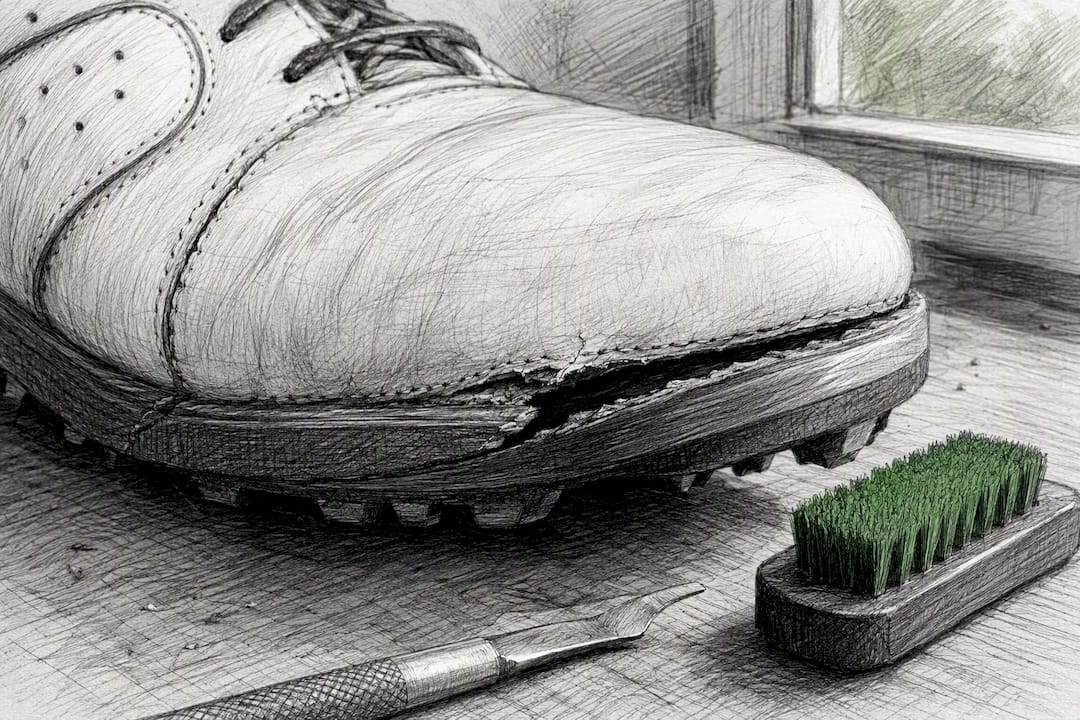
Check your care instructions and warranty terms before attempting an aggressive fix. MyGolfSpy’s guidance on wet-shoe damage recommends photographing the damage and keeping your purchase receipt handy. When you contact support, ask directly whether the issue falls under warranty repair or replacement.
What Does Aiming Fluid Golf Recommend for Wet-Weather Prep?
Good drying technique starts before the round, not after it. Carrying a compact leather utility pouch stocked with spare silica packets means you’re never digging through a soaked bag for something to dry your shoes with. A quick-wicking magnetic golf towel that clips within reach handles wet grips and clubfaces so moisture never migrates onto your shoes in the first place. Small habits like these, paired with a dedicated golf shoe bag for the wet pair, keep the drying process from becoming a weekly chore.
The Real Priority Isn’t Speed, It’s Restraint
Most advice about drying golf shoes obsesses over speed. Faster is fine, but the golfers who ruin shoes aren’t the ones drying too slowly. They’re the ones reaching for a hair dryer or leaving shoes on a sunny windowsill because passive air-drying feels too slow to trust.
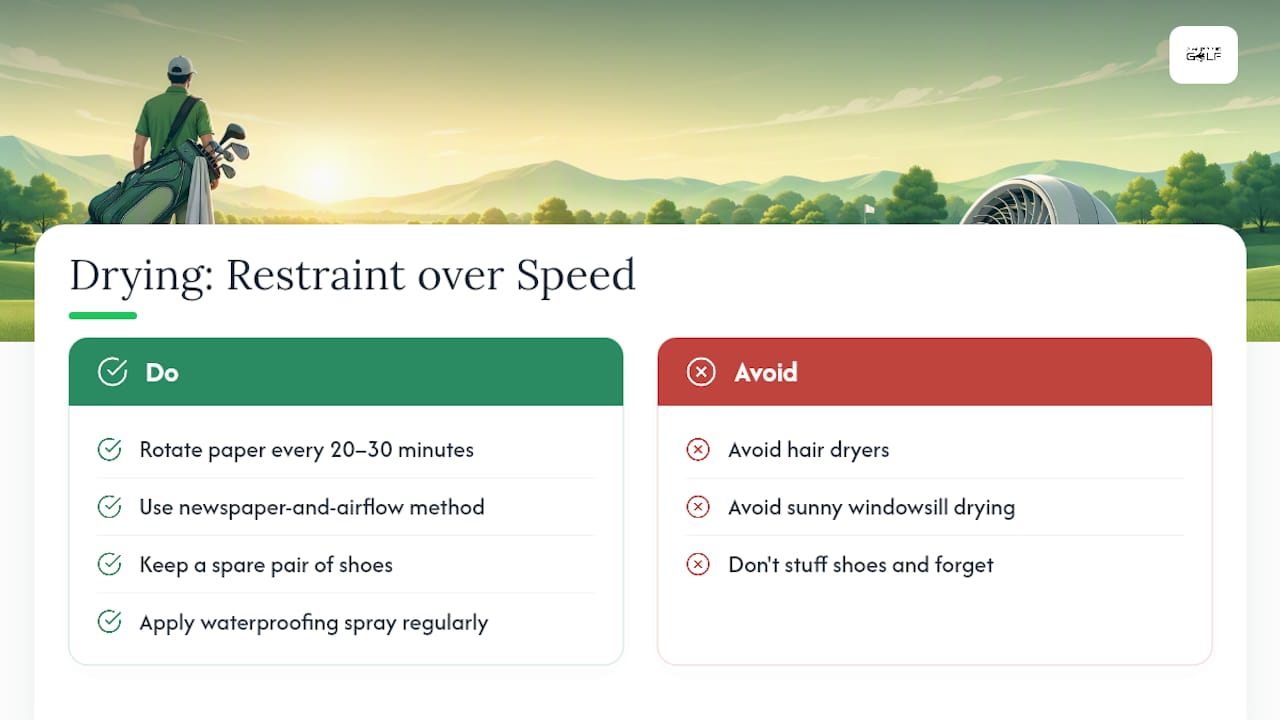
The newspaper-and-airflow method isn’t outdated advice. It’s the correct advice, and it works within hours, not days, when you actually rotate the paper on schedule. Where conventional tips fall short is timing discipline. Stuffing a shoe once and forgetting it for six hours is a fraction as effective as swapping absorbent material every 20 to 30 minutes early on.
If you take one thing from this: prioritize prevention over rescue. A spare pair, a few silica packets in your bag, and a waterproofing spray applied on schedule mean you spend far less time babysitting wet shoes on a Sunday night. Speed matters when you’re already soaked. Not getting soaked matters more.
— Gary
Sources
- What Happens When Golf Shoes Get Wet (Steps to Take)
- Golf Shoe Care & Cleaning | FootJoy
- How to dry golf shoes | CaddieHQ


