


Yes, some magnets rust. Neodymium (NdFeB) magnets are especially prone to corrosion unless they’re properly coated or encapsulated, while ceramic ferrite magnets resist rust in nearly all normal conditions. The mechanism is simple chemistry: iron reacts with oxygen and moisture, and neodymium magnets are made mostly of iron.
The single most important preventive action is keeping moisture away from the metal, through a quality coating, encapsulation, or dry storage.
- NdFeB magnets: rust-prone without protection
- Ferrite magnets: essentially rust-proof in typical use
- Samarium-cobalt: corrosion-resistant but expensive
Statistic to know: In aggressive salt-fog testing, some nickel-plated neodymium magnets show visible rust within a single week of saltwater exposure. That’s a lab stress test, not a forecast for your golf bag, but it shows how fast an unprotected magnet can fail once its coating is compromised.
Key Takeaways
Neodymium magnets rust because they’re roughly 65 to 70 percent iron, and only a quality coating, encapsulation, or dry storage prevents that iron from oxidizing.
| Point | Details |
|---|---|
| NdFeB is the risk category | Neodymium’s iron content makes it the magnet type most prone to rust; ferrite resists corrosion naturally. |
| Coating quality beats coating type | An epoxy or plating layer with a scratched edge fails faster than intact basic plating. |
| Rust cuts real strength | Documented tests show holding-force losses of up to about 11 percent in corroded magnets. |
| Storage habits prevent most failures | Keep humidity below 50% RH, use spacers, and avoid stacking magnets face-to-face. |
| Severity determines the fix | Light rust can be cleaned and resealed; pitted or crumbling magnets should be replaced. |
Table of Contents
- Do Magnets Rust? Why Composition Determines the Answer
- How Rust Changes a Magnet’s Holding Force
- Why NdFeB Magnets Corrode: the Science Behind the Rust
- Coatings and Encapsulation: What Actually Stops Corrosion
- Storing and Handling Magnets to Prevent Corrosion
- Rust Triage: Clean, Recoat, or Replace?
- How Aiming Fluid Golf Designs Around Rust
- What the Evidence Actually Tells You About Magnet Rust
- Frequently Asked Questions
- Sources
Do Magnets Rust? Why Composition Determines the Answer
Whether a magnet rusts depends almost entirely on what it’s made of, not on the fact that it’s magnetic. Magnetism and corrosion resistance are two separate properties, and manufacturers often trade one against the other.
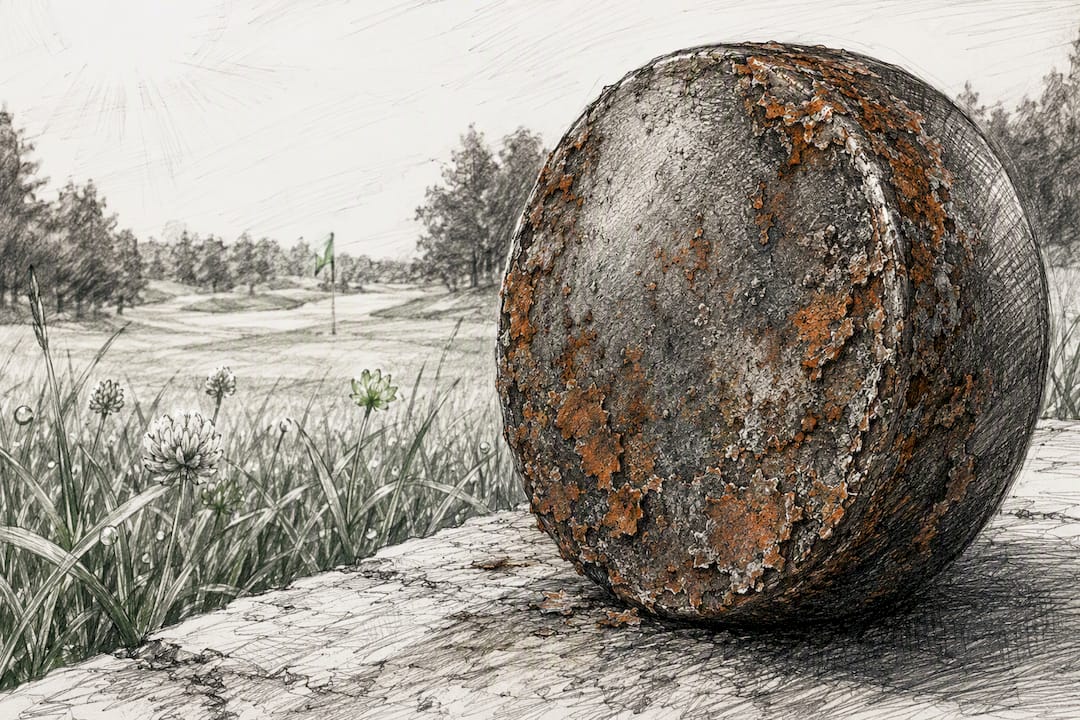
Neodymium (NdFeB) magnets are the strongest widely available permanent magnets, and that strength comes from an alloy that’s roughly 65 to 70 percent iron by weight. Iron is exactly what rusts. Left bare, an NdFeB magnet in humid air will oxidize the same way a cast-iron skillet does if you forget to dry it.
Ferrite (ceramic) magnets are made from iron oxide combined with strontium or barium carbonate. They’re already oxidized in a stable form, which makes them chemically inert to further rusting. They’re weaker per unit of size than neodymium, but for outdoor fixtures or humid environments, that trade-off often makes sense.
Samarium-cobalt (SmCo) magnets split the difference: strong like neodymium, but naturally more corrosion-resistant, at a higher price point.
For rugged applications, manufacturers often skip the corrosion question entirely by encapsulating the magnet in plastic, rubber, or a stainless-steel housing, isolating the ferromagnetic core from air and water altogether.
How Rust Changes a Magnet’s Holding Force
Rust doesn’t just look bad. It converts the magnet’s surface iron into iron oxide, a compound with weak, disorganized magnetic properties. Every micron of that conversion is holding force you no longer have.
Two things happen as corrosion progresses. First, the oxide layer itself contributes almost nothing to the magnetic circuit, so effective strength drops. Second, oxide buildup and pitting increase the physical gap between the magnet and whatever it’s holding, and magnetic force falls off sharply with distance. A magnet that looks “mostly fine” with light surface discoloration may already be underperforming.
- Surface tarnish: cosmetic in the early stage, minor strength impact
- Advancing oxidation: measurable pull-force loss begins
- Pitting and flaking: structural weakening, significant strength loss
The numbers back this up. Testing on rusted neodymium magnets has documented strength losses of up to about 11 percent in some saltwater exposure scenarios. That’s not catastrophic on paper, but for a magnet doing precision work near its rated capacity, an 11 percent shortfall can be the difference between a secure hold and a slipped connection.
Why NdFeB Magnets Corrode: the Science Behind the Rust
Neodymium magnets don’t corrode uniformly. Their internal structure is the reason.
Sintered NdFeB is a multiphase material: iron-rich grains, a neodymium-rich boundary phase, and a boron-rich phase all sit next to each other. Those phases have different electrochemical potentials, and when moisture bridges them, they form tiny galvanic cells. One phase acts as an anode and corrodes preferentially, often eating inward along grain boundaries rather than staying on the surface. That’s why a magnet can look intact from the outside while the interior weakens.
A small breach in an otherwise intact coating can let moisture in, and localized anodic attack then spreads beneath the plating. What looks like a tiny scratch on day one can become an inside-out failure months later, invisible until the coating finally bubbles or flakes.
Standard industry testing reflects how aggressive this process can be:
- Salt spray (ASTM B117): the most common accelerated corrosion benchmark; nickel-plated NdFeB samples can show first signs of failure within about a week
- Humidity/vapor exposure: condensation is often more aggressive than dry air because it delivers sustained moisture directly to grain boundaries
- Pressure cooker testing (PCT): high-temperature, high-humidity conditions that reveal weaknesses standard salt-fog testing might miss
Industry evaluations consistently find that no coating makes NdFeB immune, only more resistant. Environmental control and coating quality remain the two real levers.
Coatings and Encapsulation: What Actually Stops Corrosion
Not all protective layers are created equal, and the right choice depends on where the magnet lives, not just what it’s made of.
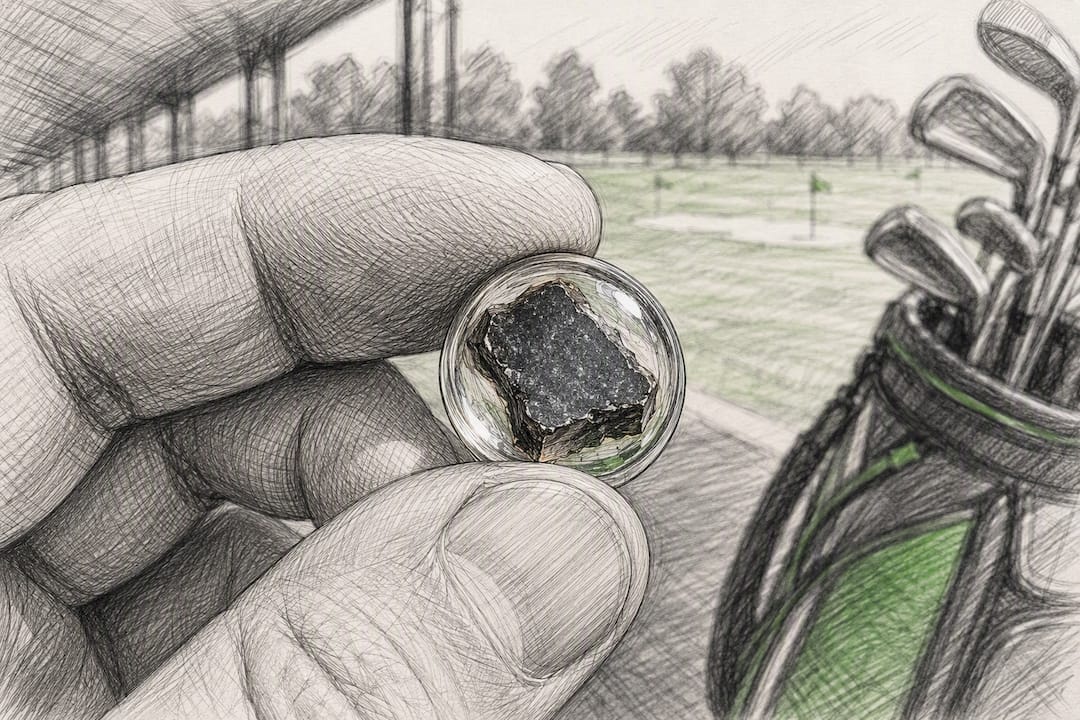
Nickel-copper-nickel (Ni-Cu-Ni) plating is the industry default for a reason: it’s thin, cheap, and adequate for dry indoor use. It’s also the coating that fails fastest in salt-fog tests, since any pinhole or scratch gives moisture a direct path to the iron underneath.
Epoxy coatings and parylene perform considerably better in humid or saline conditions. Properly applied epoxy or full encapsulation can extend service life outdoors for years, provided the coating stays intact.
Zinc plating offers moderate resistance, cheaper than epoxy but generally less durable against saltwater than a well-applied epoxy layer.
Rubber and plastic overmolding essentially wraps the magnet in a physical moisture barrier rather than a thin chemical one. This is why so many outdoor and marine magnetic products use overmolded designs instead of plated bare magnets.
Stainless steel housings go a step further, isolating the magnet mechanically so it never contacts air directly, useful for high-wear or high-impact applications where a coating alone might crack.
- Seal any potting joints or seams where two housing pieces meet
- Protect edges and corners during assembly, since coatings thin out fastest at sharp angles
- Handle magnets by their housing, not their bare face, to avoid scratching plating before it’s even in service
Pro Tip: If you’re evaluating a coated magnet for outdoor use, check for a visible seam or edge where plating might be thinner. That’s almost always where corrosion starts first, not on the flat faces.
Storing and Handling Magnets to Prevent Corrosion
Most magnet corrosion isn’t a manufacturing defect. It’s a storage problem.
- Control humidity. Keep storage environments below roughly 50 percent relative humidity, using a sealed container with a desiccant packet if you’re in a humid climate or storing magnets long-term.
- Use non-magnetic spacers. Stacking magnets face-to-face traps moisture between the surfaces, creating a hidden pocket where corrosion can start unnoticed. A plastic or cardboard spacer between magnets solves this.
- Keep skin oils and chemicals away. Fingerprints introduce moisture and salts; wipe magnets with isopropyl alcohol after handling, and never store them near solvents, cleaning chemicals, or anything acidic.
- Wear gloves for repeated handling. This matters more for hobbyist projects where the same magnets get touched daily during assembly or testing.
These habits matter just as much for a project box of loose neodymium magnets as they do for magnetic accessories built for daily outdoor use.
Rust Triage: Clean, Recoat, or Replace?
Not every rusty magnet needs to go in the trash, but knowing which category yours falls into matters.
- Light surface rust (discoloration, no pitting): Clean it with isopropyl alcohol and a fine abrasive pad, then apply a fresh protective coat, paint, epoxy, or enamel, before returning it to use.
- Moderate rust (visible flaking, uneven surface): A DIY reseal is riskier here since you can’t see how far corrosion has spread beneath the surface. Professional recoating is the safer bet if the magnet is otherwise valuable.
- Severe rust (pitting, crumbling, structural loss): Replace it. Once corrosion reaches this stage, strength has already dropped meaningfully, and no coating restores lost material.
- Disposal: Bag corroded magnet fragments rather than tossing them loose. Never incinerate a magnet; heating NdFeB above its Curie temperature can also permanently demagnetize it before you’ve even dealt with the corrosion.
How Aiming Fluid Golf Designs Around Rust
Aimingfluidgolf builds its magnetic golf towel and landing pad system around the same principles this article covers: material selection and moisture isolation, not just raw pull force.
- Magnetic components sit in protective pockets rather than exposed metal-to-metal contact
- Construction choices favor durability over the course of repeated outdoor use, rain, dew, and cart-bag humidity included
- Product pages list specs and care instructions so you know exactly what you’re carrying
Gary and the Aimingfluidgolf team recommend checking individual product pages for storage and care specifics before your next round.
What the Evidence Actually Tells You About Magnet Rust
Most consumer advice on this topic oversimplifies in one of two directions: either “neodymium magnets are fragile and unreliable” or “a little rust doesn’t matter.” Neither holds up against the testing data.
The real picture is more specific. Corrosion resistance is a design choice, not a fixed property of “magnets” as a category, and the failures that matter most happen beneath coatings you can’t inspect by eye. That’s the detail conventional advice skips: a magnet can look fine and already be losing structural integrity at the grain boundary.
If you take one thing from the lab data, it’s this: coating quality and edge protection matter more than coating type. A premium epoxy finish with a scratched edge fails faster than basic plating applied without gaps. For anyone buying magnetic gear, that means asking how the seams and edges are treated, not just what the spec sheet claims about the base material.
Prioritize dry storage and physical protection over chasing a “corrosion-proof” marketing claim. Nothing iron-based is immune. The gear that lasts is the gear designed assuming moisture will eventually find a way in.
Frequently Asked Questions
Do magnets rust if they’re stored indoors? Indoor storage lowers risk significantly, but it doesn’t eliminate it. If indoor humidity climbs above roughly 50 percent, even a well-plated neodymium magnet can slowly corrode over months or years.
Will neodymium magnets rust faster in a golf bag than in a toolbox? A golf bag introduces more moisture exposure through rain, dew, and sweat, so uncoated or scratched magnets face higher risk outdoors than the same magnet sitting dry in a workshop drawer.
Are magnets bad for credit cards? Standard consumer magnets, including neodymium ones used in golf accessories, pose no realistic risk to a credit card’s magnetic stripe or embedded chip under normal handling.
Do metal ball markers rust? Steel ball markers can rust if the plating wears through, similar to any other iron-based metal object exposed to moisture; stainless steel or coated brass markers resist this far better.
Can magnets corrode without visible rust? Yes. Internal grain-boundary corrosion can progress beneath an intact-looking coating, which is why a magnet with reduced strength but no visible rust isn’t necessarily fine.
Do magnets tarnish the same way they rust? Tarnish typically refers to a thin surface discoloration, while rust involves actual oxidation of iron content. On NdFeB magnets, what looks like tarnish is often the earliest visible stage of rust.
Sources
- Can Magnets Rust? - K&J Magnetics
- Do Neodymium Magnets Rust? - Osenc Magnets
- What to do if Neodymium magnets rust - MPCO Magnetics


