


Remove the insoles, drop in a baking-soda sachet, and let both halves air out for a full day. That handles most odor within 24 hours. The fix that actually holds is prevention: manage moisture with breathable storage, change socks, and rotate shoes. If the smell comes with itching, cracked skin, or burning between the toes, treat the foot, not just the shoe.
TL;DR:
- Baking soda sachets are the fastest and most effective method for neutralizing odor and removing moisture within 24 hours, especially when kept inside shoes overnight.
- Using crumpled newspaper or cedar chips can help draw out excess water in soaked shoes but are less suitable for quick odor elimination.
- Properly cleaning insoles and the shoe interior with mild soap and avoiding heat damage are essential steps for long-term odor control.
- Allow at least 24 hours of full drying in a well-ventilated, cross-ventilated space to prevent fungal growth and preserve shoe integrity.
- Regular rotation of two or more pairs of shoes, combined with moisture-wicking socks and breathable storage, significantly reduces persistent odor issues.
Table of Contents
- Fastest Ways to Deodorize Golf Shoes Right Now
- How to Deep Clean Golf Shoe Interiors and Insoles
- What’s the Best Way to Dry Golf Shoes Without Ruining Them?
- A Simple Weekly Routine to Keep Golf Shoes Smelling Fresh
- Could That Odor Actually Be Athlete’s Foot?
- Course-Tested Tips From Aiming Fluid Golf
- Choosing a Maintenance Routine That Matches How Often You Play
- Keep Wet Gear From Taking Over Your Bag
- Where This Advice Comes From
- Sources
- FAQ
Fastest Ways to Deodorize Golf Shoes Right Now
Foot odor starts as a moisture problem before it becomes a smell problem. Sweat pools in a closed, dark shoe, and bacteria break down skin cells and sweat into the acidic compounds that make your golf bag smell like a gym locker, according to Northwell Health. Fragrance sprays cover that up for an hour. Drying and neutralizing actually solve it.
Here’s what works, ranked by how fast you can do it:
- Baking soda sachets: Fill a sock or a coffee filter tied with string, then set one in each shoe overnight. Baking soda neutralizes the acidic odor molecules and pulls out moisture, but pouring it loose into leather shoes risks a gritty paste once it meets sweat, so keep it contained (Lumi Outdoors).
- Crumpled newspaper: Stuff both shoes to pull excess water out of soaked leather or synthetic uppers, per FootJoy’s own shoe-care guidance. Swap it out after a few hours if the shoes were truly wet.
- Diluted vinegar mist: Mix water and white vinegar 1:1 in a spray bottle and mist lightly. Skip the soak. Vinegar shifts the pH and knocks down odor-causing organisms, but oversaturating leather can dry it out or warp the shape (Lumi Outdoors).
- Rubbing alcohol: A light wipe inside the shoe speeds evaporation and kills surface bacteria fast, but keep it away from glued seams and painted leather logos, where it can lift adhesive.
- Tea bags, cedar chips, charcoal pouches: These absorb moisture passively overnight rather than acting fast. Good for a locker or trunk, not for a same-day emergency.
Pro Tip: Deodorizers mask smell; drying eliminates the bacteria producing it. Do both, in that order, for a fix that lasts longer than one round.
How to Deep Clean Golf Shoe Interiors and Insoles
Cleaning the outside of a shoe does nothing for the odor living in the lining and insole. That’s where sweat and skin debris actually collect, and it’s the piece most golfers skip entirely, which is why sprays alone rarely work for long, per Northwell Health.
- Pull the laces and insoles out completely. You cannot clean either properly while they’re still in the shoe.
- Wash insoles by hand with mild soap and warm water, then rinse and let them air dry flat, never wring them, since that can warp the foam.
- Clean the upper based on its material. Wipe leather with a damp cloth and mild soap, following FootJoy’s shoe-care instructions; mesh and synthetic uppers tolerate a bit more water, but avoid full submersion on any golf shoe with waterproof membranes or glued components.
- Brush out the outsole and spike area. Remove metal spikes first if your model allows it, then clear compacted dirt and grass with a stiff brush so moisture doesn’t get trapped underneath.
- Check insole condition before you clean again. If the foam is compressed, cracking, or smells even after washing and full drying, it’s time to replace the insole rather than keep treating it.
Insoles typically wear out faster than the shoe itself. A $10 replacement often solves an odor problem that no amount of cleaning will touch.
What’s the Best Way to Dry Golf Shoes Without Ruining Them?
Heat is the enemy here, not the solution. A radiator, hair dryer, or car dashboard will dry shoes fast, but it also cracks leather and can loosen the glue holding soles together. The safer route takes longer and protects the shoe.
- Pull the insoles and loosen the laces fully to open the shoe up to airflow.
- Point a fan at the open shoes, or set them somewhere with cross ventilation, rather than sealing them in a closet.
- Use crumpled newspaper for the first pass on soaked shoes, then switch to a cedar shoe tree once they’re mostly dry, since cedar keeps absorbing residual moisture and odor over time (FootJoy).
- Give shoes at least 24 hours to dry fully before wearing them again, a threshold Harvard Health recommends specifically to keep fungal growth from taking hold.
- A few minutes of indirect sun is fine for synthetic uppers; extended direct sun fades and stiffens leather.
Pro Tip: If you play more than twice a week, that 24-hour window means you need a second pair in rotation. One pair can’t dry properly if you’re already back on the course the next morning.
For a full breakdown of what to do in the first hour off the course, see immediate fixes to dry wet golf shoes.
A Simple Weekly Routine to Keep Golf Shoes Smelling Fresh
Most odor problems are really rotation problems. One pair of shoes worn every round never gets the 24 hours it needs to fully dry, so bacteria never lose their moisture supply.
- Own at least two pairs and alternate rounds. This is the single biggest lever for eliminating shoe odor, according to Harvard Health’s rotation advice.
- Wear moisture-wicking socks and swap them mid-round in hot weather if you’re prone to heavy sweating.
- Store shoes in a breathable bag, not sealed plastic. Plastic traps humidity; breathable fabric contains dirt and lets remaining moisture escape.
- Toss a charcoal or cedar sachet into your storage bag so it works passively between rounds without any effort from you.
- Run a 90-second post-round routine: pull insoles, air the shoes for a few minutes in your trunk or garage, then bag them with a sachet before they go back in the closet.
If you’ve done all of this consistently and the smell still comes back within a day, the shoe or insole may simply be at the end of its life. When to replace your golf shoes covers the signs worth watching for.
Could That Odor Actually Be Athlete’s Foot?
Persistent, sharp odor paired with itching, peeling skin, or burning between the toes usually isn’t a shoe problem at all. It’s a fungal infection, and no amount of shoe deodorizing fixes that on its own.
- Wash and thoroughly dry your feet daily, paying particular attention to the spaces between toes.
- Change socks daily, or more often if your feet sweat heavily during a round.
- Use an over-the-counter antifungal cream or powder as directed, which Mayo Clinic lists as a standard first step alongside rotating shoes and keeping feet dry.
- Clean or spray the inside of your shoes with an antifungal product, since wearing treated feet back into contaminated shoes just reinfects you.
- See a doctor if the rash spreads, cracks and bleeds, or doesn’t improve after a couple of weeks of consistent treatment.
Course-Tested Tips From Aiming Fluid Golf
Between-round shoe maintenance has to fit inside a golf bag, not a laundry room. Aiming Fluid Golf builds gear with that constraint in mind: a small baking-soda sachet, one spare pair of socks, and a mini alcohol spray tucked into a pouch cover the basics without adding bulk.
Storage matters just as much as what’s inside the bag. A breathable shoe bag keeps wet spikes away from your clean gear on the drive home, and pairing it with a towel that clips somewhere accessible, rather than buried under clubs, means you actually use it between holes instead of playing with damp hands and wet uppers all day.
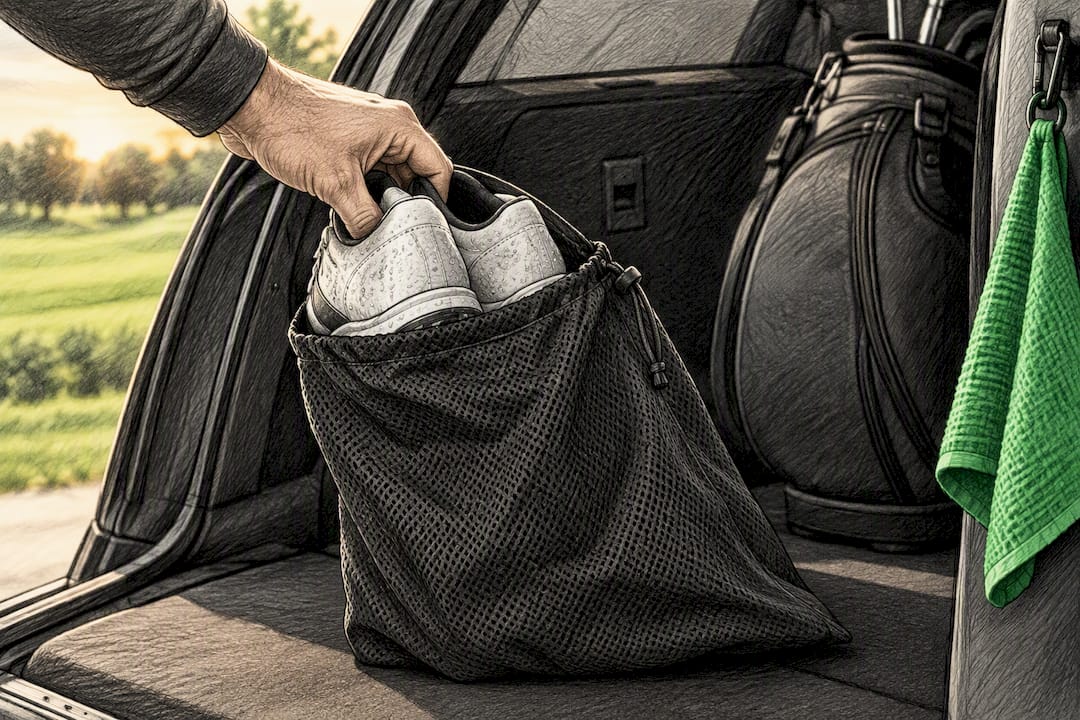
For deeper reading on both pieces of that system, immediate fixes to dry wet golf shoes walks through the first-hour steps, and the best golf shoe bag for organized golfers breaks down what separates a genuinely breathable bag from one that just traps moisture in a different container.
Choosing a Maintenance Routine That Matches How Often You Play
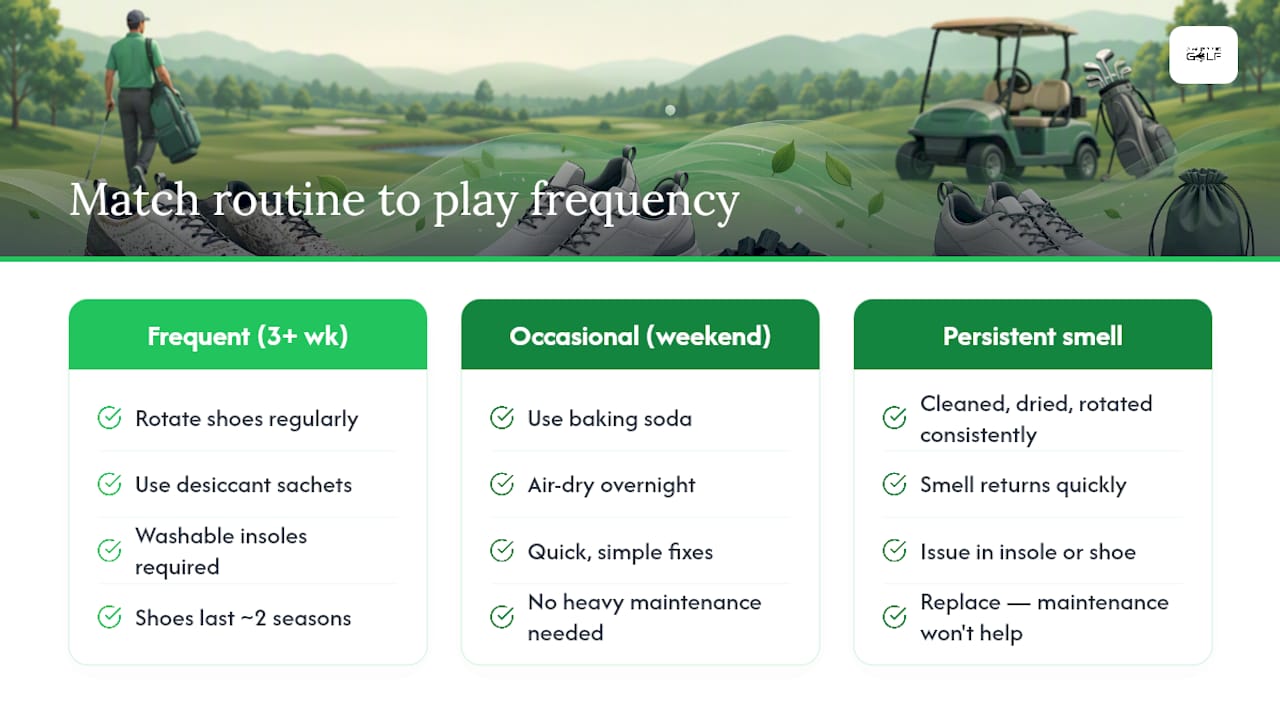
Not every golfer needs the same system. Play three or more rounds a week, and rotation, desiccant sachets, and washable insoles stop being optional. That’s the difference between shoes that last two seasons and shoes that need replacing every few months.
Occasional weekend golfers can lean on quick fixes: baking soda, a night of air drying, done. And if you’ve cleaned, dried, and rotated consistently and the smell still returns fast, that’s usually the insole or the shoe telling you it’s past the point maintenance can fix.
— Gary
Keep Wet Gear From Taking Over Your Bag
A magnetic towel system can help solve the problem of wet and dirty gear during a round by providing a clean place to put it. The Magna-Anchor™ Magnetic Golf Towels clip instantly to your bag and back off just as fast, so you’re not stuffing a soaked towel next to your glove or grip tape between holes.

None of this replaces the actual work of drying shoes and treating your feet. What it does is remove the friction that makes golfers skip that work in the first place. Pair a towel with the Magnetic Landing Pad to keep small wet items off your bag’s clean surfaces entirely, and check the full accessory lineup for the rest of the on-course kit. These items can ship ready to clip onto your bag for convenience during your next round.
Where This Advice Comes From
The moisture-and-bacteria explanation behind shoe odor comes from Northwell Health’s breakdown of foot odor causes. The 24-hour drying and rotation recommendation is backed by Harvard Health’s guidance on athlete’s-foot fungus in shoes. Symptom recognition and treatment steps for athlete’s foot follow Mayo Clinic’s diagnosis and treatment overview, and material-specific cleaning steps reference FootJoy’s official shoe-care page.
Sources
- Athlete’s foot — diagnosis and treatment — Mayo Clinic
- Athlete’s-foot fungus in shoes — Harvard Health
- Why do feet smell? — Northwell Health (The Well)
- Shoe care — FootJoy
FAQ
What Is a Good Deodorizer for Golf Shoes?
Baking soda in a sachet is the most reliable low-cost option because it neutralizes odor molecules and absorbs moisture rather than just masking smell. Cedar shoe trees and charcoal pouches work well as passive, ongoing deodorizers between rounds.
What Neutralizes Smelly Shoes?
Baking soda and diluted vinegar both neutralize odor by changing the pH that odor-causing bacteria depend on, rather than simply covering the smell. Pair either with full drying, since bacteria regrow as soon as moisture returns.
How Do I Remove Odor From Shoes Immediately?
Pull the insoles, wipe the interior with a light rubbing alcohol pass, and stuff both shoes with crumpled newspaper to draw out moisture fast. Follow up with a baking-soda sachet overnight for a fix that lasts beyond one wear.
How Can I Get Rid of Bad Smells From My Golf Shoes for Good?
Consistent odor removal comes down to rotation, not repeated deep cleaning. Own two pairs, let each dry a full 24 hours between wears, store them in breathable bags, and treat any accompanying itching or skin cracking as a foot issue rather than a shoe issue.


