


TL;DR:
- Golf course readiness combines optimal turf conditions, weather, and personal equipment preparedness for safe, enjoyable play. Professional standards show that precise measurements and maintenance practices lead to consistent surfaces, while golfers should focus on gear organization and understanding course metrics like soil temperature. Most players benefit from preparing their equipment and adjusting expectations based on actual conditions rather than aiming for perfection or ideal weather.
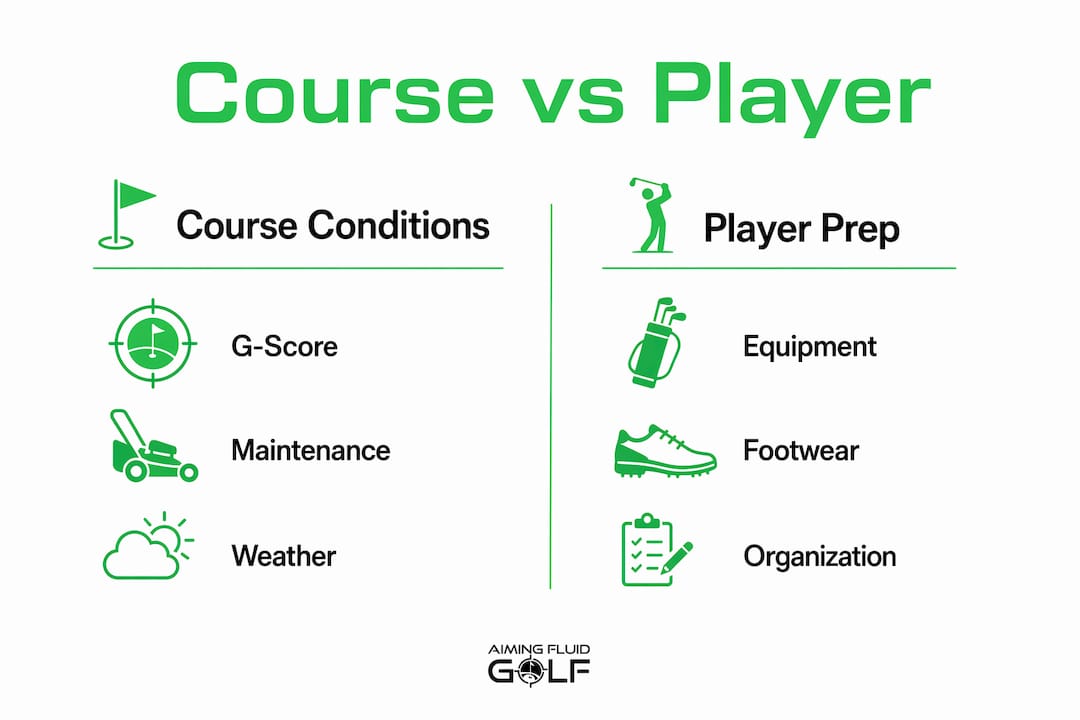
Golf course readiness is defined as the state in which both course conditions and player equipment meet the standards required for safe, efficient, and enjoyable play. Most golfers focus on one side of that equation and ignore the other. A course can have perfectly manicured greens and still deliver a frustrating round if your clubs are dirty, your tees are scattered across three pockets, and your rain gear is buried at the bottom of your bag. Defining golf course readiness means evaluating turf health, weather conditions, maintenance standards, and personal gear preparedness as a single, unified system.
What are the key course condition standards that define readiness?
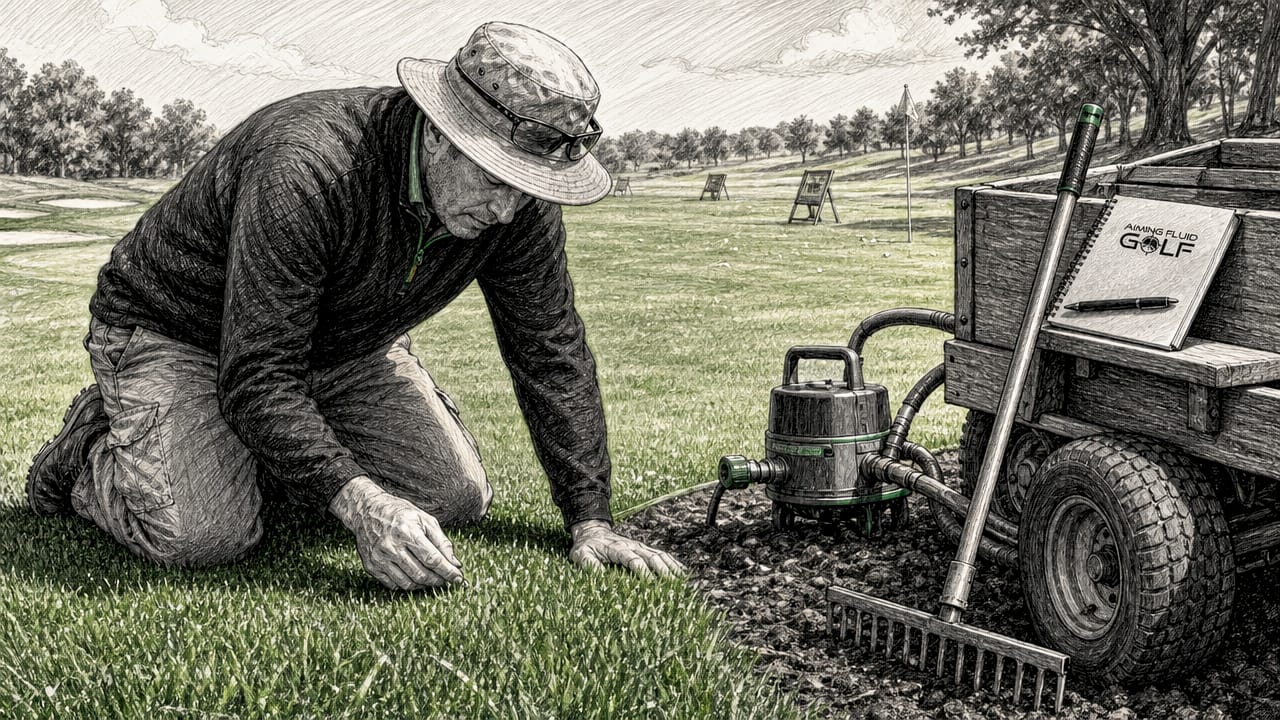
Golf course readiness at the maintenance level is governed by daily and weekly schedules that target greens, fairways, tees, and bunkers with specific interventions. Daily greens maintenance and multiple weekly fairway treatments are the baseline for playable turf health. Skipping even one cycle during peak season creates compounding problems that take days to correct.
The four core maintenance practices that define course condition standards are:
- Aeration: Relieves soil compaction and improves root-zone oxygen exchange, directly affecting how firm and consistent the surface plays.
- Irrigation: Precision moisture management prevents both drought stress and waterlogging, two conditions that make surfaces unpredictable.
- Fertilization: Nitrogen applications timed to soil temperature drive healthy shoot growth without creating excessive thatch.
- Pest and disease management: Fungal outbreaks and insect damage can render a green unplayable within 48 hours if not addressed proactively.
One metric that quantifies these conditions objectively is the G-Score. Active rain drops G-Score by 30 points; lightning risk drops it by 60 points. A score below 70 signals that golfers need to adjust their strategy or reconsider play entirely. This scoring system converts subjective “the course looks fine” assessments into a measurable standard.
The table below summarizes the maintenance frequency benchmarks that define a course as ready versus degraded:
| Maintenance Task | Frequency | Readiness Impact |
|---|---|---|
| Greens mowing | Daily | Surface trueness and speed consistency |
| Fairway mowing | 3 to 5 times per week | Lie quality and ball roll predictability |
| Bunker raking | After each use or daily | Hazard fairness and shot repeatability |
| Aeration | Seasonally (2 to 3 times per year) | Root health and long-term firmness |
| Irrigation adjustment | Daily based on evapotranspiration | Moisture balance across all surfaces |
Pro Tip: Check whether your course posts its maintenance schedule publicly or on its app. Knowing that greens were aerated two days ago tells you more about expected conditions than any forecast.
One nuance that separates experienced golfers from beginners: firm and true greens matter more than fast greens. Greens that reward well-struck putts with predictable rolls define readiness far better than a high Stimpmeter reading on an inconsistent surface.
How does weather and environmental factors affect golf course readiness?
Weather is the single most variable factor in any course readiness assessment, and it operates on a spectrum rather than a binary open-or-closed decision. Golf participation drops during marginal conditions even when the course is technically playable, which reflects a real gap between official readiness and practical readiness for individual golfers. Understanding where you personally fall on that spectrum is part of evaluating whether the course is ready for you.
The key weather variables and their effects on course conditions are:
- Rain: Light rain firms up dusty fairways but sustained rain saturates soil, reduces traction, and triggers cart path restrictions that slow pace of play significantly.
- Lightning: The most serious safety threshold. G-Score systems reduce playability scores by 60 points under lightning risk, and most courses follow USGA and PGA Tour protocols to suspend play immediately.
- Temperature: Cold temperatures slow turf recovery from divots and foot traffic. Heat stress on cool-season grasses like bentgrass causes surface inconsistency in summer months.
- Wind: High wind does not directly damage turf but affects ball flight so dramatically that course setup and personal club selection need to adjust.
Soil temperature governs seasonal readiness more precisely than air temperature or calendar date. Root activity begins at 40°F; shoot growth starts at 45 to 50°F; nitrogen fertilization becomes efficient only above 50°F soil temperature. Superintendents who apply nitrogen before soil temperatures reach that threshold waste product and risk burning shallow roots. Golfers who understand this know why a course that looks green in early April may still play poorly.
Rushing early-season maintenance to meet golfer demand risks long-term turf health and course playability. A superintendent who waits for the right soil temperature delivers a better season than one who opens two weeks early on a damaged surface.
The practical takeaway for golfers: check soil temperature data alongside air temperature forecasts when evaluating course conditions in spring. A course that opens in late March in the northern United States may technically be open but still playing at 60% of its seasonal potential.
What should golfers check in their personal equipment and preparations?
Personal equipment readiness is the half of golf course preparation that golfers control entirely. Course conditions can be assessed but not changed. Your gear can be optimized before you leave the house. The following sequence covers the complete personal course readiness checklist:
- Clean your clubs. Grooves clogged with dirt and grass reduce spin by a measurable amount on wedge shots. A stiff brush and water take 90 seconds and directly affect shot control on approach shots.
- Audit your tee supply. Running out of tees on hole 14 is a minor frustration that compounds into a pace-of-play problem when you are searching through your bag at the tee box. Carry at least 10 tees per round.
- Check your ball inventory. Match ball type to course firmness. Soft-compression balls like Titleist Pro V1x Left Dash or Callaway Chrome Soft X perform differently on firm links-style turf versus soft parkland courses.
- Inspect your footwear. Worn soft spikes reduce lateral stability on wet slopes. Replacing cleats costs less than the strokes lost from a slipped swing.
- Organize your bag by shot frequency. Wedges and putter should be immediately accessible. Rarely used clubs should not block access to the clubs you reach for on every hole.
- Prepare for weather. Pack a rain glove, waterproof jacket, and dry towel even when the forecast looks clear. Conditions change faster than forecasts update.
Matching clubs and tees to course firmness mirrors the precision approach that superintendents apply to turf care. A superintendent adjusts scarifier depth by millimeters to match surface conditions. A prepared golfer adjusts tee height and ball selection to match the same surface. The logic is identical.
Pro Tip: Use a magnetic towel system to keep your cleaning cloth accessible on every shot without digging through your bag. Aimingfluidgolf’s magnetic towel and landing pad system attaches and detaches in one motion, which removes a small but real friction point from your pre-shot routine.
For adverse weather rounds, the winter golf gear guide from Aimingfluidgolf covers specific equipment adjustments for rain and cold that apply directly to course readiness in marginal conditions.
How do professional course preparations illustrate golf course readiness?
Tournament-level course preparation sets the ceiling for what golf course readiness looks like at its most precise. At the 2026 PGA Championship at Aronimink Golf Club, teams of over 100 staff began work as early as 3:45 a.m., taking detailed moisture and firmness measurements across every green before the first player teed off. That level of documentation transforms readiness from a feeling into a data set.
At Royal Birkdale during the 2026 Open Championship, superintendents adjusted scarifiers by millimeters to dial in surface conditions that matched the speed and firmness targets set for each round. Equipment inventory was doubled to eliminate any single point of failure. Every decision was made against a measured baseline, not intuition.
The table below contrasts tournament-level readiness standards with typical daily course standards:
| Readiness Factor | Daily Course Standard | Tournament Standard |
|---|---|---|
| Green speed measurement | Weekly Stimpmeter reading | Daily measurement, multiple locations |
| Moisture monitoring | Visual inspection | Digital sensors, pre-dawn readings |
| Staff deployment | Standard grounds crew | 100-plus staff, staggered pre-dawn shifts |
| Equipment redundancy | Single set of tools | Full duplicate inventory on site |
| Firmness targets | Seasonal range | Precise daily targets per green |
The lesson for recreational golfers is not to replicate this scale. It is to adopt the underlying discipline. Seasonal performance ranges for green speed, firmness, and moisture provide a sustainable framework that any golfer can use to calibrate expectations before a round. Knowing that a course is playing firm and fast in July tells you to land approach shots short and run them up, not fly them at the flag.
The 2026 performance guide from Aimingfluidgolf translates these professional readiness principles into practical preparation steps for recreational players.
Key takeaways
Golf course readiness requires assessing turf maintenance standards, weather conditions, and personal equipment preparedness as a single system before every round.
| Point | Details |
|---|---|
| G-Score as a readiness metric | Scores below 70 signal strategy adjustments; lightning risk alone drops the score by 60 points. |
| Soil temperature governs timing | Root activity starts at 40°F; nitrogen efficiency requires 50°F soil temperature for safe application. |
| Personal gear preparation matters | Clean grooves, organized bags, and matched equipment directly affect pace of play and shot quality. |
| Tournament standards set the benchmark | Pre-dawn moisture readings and millimeter scarifier adjustments define what precision readiness looks like. |
| Firmness and trueness over speed | Consistent, predictable greens define readiness better than chasing a specific Stimpmeter number. |
Why I stopped chasing perfect conditions and started preparing for real ones
Most golfers I know spend more time checking the weather app than checking their own bag. That is a readiness gap hiding in plain sight. The course will be what it is. Your equipment is the only variable you fully control before the first tee.
I spent years arriving at courses with dirty wedges, three loose tees, and a towel stuffed under a headcover. The rounds where I played poorly in marginal conditions were rarely about the conditions. They were about the friction. Searching for a tee at the box, wiping a ball on my shirt, reaching past four clubs to grab my gap wedge. Each one is small. Together, they break concentration.
The professional standard is not about perfection. It is about removing variables. Superintendents at Aronimink do not start at 3:45 a.m. because they are perfectionists. They do it because consistent green firmness and trueness require measurement, not assumption. Golfers who apply that same logic to their own preparation, checking gear the night before, organizing by shot frequency, matching equipment to expected conditions, play more confidently regardless of what the course throws at them.
The uncomfortable truth about course readiness is that most golfers use it as an excuse. “The greens were slow.” “It was too wet.” Those things matter, but they matter less than whether you showed up prepared to play the course as it is.
— Gary
Gear that keeps you ready from the first tee to the last green

The equipment checks described in this article only work if your gear is organized well enough to access quickly. Aimingfluidgolf designs accessories specifically for this problem. The magnetic towel and landing pad system keeps your cleaning cloth on the bag and off your shirt, accessible in one motion on every shot. Precision tees, divot tools, and utility pouches are built to stay where you put them, so your bag stops feeling like a junk drawer mid-round. Visit the expert picks guide to see the full lineup of accessories built for golfers who take course preparation seriously.
FAQ
What is golf course readiness?
Golf course readiness is the state in which turf conditions, weather factors, and player equipment all meet the standards required for safe and efficient play. It combines course maintenance quality with personal gear preparation.
How is a G-Score used to assess course readiness?
The G-Score quantifies playability on a numeric scale, with active rain reducing the score by 30 points and lightning risk by 60 points. Scores below 70 indicate conditions that require strategy adjustments or suspension of play.
When is a golf course ready to open in spring?
A course is ready for full play when soil temperatures reach at least 45 to 50°F, which triggers shoot growth and allows nitrogen fertilization to work efficiently. Opening before this threshold risks turf damage that affects the entire season.
What personal equipment checks define player readiness?
Clean club grooves, a full tee supply, matched ball selection, functional footwear, and an organized bag are the core elements of a personal course readiness checklist. These factors directly affect shot quality and pace of play.
How do tournament standards apply to recreational golf?
Tournament preparation, including daily green speed and firmness measurements, teaches recreational golfers to calibrate expectations against actual conditions rather than assumed ones. Applying a seasonal performance range framework improves shot selection and course management.


