


TL;DR:
- Towel material properties like fiber type and weave structure significantly affect absorbency, drying speed, and hygiene. Egyptian, Turkish, and Supima cotton offer high absorbency and durability, while microfiber provides rapid drying but less natural feel, with GSM indicating performance capacity. For active use, choosing a towel with appropriate GSM and weave ensures optimal balance between moisture management and microbial control.
Most golfers and athletes pick a towel based on how it looks or how soft it feels in the store. That instinct misses the point entirely. The role of towel materials goes far deeper than texture. Fiber type, weave construction, and yarn structure collectively determine how much water a towel can pull off your hands and club face, how quickly it dries between uses, how long it holds up under repeated washing, and whether it becomes a breeding ground for bacteria after a humid round. This guide covers all of it with the specificity you need to make a genuinely informed choice.
Table of Contents
- Key Takeaways
- The role of towel materials: fiber types explained
- How weave structure shapes performance
- Towel materials and hygiene for active users
- Sports and leisure towels: what actually matters
- Choosing the right towel material for your situation
- My take on towel material advice
- Explore premium golf towels built for performance
- FAQ
Key Takeaways
| Point | Details |
|---|---|
| Fiber type drives absorbency | Long-staple cotton fibers absorb more water and hold up longer than short-staple or synthetic alternatives. |
| Weave structure affects drying speed | Waffle weave dries significantly faster than terry loop, reducing microbial growth between uses. |
| GSM signals performance capacity | Higher GSM indicates denser construction and greater moisture retention, useful for heavy-use sports towels. |
| Hygiene depends on material and care | Washing at 60°C or above controls bacteria like Staphylococcus aureus that accumulate in damp towels. |
| Sports use needs a material balance | The best athletic towel combines fast drying with adequate absorbency, not just maximum plushness. |
The role of towel materials: fiber types explained
Not all cotton is the same. Egyptian cotton held 43.32% of the global towel market share as of 2021, and that dominance exists for a clear structural reason. Egyptian cotton produces extra-long staple fibers, meaning each individual fiber strand is longer than standard cotton. Longer fibers spin into finer, stronger yarns that create more surface area per square inch of terry loop. The result is a towel that absorbs more moisture, resists pilling, and softens with each wash rather than degrading.
Turkish cotton (also called Aegean cotton) shares many of the same long-staple advantages. It absorbs quickly, dries faster than Egyptian cotton due to slightly less density, and is often chosen for towels where both absorbency and moderate drying speed matter. Supima cotton, grown in the American Southwest, is another long-staple variety with similar properties to Egyptian cotton and is often used as a domestic alternative with verified fiber origin.
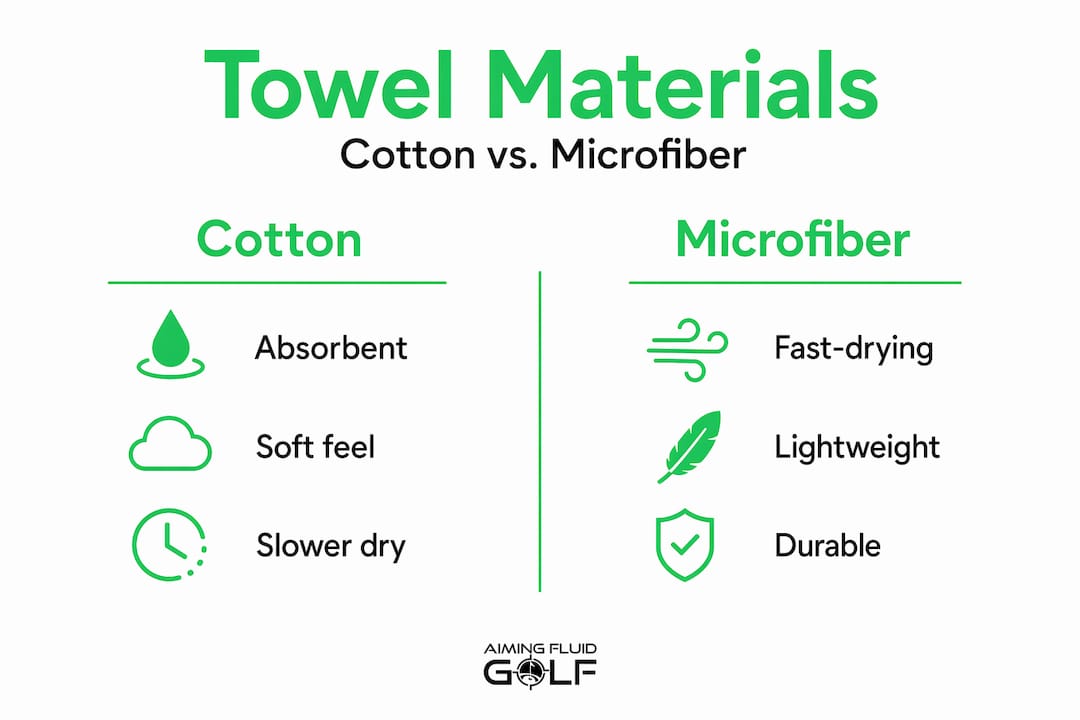
Microfiber is a different category entirely. Made from ultra-fine synthetic filaments, usually polyester or a polyester-nylon blend, microfiber works by physically trapping water molecules through capillary action rather than chemical absorption. Microfiber towels typically weigh 180 to 300 GSM with very fast drying times, making them ideal for sports and gym use. The trade-off is that synthetic fibers lack cotton’s natural feel and can trap oils and skin cells if not washed frequently.
Bamboo-cotton blends sit between these two poles. Bamboo viscose fibers are naturally antimicrobial, softer than standard cotton, and more moisture-wicking than pure cotton. They tend to be eco-conscious choices, though the manufacturing process for bamboo viscose involves significant chemical processing that offsets some environmental benefit.
Here is a quick comparison of the major towel material types:
| Material | Absorbency | Drying speed | Durability | Best use |
|---|---|---|---|---|
| Egyptian cotton | Very high | Slow | Very high | Bath, luxury, golf |
| Turkish cotton | High | Moderate | High | Bath, sports, gym |
| Microfiber | Moderate | Very fast | Moderate | Gym, travel, sport |
| Bamboo blend | High | Moderate | Moderate | Sensitive skin, eco |
| Waffle weave cotton | High | Fast | High | Sports, humid use |
How weave structure shapes performance
Fiber type matters. Weave structure may matter more. Loop density and pile height affect drying time and odor resistance even within the same cotton variety. Two towels made from identical Egyptian cotton will perform very differently if one uses a high-pile terry loop and the other uses a tight waffle weave.

Terry loop construction works by creating small, upright loops on the towel surface. Those loops increase total fiber surface area and hold moisture effectively. The taller and denser the loops, the more water a towel retains. The downside is that dense loops take longer to dry out after use. In humid environments, that retained moisture becomes a liability.
Waffle weave uses a textured grid pattern with far less surface area per square inch. The recessed pockets in the weave allow airflow between uses. Waffle weave towels dry approximately 50% faster than traditional terry loop towels in 2026 industry testing. For golfers carrying a towel through 18 holes in summer heat, that faster drying time directly reduces bacterial accumulation and odor.
GSM (grams per square meter) is the standardized weight measure for towels. A 300 GSM towel is light and fast-drying. A 600 to 900 GSM towel is dense, absorbent, and plush. Sports towels typically perform best in the 400 to 600 GSM range, where absorbency and drying time reach a practical balance.
Yarn twist is another variable that rarely appears on packaging. Tightly twisted yarns are more durable but less soft to the touch. Zero-twist yarns are prone to pilling and fiber shedding after just 10 to 20 washes, meaning that ultra-soft feel you experience in a store does not last. Low-twist or classic-twist yarns offer better long-term performance for towels used in rotation.
Pro Tip: When evaluating a towel for athletic use, check both the GSM and the weave type. A 500 GSM waffle weave will outperform a 700 GSM zero-twist terry towel in any high-humidity or high-frequency scenario.
Towel materials and hygiene for active users
Damp textiles are fertile environments for bacteria. After a single workout or round of golf, a towel collects sweat, oil, skin cells, and environmental debris. The importance of towel fabrics extends directly to skin health. A 2026 textile hygiene review recommends washing towels at 60°C to control bacteria like Staphylococcus aureus that thrive in damp fibers.
The problem compounds with weave structures that retain moisture. A thick terry loop towel used twice and left folded in a golf bag will stay damp for hours. Towels left damp for hours encourage microbial colonization, and quick-drying materials like waffle weave or linen are measurably superior in humid settings. This is not cosmetic. Bacteria on towel fibers transfer directly to freshly cleaned skin and can contribute to irritation, breakouts, and infection in compromised skin.
For athletes and golfers with sensitive or reactive skin, fiber quality has direct dermatological implications. The American Academy of Dermatology recommends high-grade cotton construction to reduce epidermal micro-abrasions caused by coarse or degraded fibers. High-quality long-staple cotton, when properly maintained, creates minimal mechanical friction during use.
Fabric softeners are a common mistake that undermines all of this. Routine use of fabric softener makes towels slightly water-repellent after six months of use. The coating that creates a soft feel also blocks the fiber’s ability to absorb water. Skip the fabric softener entirely on performance towels.
Pro Tip: Wash sports towels separately from regular laundry, at 60°C, with no fabric softener. Add a half cup of white vinegar to the rinse cycle twice a month to break down residue and restore absorbency.
Sports and leisure towels: what actually matters
The choosing towel materials conversation shifts when you are selecting something to carry through a gym session, a 5K, or 18 holes of golf. Plushness becomes secondary. What matters is the combination of quick drying, sufficient absorbency, odor resistance, and physical durability under repeated wash cycles.
For gym and outdoor use, microfiber is the go-to material for good reason. It is lightweight, packs small, and dries fast enough to be reused within hours. The limitation is that it feels less natural against skin and can develop a persistent odor if not washed frequently, because synthetic fibers trap proteins differently than cotton.
For golf, the calculus is more nuanced. A functional golf towel design needs to clean club faces, dry hands in variable weather, and hang accessible on a bag without getting lost. Cotton-based towels in the 500 to 600 GSM range with a waffle or low-pile terry weave hit that balance reliably.
Key material properties to prioritize for sports towels:
- Fast drying: Waffle weave or low-pile microfiber over thick terry loops for humid or multi-use conditions
- Adequate absorbency: 400 to 600 GSM range; enough to dry hands and wipe equipment without being waterlogged
- Odor resistance: Natural fibers or bamboo blends resist mildew better than synthetic microfiber over time
- Durability under washing: Low-twist or classic-twist yarns, no zero-twist construction for high-frequency users
- Skin compatibility: Long-staple cotton or bamboo blends for users with sensitive or reactive skin
Understanding towel systems in golf also matters practically. A towel that performs well on paper still fails if it is constantly buried in the bag. Accessibility and material performance work together.
Pro Tip: For golfers who play in hot, humid climates, a waffle weave cotton towel in the 450 to 500 GSM range is the most practical choice. It dries between holes, resists mildew through a full round, and holds up to daily summer washing.
Choosing the right towel material for your situation
Knowing what makes a good towel comes down to matching fiber type, weave structure, and GSM to your actual use pattern. Here is a reference table:
| Use case | Recommended material | Weave type | GSM range |
|---|---|---|---|
| Golf (humid climate) | Turkish or Egyptian cotton | Waffle weave | 450 to 550 |
| Golf (dry climate) | Egyptian cotton | Low-pile terry | 550 to 650 |
| Gym or travel | Microfiber blend | Flat or waffle | 180 to 300 |
| Sensitive skin | Long-staple cotton or bamboo | Low-pile terry | 500 to 650 |
| High-frequency use | Turkish cotton or cotton blend | Waffle weave | 400 to 500 |
When evaluating a purchase, work through this checklist:
- Fiber origin: Look for Egyptian, Turkish, or Supima cotton labeling. Generic “100% cotton” can mean low-grade short-staple fiber.
- GSM rating: Confirm the weight matches your use case. Heavier is not always better for sports.
- Weave type: Terry or waffle. Waffle for faster drying, terry for maximum moisture retention.
- Yarn twist: Avoid zero-twist claims for towels that will be washed frequently. The softness does not last.
- Care instructions: If the label says to wash below 40°C, the towel will not maintain hygiene standards for athletic use.
Quality costs more upfront but saves money over time. A well-constructed Egyptian cotton or Turkish cotton waffle weave towel washed correctly at 60°C will maintain absorbency and structural integrity through hundreds of cycles. A cheap zero-twist alternative will pill, lose shape, and need replacing within a season.
My take on towel material advice
I have carried a lot of towels across a lot of rounds and workouts, and the most consistent failure I see comes from people buying thick, plush towels because they assume that softness signals quality. It does not. In my experience, those towels feel great in the first five washes. By wash twenty, they are pilling, slow to dry, and holding onto odors that no amount of washing seems to remove.
The towels I have trusted longest are mid-weight cotton waffle weaves and well-constructed Turkish cotton terry towels with a classic twist. Neither is the most impressive thing to pull out of a bag, but both have held up through aggressive washing schedules, humid summer rounds, and years of actual use.
What I find most interesting is how little material science enters the buying conversation. Marketing focuses on brand names, colors, and thickness claims. The actual variables that determine long-term performance, which are fiber length, twist level, weave density, and GSM, appear in small print if they appear at all. My advice is to treat those specs the same way you would treat club specifications. They are not technical trivia. They tell you exactly what you are buying.
The other thing most advice misses is the interaction between washing habits and material durability. Frequent high-temperature washing at 60°C or above actually preserves cotton durability better than the gentle cycles most people assume are gentler on fabric. Gentle cycles leave bacteria behind. Hot cycles, done correctly, extend both hygiene and fiber life for natural cotton towels.
— Gary
Explore premium golf towels built for performance
Aimingfluidgolf designs towels specifically for golfers who understand that material quality and system design both matter on the course.
The magnetic golf towel collection pairs high-performance fabric construction with a magnetic attachment system that keeps your towel accessible at every shot, not buried in a side pocket. Each towel is selected for its absorbency, drying characteristics, and durability under frequent washing, because a towel that is hard to reach or quick to degrade defeats the purpose entirely. If you want to see how material quality and practical design work together, the best golf accessories guide from Aimingfluidgolf is a good starting point for building a performance-focused kit.
FAQ
What is the most absorbent towel material?
Egyptian cotton is consistently the most absorbent towel material due to its extra-long staple fibers, which create more surface area per loop. It held 43% of global towel market share as of 2021, reflecting its dominance in the premium segment.
Why do some towels stop absorbing water after a few months?
The most common cause is regular use of fabric softener. Fabric softener coats cotton fibers and creates a water-repellent barrier that reduces absorbency significantly over time. Washing towels without softener and occasionally adding white vinegar restores performance.
What towel material is best for gym and sports use?
Microfiber is the most practical choice for gym and travel due to its light weight and fast drying time. For golf and sports with longer duration, a waffle weave cotton towel in the 450 to 500 GSM range offers the best balance of absorbency and drying speed.
How often should sports towels be washed?
Sports towels should be washed after every use. Washing at 60°C or above is the standard recommended to eliminate bacteria like Staphylococcus aureus, which colonize damp fibers quickly between sessions.
What does GSM mean on a towel label?
GSM stands for grams per square meter and measures the density and weight of the towel fabric. Higher GSM means a denser, more absorbent towel. For sports and golf use, 400 to 600 GSM typically offers the best balance between moisture retention and drying speed.
Recommended
- Role of towel systems in golf: Boost organization by 40% – Aiming Fluid Golf
- Printed Golf Towels Look Good—But They Clean Worse | The Truth – Aiming Fluid Golf
- The Importance of Golf Towels for Players on the Course – Aiming Fluid Golf
- Functional golf towel design for better play in 2026 – Aiming Fluid Golf


