


TL;DR:
- Walking golfers face unique organizational challenges due to the weight and access limitations of carrying their gear. Effective accessories for them focus on reducing fatigue, enhancing quick access, and ensuring secure retention on uneven terrain through systems like magnetic fasteners and full-length dividers. Careful measurement and system-oriented setups are key to optimizing organization and improving round efficiency.
Walking golfers carry a unique burden that cart riders simply don’t face. Every item you bring onto the course travels with you for four or five hours, and if your gear isn’t organized correctly, your bag feels like a junk drawer you’re hauling across 18 holes. The right organizational accessories for walking golfers solve specific problems: reducing fatigue, eliminating mid-round fumbling, and keeping everything you need within arm’s reach without adding unnecessary weight. This article covers the ten most effective categories of accessories, with criteria, comparisons, and situational guidance built in.
Table of Contents
- Key takeaways
- 1. What to look for in organizational accessories for walking golfers
- 2. Stand bags with full-length club dividers
- 3. Magnetic towel and landing pad systems
- 4. Leather utility pouches for valuables and small accessories
- 5. Push cart accessory consoles
- 6. Adjustable drink holders and insulated pouches
- 7. Umbrella mounts and weather-ready pockets
- 8. Storage baskets and mesh cargo bags
- 9. Swivel wheel systems for terrain handling
- 10. Situational recommendations by walker profile
- My take on what actually transforms your walking round
- Gear worth adding to your walking setup from Aimingfluidgolf
- FAQ
Key takeaways
| Point | Details |
|---|---|
| Weight and access are primary | Choose accessories that reduce what you carry while keeping frequent-use items immediately reachable. |
| Retention systems matter | Magnetic and hook-and-loop fasteners outperform open pockets on uneven terrain. |
| Stand bags anchor the system | A well-designed stand bag with full-length dividers is the foundation every walking setup needs. |
| Compatibility checks prevent problems | Measure your push cart tubing before adding baskets or consoles to avoid gear interference. |
| System thinking beats single purchases | Accessories that work together as a coordinated system outperform a collection of unrelated add-ons. |
1. What to look for in organizational accessories for walking golfers
Before buying anything, you need a framework. Walking golfer gear requirements differ from cart setups in four measurable ways: weight, access speed, retention on uneven terrain, and ergonomic compatibility.
Weight and ergonomics come first. Prioritizing essentials and easy reach positions are what PGA instructors recommend to conserve energy over a full round. Every accessory you add has a weight cost. If it doesn’t earn its place by saving time or reducing friction, it’s a liability.
Quick access is the second filter. Any item you reach for more than three times per round — tees, ball markers, a rangefinder, a towel — needs to be in a designated spot you can find without looking. Digging through a bag mid-fairway wastes time and breaks concentration.
Retention under movement is where many cheap accessories fail. Bumpy fairways, slopes, and uneven cart paths punish loose or open storage. Magnetic and hook-and-loop fasteners outperform traditional open pockets across varied terrain.
Compatibility with your existing setup matters more than most golfers realize. An accessory that fits one push cart model may block the wheel controls of another.
- Lightweight construction, ideally under 5 lbs for a loaded stand bag
- Designated pockets at hip height or above for items used every hole
- Closed or secured storage for valuables and small accessories
- Strap or attachment systems rated for repeated clip-and-release cycles
- Cart-specific accessories verified against your cart’s tubing diameter
Pro Tip: Before purchasing any cart add-on, measure your push cart’s frame tubing diameter. A basket designed for 20mm tubing will not fit a 25mm frame and can obstruct wheel operation entirely.
2. Stand bags with full-length club dividers
The foundation of any organized walking setup is the bag itself. A stand bag engineered for walking delivers club protection, pocket placement optimized for quick access, and a carry system that distributes weight across both shoulders.
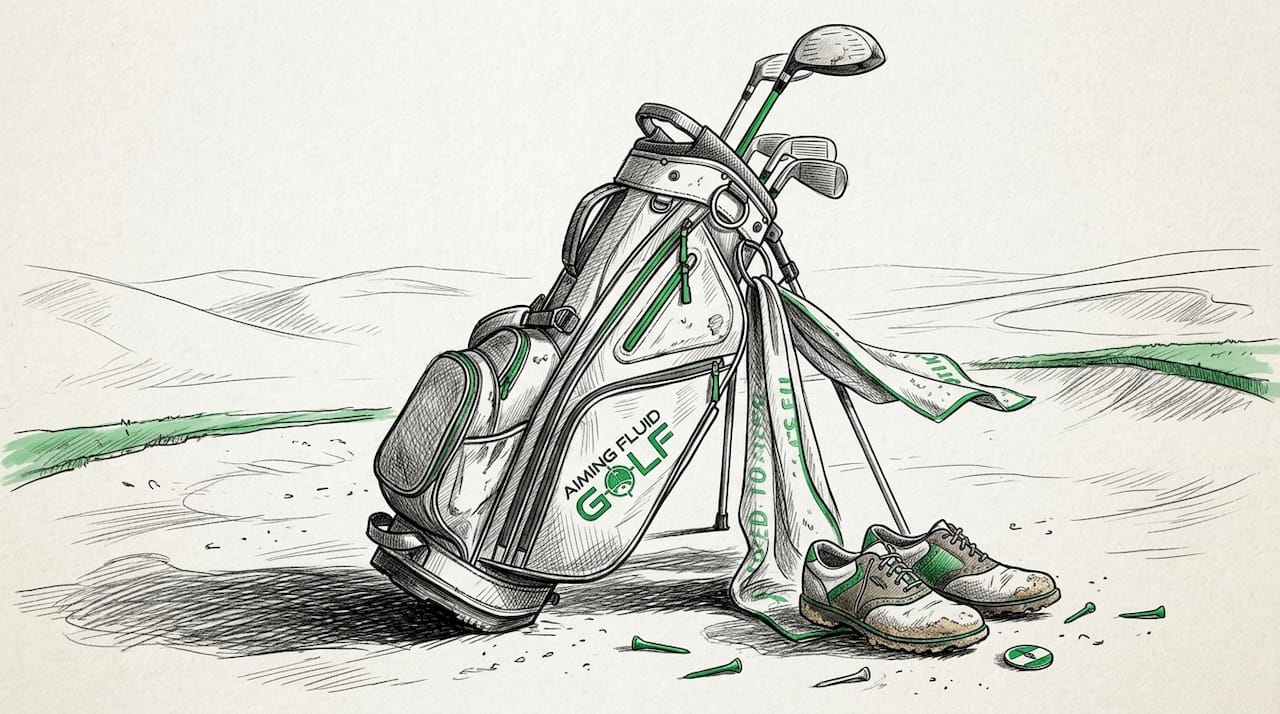
Full-length dividers and multiple pockets in bags like Sun Mountain’s Matchplay 14-Way, with 14 individual divider slots and nine pockets, represent the current standard for walking golfer organization. Each club stays separated, which prevents shaft damage and makes club selection faster at address.
The ergonomic dual strap system in well-designed stand bags prevents fatigue and improves endurance over 18 holes by distributing load evenly across the back. Unbalanced bags, by contrast, shift weight to one shoulder and cause cumulative fatigue by the back nine.
Pro Tip: Pack your bag so the heaviest clubs, typically the irons, sit closest to your back. This shifts the center of mass inward and reduces the lever arm pulling you backward during your stride.
For a detailed look at how to organize a stand bag for walking efficiency, the Peter Finch bag method offers a practical packing sequence used by serious walkers.
3. Magnetic towel and landing pad systems
A towel is the most frequently touched accessory in your bag, yet most golfers treat it as an afterthought. Clipping a traditional towel to your bag ring works until the towel spins around, falls off, or ends up behind the bag where you can’t see it.
Magnetic towel systems solve this with a landing pad — a flat magnetic surface that attaches to your bag — and a corresponding magnet embedded in the towel. You pull the towel free with one hand, wipe your club or ball, and return it to the same spot without looking. The magnet locks it in place whether you’re on a slope or a cart path.
For walking golfers who want to understand placement best practices, the expert guidance on towel placement covers exactly where pros mount their towel systems for fastest access during a round.
This type of system directly reduces the secondary friction that slows rounds. You’re not adjusting a clip, fishing for a towel that rotated to the back of the bag, or wiping a club on your pants because the towel is buried.
4. Leather utility pouches for valuables and small accessories
Every walking golfer has a cluster of small items that don’t fit neatly anywhere: ball markers, pitch repair tools, a spare glove, a scorecard, car keys, a phone. Without a dedicated housing for these items, they scatter across multiple pockets and create the exact fumbling problem you’re trying to avoid.
A leather utility pouch with a 360-degree metal clip solves this by grouping all valuables into one secured, clipped unit that attaches to your bag’s exterior or push cart frame. Premium versions include a zippered closure and soft interior lining to protect screens and finished surfaces.
The key performance variable here is the clip mechanism. A full 360-degree swivel clip allows the pouch to hang flat against the bag regardless of angle, which matters when you set the bag down on a slope or transition from carrying to cart. Inferior clips rotate only partially and let the pouch swing free, which adds noise and wear to both the pouch and the attachment point.
5. Push cart accessory consoles
Push carts have evolved from simple three-wheeled platforms into organized mobile stations. The critical upgrade that separates a functional cart from a disorganized one is the accessory console.
A well-designed console integrates a phone holder, charging access, magnetic or hook-and-loop storage pads for tees and markers, and a drink holder into a single unit that mounts at handle height. The Clicgear Model 4.5 console includes a redesigned storage platform with sound amplification, charging access, and magnetic storage pads that secure small items during movement over rough paths.
The advantage of handle-height placement is direct. You reach the console without bending, which adds up over 18 holes of repeated access. Consoles mounted lower on the frame require a bend at the waist every time you pull out your phone or grab a tee.
For a broader overview of cart-mounted upgrades, the best golf cart accessories guide covers storage mounts and tech upgrades in detail.
6. Adjustable drink holders and insulated pouches
Hydration management is an organizational problem as much as a health one. If your drink is buried in your bag, you won’t drink it consistently. If it’s in an unstable holder that tips on inclines, you’ll either lose it or avoid using the holder entirely.
Look for drink holders with adjustable diameter clamping, which accommodates everything from a standard water bottle to a wide-mouth insulated tumbler. Insulated bag pockets or bolt-on cooler pouches for push carts keep drinks at temperature for full rounds in summer conditions.
The MGI E-Boost’s integrated storage for walking convenience includes multiple ball holders and drink holders as part of the cart’s primary structure, reducing how often you need to access your bag at all. That design principle, building storage into the cart rather than bolting it on, is the direction the entire category is heading.
7. Umbrella mounts and weather-ready pockets
Weather preparedness is an organizational function, not just a comfort one. If your rain gear is buried at the bottom of your bag when a storm rolls in, you’ve failed at organization. If your umbrella is loose in a side pocket, it will shift the bag’s center of gravity every time you swing it onto your shoulder.
Dedicated umbrella holders that clamp directly to push cart frames and stand bag side rings keep the umbrella vertical, accessible, and stable. The Bag Boy Nitron Swivel integrates an umbrella slot as part of its factory accessory system, along with magnetic accessory plates and a 360-degree swivel front wheel for terrain handling.
Quick-access rain pockets, typically located on the outer face of the bag, are designed so you can pull a rain jacket without unpacking clubs or accessories. That placement detail is the difference between a soaked back nine and staying dry.
8. Storage baskets and mesh cargo bags
When you’re carrying more than your bag can hold cleanly, a storage basket or mesh cargo bag attached to your push cart gives you overflow capacity without compromising bag organization.
The critical rule here: measure your cart tubing before buying. A basket with an incompatible clamp diameter sits loosely, vibrates on cart paths, and creates more interference with your round than it solves. Purpose-fit baskets, designed for specific cart models, sit flush and stable.
Mesh bags offer a lighter, more flexible option for carrying extra layers, a lunch bag, or shoes. They’re particularly useful for walkers who park once and play through without returning to a car or locker room mid-round.
9. Swivel wheel systems for terrain handling
Cart stability directly affects accessory effectiveness. A cart that wobbles on slopes or locks up on turns means every item on it gets jostled, which is when loose accessories shift, tip, or fall.
Lockable swivel wheels and 360-degree front wheel designs allow walkers to steer with one finger on flat terrain while engaging a lock for steep descents. This stability improvement has a downstream effect on every accessory mounted to the cart. Drink holders stay upright. Storage pads keep their contents. Consoles don’t swing.
Push carts with integrated accessory points built into the frame avoid the add-on clutter effect, where multiple independent accessories compete for mounting real estate and end up interfering with each other during normal handling.
10. Situational recommendations by walker profile
Not every walking golfer needs the same setup. Here is how to prioritize based on your actual playing pattern.
Competitive and low-handicap walkers should prioritize stand bag quality, retention systems, and weight above all else. A lightweight 14-way stand bag with a magnetic towel system and a precision utility pouch covers 90% of organizational needs without adding bulk.
Casual and recreational walkers benefit most from push cart console upgrades and insulated drink holders. If you’re walking for the social experience and aren’t racing the clock, comfort accessories like padded armrests and cooler pouches add genuine value.
Hybrid and e-assist cart users can take advantage of deeper integration. E-assist carts with built-in storage reduce bag-digging frequency because frequently used items live on the cart’s primary structure.
- Minimalist walkers: stand bag plus magnetic towel system plus utility pouch
- Cart-based walkers: console upgrade plus drink holder plus storage basket
- Budget-focused: prioritize divider count and pocket placement in a base stand bag
- Premium buyers: invest in magnetic retention systems, ergonomic strap engineering, and cart-integrated accessories
For a comprehensive packing and organization framework, the walking golfer organization guide covers gear arrangement strategies tailored to pace of play.
My take on what actually transforms your walking round
I’ve watched golfers spend real money on accessories and still fumble through every pre-shot routine because they bought the wrong things in the wrong order. Here’s what I’ve actually observed matters versus what sounds good on paper.
The single biggest organizational failure I see is treating pockets as the solution. More pockets do not solve disorganization. They redistribute it. What actually works is a small number of designated locations for frequently touched items, each with a retention mechanism that holds the item in place until you deliberately remove it. That’s the principle behind magnetic systems, and it’s why they outperform traditional pouch pockets for walk-specific gear.
I’ve also found that walkers consistently underestimate the cumulative cost of micro-delays. Reaching into the wrong pocket 20 times per round, each taking three seconds, adds a full minute to your round. That’s before you count re-sorting items you put back wrong. A well-designed convenience workflow eliminates those micro-delays through placement consistency, not by carrying more gear.
My personal non-negotiables: a bag with full-length dividers, a magnetic towel landing pad system, and a utility pouch that clips to the exterior. Everything else is situational.
— Gary
Gear worth adding to your walking setup from Aimingfluidgolf
Aimingfluidgolf designs accessories built specifically around the access and retention challenges walking golfers face. The product system starts with magnetic golf towels that pair with a landing pad mounted directly to your bag. Pull the towel free, wipe your club, return it without searching. The magnet locks it in place on slopes and cart paths without adjustment.

The magnetic towel holder and landing pad system gives you the mounting infrastructure for a full magnetic organization setup. Pair it with the leather utility pouch, which clips directly to your bag exterior and houses all your small items in one zippered, soft-lined unit. Every product in the Aimingfluidgolf line is designed to work as a system, not as isolated add-ons, which is the distinction that separates functional organization from a bag that still feels like a junk drawer.
FAQ
What makes an accessory suitable for walking golfers specifically?
Walking golfer accessories need to be lightweight, secure on uneven terrain, and positioned for one-handed access without stopping. Weight and retention are the two failure modes that cart accessories ignore but walking setups cannot.
How do magnetic towel systems work on a golf bag?
A magnetic landing pad mounts to your bag exterior, and a corresponding magnet sewn into the towel snaps to it on contact. You remove and return the towel with one hand, and the magnet holds it in place during movement.
Are push cart storage baskets compatible with all carts?
No. Basket compatibility depends on your cart’s frame tubing diameter. An incorrect fit causes vibration, blocked controls, and instability. Always verify fit specifications before purchasing.
How many pockets does a walking stand bag need?
At minimum, a walking stand bag should have seven pockets: a full-length apparel pocket, an insulated hydration pocket, a valuables pocket, and four smaller pockets for tees, balls, a rangefinder, and gloves. Placement matters more than total count.
What is the best organizational system for minimalist walking golfers?
A 14-way stand bag with full-length dividers, a magnetic towel system, and a clip-on utility pouch covers the core organizational needs of most walkers without adding significant weight or complexity to the setup.
Recommended
- Walking golfer organization guide: gear up for faster rounds – Aiming Fluid Golf
- Personalizing golf accessories: Expert picks for premium performance – Aiming Fluid Golf
- How to Organize Your Golf Bag Like a Pro: The Peter Finch Method – Aiming Fluid Golf
- From Towels to Landing Pads: Essential Accessories for Every Golfer – Aiming Fluid Golf


