


TL;DR:
- Efficient on-course gear retrieval involves consistent habits, proper organization, and understanding of rules. Using fixed pockets and practice with retrieval tools helps maintain pace and safety during the round. Knowledge of USGA rules ensures golfers retrieve gear without penalties, especially in competitive play.
On-course gear retrieval is the organized process of locating and collecting clubs, balls, and accessories during a round to maintain pace and organization on the course. Explaining on-course gear retrieval properly means covering not just the physical act of picking up equipment, but also the rules, etiquette, and gear systems that make the process fast and friction-free. The USGA governs the rules framework, and golf etiquette standards set the behavioral expectations every golfer should know. Aimingfluidgolf designs accessories specifically to reduce retrieval time and keep essential gear within arm’s reach throughout every round.
What are the common gear retrieval techniques used on the golf course?
Efficient gear collection starts with a consistent mental system, not just physical tools. The most reliable method is spot-checked scanning: before you leave any area of the course, pause and visually sweep the ground around you for clubs, tees, ball markers, and gloves. Golfers who build this habit into their routine rarely leave equipment behind.
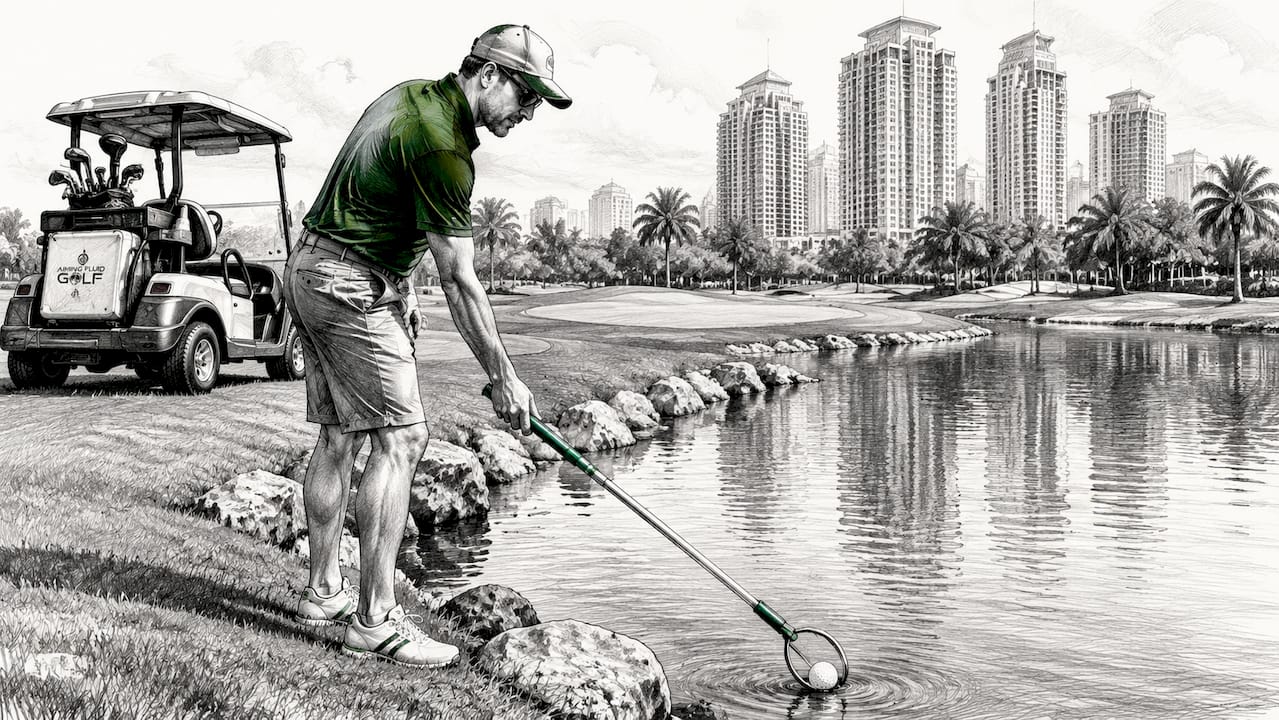
For balls in water hazards or deep rough, a telescopic ball retriever is the standard tool. Telescopic retrievers extend over 15 feet and are built to scoop or grasp balls from difficult locations. That reach matters most near pond edges and steep banks where bending down creates a fall risk.
Magnetic gear organizers and dedicated pouches add a second layer of efficiency. Organizational products speed up retrieval by keeping tees, gloves, and ball markers in fixed locations rather than scattered across multiple pockets. When every item has a home, you stop searching and start playing.
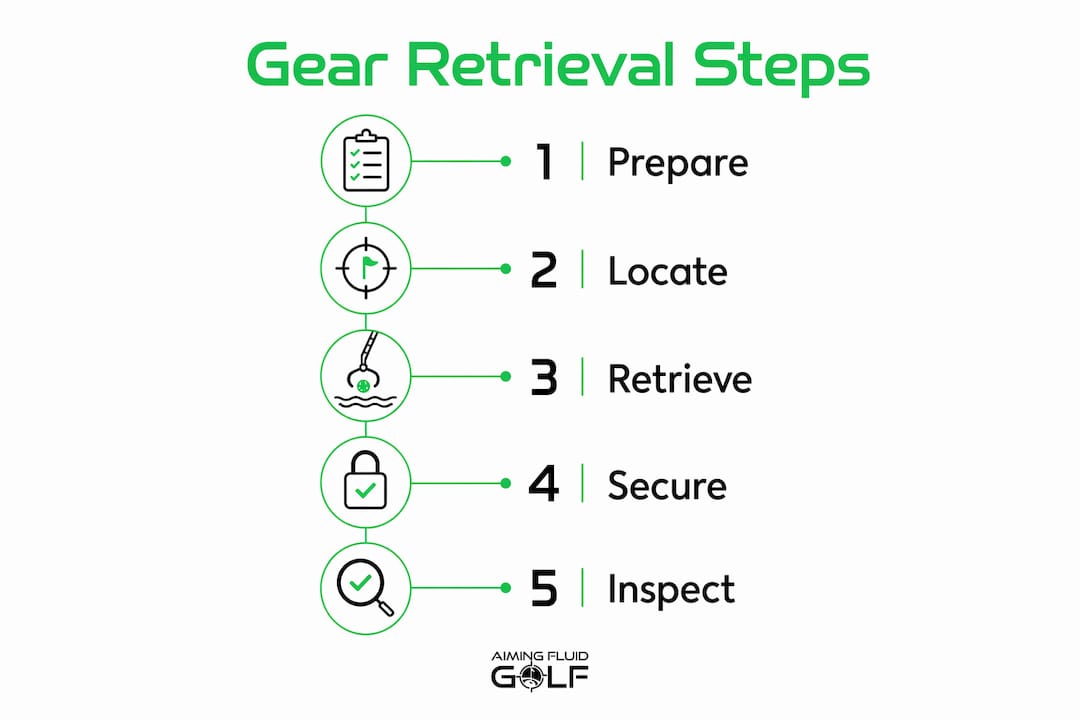
The core steps for efficient gear pickup during a round:
- Scan before you walk away. Check the tee box, fairway lie, and green surrounds before moving to the next position.
- Use a fixed pocket system. Assign one pocket for tees, one for ball markers, and one for your glove. Never rotate these assignments mid-round.
- Extend your retriever fully before reaching. A partially extended shaft reduces control and increases the chance of dropping the ball back into the hazard.
- Mark your ball clearly. A distinctive mark on your ball reduces confusion and speeds identification during retrieval.
- Return gear immediately. After using a tee or divot tool, return it to its designated pocket before addressing the next shot.
Pro Tip: Practice with your telescopic retriever at home before your round. High-pressure fumbling with an unfamiliar tool is common and entirely avoidable with ten minutes of off-course handling.
How do golf rules and pace of play affect gear retrieval practices?
The USGA Rule 6-7 on undue delay is the governing standard for gear retrieval in competition. Retrieving a forgotten club is allowed under this rule, but a two-stroke penalty or loss of hole applies if the retrieval causes undue delay in a competitive round. The rule exists to protect the pace of the field, not to punish honest mistakes.
The distinction between casual and competitive play matters here. In a casual round, most groups handle brief retrieval breaks through mutual agreement and common courtesy. In a stroke play or match play competition, the same retrieval that costs you 90 seconds could cost you two strokes. Knowing which format you are playing changes how aggressively you should pursue a forgotten club.
Linda Miller, a well-known golf rules expert, frames the issue clearly:
“Pace of play should be the primary consideration during gear retrieval. Considerate groups allow brief retrieval breaks without enforced penalties in casual rounds, because etiquette and mutual respect govern most situations more than strict rule enforcement does.”
Practical ways to retrieve gear without delaying your group:
- Use a cart. Driving back to a forgotten club takes far less time than walking. If you are on foot, send the fastest walker in the group.
- Communicate early. Tell your playing partners immediately when you notice a missing club. Early notice lets the group plan around the retrieval.
- Play on if retrieval takes too long. Players are not required to use a putter on the green and may use another club if the putter is forgotten or unavailable. Continuing play avoids a delay penalty entirely.
- Assess the time cost. If retrieving a club means holding up the group behind you, the etiquette-correct choice is to play without it and collect it after the hole.
Golfers who want a deeper look at pace of play rules will find that most delays come from indecision, not from genuine retrieval needs. Treating gear retrieval as a planned contingency rather than a surprise keeps rounds moving.
What safety and best practice considerations should golfers know?
Physical safety during gear retrieval is a real concern, particularly near water hazards and uneven terrain. A wide stance facing uphill prevents falls when retrieving balls near slopes or pond edges. Body mechanics matter as much as the tool itself.
Proper stance positioning during retrieval follows three principles. Keep your feet shoulder-width apart. Face the slope rather than standing parallel to it. Keep your weight centered over your hips, not your toes. These mechanics apply whether you are using a telescopic retriever or simply bending to pick up a tee.
Gear organization reduces retrieval needs before they become safety situations. When tees, markers, and gloves live in fixed pockets, you rarely need to search near hazards or awkward terrain. Organized gear and magnetic accessories reduce retrieval time and the mental fatigue that leads to careless positioning near water.
Best practice considerations for safe gear recovery:
- Never lean over water with a fully extended retriever without a stable footing. Wet grass near hazards is slippery regardless of conditions.
- Check your retriever’s locking mechanism before each round. A shaft that collapses mid-reach sends the ball back into the hazard and can cause a sudden loss of balance.
- Keep retrieval tools clean and dry. Mud on the grip reduces control during the reach.
- Stay mentally present. Distraction during retrieval near slopes is the leading cause of slips. Focus on footing first, ball second.
Pro Tip: Inspect your telescopic retriever’s locking joints before every round. A worn lock is a failure mode waiting to happen at the worst possible moment, usually over water on a tight hole.
How can golfers build efficient gear retrieval systems?
The most effective gear retrieval system is one that eliminates most retrieval needs before they arise. A “home pocket” system assigns every small essential a permanent location in your bag or on your person. Tees go in the front left pocket. Ball markers go in the watch pocket. The glove returns to the same side pocket after every shot. When the system is consistent, your hands find gear automatically.
Dedicated pouches and compartmentalized storage take this further. A leather utility pouch clipped to your bag keeps valuables, markers, and backup tees in one place without digging through a main compartment. Magnetic golf towels and utility pouches protect glove life and organize small gear essentials so retrieval takes seconds rather than minutes.
The table below compares organization gear options by the factors that matter most during a round:
| Gear option | Convenience | Capacity | Portability |
|---|---|---|---|
| Magnetic towel system | High: instant attach and detach | Low: towel and small items | High: clips to bag or cart |
| Leather utility pouch | High: single-zip access | Medium: tees, markers, valuables | High: 360-degree metal clip |
| Bag main compartment | Low: requires digging | High: full round supplies | Low: fixed to bag |
| Loose pockets (no system) | Very low: inconsistent location | Medium: varies by clothing | Medium: depends on attire |
Pre-round habits reduce on-course retrieval needs significantly. A two-minute gear check before the first tee confirms that every item is in its assigned location. Golfers who skip this step spend the back nine searching for items they packed incorrectly on the front. For a full set of organization strategies for amateur golfers, the principle is always the same: a place for everything, and everything in its place before you tee off.
Additional habits that reduce lost gear:
- Run a pocket check after every green before walking to the next tee.
- Use a brightly colored tee or distinctive ball mark so items are visible from a distance.
- Clip your divot tool to a fixed location rather than dropping it in a pocket.
Key Takeaways
Efficient gear retrieval combines consistent physical habits, rules awareness, and the right organizational tools to keep rounds moving without unnecessary delays.
| Point | Details |
|---|---|
| Define your retrieval system | Assign fixed pockets for every small item before the round starts. |
| Know the rules | Rule 6-7 allows club retrieval but a two-stroke penalty applies if it causes undue delay in competition. |
| Prioritize pace of play | In casual rounds, etiquette governs retrieval more than strict enforcement does. |
| Use the right tools | Telescopic retrievers extending over 15 feet handle water hazards; practice with them off-course first. |
| Organize to prevent retrieval | Magnetic towels, utility pouches, and compartmentalized storage eliminate most retrieval needs before they arise. |
What I’ve learned from watching golfers lose time on retrieval
Most golfers treat gear retrieval as a reactive problem. Something goes missing, and then they scramble. The golfers who move fastest through a round treat it as a proactive system. They never leave a tee box without scanning. They never finish a hole without a pocket check. The difference in pace over 18 holes is measurable.
The rule knowledge gap surprises me most. A large number of recreational golfers do not know that playing on without a forgotten putter is a legal and often smarter choice than holding up the group to retrieve it. The USGA’s framework on undue delay exists precisely because retrieval decisions affect everyone on the course, not just the player involved.
I have also seen golfers fumble with telescopic retrievers for 90 seconds because they never practiced the extension mechanism before a round. That is a fixable problem that costs nothing to solve. Ten minutes in the backyard before the season starts builds the muscle memory that prevents embarrassing delays near the 18th water hazard.
The best retrieval system is the one you actually use consistently. Build it around your playing style, your bag setup, and the courses you play most. A system that works at your home course but falls apart on an unfamiliar layout is not a system. It is a habit that depends on familiarity. Test your setup somewhere new before you rely on it in a competitive round.
— Gary
Gear from Aimingfluidgolf that supports faster on-course retrieval
Aimingfluidgolf builds accessories around one principle: every item you carry should be instantly accessible, not buried. The magnetic towel system attaches and detaches from your bag in one motion, so your towel is never the reason you slow down. The leather utility pouch clips directly to your bag with a 360-degree metal clip and keeps tees, markers, and valuables in a single zip-access compartment.

Golfers who use a leather utility pouch alongside a magnetic towel report that their bag stops feeling like a junk drawer and starts functioning like a system. Both products are designed for golfers who want their gear ready at the exact moment they need it, without searching, fumbling, or delaying the group.
FAQ
What is on-course gear retrieval in golf?
On-course gear retrieval is the process of locating and collecting clubs, balls, and accessories during a round to maintain pace and organization. It covers both physical techniques and the rules framework that governs when and how retrieval is permitted.
Does retrieving a forgotten club cost a penalty stroke?
Retrieving a forgotten club is allowed under USGA Rule 6-7, but a two-stroke penalty or loss of hole applies in competition if the retrieval causes undue delay. In casual rounds, penalties are rarely enforced.
How long should a telescopic ball retriever be?
A retriever that extends over 15 feet handles most water hazard situations effectively. Choose a model with a secure locking mechanism to maintain control during the reach.
What is the safest way to retrieve a ball near a water hazard?
Stand with a wide stance facing uphill and keep your weight centered over your hips rather than your toes. Check that your retriever’s locking joint is secure before extending it over water.
How do I stop losing small gear items during a round?
Assign every small item a fixed pocket location before the round and run a pocket check after every green. Magnetic towels and utility pouches keep tees, markers, and gloves organized so retrieval becomes a non-issue.


