


TL;DR:
- Proper golf gear maintenance involves cleaning, inspecting, and storing clubs carefully to extend their lifespan and maintain performance.
- Routine cleaning during and after rounds prevents long-term damage, and proper storage in a dry environment protects clubs from rust and warping.
On-course equipment preparation is the process of cleaning, inspecting, and organizing your golf gear to maintain peak performance and extend its lifespan during play. Most golfers treat gear maintenance as an afterthought, but proper cleaning and storage can extend club lifespan by 300–500% compared to neglect. That gap represents thousands of dollars in gear protected or lost. This guide covers the tools, routines, safety protocols, and storage methods that form a complete on-course equipment prep system, drawing on PGA Tour equipment manager standards and Aimingfluidgolf expertise.
What does an on-course equipment prep guide actually cover?
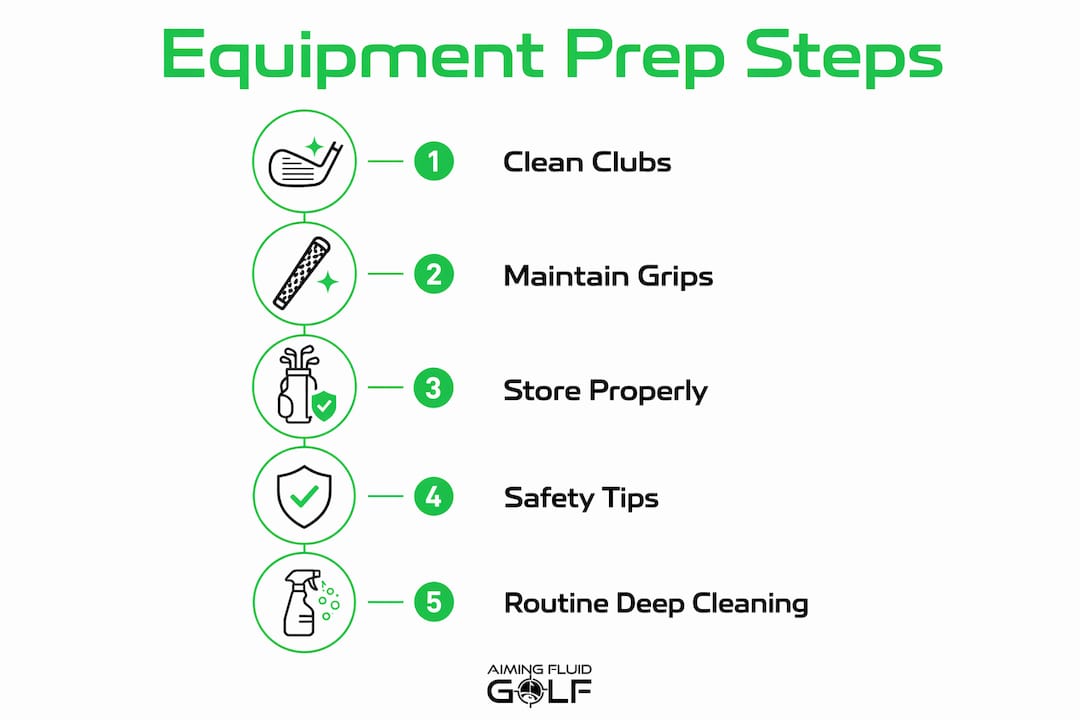
An on-course equipment prep guide addresses four core areas: cleaning tools, maintenance routines, safety protocols, and storage methods. Each area directly affects how your clubs perform and how long they last. Golfers who treat prep as a system rather than a series of one-off tasks see the most consistent results. The sections below build that system from the ground up.
What tools and supplies do you need for effective gear prep?
The right tools make every cleaning and maintenance task faster and more thorough. Without them, you end up improvising with whatever is in your bag, which usually means incomplete cleaning and missed problems.
Core cleaning tools:
- Groove brush or dual-head brush. A dual-head groove cleaner handles both face grooves and sole debris in one pass. Stiff bristles on one end clear packed dirt; softer bristles on the other polish the face.
- Damp microfiber towel. Microfiber lifts debris without scratching club faces. Carry at least two: one wet, one dry.
- Mild dish soap. A few drops in warm water creates the cleaning solution used for deep cleaning sessions.
- Warm water container. A small bucket or wide-mouth bottle works for soaking iron heads during post-round cleaning.
- Polishing cloth. Used on shafts and club heads after cleaning to remove water spots and light oxidation.
Organizational supplies:
- Individual-slot golf bags with padded dividers prevent club-on-club collisions during transport.
- Headcovers protect woods and hybrids from impact damage and moisture.
- A utility pouch keeps tees, divot tools, and a spare towel within reach without digging through your bag.
| Tool | Purpose | Usage frequency |
|---|---|---|
| Groove brush | Clears debris from club face grooves | After every shot |
| Damp microfiber towel | Wipes face and shaft clean | After every shot |
| Mild soap + warm water | Deep cleaning solution for iron heads | Every 3–5 rounds |
| Polishing cloth | Removes water spots and light oxidation | Post-round |
| Headcovers | Protects woods and hybrids from impact | Every round |
Pro Tip: Attach your towel to your bag with a magnetic clip system. Aimingfluidgolf’s magnetic towel and landing pad design keeps your towel accessible without searching through pockets between shots.
How do you properly clean golf clubs during and after rounds?
PGA Tour equipment managers report that post-round cleaning prevents 90% of long-term club damage by removing dirt and corrosive substances before they set. That standard applies directly to amateur golfers. A two-phase approach, quick cleaning during play and deep cleaning after, covers both immediate performance and long-term condition.

Quick cleaning during play
Wipe the club face with a damp towel immediately after each shot. Use the groove brush to clear any packed debris before returning the club to your bag. This takes under 10 seconds and prevents groove degradation that affects spin and shot direction. Dirty grooves cause shorter, lower, and offline shots, even when the swing is correct.
Deep cleaning every 3–5 rounds
A thorough deep clean takes about 15 minutes and follows this sequence:
- Fill a bucket with warm water and a few drops of mild dish soap.
- Submerge iron heads only. Keep shafts and ferrules out of the water.
- Let heads soak for 5–10 minutes to loosen compacted debris.
- Scrub grooves with a stiff-bristle groove brush, working in the direction of the groove channel.
- Rinse each head with clean water.
- Dry immediately with a clean towel. Do not air dry, as standing water causes rust.
- Buff shafts with a dry polishing cloth.
- Inspect grips for slickness or hardness before returning clubs to the bag.
Pro Tip: After drying iron heads, leave clubs out of the bag for 20–30 minutes in a dry room before storing. Any residual moisture trapped in the bag accelerates rust on the hosel and face.
Grip maintenance deserves specific attention. Grip tackiness degrades before visible cracking appears. A grip that feels slightly slick or hard has already lost performance. Test each grip by pressing your thumb firmly against the surface. If it slides without resistance, replacement is overdue. Wash grips with mild soap and water monthly to extend their useful life.
For a more detailed breakdown of cleaning methods by club type, Aimingfluidgolf’s complete club cleaning guide covers irons, woods, and wedges separately.
What safety tips should golfers follow when managing equipment on course?
Equipment safety covers two areas: protecting your gear from damage and protecting yourself and others from injury. Both require deliberate habits, not just common sense.
Golf cart safety:
Parking your cart within 25–30 feet of greens or tees is the standard safety buffer required on most courses. Driving through sensitive turf areas, bunker edges, or marked restricted zones risks course damage and cart tip-overs on uneven terrain. Always apply the parking brake on slopes before exiting.
On-course equipment handling:
- Never lean clubs against the cart where they can fall onto the path or into a bunker.
- Return clubs to the bag immediately after each shot. Leaving them on the ground is the leading cause of clubs being left on the course.
- Inspect club heads before each round for cracks, loose hosels, or damaged faces. A cracked iron head can shatter on impact.
- Wear a glove during play to protect your grip hand and maintain consistent contact pressure.
- Keep headcovers on woods until you reach the tee box. Impact from bag movement during cart travel chips paint and dents club faces.
Safety do’s and don’ts:
- Do: park carts at the required distance from greens and tees.
- Do: check for cracked or loose club heads before play.
- Don’t: carry more clubs than the 14-club limit, as overfilled bags increase collision damage.
- Don’t: use a club with a loose hosel. The head can detach mid-swing and become a projectile.
How should you organize and store golf equipment between rounds?
Storage is where most golfers lose the most ground on gear longevity. Clubs stored damp, in a hot car trunk, or in a bag without dividers degrade faster than clubs used heavily but stored correctly.
Using a quality golf bag with individual dividers and keeping clubs dry before storage prevents warping, rust, and collision damage. That combination addresses the three most common storage failure modes in one step.
| Storage method | Key benefit | Common mistake to avoid |
|---|---|---|
| Individual-slot bag with dividers | Prevents club-on-club collision | Using a single-compartment bag |
| Cool, dry indoor location | Prevents rust and grip degradation | Storing in a car trunk or garage |
| Headcovers on woods and hybrids | Protects against impact and moisture | Removing headcovers during transport |
| Clubs dried before storage | Eliminates rust at hosel and face | Returning wet clubs directly to bag |
| Upright bag position | Prevents shaft warping | Laying bag flat for extended periods |
The ideal storage environment is a cool, dry indoor space with stable temperature. Garages and car trunks expose clubs to heat spikes above 100°F in summer, which softens grip compounds and accelerates shaft wear. A closet or climate-controlled room is the correct choice.
Pro Tip: Slip a dry microfiber cloth into each divider slot before storing. It absorbs any residual moisture from the shaft and prevents rust at contact points.
For more detail on protecting gear between rounds, Aimingfluidgolf’s guide on golf equipment storage covers bag selection, environmental factors, and seasonal considerations.
What are the most common equipment prep mistakes and how do you fix them?
Most equipment damage is self-inflicted through habits that feel harmless. Recognizing the failure pattern is the first step to correcting it.
Waiting until clubs look visibly dirty before cleaning is already too late. Performance loss from packed grooves occurs before debris is visible to the naked eye. By the time you notice dirt, spin and trajectory control have already degraded.
Top mistakes and corrections:
- Skipping the post-shot wipe. Fix: carry a damp towel clipped to your bag and wipe the face before re-gripping. This takes 5 seconds.
- Soaking ferrules during deep cleaning. Excess moisture at the ferrule joint breaks down the epoxy bond between the shaft and hosel. Fix: submerge only the club head, keeping the ferrule above the waterline.
- Ignoring grip slickness. Grips lose tackiness before they crack. Fix: test grip feel monthly and wash with mild soap. Replace when the surface no longer resists thumb pressure.
- Storing clubs in a hot car. Heat above 100°F softens grip compounds and can loosen shaft epoxy. Fix: bring clubs indoors after every round.
- Using a single-compartment bag. Clubs collide during transport, chipping faces and denting shafts. Fix: switch to a bag with individual dividers.
Pro Tip: Set a phone reminder every 3 rounds to run a full deep clean. Tying the habit to a specific trigger, rather than waiting until clubs “look dirty,” keeps the routine consistent.
Golfers who pair good equipment habits with a broader fitness and preparation routine see the most consistent results. A functional fitness checklist can help you build the physical consistency that makes equipment prep habits stick.
Key takeaways
Consistent equipment prep is the single most effective way to protect a $2,000–$5,000 gear investment while maintaining shot accuracy and club performance across every round.
| Point | Details |
|---|---|
| Clean after every shot | Wipe the face and brush grooves immediately to prevent packed debris from degrading spin and accuracy. |
| Deep clean every 3–5 rounds | A 15-minute soak-and-scrub routine removes compacted dirt and prevents long-term surface damage. |
| Never soak ferrules | Keep the ferrule above the waterline during cleaning to protect the epoxy bond between shaft and hosel. |
| Store clubs dry and indoors | Cool, dry storage prevents rust, grip degradation, and shaft warping between rounds. |
| Replace grips proactively | Test grip tackiness monthly. Replace before visible cracking appears, not after. |
What consistent prep has taught me about gear and confidence
Gary’s perspective on equipment prep goes beyond the technical checklist.
The golfers I see struggle most with consistency are rarely struggling with their swing. They’re struggling with gear they don’t trust. A club face packed with debris, a slick grip, or a rattling hosel creates doubt at address. That doubt costs strokes before the swing even starts.
The habit that changed my own game was treating the post-shot wipe as part of the shot routine, not a separate task. Club comes out, shot is played, face gets wiped, club goes back. It takes less time than reading a putt, and it means every club in the bag is ready for the next shot without a second thought.
The financial argument is equally clear. A full set of irons, a driver, and a putter represent a serious investment. Neglecting cleaning and storage is the equivalent of buying a quality car and never changing the oil. The gear degrades faster than it should, and replacement costs arrive sooner than they need to.
Start with one habit: the post-shot wipe. Add the deep clean routine after a few rounds. Build from there. The improvement in both gear condition and on-course confidence is measurable within a month.
— Gary
Gear that supports your prep routine

Aimingfluidgolf designs accessories specifically for golfers who take equipment prep seriously. The magnetic towel and landing pad system keeps your cleaning towel accessible at all times, removing the friction that causes most golfers to skip the post-shot wipe. Precision divot tools, utility pouches, and groove-cleaning brushes are built to the same standard: durable materials, practical function, and a design that solves a real on-course problem.
Explore the full range of golf accessories curated by Aimingfluidgolf to find the tools that fit your prep routine and protect your gear investment across every round.
FAQ
How often should I deep clean my golf clubs?
Deep clean your clubs every 3–5 rounds using warm water, mild soap, and a groove brush. The process takes about 15 minutes and prevents the long-term damage that shortens club lifespan.
Can I soak my entire club in water during cleaning?
No. Submerge only the club head and keep the ferrule above the waterline. Excess moisture at the ferrule joint breaks down the epoxy bond and can eventually loosen the club head from the shaft.
How do I know when to replace my grips?
Test grip tackiness monthly by pressing your thumb firmly against the surface. If it slides without resistance, replace the grip. Visible cracking means the grip is already past its useful life.
How far should I park a golf cart from the green?
The standard safety buffer is 25–30 feet from greens and tees. Parking closer risks turf damage and increases the chance of cart-related incidents on uneven terrain near the putting surface.
What is the best way to store golf clubs between rounds?
Store clubs clean, dry, and upright in a cool, dry indoor location. Avoid car trunks and garages where heat spikes accelerate grip and shaft degradation. Use a bag with individual dividers to prevent club-on-club collision damage.


