


TL;DR:
- Proper golf bag organization protects equipment and speeds up play by storing accessories in designated compartments. Consistently returning clubs and accessories to specific spots maintains order and prevents damage. Modular pouches and routines enhance gear management and promote lasting organization habits during rounds.
Organizing on-course accessories means systematically storing your clubs, balls, tees, gloves, divot tools, and markers in designated bag compartments for fast access and consistent play. Proper gear management is not just about tidiness. Organizing your gear protects equipment from friction and scratches, extending its lifespan while reducing the mental distraction of searching through a cluttered bag mid-round. Golfers who follow a structured accessory arrangement guide play faster, lose fewer items, and arrive at each shot fully prepared.
What are the essential on-course golf accessories and their recommended storage spots?
Every golfer carries a core set of items that must be accessible within seconds during play. Knowing where each item lives in your bag is the foundation of effective course accessory organization.
The standard on-course essentials checklist includes:
- Golf balls: Carry 6–10 balls in a dedicated ball pocket. A separate, easy-to-reach pocket prevents digging through clutter when you need a replacement fast.
- Tees: Store in a small zippered pouch or the front accessory pocket. Loose tees scattered across compartments are the most common source of bag clutter.
- Gloves: Keep one active glove accessible in a top accessory pocket. Spare gloves belong in a dedicated pouch to protect their shape and grip texture.
- Ball markers and divot tools: These go in a single, consistent pocket. Mixing them with tees or valuables creates unnecessary searching.
- Rangefinder: Use a dedicated side pocket or a clip-on case attached to the bag strap for instant access before each shot.
- Weather gear: Rain gloves and a jacket belong in the large apparel pocket, separate from clubs and consumables.
- Valuables: Keys, wallet, and phone go in a lined, zippered valuables pocket. Never mix valuables with tees or wet gear.
Separating consumables from valuables and apparel is the single most effective habit for speeding up access. Each category of item has a different use frequency and damage risk, so mixing them creates both clutter and wear.
| Item Category | Recommended Storage Location | Access Priority |
|---|---|---|
| Golf balls (6–10) | Dedicated ball pocket | High |
| Tees | Front zippered accessory pouch | High |
| Gloves | Top accessory pocket or glove pouch | High |
| Ball markers and divot tools | Single consistent side pocket | Medium |
| Rangefinder | Side pocket or clip-on case | Medium |
| Weather gear | Large apparel compartment | Low |
| Valuables | Lined, zippered valuables pocket | Low |
How to arrange clubs and accessories inside your golf bag for maximum efficiency
Club arrangement is the structural backbone of any golf accessory storage solution. Get it wrong, and the rest of your organization system falls apart.
- Place drivers and woods at the top. Clubs arranged longest to shortest prevent grip tangling and keep the bag balanced. Drivers and fairway woods go in the rear slots nearest the strap.
- Position irons in the middle slots. Long irons (3–5) sit above mid-irons (6–8), which sit above short irons (9, PW). This mirrors the natural selection sequence during a round.
- Place wedges and the putter at the front or bottom. Wedges and the putter are used most frequently around the green, so front-facing slots reduce fumbling at the critical moment.
- Choose the right divider system. A 4-way divider suits carry bags with fewer clubs. A 14-way divider gives every club its own slot, eliminating shaft contact entirely. A 5-way divider is the practical middle ground for most golfers.
- Center your heaviest accessories. Rangefinders, water bottles, and packed rain gear should sit near the bag’s center of gravity. Off-center weight causes cart bags to tip and carry bags to pull uncomfortably on one shoulder.
- Group small accessories in modular pouches. Tees, markers, and spare gloves belong in dedicated zippered compartments, not loose in the main club area. Loose items migrate into club slots and cause grip damage over time.
Pro Tip: Label your pouches with a small tag or colored clip during your first few rounds with a new system. Muscle memory builds faster when you have a visual cue reinforcing each pocket’s purpose.
The divider type you choose has a direct impact on club condition. Shaft-on-shaft contact during cart travel is a leading cause of grip wear. A 14-way divider eliminates that contact entirely, which is why tour caddies prefer it regardless of the extra weight.
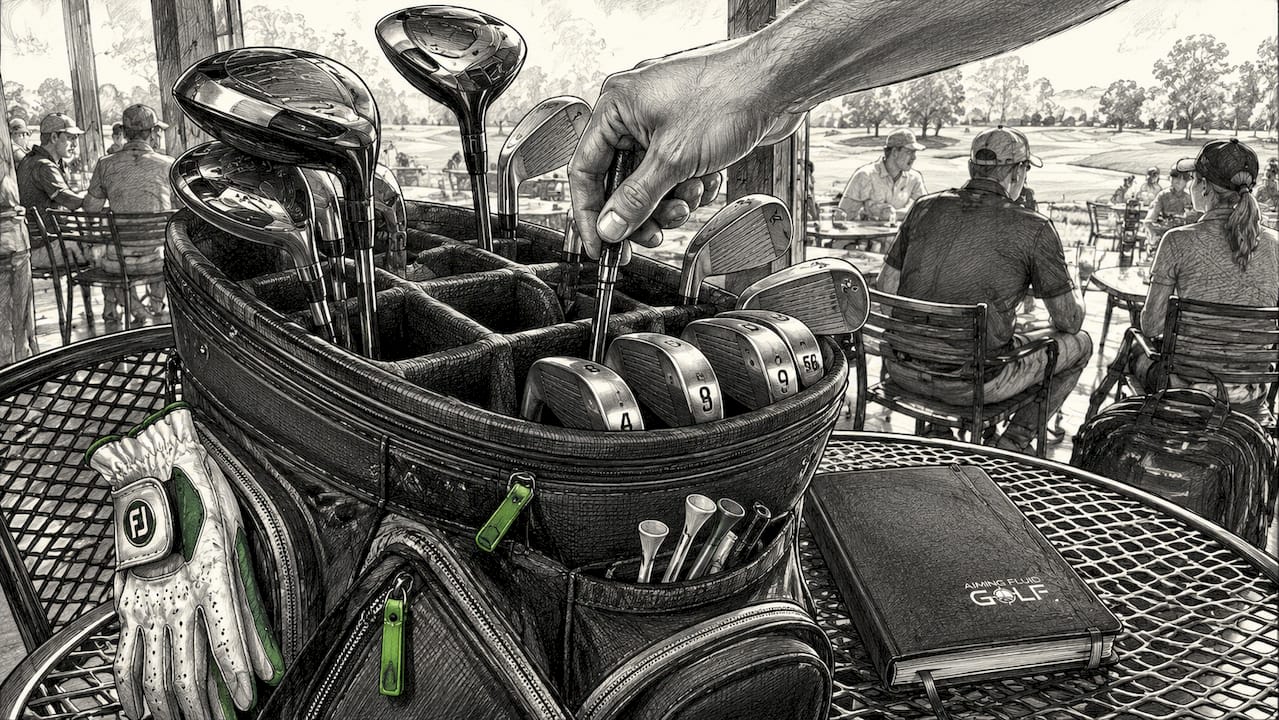
What tools and organizational accessories can improve your on-course gear management?
The right physical tools make the difference between a bag that stays organized and one that reverts to disorder after three holes. Modular storage tools are the most practical category for golfers who want to improve without rebuilding their entire setup.
Key tools that improve on-course gear management:
- Zippered accessory pouches: A dedicated pouch for tees, markers, and spare balls keeps consumables contained. Accessory caddies can hold 3–6 gloves and other small items securely, preventing loss and mess across a round.
- Magnetic towel attachments: A magnetic towel system allows instant attachment and retrieval without clipping or unclipping. Aimingfluidgolf’s magnetic towel and landing pad system, for example, lets golfers return the towel to the bag in one motion, which removes a consistent friction point during play.
- Utility pouches with soft interior lining: A leather utility pouch protects valuables from club vibration and moisture. The soft lining prevents scratches on phones and sunglasses that a standard pocket cannot guarantee.
- Velcro strips and clip-on organizers: These attach to bag straps or cart frames and create external storage for frequently used items like tees or a scorecard holder.
- Divot tools with multi-function design: A 5-in-1 divot tool consolidates ball marker, club cleaner, groove pick, and alignment aid into one item. Fewer individual pieces mean fewer pockets needed.
Pro Tip: Match your organizational tools to your bag type. A carry bag golfer needs lighter pouches and magnetic attachments that do not add bulk. A cart bag golfer can use larger caddies and rigid organizers without the weight penalty.
Magnetic towel attachments and removable pouches represent the most practical category of organizational innovation available to golfers today. They require no permanent modification to the bag and can be repositioned as your routine evolves.
What routines and habits help maintain your on-course organization during play?
A well-organized bag at the start of a round means nothing if you abandon the system by the fourth hole. Consistent habits are what separate golfers who stay organized from those who revert to chaos.
- Prepare accessories before you walk to the ball. Grab your tee, ball marker, and divot tool when you pull your club. Pre-shot routines that include accessory preparation prevent the scramble at the tee box and green.
- Return clubs immediately after each shot. Do not carry a club to the next position and set it on the ground. Return it to its designated slot before you move. This habit alone prevents the most common cause of lost clubs during a round.
- Clean clubs before they go back in the bag. Dirt and grass on club faces transfer to grips and other shafts inside the bag. A quick wipe with your towel before re-slotting protects both the club and its neighbors.
- Check accessory pouches at the turn. The nine-hole mark is the natural reset point. Restock tees, confirm your ball count, and verify your valuables pocket is zipped. This two-minute check prevents the back-nine scramble for supplies.
- Keep frequently used items in the same pocket every round. Consistent access points build muscle memory. When your tee pouch is always in the same front pocket, you stop thinking about where it is and start thinking about your shot.
Consistent organization routines reduce mental friction during play. Golfers who know exactly where every item lives spend less cognitive energy on logistics and more on course management. That shift in focus is measurable in pace of play and, over time, in scoring consistency.
Key Takeaways
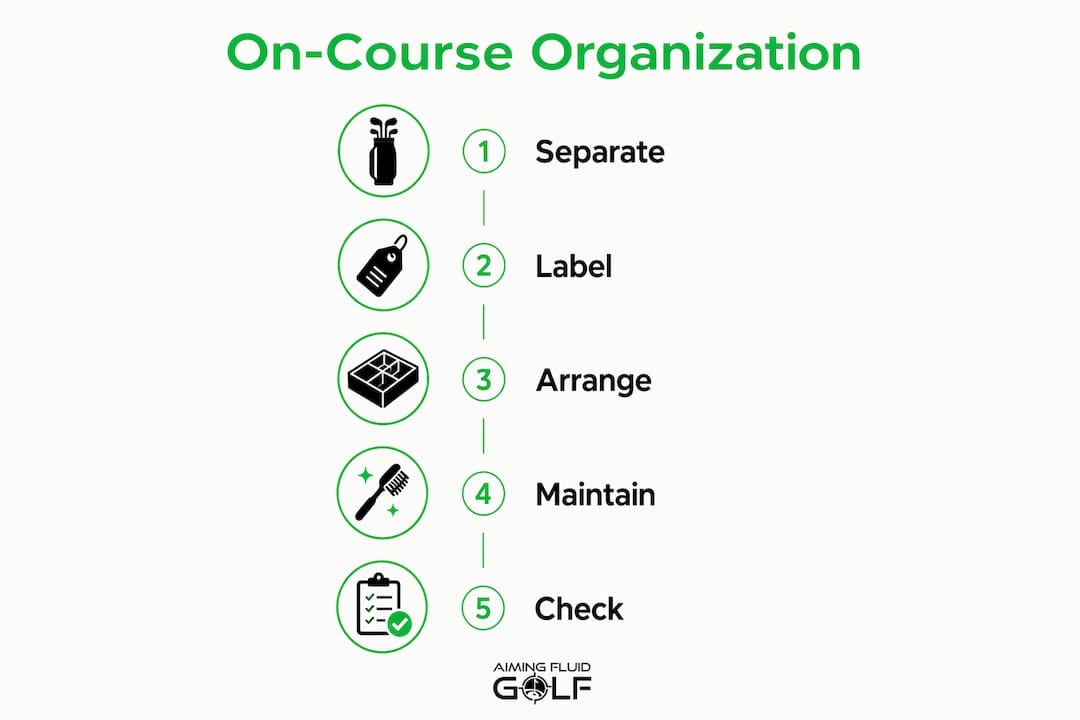
Effective on-course gear management combines a fixed storage system, the right physical tools, and consistent habits maintained across every round.
| Point | Details |
|---|---|
| Separate item categories | Store consumables, valuables, and apparel in distinct pockets to prevent damage and speed access. |
| Arrange clubs longest to shortest | Place drivers at the top and wedges at the front to mirror natural club selection and prevent grip tangling. |
| Use modular storage tools | Zippered pouches, magnetic towels, and utility caddies keep small accessories contained and retrievable. |
| Build pre-shot and post-shot habits | Prepare accessories before shots and return clubs immediately after to maintain system integrity. |
| Check inventory at the turn | A two-minute audit at the nine-hole mark prevents supply shortages and keeps the bag orderly. |
What I’ve learned about golf bag organization after years on the course
Most golfers treat bag organization as a one-time setup task. They arrange everything neatly before a round, then spend the back nine fishing for tees and wondering where their glove went. The real discipline is the return habit, not the initial arrangement.
The single biggest mistake I see is overpacking. Golfers add items “just in case” until the bag weighs more than it should and every pocket is jammed. A cluttered bag damages clubs through friction and forces you to dig for everything. The fix is a strict essentials-only rule: if you did not use it in the last three rounds, it does not belong in the bag.
Modular pouches changed how I think about organization. Instead of assigning items to bag pockets, I assign them to pouches that live in bag pockets. When I switch bags, the system transfers in under two minutes. That portability is something most golfers do not consider until they are repacking from scratch for the third time.
My honest advice: start with the Peter Finch method for club arrangement, then layer in your own pouch system for accessories. Do not try to build a perfect system on day one. Refine it over three or four rounds, and you will land on something that actually fits how you play.
— Gary
Aimingfluidgolf’s top picks for organized on-course play
Aimingfluidgolf designs accessories specifically for golfers who want a system that holds up across 18 holes, not just the first tee.

The best golf accessories curated by Aimingfluidgolf cover cart, carry, and practice setups, with options including magnetic towels, precision tees, 5-in-1 divot tools, and leather utility pouches. Each product is built to solve a specific organizational problem rather than add bulk. The magnetic towel collection is particularly effective for golfers who lose time re-attaching their towel after every shot. If you want to avoid the most common gear packing errors before your next round, the packing mistakes guide on the Aimingfluidgolf site is a practical starting point.
FAQ
What is the correct order to arrange clubs in a golf bag?
Arrange clubs from longest to shortest, with drivers and woods at the top and wedges at the front or bottom. This prevents grip tangling and keeps the bag balanced during carry and cart transport.
How many golf balls should I carry during a round?
Carry 6–10 golf balls in a dedicated ball pocket. That range covers most rounds without adding unnecessary weight.
What is the best way to store a golf glove in the bag?
Keep one active glove in a top accessory pocket and store spares in a dedicated glove pouch. A structured pouch preserves the glove’s shape and grip texture between uses.
How do I stop my bag from becoming disorganized mid-round?
Return every club to its designated slot immediately after each shot and check accessory pouches at the turn. Consistent access points build the muscle memory that keeps the system intact across all 18 holes.
Does bag organization actually protect my equipment?
A cluttered bag causes shaft-on-shaft contact and grip wear during cart travel. Proper organization, including dividers and separate pouches, is a direct investment in gear longevity.
Recommended
- How to Organize Your Golf Bag Like a Pro: The Peter Finch Method – Aiming Fluid Golf
- Golf Course Accessory Placement Tips That Save Strokes – Aiming Fluid Golf
- How to Manage On-Course Essentials for Better Golf – Aiming Fluid Golf
- Master on-course gear management for peak golf performance – Aiming Fluid Golf


