


Most golfers spend hundreds on clubs, balls, and accessories but still scramble to find a tee or clean towel mid-round. True golf gear preparedness isn’t about owning more equipment, it’s about organizing, maintaining, and packing what you have so every item is accessible exactly when you need it. This approach transforms your on-course efficiency, reduces distractions, and keeps you focused on your game. In this guide, you’ll discover what golf gear preparedness really means, how to build effective systems, and which strategies deliver the biggest performance gains.
Table of Contents
- Key takeaways
- What golf gear preparedness really means
- Core components of effective golf gear preparedness
- Comparing common golf gear organization methods
- Strategies to build and maintain golf gear preparedness
- Enhance your golf gear preparedness with expert accessories
- Frequently asked questions about golf gear preparedness
Key Takeaways
| Point | Details |
|---|---|
| Gear organization | Effective golf gear preparedness hinges on organizing every item with a designated spot so you can grab what you need without thinking. |
| Regular maintenance | Regular maintenance keeps clubs, grips, shoes, and accessories in peak condition so mid round failures are avoided. |
| Smart packing | Smart packing loads your bag based on course conditions and weather so you have what you need when you need it. |
| Course readiness | Planning for course specifics such as layout, pace expectations, and environmental factors helps you adapt quickly and maintain focus on your game. |
What golf gear preparedness really means
Golf gear preparedness involves the organization, maintenance, and smart packing of essential golf equipment for optimal on-course performance. It’s the difference between owning a full set of clubs and having those clubs clean, organized, and paired with every accessory you’ll actually use during a round. Many golfers confuse accumulation with readiness. You can own premium gear and still waste strokes fumbling for ball markers or dealing with dirty grips.
True preparedness has four core components. First, equipment organization ensures every item has a designated spot and you can grab what you need without thinking. Second, regular maintenance keeps clubs, shoes, and accessories in peak condition so nothing fails mid-round. Third, smart packing means loading your bag based on the specific course, weather, and your playing style. Fourth, course-specific adaptations prepare you for terrain challenges, pace expectations, and environmental factors.
The benefits extend beyond convenience. When your gear is ready, your mental energy stays on shot execution instead of logistics. You move faster between shots, improving pace of play for your group. You avoid embarrassing moments like asking playing partners for extra tees or realizing your glove is soaked. Here’s what needs attention in your essential golf gear guide:
- Clubs: clean grooves, fresh grips, proper headcovers
- Balls: sufficient quantity, matched to your skill level and course conditions
- Tees: multiple sizes for different clubs and tee box conditions
- Apparel: weather-appropriate layers, backup glove, clean shoes
- Accessories: ball markers, divot tools, towels, pitch repair tools
- Maintenance tools: groove cleaner, club brush, microfiber cloths
Each element contributes to a complete preparedness system. Miss one, and you create potential disruptions that pull focus from your game.
Core components of effective golf gear preparedness
Building comprehensive preparedness requires mastering several interconnected elements that work together. Consistent maintenance and smart organization of gear contribute to higher performance and fewer on-course issues. Start with packing smartly by loading your bag in reverse order of use. Items you’ll need first, like your driver and tees, should be most accessible. Rain gear and extra layers go in less accessible pockets since you’ll only grab them if conditions change.
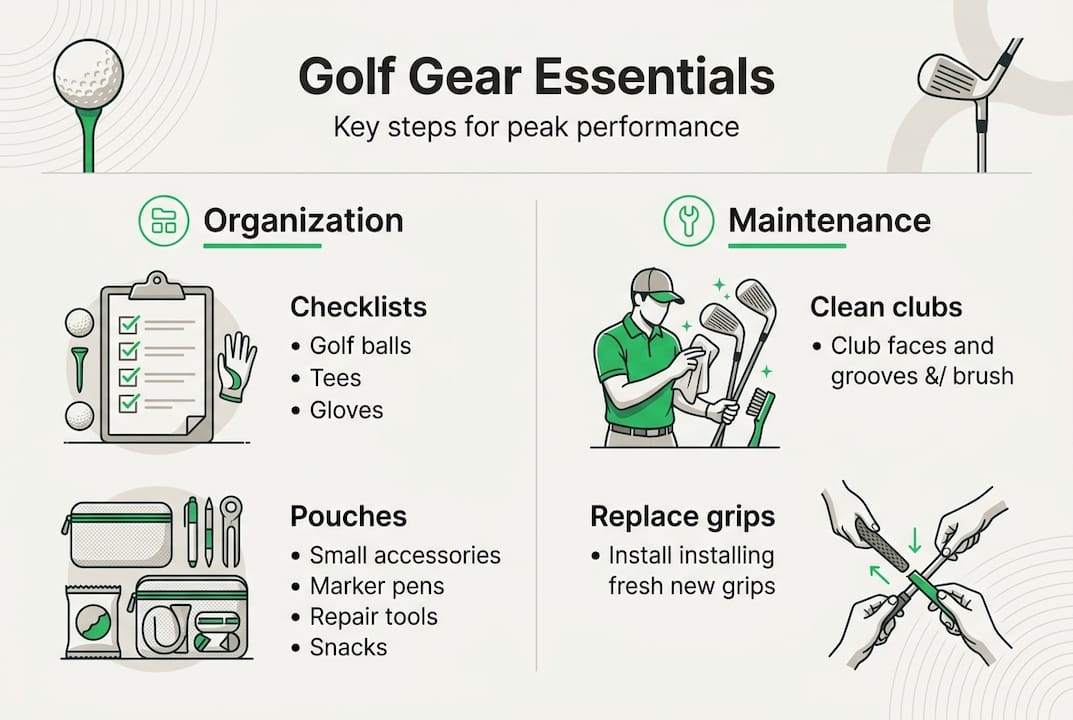
Regular equipment maintenance prevents mid-round failures. Clean your clubs after every round, not just when grooves look dirty. Inspect grips monthly for wear, hardening, or slickness. Check shoe spikes before each round and replace any that show wear. These small habits prevent equipment from degrading gradually until it affects performance.
Organizing for accessibility means creating systems where muscle memory guides you to each item. Always store your rangefinder in the same pocket. Keep tees in a dedicated compartment, not loose in your bag. Use a golf bag essentials checklist 2026 to verify nothing gets forgotten. Planning for course conditions involves researching the layout, typical weather, and pace expectations before you arrive.
Your must-have items for complete preparedness include:
- Full set of clean clubs with fresh grips and protective headcovers
- Two dozen balls appropriate for your swing speed and course firmness
- Variety of tee sizes for drivers, fairway woods, and irons
- Primary glove plus backup in waterproof storage
- Weather-appropriate apparel including rain jacket and extra layer
- Maintenance toolkit with groove cleaner and microfiber towels
- High-performance accessories like magnetic towels and utility pouches
- Hydration and nutrition for 18 holes plus potential delays
- Scorecard holder, pencils, and ball markers
- Sunscreen, lip balm, and any personal medications
Pro Tip: Create a pre-round checklist tailored to your play style and local courses to avoid missing crucial items. Keep it on your phone and review it the night before each round, then again as you load your car.
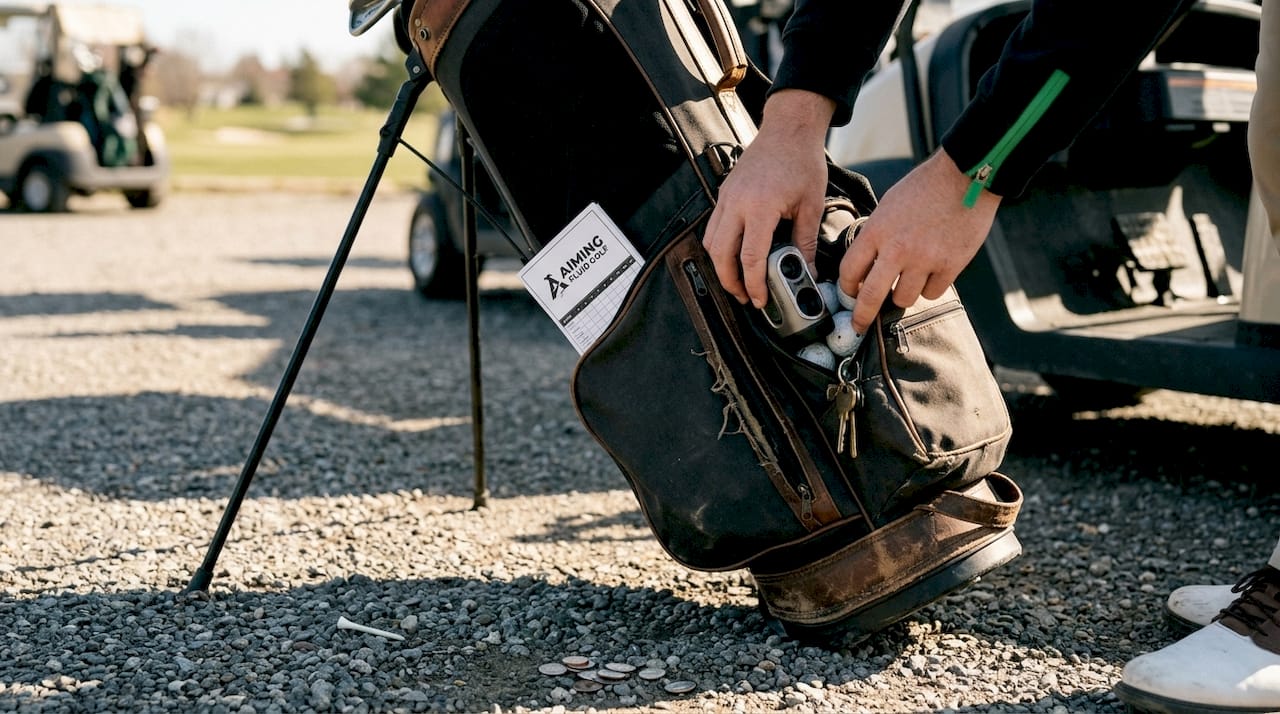
Storage solutions dramatically improve efficiency. Premium utility pouches keep valuables, rangefinders, and small accessories organized in one secure location. Magnetic golf towels attach instantly to your bag or cart, eliminating the search-and-fumble routine that wastes time. These purpose-built accessories transform random bag chaos into systematic organization.
Comparing common golf gear organization methods
Golfers use various approaches to organize their equipment, each with distinct advantages depending on play style and priorities. Organizing gear using dedicated specific compartments versus general storage can significantly affect accessibility and efficiency on the course. Understanding how traditional golf bags, modular organizers, and utility pouches compare helps you choose the right system.
| Method | Accessibility | Weight | Protection | Space | Cost |
|---|---|---|---|---|---|
| Traditional 14-way bag | Moderate, clubs separated but accessories mixed | Heavy, 5-8 lbs empty | Excellent club protection, minimal accessory protection | Maximum, multiple large pockets | High, $200-$500+ |
| Modular organizers | High, dedicated spaces for specific items | Light, 1-2 lbs added | Good, padded compartments available | Moderate, customizable layout | Moderate, $50-$150 |
| Utility pouches | Excellent, instant access to essentials | Minimal, under 1 lb | Very good for valuables and electronics | Limited, prioritizes key items | Low to moderate, $30-$80 |
| Magnetic accessories | Outstanding, one-hand operation | Negligible, ounces | Moderate, keeps items clean and ready | Minimal footprint, attaches to existing gear | Low, $20-$60 |
Traditional golf bags offer comprehensive storage but often become disorganized black holes where accessories disappear into random pockets. You have space for everything but spend time hunting through multiple compartments. Modular organizers improve this by creating dedicated zones, though they add complexity to your packing routine.
Utility pouches excel at keeping high-value, frequently accessed items secure and immediately available. A premium leather pouch protects your rangefinder, wallet, keys, and phone while clipping to your bag or belt for instant access. You eliminate the fumbling that happens when these items mix with tees, ball markers, and other small accessories in general pockets.
Innovations like magnetic golf towels revolutionize organization by solving the towel accessibility problem. Instead of tucking your towel through a loop or carabiner where it gets dirty and requires two hands to retrieve, magnetic systems let you grab and return your towel instantly with one hand. This saves 5-10 seconds per club cleaning, adding up to several minutes per round.
Specialty divot tools with integrated features, precision tees in organized dispensers, and purpose-built accessory holders all contribute to better organization. The best golf accessories guide 2025-2026 highlights how combining methods creates optimal systems.
Pro Tip: Combine methods by using a lightweight stand bag with a leather utility pouch for valuables and quick access items. Add magnetic towels and a modular tee dispenser. This hybrid approach maximizes accessibility while minimizing weight and complexity.
Strategies to build and maintain golf gear preparedness
Establishing consistent preparedness habits requires systematic approaches that become automatic over time. Regular gear audits and course-specific packing strategies help golfers avoid common pitfalls and remain prepared year-round. Follow these sequential steps before each round to ensure nothing gets overlooked.
- Conduct a gear check 24 hours before your tee time, verifying all clubs are present and clean.
- Inspect grips, headcovers, and club faces for damage or excessive wear requiring attention.
- Count balls and tees, restocking to maintain at least two dozen balls and 20 tees of varying sizes.
- Check weather forecasts and pack appropriate apparel layers, rain gear, and sun protection.
- Verify accessories like rangefinder batteries, divot tools, ball markers, and towels are ready.
- Load your bag in accessibility order, with driver, tees, and glove most accessible.
- Confirm hydration and nutrition supplies are sufficient for your round duration plus delays.
- Review the course layout and any special conditions like temporary greens or cart path rules.
Maintaining this preparedness over time requires understanding inspection frequencies for different gear categories:
| Equipment Category | Inspection Frequency | Key Maintenance Tasks |
|---|---|---|
| Clubs and grips | After every round | Clean grooves, wipe shafts, check grip tackiness |
| Balls and tees | Before each round | Count inventory, discard damaged balls, restock supplies |
| Shoes and apparel | Weekly during season | Clean shoes, check spikes, wash gloves, inspect rain gear |
| Bag and storage | Monthly | Empty all pockets, clean interior, check zippers and straps |
| Accessories | Bi-weekly | Test rangefinder battery, inspect towels, verify divot tool function |
| Seasonal gear swap | Spring and fall | Rotate apparel, update for temperature changes, refresh supplies |
Adapting your packing for different seasons and course conditions prevents unpleasant surprises. Spring golf often means softer fairways and unpredictable weather, requiring extra towels, waterproof gear, and possibly different ball selections. Summer demands hydration focus, sun protection, and lighter apparel layers. Fall brings temperature swings within single rounds, making layering systems critical. Winter golf in milder climates needs hand warmers, thermal layers, and equipment that performs in cold temperatures.
Create ritual habits that minimize forgetfulness and maximize readiness. Always restock your bag immediately after a round, not the morning of your next tee time. Keep a master checklist visible in your garage or golf storage area. Set phone reminders for monthly maintenance tasks. These small systems compound into reliable preparedness.
Replacing worn equipment and updating accessories regularly maintains peak performance. Grips lose tackiness after 40 rounds or one year, whichever comes first. Shoes need spike replacement every season for walkers, every two seasons for cart riders. Towels, gloves, and other soft goods degrade with use and should be evaluated honestly. The spring golf bag gear up checklist provides seasonal guidance for these updates.
Enhance your golf gear preparedness with expert accessories
Specialized accessories transform good preparedness into exceptional on-course efficiency. Premium utility pouches keep valuables secure and instantly accessible, eliminating the frustration of digging through bag pockets for your rangefinder or keys. Magnetic golf towels attach and detach with one hand, keeping your clubs clean without the awkward fumbling of traditional towel clips. These purpose-built solutions address real problems that generic gear ignores.

Our curated selection of expert golf accessories picks includes performance-focused items suitable for golfers at every level. The premium leather golf utility pouch combines luxury materials with practical design, featuring diamond stitching, soft interior lining, and a 360-degree metal clip that attaches securely to any bag. Explore our magnetic golf towels collection to discover how smart design elevates simple accessories into game-changing tools. These investments in quality gear preparedness pay dividends in every round you play.
Frequently asked questions about golf gear preparedness
What is golf gear preparedness?
Golf gear preparedness is the proactive organization, maintenance, and strategic packing of all equipment and accessories you need for efficient, distraction-free rounds. It goes beyond simply owning clubs and balls to ensure every item is clean, functional, accessible, and appropriate for the specific course and conditions you’ll face.
How can amateur golfers start improving their gear preparedness?
Begin by creating a simple checklist of essential items and reviewing it before every round until the habit becomes automatic. Invest in basic organizational tools like a utility pouch for valuables and a magnetic towel for club cleaning. Clean your clubs after each round and designate specific pockets in your bag for different accessory categories. The beginner’s golf gear guide provides detailed starting points.
How does gear preparedness affect on-course performance?
Proper preparedness eliminates mental distractions caused by missing or inaccessible equipment, allowing you to maintain focus on shot execution and course management. It speeds up your pace of play by reducing time spent searching for items, which keeps your rhythm consistent and your playing partners happy. Well-maintained equipment performs more predictably, and having the right gear for conditions prevents avoidable penalty strokes.
What are common mistakes to avoid when organizing golf gear?
Many golfers pack too much, creating weight and clutter that makes finding essentials harder rather than easier. Others neglect regular maintenance, allowing grips to degrade and club faces to accumulate dirt that affects spin and control. Failing to adapt packing for specific courses and weather conditions leaves you unprepared for foreseeable challenges. Finally, disorganized accessory storage where small items mix randomly in pockets wastes time and creates frustration during rounds.
Where can I find ongoing education about golf gear and preparation?
Reputable golf accessory brands often publish comprehensive guides covering equipment selection, maintenance, and organizational strategies. Online golf communities and forums provide peer insights about what works in real playing conditions. Professional club fitters and golf shops offer personalized advice based on your specific game and local course conditions. Regularly reviewing updated gear guides ensures you stay current with innovations that genuinely improve preparedness and performance.
Recommended
- Spring Golf Bag Gear Up: The Essential 7-Point Checklist & Upgrades – Aiming Fluid Golf
- Spring Golf Bag Essentials: 5 Items to Replace Before Your First Round – Aiming Fluid Golf
- Master the golf convenience workflow for faster play – Aiming Fluid Golf
- Spring Golf Essentials (2026) | Must-Have Gear to Start the Season Rig – Aiming Fluid Golf
- Performance naturelle : guide pratique et scientifique 2026 – Vitalcup


