


TL;DR:
- Proper labeling of golf gear prevents loss and speeds up play by ensuring each item’s designated place. Durable materials like vinyl and polyester, combined with correct surface preparation and secure hardware such as stainless steel loops, significantly extend label lifespan. Regular inspections and maintenance ensure labels remain legible and securely attached through multiple seasons of outdoor use.
You know the feeling: you reach into your bag mid-round and pull out someone else’s wedge, or you leave a rangefinder at the 14th tee and have no idea how to prove it’s yours. Learning how to label golf gear effectively solves both problems before they cost you money or time. Done right, labeling tells you exactly where every club, bag, and accessory belongs, speeds up your pace of play, and gives you a fighting chance at recovering lost gear. This guide covers the right materials, the correct application process, and the mistakes that trip up most golfers.
Table of Contents
- Key takeaways
- Materials and tools for labeling golf gear effectively
- Step-by-step process for labeling clubs and accessories
- Mistakes to avoid when labeling golf gear
- Verifying and maintaining your labeled golf gear
- My honest take on labeling golf gear
- Gear that makes organization easier
- FAQ
Key takeaways
| Point | Details |
|---|---|
| Choose durable materials | Vinyl or polyester labels with UV and waterproof resistance last through full seasons of outdoor play. |
| Prepare surfaces first | Clean shafts with rubbing alcohol before applying any adhesive label to maximize long-term adhesion. |
| Avoid clubface stickers | Reflective stickers on clubfaces can trigger rule violations and potential disqualification during official rounds. |
| Use metal hardware on bag tags | Stainless steel loops and metal eyelets outperform plastic attachments for durability under rough handling. |
| Inspect labels regularly | Check adhesion and legibility at least once per season and replace labels that show peeling or fading. |
Materials and tools for labeling golf gear effectively
Getting this right starts before you ever apply a label. The environment golf gear operates in is demanding: sun exposure, sweat, rain, cart vibration, and repeated friction all work against labels that were not designed for the job.
Label material selection is the single most important decision. Vinyl and polyester labels are the industry standard for golf clubs because both materials resist water and UV degradation. Vinyl conforms to curved shaft surfaces well. Polyester holds ink more precisely and tends to retain print clarity longer under direct sunlight. Paper-based labels, even laminated ones, will fail within a few weeks of outdoor use.
For bag tags, the material choice matters, but the attachment method matters just as much. Metal attachment hardware such as stainless steel loops or metal eyelets significantly outperforms plastic in tensile and fatigue tests. A plastic loop that looks fine at the start of the season can fracture after repeated impacts during transport or storage. Metal does not.
Here is the core toolkit you need before starting:
- Label printer or pre-cut vinyl labels: A thermal label printer (Dymo or Brother models work well) gives you clean, legible text at any size. Pre-cut vinyl sheets sized for golf shafts are a faster option for beginners.
- QR code tagging kit: Smart QR-based recovery systems are available as a one-time purchase of around $24.99 for 15 tags, with no recurring subscription. Each tag links to your contact profile when scanned.
- Rubbing alcohol and clean cloths: Non-negotiable for surface preparation before any adhesive application.
- Stainless steel bag tag loops or zip ties: Zip ties secured through metal eyelets provide the most reliable bag tag attachment for shipping and transport situations.
- UV-resistant clear coat or laminate overlay: An optional but effective final layer over printed labels to extend outdoor lifespan.
Pro Tip: Before purchasing any label stock, confirm the adhesive is rated for temperatures above 150°F. Golf bags stored in car trunks during summer can easily reach that threshold, and standard adhesives will fail.
| Material | Waterproof | UV Resistant | Conformability | Longevity |
|---|---|---|---|---|
| Vinyl | Yes | Yes | High | 2 to 4 seasons |
| Polyester | Yes | Yes | Moderate | 3 to 5 seasons |
| Paper (laminated) | Partial | No | Low | Under 3 months |
| Laser engraving | N/A | Yes | N/A | Permanent |
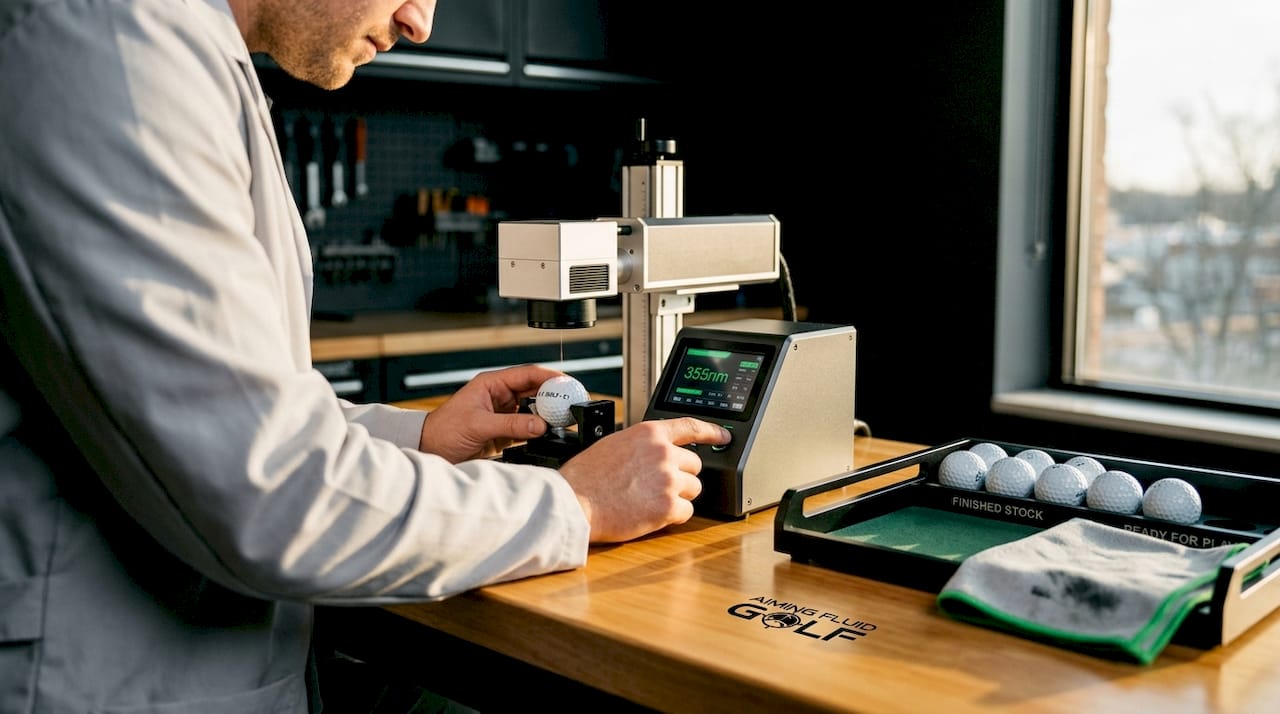
UV laser marking at 355nm produces higher-contrast, more permanent results than standard fiber laser engraving at 1064nm. For golfers who want personalization options beyond adhesive labels, this is the most durable method available. Aimingfluidgolf covers this in more depth in their guide to personalizing golf accessories.
Step-by-step process for labeling clubs and accessories
Follow this sequence precisely. Skipping any step reduces label lifespan and increases the chance of placement errors that interfere with play.
-
Clean every surface you plan to label. Use rubbing alcohol on a clean cloth and wipe the target area thoroughly. Surface prep before adhesion removes skin oils, dirt, and residue that prevent the adhesive from bonding correctly. Let the surface dry completely before moving on. This step alone accounts for the majority of early label failures when skipped.
-
Measure and mark your placement zone. On iron and wedge shafts, the back of the shaft just above the hosel is the standard placement zone. This keeps the label out of your grip line and away from contact with the turf. On woods and hybrids, the area just below the grip is preferable. Avoid placing labels within 6 inches of the clubhead on any club.
-
Cut your label to size before peeling. If you are using a sheet, pre-cut the label so you have exact control when you apply it. Trying to cut after application causes tearing and uneven edges.
-
Apply the label in a single smooth motion. Peel the backing halfway, align the label visually, then press and pull the backing as you lay the label down. Eliminate air bubbles by pressing from the center outward with a flat edge like a credit card.
-
Apply a clear laminate overlay if the label is printed, not laser engraved. This adds UV and abrasion resistance. Cut the overlay slightly larger than the label for full edge coverage.
-
Attach your bag tag using stainless steel loops or a zip tie through a metal eyelet. Never tape a tag directly to your bag material. The adhesion will fail during transport, and luggage shipping tags secured with zip ties are a far more reliable method.
-
Register your QR tags immediately after attachment. A tag attached to your bag that is not yet linked to your contact information offers zero recovery value. Complete the registration before your next round.
Pro Tip: Place a small, secondary label inside your bag’s interior pocket with your name and phone number. If your primary bag tag detaches during travel, this backup label gives anyone who opens your bag a way to contact you.
To learn more about securing accessories to your bag so they stay put throughout a round, the Aimingfluidgolf guide on attaching gear to bags covers attachment mechanics in practical detail.
Mistakes to avoid when labeling golf gear
Most labeling failures are preventable. The errors below are the ones Aimingfluidgolf sees most consistently, and each one has a specific technical reason behind it.
-
Applying stickers to clubfaces. This is not a cosmetic issue. Reflective stickers on clubfaces can trigger disqualification under the Rules of Golf. Any marking that could potentially influence ball flight or provide an optical alignment advantage is prohibited during official play. If you use any type of training aid sticker during practice, remove it before you tee off in a competition.
-
Reusing adhesive labels. Adhesive labels designed for one-time application lose bonding strength when peeled and reapplied. The adhesive layer tears microscopically during removal, and weather resistance drops significantly on the second application. If a label comes off a club, replace it with a new one.
-
Using tape to attach bag tags. Standard tape, including duct tape and gaffer tape, fails under moisture exposure and temperature cycling. The adhesive softens in heat and turns brittle in cold. This is a failure mode that predictably strikes during travel, which is exactly when you most need the tag intact.
-
Ignoring friction zones. Labels placed near grip edges, on bag exterior pockets that zip repeatedly, or on club heads that make contact with the bag interior will experience abrasion failure quickly. Map your placement zones before applying anything.
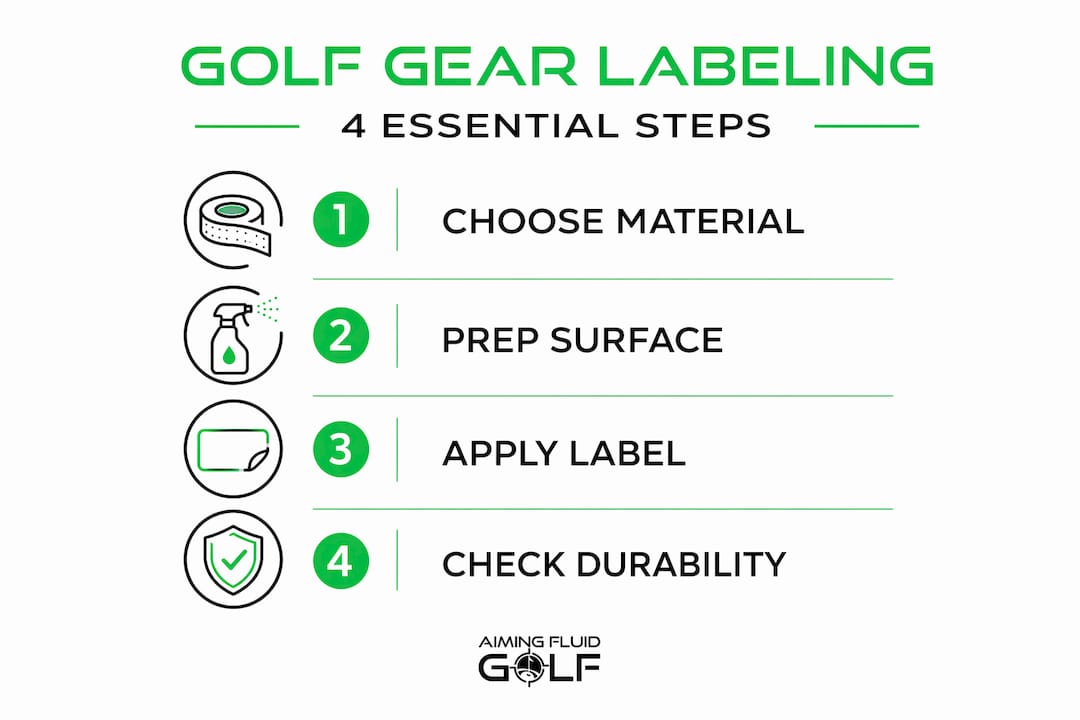
“Durable labeling is not about the label itself. It is about the combination of the right material, the right surface preparation, the right placement, and the right attachment method. All four factors working together determine whether your label survives a season or a month.” — Aimingfluidgolf
Pro Tip: To extend the life of bag tags in humid climates, choose tags manufactured with hardware tested for sweat and UV resistance. Not all stainless steel hardware is equivalent. Look specifically for marine-grade or grade 316 stainless for maximum corrosion resistance.
You can also reference industry guidance on making durable labels for outdoor and high-contact applications, which translates directly to golf equipment environments.
Verifying and maintaining your labeled golf gear
Labeling is not a one-time task. Labels degrade, attachments loosen, and contact information changes. A system that is not maintained stops working.
Schedule a label inspection routine at the start and end of every playing season, and after any major travel. During inspection, check four things: adhesion at all edges, print legibility under normal lighting, attachment hardware integrity on bag tags, and whether your contact information is still accurate. Each check takes under two minutes per bag.
When to replace labels:
- Edge lifting on more than 20% of the label perimeter. At this point, moisture and debris will work under the label and accelerate full detachment.
- Print fading to the point where text requires close inspection. A label that cannot be read at arm’s length has lost its functional value.
- Any crack or deformation in attachment hardware. Replace the entire tag and hardware, not just the card.
- QR code damage or scratching. A QR tag that does not scan consistently provides no recovery benefit. Test your tags with a phone scanner before each season.
Regarding storage between seasons, keep bags in a dry, temperature-stable environment. Prolonged heat exposure softens adhesives, and freezing temperatures make some vinyl formulations brittle. Covering the bag during storage also protects labels from dust and UV exposure from overhead lighting in garages.
| Label type | Expected lifespan | Key maintenance action |
|---|---|---|
| Vinyl adhesive | 2 to 4 seasons | Check edge adhesion annually |
| Polyester adhesive | 3 to 5 seasons | Inspect for UV fading at season start |
| QR hang tag (metal) | 5 or more seasons | Test scan reliability before each season |
| Paper laminate | Less than 3 months | Replace after heavy rain exposure |
Labeling works best as part of a broader organizational approach. Combining clear labels with a structured club organization system means you can locate any piece of gear in seconds, even mid-round. Aimingfluidgolf outlines this approach in their guide to organizing your golf bag.
My honest take on labeling golf gear
I have played enough rounds to know what actually fails in practice versus what sounds right in theory. The mistake I made early on was treating the label as the primary variable. I spent time finding the right vinyl material, the right font size, the right colors. What I ignored was attachment hardware, and I paid for it.
My first set of bag tags used plastic snap-rings. By the third tournament of the season, two tags had snapped off during cart transport. The labels were fine. The attachment was the failure mode. Once I switched to stainless steel loops, I stopped losing tags entirely.
The other thing most golfers overlook is the trade-off between permanence and flexibility. Laser engraving is permanent and completely weather-resistant, but if your contact information changes, you cannot update it. QR tags solve this elegantly because you update the linked profile digitally without touching the physical tag. For active golfers whose phone numbers or club memberships change, QR is genuinely the more practical long-term choice.
My advice: use vinyl adhesive labels on your clubs for identification, use QR metal hang tags on your bag for recovery, and check both at the start of every season. That combination covers all the real-world scenarios where labeling actually earns its value.
— Gary
Gear that makes organization easier
Knowing how to label golf gear effectively is only part of the equation. Having the right accessories around your labeled gear means everything stays accessible and protected during a round. Aimingfluidgolf designs products specifically for golfers who prioritize organization and on-course efficiency. From magnetic towel systems that keep your towel immediately accessible without digging through your bag, to utility pouches built for rapid access to tees and divot tools, each product is designed to work with a well-organized bag setup. Browse the full catalog of expert-picked golf accessories to find gear that complements your labeling system and keeps every round running on schedule.
FAQ
What is the best label material for golf clubs?
Vinyl and polyester are the top choices for golf clubs because both materials resist water and UV damage. Vinyl conforms better to curved shafts, while polyester holds print clarity longer under direct sunlight.
Can I put stickers on my clubface?
Reflective or alignment-style stickers on clubfaces are prohibited during official play and can result in disqualification under the Rules of Golf. Remove any practice stickers before competing in a formal round.
How long do adhesive golf club labels last?
Vinyl adhesive labels typically last two to four seasons with proper surface preparation and a UV-resistant laminate overlay. Polyester labels can last three to five seasons under similar conditions.
Are QR tags worth it for golf gear?
Yes, particularly for bags and travel cases. QR-based recovery systems link each tag to your contact profile and cost around $24.99 for 15 tags with no subscription fee, making them a cost-effective way to tag golf equipment.
How do I keep bag tags from falling off?
Use stainless steel loops or zip ties through metal eyelets rather than plastic hardware or tape. Metal attachments withstand the tensile stress and temperature cycling that come with regular transport and cart handling.


