


TL;DR:
- Poor packing causes damaging clubs, missed tee times, and extra costs on golf trips. Protect your gear by removing adjustable driver heads, using internal padding, and checking course dress codes. Always photograph your packed bag and carry backup gloves to ensure readiness and prevent issues.
Poor packing preparation is the leading cause of damaged clubs, denied tee times, and expensive last-minute purchases on golf trips. Common golf gear packing mistakes fall into three categories: inadequate club protection, missing backup gear, and ignoring course-specific conditions. A single bent shaft or forgotten glove can derail an entire round. This article covers the exact errors golfers make before travel and gives you a clear, practical system to prevent them. Aimingfluidgolf has compiled these findings from expert sources and real travel experience to help you arrive ready to play.
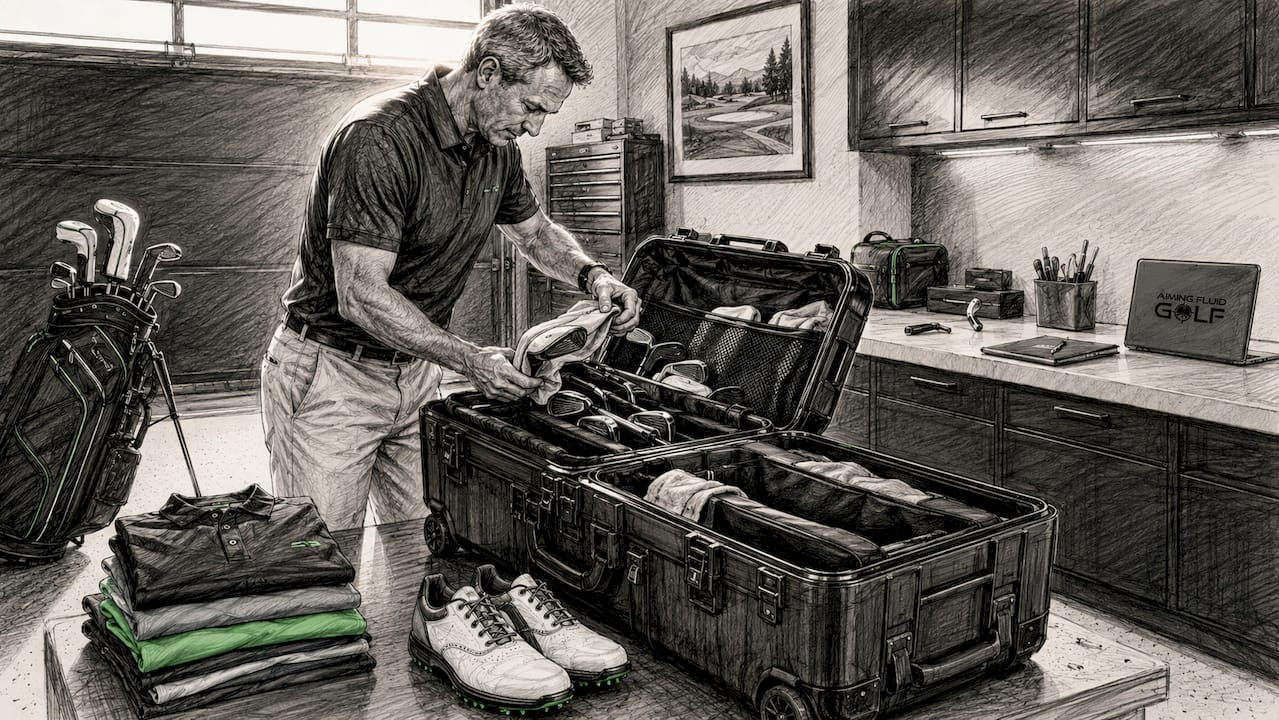
1. Common golf gear packing mistakes that damage clubs in transit
Club damage during travel is the most expensive packing failure a golfer can make. The two most frequent failure points are the hosel connection on adjustable drivers and the shafts of heavy steel irons.
Removing adjustable-head drivers and woods before packing is the single most effective step you can take. The hosel is a mechanical connection point, not a structural weld. Baggage handling puts lateral force on club heads, and that force shears the hosel when the head is still attached to the shaft. Store removed heads in a padded pouch inside the bag’s accessory pocket.
Steel-shafted irons create a different problem. A typical 5-iron weighs approximately 425 grams. Multiply that across a full iron set and you have significant mass shifting during transit. A stiff arm or support rod inside the travel bag counteracts that weight and prevents shafts from bending under impact. Without one, even a padded soft bag offers limited protection.
Pro Tip: Wrap each club head individually in a microfiber towel before placing clubs in the bag. This adds a second layer of cushioning and keeps grip tape clean during travel.
| Protection Method | Best For | Risk Without It |
|---|---|---|
| Remove adjustable heads | Drivers, fairway woods | Hosel shear, broken connection |
| Stiff arm or support rod | Full iron sets | Bent or cracked shafts |
| Padded head covers | All clubs | Surface scratches, minor impact damage |
| Hard-shell travel case | Frequent flyers, premium sets | Crush damage from heavy luggage |
Hard-shell cases are the right choice for golfers who fly more than four times per year with their clubs. The upfront cost is higher, but the protection against crush damage from stacked luggage is not replicable with a soft bag alone.
2. Forgetting backup gloves and how humidity destroys performance
Carrying only one golf glove is a frequent packing error that costs golfers strokes, not just comfort. Humidity and sweat degrade glove performance mid-round, reducing grip friction and increasing the chance of club slippage. Packing at least two gloves is standard practice among experienced players.
The degradation is faster than most golfers expect. A leather glove soaked in sweat loses its grip texture within a few holes. Synthetic gloves hold up slightly better in humidity but still benefit from rotation. Carrying a second glove lets you swap at the turn and maintain consistent grip pressure throughout 18 holes.
Pro Tip: Store backup gloves in a sealed zip-lock bag to keep them dry during travel. Moisture from a damp bag interior can pre-condition a glove before you even reach the course.
Beyond gloves, bring 2–3 dozen golf balls and a full supply of tees. Pro shop replacements for forgotten gear can cost upwards of $98 per item. That price point reflects resort and destination course markups, where you have no competitive alternatives. Packing extra consumables costs almost nothing compared to buying them on-site.
3. Underpacking apparel for weather variability
Weather variability is the most underestimated factor in golf trip preparation. A forecast that shows 72 degrees and partly cloudy can shift to wind and rain by the back nine. Golfers who pack only one outfit for each day have no fallback when conditions change.
The core apparel system for any golf trip includes moisture-wicking polos, a waterproof jacket, and versatile pants or shorts that meet most dress codes. Layering is the correct approach. A lightweight base layer under a wind vest covers a 20-degree temperature swing without adding bulk to your swing. Check weather-resistant gear options before finalizing your packing list.
Sun protection is a separate category that golfers consistently overlook. A wide-brim hat and SPF 50 sunscreen belong in every golf bag, regardless of the forecast. UV exposure on open courses is significant, and sunburn affects concentration and endurance over a full round.
- Moisture-wicking polos (minimum two per day of play)
- Waterproof jacket with sealed seams
- Wind vest or lightweight fleece for temperature drops
- Versatile pants and shorts that meet collar-and-trouser dress codes
- Wide-brim hat or structured cap
- SPF 50 sunscreen, minimum 3-ounce travel size
- Compression socks for long walking rounds
Pack for rain even when the forecast looks clear. A rain-ready golf bag setup takes less than five minutes to build and eliminates the need for a $98 pro shop purchase mid-trip.
4. Poor internal bag organization that causes gear damage
Soft travel bags alone do not protect golf clubs. The protective layering strategy inside the bag is what actually prevents damage. Golfers who pack a bare travel bag and expect the outer shell to absorb all impact are making a structural error in their packing logic.
The correct method uses clothing and towels as internal shock absorption. Place folded pants and jackets around the club shafts. Fill empty space at the top of the bag with rolled socks or a fleece. The goal is zero movement inside the bag when you shake it. If you can hear clubs rattling, the bag needs more internal padding.
Packing cubes and waterproof laundry bags serve two functions. They compress apparel to create denser padding, and they separate clean clothes from worn gear. Golf shoes belong in a dedicated shoe bag, separate from clothing. Shoe odor transfers to fabric within hours in a sealed bag, and cleats can snag delicate materials.
Pro Tip: Pack your heaviest items, such as shoes and rain gear, at the bottom of the travel bag closest to the wheels. This keeps the center of gravity low and reduces tipping stress on club shafts during transport.
For a detailed system on organizing your golf bag before travel, the layering principles used by tour caddies apply directly to travel packing.
5. Ignoring dress codes and getting turned away at the course
Failing to check course dress codes can result in being denied a tee time despite having all your gear ready. This is one of the most avoidable golf travel mistakes, and it happens regularly at private and semi-private courses.
Dress code requirements vary widely. Some courses require only a collared shirt. Others mandate tailored trousers, prohibit cargo shorts, and require soft spikes. A few destination courses in Scotland and Ireland enforce jacket requirements in the clubhouse. Packing only athletic shorts and a polo can leave you ineligible to play at a course with stricter standards.
Research the specific course before you pack. Most club websites list dress code requirements under “Visitor Information” or “Course Rules.” If the information is not posted, call the pro shop directly. A two-minute phone call prevents a wasted trip.
- Confirm collared shirt requirements (polo or button-down)
- Check trouser and short length standards
- Verify spike type (soft spikes vs. metal spikes)
- Review clubhouse dress requirements if dining on-site
- Confirm any restrictions on branded athletic wear
Local course conditions also affect which clubs and accessories you need. Links-style courses in coastal regions require lower ball flight and different club selection than parkland courses. Packing the wrong wedge setup for the conditions is a strategic error that starts before you leave home.
6. Overlooking airline safety rules for electronic devices
Lithium-ion battery devices require specific handling during air travel. Batteries must be removed from devices like rangefinders and GPS units and packed in carry-on luggage. Checked baggage with active lithium-ion batteries creates a fire risk that airlines treat as a safety violation.
This rule catches golfers off guard because rangefinders and GPS watches look like simple electronics. The FAA and most international aviation authorities classify lithium-ion batteries as hazardous materials in checked luggage. A confiscated rangefinder at the security checkpoint is a costly and avoidable loss.
Pack your rangefinder, GPS watch, and any battery-powered swing analyzers in your carry-on. Remove the batteries from the devices and store them in a separate hard case. Label the case clearly. This takes less than three minutes and eliminates any compliance risk.
7. Skipping documentation before handing over your bag
Photographing your packed golf bag before travel significantly improves the outcome of airline damage or loss claims. Clear photographic evidence establishes the pre-travel condition of your equipment and removes ambiguity from the claims process.
Most golfers skip this step because damage seems unlikely. Airlines mishandle thousands of bags per day, and golf travel bags are large, awkward items that frequently receive rough treatment on the tarmac. A custom set of irons worth $2,000 or more deserves 60 seconds of documentation.
Take photos of the exterior of the bag, the interior with clubs packed, and each individual club head. Store the photos in cloud backup immediately so they are accessible from any device. If damage occurs, you have timestamped evidence that supports your claim with the airline and your travel insurance provider.
Key takeaways
Avoiding common golf gear packing mistakes requires protecting clubs structurally, packing backup consumables, and researching course conditions before you leave home.
| Point | Details |
|---|---|
| Remove adjustable club heads | Detach drivers and woods before travel to prevent hosel shear during transit. |
| Use a stiff arm in your travel bag | A support rod prevents heavy iron sets from bending shafts under baggage impact. |
| Pack at least two gloves | Humidity degrades glove grip mid-round; a backup glove maintains consistent performance. |
| Layer clothing inside the bag | Soft goods around club shafts create shock absorption that the bag shell alone cannot provide. |
| Check dress codes before packing | Course dress requirements vary widely; failing to verify them can result in a denied tee time. |
What I’ve learned from packing wrong more than once
The first time I showed up to a course with a bent 7-iron shaft, I blamed the airline. The second time, I blamed the travel bag. By the third trip, I accepted that the problem was my packing method. No stiff arm, no internal layering, clubs rattling loose inside a soft case. The bag was doing its job. I was not doing mine.
The lesson that changed my approach was understanding that a travel bag is a container, not a protection system. Protection comes from what you build inside it. Once I started treating the interior like a custom fit, with clothing packed tight around the shafts and heads removed and stored separately, I stopped having damage issues entirely.
The dress code mistake is the one I see most often with golfers who travel internationally. They pack perfectly for the weather and forget to check whether cargo shorts are allowed. I watched a golfer get turned away at a course in Ireland because he had no collared shirt in his bag. He had three pairs of shorts, two rain jackets, and a full set of clubs. He could not play. That is a packing checklist failure, not a gear failure.
My practical system now includes three non-negotiables: photograph the packed bag before leaving, carry two gloves minimum, and call the pro shop if the dress code is not clearly posted online. These three steps take less than ten minutes total and have never failed me.
I also recommend tracking your bag with an AirTag or similar GPS tracker placed inside the travel bag. Airlines lose golf bags more often than they report. A tracker gives you real-time location data and strengthens your claim timeline if the bag goes missing.
— Gary
Gear that keeps your packing system working on the course
Packing correctly gets your clubs to the course intact. What happens after you arrive depends on the accessories you bring with you.

Aimingfluidgolf designs accessories built around the same organizational principles that make travel packing effective. The magnetic golf towel system attaches directly to your bag and keeps your towel accessible without digging through pockets. The leather utility pouch holds tees, ball markers, and a divot tool in one compact unit that clips to your bag. For a full selection of accessories built for organized, efficient play, the expert picks guide covers every category from tees to multi-tools.
FAQ
What is the most common mistake when packing golf clubs for travel?
Leaving adjustable driver heads attached to shafts is the most common error. The hosel connection point breaks under lateral baggage handling force, and the damage is typically not covered by standard airline liability.
How many golf gloves should I pack for a trip?
Pack at least two gloves per round of play. Humidity and sweat degrade leather glove grip within a few holes, and a dry backup glove maintains consistent grip pressure through 18 holes.
Do I need a hard-shell case to protect my golf clubs?
A hard-shell case provides the highest level of crush protection and is the right choice for frequent flyers. Golfers who travel occasionally can use a soft bag effectively by layering clothing and towels around the shafts and using a stiff arm support rod.
Can I pack my rangefinder in checked luggage?
No. Lithium-ion battery devices must travel in carry-on luggage with batteries removed. Checked baggage with active lithium-ion batteries violates FAA regulations and most international airline safety rules.
What happens if I ignore a course dress code?
You can be denied a tee time regardless of whether your gear is ready. Dress codes at private and semi-private courses range from collared shirts only to full trouser and soft-spike requirements. Verify the specific rules before you pack.
Recommended
- Personal gear in golf: cut retrieval time by 50% – Aiming Fluid Golf
- Top Beginner Golf Mistakes That Kill Your Score (And How to Fix Them) – Aiming Fluid Golf
- Golf Bag Essentials Checklist 2026: The Ultimate Gear Guide – Aiming Fluid Golf
- How to Organize Your Golf Bag Like a Pro: The Peter Finch Method – Aiming Fluid Golf


