


TL;DR:
- Dirty club grooves can reduce wedge spin by nearly 50%, compromising shot control and green play.
- Consistent cleaning routines—after each round, weekly, and monthly—prevent rust, preserve performance, and increase resale value.
- Proper maintenance prolongs club lifespan, maintains optimal spin, and requires simple tools like microfiber towels and groove brushes.
Dirty clubs cost you more than you think. Testing data shows that wedge spin drops nearly 50% when grooves are clogged with dirt and debris, falling from 10,500 rpm down to 5,759 rpm. That is not a marginal difference. It changes how the ball behaves on the green entirely. The benefits of routine golf cleaning go well beyond aesthetics. Clean clubs preserve friction, protect your equipment, and give you a reliable baseline every time you step to the ball. This article breaks down exactly what consistent maintenance delivers and how to build a routine that works.
Table of Contents
- Key takeaways
- 1. How clean grooves directly affect spin and ball control
- 2. Cleaning routines and schedules that maximize performance
- 3. Rust prevention, equipment lifespan, and resale value
- 4. Comparing cleaning tools, supplies, and techniques
- 5. Situational recommendations for different golfers and conditions
- My take: why most amateurs underestimate this
- Keep your gear clean with the right tools from Aimingfluidgolf
- FAQ
Key takeaways
| Point | Details |
|---|---|
| Spin loss is measurable and severe | Dirty grooves can cut wedge spin by nearly 50%, directly hurting shot control and green-holding ability. |
| Tiered cleaning schedules work best | A quick wipe after every round, weekly cleaning, and monthly deep cleans covers all performance and longevity bases. |
| Rust prevention protects your investment | Wiping clubs dry and using protective oils after rounds significantly slows oxidation damage on groove edges. |
| Resale value rises with condition | Proper maintenance can increase club resale value by up to 30% compared to neglected equipment. |
| Tool selection matters | Groove brushes, microfiber towels, and mild soap handle most cleaning needs without risking damage to shafts or epoxy bonds. |
1. How clean grooves directly affect spin and ball control
This is where the benefits of routine golf cleaning become impossible to ignore. Grooves do not create spin directly. They channel moisture and debris away from the contact zone so the clubface can maintain the friction needed to generate spin. Think of it like tire treads on wet pavement. Clogged grooves cannot do that job.
When grooves fill with grass, sand, or mud, the ball hydroplanes slightly at impact. The result is a “flyer,” where the ball launches without the expected spin rate and travels farther than intended with almost no stopping power. A wedge that should check up on the green instead bounces through.
The numbers are stark. Spin drops from roughly 10,500 rpm to 5,759 rpm with dirty grooves. That kind of spin loss affects:
- Shot trajectory, which tends to flatten out
- Distance consistency, which becomes unpredictable
- Green-holding ability, which deteriorates significantly
- Shot shape control on intentional draws and fades
Modern clubs use micro-grooves and laser etching to maximize spin performance. But that engineering only works when grooves are clear. A dirty high-end wedge will outperform a clean budget wedge exactly zero times.
2. Cleaning routines and schedules that maximize performance
Not all cleaning sessions need to be the same. Golf equipment maintenance is most effective when you match the depth of cleaning to your frequency of play. Here is a practical three-tier structure used by club care professionals:
- After every round: Spend five minutes wiping down clubfaces with a damp towel and running a groove brush through irons and wedges. This prevents debris from hardening overnight.
- Weekly for frequent players: Do a full wash of all clubheads using warm water, mild dish soap, and a soft-bristle brush. Inspect grips for slickness and wipe them down with a damp cloth.
- Monthly deep clean: Clean grips thoroughly, inspect shafts for scratches, apply a thin coat of shaft polish, and check for any rust forming near the hosel. Maintenance guidelines recommend 15 to 20 minutes for a complete monthly session.
One critical technique note: never submerge an entire club in water. Soaking the full clubhead can introduce moisture into the hosel, loosen the shaft epoxy, and lead to rust inside the connection point. Submerge only the head if needed, and dry everything immediately.
Pro Tip: Clean your wedges and short irons immediately after each round while the debris is still soft. Once dirt dries and hardens inside grooves, you need more time and more scrubbing to remove it without risk of groove damage.
The golf club care routine you build around these tiers does not need to be complicated. Consistency matters more than perfection.
3. Rust prevention, equipment lifespan, and resale value
Performance benefits are obvious, but the financial and longevity case for routine golf gear upkeep is just as strong. Moisture is the primary enemy of club condition. When clubs are stored wet or left dirty after rounds in humid conditions, oxidation begins quickly on bare metal surfaces around the grooves and the hosel.
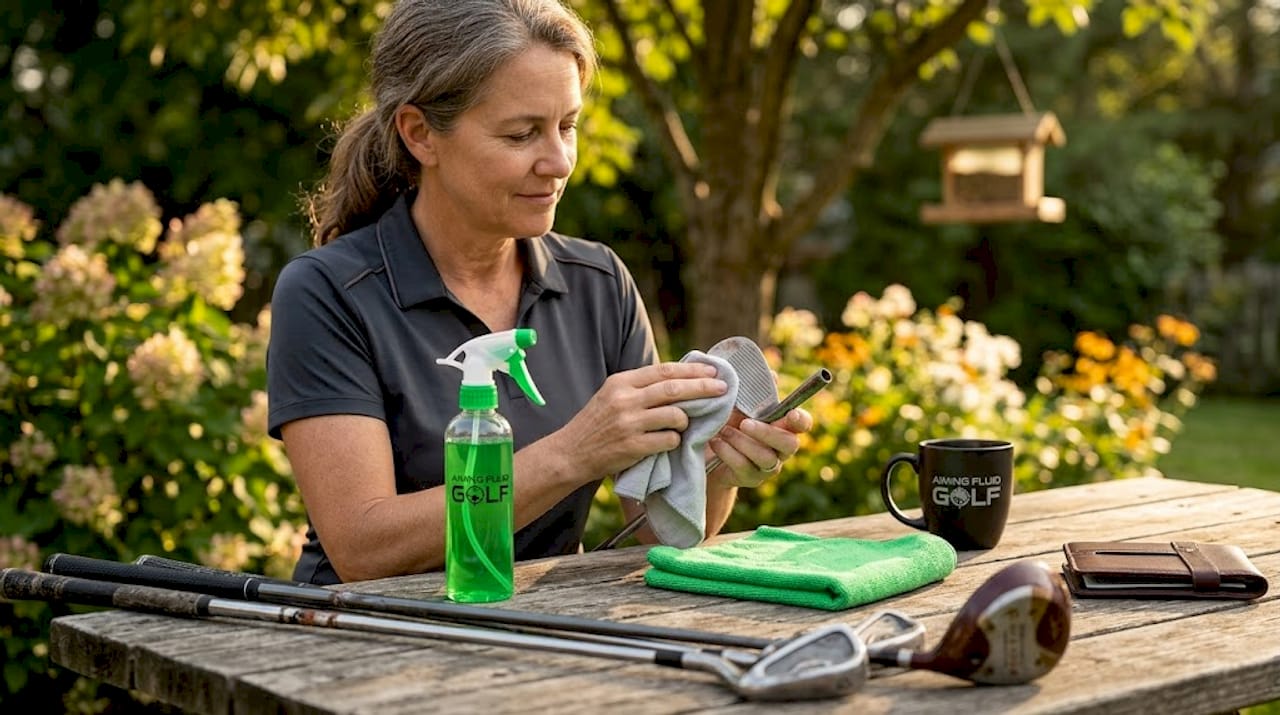
Rust dulls groove edges over time, which reduces shot consistency in the same way that physical debris does. The difference is that rust damage is permanent. A groove clogged with mud can be cleaned. A groove with corroded edges cannot be restored without regrooving or replacement.
Key practices that prevent rust and extend club life:
- Wipe clubs completely dry before placing them in your bag after any round
- Store clubs in a temperature-stable environment rather than a car trunk
- Apply a light coat of WD-40 or similar protective oil to iron heads a few times per season
- Inspect for rust near the hosel and sole after humid rounds or play in wet conditions
The resale value angle is frequently overlooked. Clean, well-maintained clubs look newer and perform closer to their original specifications. Proper cleaning and polishing can raise resale value by up to 30%. If you plan to trade in or sell your irons at any point, the 10 minutes you spend cleaning after each round is one of the highest-return maintenance habits in golf.
“Regular groove inspection and cleaning can extend club usable life by multiple seasons, especially in humid climates.” — Golf maintenance experts
4. Comparing cleaning tools, supplies, and techniques
Choosing the right tools makes the job faster and reduces the risk of accidental damage. The golf cleaning tips that matter most involve selecting tools matched to the task rather than grabbing whatever is nearby.
| Tool | Best Use | Frequency | Risk Level | Estimated Cost |
|---|---|---|---|---|
| Groove brush (stiff bristle) | Clearing groove channels on irons and wedges | After every round | Low | $5–$15 |
| Microfiber towel | Wiping faces, grips, and shafts mid-round and post-round | Every round | Very low | $5–$20 |
| Soft-bristle brush + mild soap | Full clubhead wash | Weekly | Low | Minimal (household item) |
| Groove pick or groove sharpener | Removing compacted debris from deep groove channels | Monthly or as needed | Medium if misused | $8–$20 |
| Shaft polish or club cleaner spray | Protecting shaft finish and removing surface oxidation | Monthly | Low | $10–$25 |
A few practical notes on each tool. Stiff-bristle groove brushes are the workhorses of routine golf gear upkeep. They clear packed debris without scratching the face. Groove picks require more care. Used with too much pressure, they can widen groove edges and actually reduce spin performance over time.
Microfiber towels are the most versatile item in the kit. They absorb moisture well, do not leave lint on club surfaces, and work on faces, shafts, grips, and golf balls. A golfer who keeps one accessible during every round will clean more consistently and more often.
Pro Tip: Attach your towel somewhere accessible during the round rather than burying it in your bag. Golfers who can reach their towel instantly between shots clean their clubs far more often than those who have to dig for it.
Tour professionals clean clubs before almost every shot on approach and around the green. Replicating that habit at the amateur level, even partially, produces measurable shot consistency improvements.
5. Situational recommendations for different golfers and conditions
The importance of golf cleaning scales with your playing environment. Not every golfer needs the same routine. A golfer playing twice a week on a dry desert course has different maintenance demands than someone playing coastal courses in high humidity three times a week.
Factors that should influence your cleaning frequency and method:
- Humid or coastal climates: Increase rust prevention steps. Wipe and dry clubs more thoroughly after each round. Monthly oil applications become more important.
- Clay or soft ground courses: Grooves pack with clay faster than any other surface. A groove brush after every hole on muddy days prevents buildup that affects the very next shot.
- Dry or sandy conditions: Fine sand is abrasive and settles into groove channels quickly. Brushing after each round prevents gradual groove edge wear.
- Competitive golfers: Cleaning before every wedge shot and iron shot is worth the time. Spin consistency directly affects scoring at competitive levels.
- Casual golfers: A five-minute wipe-down after each round and a monthly deep clean covers performance needs without becoming a burden.
Recognizing wear signs also matters. When clean clubs still produce inconsistent spin or flyers, the grooves may be worn below legal depth. Launch monitors can measure spin degradation objectively and help you decide when a club needs replacement rather than just cleaning.
Neglecting cleaning shortens club life by approximately 30% and reduces accuracy by up to 10%, according to golf maintenance analysis. That is a steep cost for skipping a habit that takes minutes to build.
The broader payoff of consistent cleaning habits is confidence. When you know your equipment is in peak condition, you approach each shot with fewer variables. That mental clarity has real, compounding effects on your game over a season.
My take: why most amateurs underestimate this
I have watched golfers spend thousands on new equipment while playing with clubs that look like they have been buried for a season. The grooves are packed with dried grass, the faces have surface rust near the sole, and the grips feel like worn sandpaper. They wonder why their wedge game is inconsistent.
In my experience, the single biggest improvement most mid-handicap golfers can make to their short game does not cost a cent. It is cleaning their wedges before every round and brushing the faces clean after contact with rough or sand. The improvement in spin consistency on approach shots is noticeable within a few rounds.
The common misconception is that cleaning is about cosmetics. It is not. It is a performance variable, the same as shaft flex or loft. When I started treating post-round cleaning as part of the round itself rather than optional maintenance, my distance control with irons tightened noticeably. Flyers from 100 yards became rare instead of a constant hazard.
The habit takes less than five minutes per round to establish. For golfers who resist it, the question worth asking is: would you play with a worn-out glove that costs you grip on every shot? Dirty grooves are the same problem, just less visible.
— Gary
Keep your gear clean with the right tools from Aimingfluidgolf
The performance case for cleaning is clear. Now the practical question is whether your gear supports the habit during a round, not just at home after it.

Aimingfluidgolf designs accessories built around exactly this problem. The magnetic golf towel system keeps your towel attached to your bag and accessible between every shot, so wiping a clubface takes two seconds instead of becoming a reason to skip it. Pair that with the right groove tools, and cleaning between shots becomes automatic rather than effortful. Browse the full range of expert-picked golf accessories at Aimingfluidgolf to find gear that supports your maintenance routine from the first tee to the final hole.
FAQ
How much spin do dirty grooves cost you?
Dirty wedge grooves reduce spin by nearly 50%, dropping from around 10,500 rpm to approximately 5,759 rpm in controlled testing. That level of spin loss significantly reduces your ability to hold greens on approach shots.
How often should you clean your golf clubs?
A quick wipe-down after every round is the minimum. Frequent players benefit from a full wash weekly and a thorough deep clean monthly that includes grips and shaft inspection.
Can cleaning your clubs actually damage them?
Yes, if done incorrectly. Fully submerging a club can introduce water into the hosel, loosen epoxy bonds, and cause rust inside the shaft connection. Use damp cloths or submerge only the head, and dry clubs immediately after washing.
Does cleaning clubs improve resale value?
Properly maintained clubs can command up to 30% more in resale or trade-in scenarios compared to neglected equipment. Regular polishing and cleaning preserves the finish and keeps groove geometry closer to original specifications.
When should you replace clubs instead of just cleaning them?
When consistently clean clubs still produce erratic spin or distance, the grooves may be worn past effective depth. A session on a launch monitor that shows ongoing spin degradation despite clean grooves is a reliable indicator that replacement is the right call rather than more maintenance.
Recommended
- Mid-round club cleaning guide for faster play – Aiming Fluid Golf
- Dirty Golf Balls Cost Spin: Golf Ball Cleaner Benefits Explained – Aiming Fluid Golf
- How to Clean Golf Clubs & Balls Like a Pro (Without Losing Spin) – Aiming Fluid Golf
- Understanding the Role of Golf Club Cleaning in Enhancing Equipment Lo – Aiming Fluid Golf


